So you want to put on a comedy show. Good. The world needs more laughter.
But figuring out what kind of show to put on can feel harder than getting a comedian to show up on time. It's easy to default to a standard stand-up night. That can work.
But sticking to just one format is like only knowing one joke. You're missing out on a bunch of comedy show event ideas that attract different crowds and are honestly more fun to produce.
This isn't another fluffy list. It's a practical roundup of ten proven comedy formats for small venues and independent organizers. We'll break down what each one is, who it's for, and how to pull it off without losing your mind.
Whether you're a pop-up chef adding humor to your dinner series or a community organizer looking for a fresh event, you’ll find something here.
We'll cover everything from classic open mics to live podcast recordings. We'll even touch on logistics like ticketing and promotion. A great concept deserves a great room. When you're ready, you can explore inspiring event spaces for creatives that fit the mood. Let's get to it.
1. Stand-Up Comedy Night
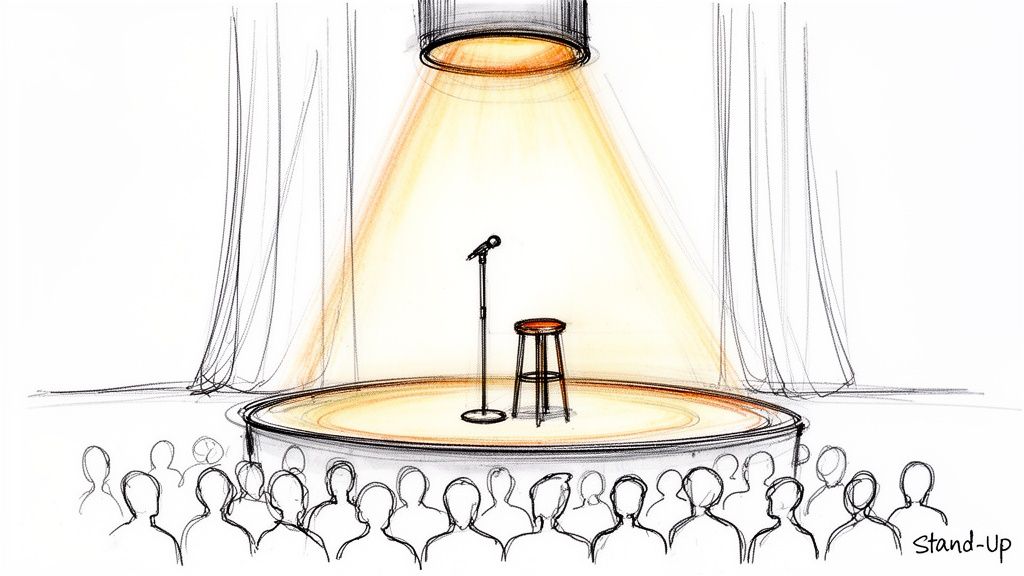
This is the classic comedy format. It's often the easiest entry point for new organizers.
You get a stage, a mic, a comedian, and an audience. It’s a simple formula that has worked for decades, from legendary clubs to the back room of your local brewery. The setup is minimal, but the potential for a memorable night is huge.
How It Works
A stand-up night features a lineup of comedians performing individual sets. A typical show includes a host (or MC), an opener, one or two feature acts, and a headliner.
Each comedian performs a monologue, sharing their unique perspective through jokes and stories. The format is flexible enough for a 60-minute showcase or a full two-hour event.
Who It's For
This format is perfect for small venues like bars, cafes, and community centers looking to draw a crowd on a weeknight. It's a proven model that attracts a broad audience, from comedy fans to couples looking for a date night.
Execution Tips
- Book Smart: Reach out to comedians at least two months in advance. Always book a backup. Life happens.
- Show Structure: A standard 90-minute show might look like this: Host (10 min), Opener (15 min), Feature (25 min), Headliner (40 min).
- Tech Check: Test your microphone, speakers, and lighting an hour before doors open. Bad audio kills great jokes.
- Ticketing: Keep it simple. You can set up a page and sell tickets in minutes. Offer General Admission and VIP front-row seats without giving up a percentage of your sales.
2. Comedy Workshop or Master Class
Not every comedy event has to be a passive experience. A workshop flips the script and invites aspiring comedians to get in on the action.
This format blends education with entertainment. It creates a unique, hands-on event that builds community and skills. It’s an excellent way for venues or instructors to engage an audience that wants to learn the "how" behind the "ha-ha."
How It Works
A professional comedian or instructor leads a session on a specific aspect of comedy. This could be anything from joke writing and story structure to stage presence.
The event is interactive. It often involves writing exercises, group activities, and a chance for participants to perform and get feedback. It’s less of a show and more of a creative classroom.
Who It's For
This idea is perfect for creative class providers, community theaters, and even corporate clients looking for a fun team-building activity. It attracts aspiring performers, writers, and anyone looking to boost their confidence.
Execution Tips
- Find the Right Teacher: Your instructor is key. Book a comedian with teaching experience and a knack for creating a supportive environment.
- Structure the Class: A three-hour workshop could include an intro (30 min), a core lesson with exercises (90 min), a break (15 min), and a Q&A session (45 min).
- Limit Class Size: Keep the group small, around 15 to 25 people, to ensure everyone gets personal attention. This makes a higher ticket price feel justified.
- Tiered Ticketing: Offer different access levels. You could have a "Participant" ticket for full access and a cheaper "Observer" ticket for those who just want to watch. This way, you don't lose a sale.
3. Comedy Dinner Show or Supper Club
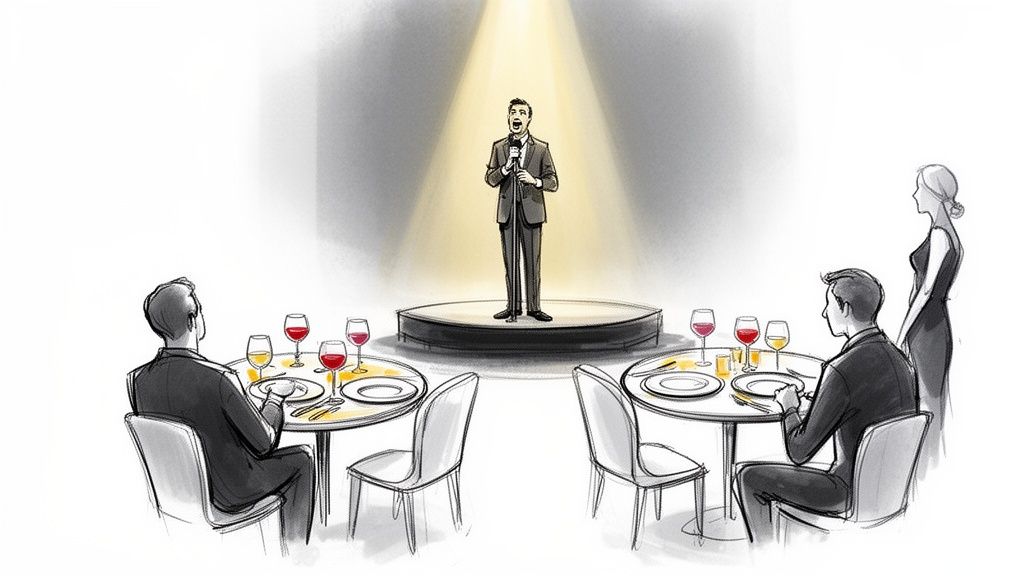
Pairing laughter with a great meal is a classic for a reason. This format elevates a standard comedy show into a premium experience.
Instead of just a show, you’re creating an entire evening out. It’s ideal for pop-up chefs and venues with kitchens that want to offer something more sophisticated and command a higher ticket price.
How It Works
Guests enjoy a multi-course meal, with comedians performing sets between courses. A common flow is drinks and appetizers, followed by the host and opener. Then the main course is served, followed by the feature and headliner.
Timing is crucial. The kitchen and the stage manager must work in sync to ensure food is served hot and comedians go on stage to an attentive audience.
Who It's For
This is a perfect fit for restaurants wanting to boost a slow night, culinary event organizers, and private supper clubs. It attracts foodies and couples looking for a complete date night package. It also works well for corporate events and fundraisers.
Execution Tips
- Coordinate Timing: Create a detailed run-of-show that syncs kitchen prep, service, and stage time. The show’s rhythm depends on it.
- Plan Your Sets: Schedule longer breaks for main courses and shorter ones for appetizers or dessert. Aim for 20-30 minute comedy sets between food service.
- Market the Experience: Sell it as a "Comedy Supper Club," not just a comedy show. The food is as much a star as the headliner.
- Manage Seating & Dietaries: Use a ticketing tool to sell different table tiers. Let guests specify dietary needs on the purchase page. This avoids chaos on the night of the event.
4. Improvisation (Improv) Comedy Show
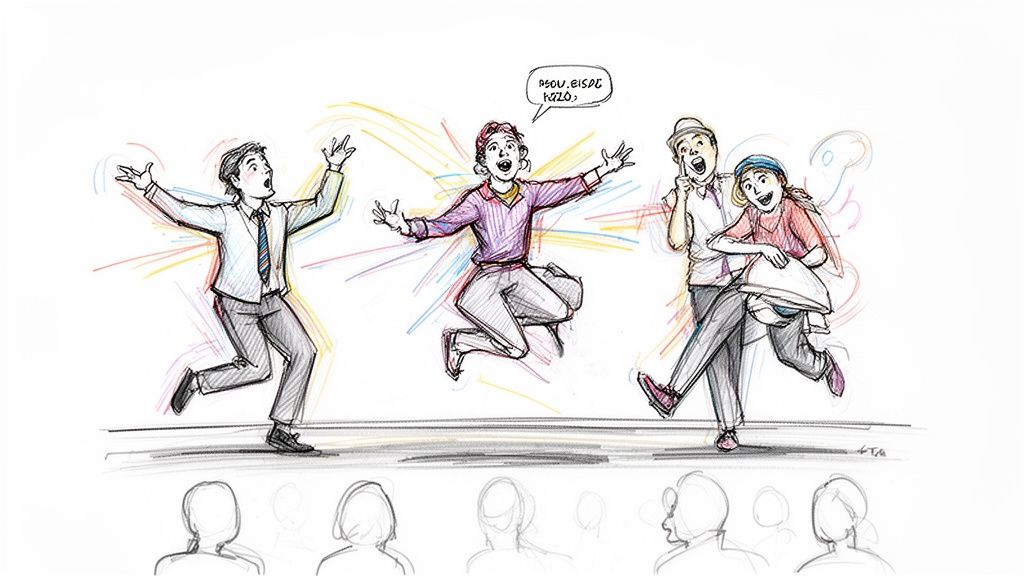
An improv show is comedy created on the spot, built from audience suggestions. Unlike scripted stand-up, every scene and punchline is unpredictable.
It’s a high-wire act of collaborative creativity. It turns the audience into part of the show, making it an energetic and engaging format. This is a great idea for building a loyal, local following.
How It Works
An improv troupe asks the audience for prompts, like a weird location, a random object, or a relationship. From there, they launch into short scenes or games.
The result is a one-of-a-kind performance that will never happen again. Shows are often fast-paced, running 60 to 90 minutes to keep the energy high.
Who It's For
This format thrives in intimate venues like black box theaters, community centers, and breweries. It’s perfect for organizers who want to offer a highly interactive experience that encourages repeat attendance.
Execution Tips
- Build a Team: Partner with a local improv troupe or hold auditions to form a house team. Chemistry is the key to great improv.
- Structure the Show: A host is crucial for warming up the audience and explaining how improv works. Plan a series of short games followed by a longer scene to create rhythm.
- Audience Engagement: Make it clear in your marketing that audience participation is part of the fun. A well-lit house makes people more comfortable shouting suggestions.
- Recurring Nights: Improv works best as a recurring event. Set up a series pass or subscription ticketing model to reward regulars and secure revenue upfront. A flat fee tool means you keep it all.
5. Corporate Comedy Event or Team Building
Taking comedy into the conference room is a smart way to tap into a lucrative market. Businesses are always looking for unique ways to boost morale, entertain clients, or liven up a holiday party.
A professional comedy show feels like a high-value perk. It offers a shared experience that can bring a team together. This isn't just entertainment. It’s a memorable employee engagement tool.
How It Works
A corporate comedy event involves booking one or more comedians to perform for a private company audience. This can range from a 30-minute set during a conference to a full 90-minute show for a company party.
The key is customization. The material is often tailored to be "clean" or "corporate-friendly." Comedians might even incorporate inside jokes about the company for a personal touch.
Who It's For
This is a perfect fit for companies of all sizes. It’s also a great option for professional associations looking for engaging entertainment. If you're looking for other ways to make your event stand out, exploring some corporate party entertainment ideas can provide more inspiration.
Execution Tips
- Know Your Audience: Get a detailed brief from your client. Understand their company culture, audience demographics, and any topics to avoid. This is non-negotiable.
- Book Corporate-Savvy Comics: Not every comedian is a corporate comedian. Book performers with experience in this space who can deliver a clean, professional set.
- Package Your Services: Offer tiered packages. A basic package might be a 45-minute show. A premium tier could include a comedian Q&A and customized material.
- Lock It In: Use detailed contracts that clearly outline content expectations, performance length, and payment terms.
- Branding Matters: When you manage RSVPs, use a tool that allows for custom branding. The event page should look like it came from the company, not a third-party promoter.
6. Charity Benefit Comedy Show
Laughter for a good cause is a powerful combination. A charity benefit channels the energy of a comedy night into support for a nonprofit.
It gives your audience a chance to enjoy a fantastic lineup while contributing to something meaningful. This format not only draws a crowd but also builds goodwill and strengthens community ties.
How It Works
This event raises funds and awareness for a specific charity. You partner with a nonprofit, organize a comedy show, and donate a significant portion of ticket proceeds to their cause.
The event often includes a brief presentation from the charity, testimonials, and sometimes a silent auction. The comedy is the main draw, but the charitable angle adds a layer of purpose.
Who It's For
This is a perfect fit for nonprofits, community groups, and corporate event planners hosting a fundraiser. It works well for independent producers who want to give back. The built-in narrative can attract a diverse audience.
Execution Tips
- Partner Wisely: Team up with a reputable nonprofit. Their network and credibility will help sell tickets and attract sponsors. Be transparent about how funds will be used.
- Sponsorship is Key: Secure corporate sponsors to cover the hard costs (venue, talent fees). This allows 100% of ticket sales to go to the charity, which is a powerful marketing message.
- Clear Communication: Use your event page to clearly state what percentage of proceeds goes to the charity. Tools can make it easy to add a "Donate Now" button for those who can't attend.
- Share the Impact: Throughout your promotion, share stories and a clear mission statement from the charity. People are more likely to buy tickets when they feel a connection to the cause.
7. Open Mic Comedy Night
An open mic is the raw, unfiltered proving ground of comedy. It’s where seasoned pros work out new material and new comics take their first steps onto the stage.
Hosting an open mic is less about a polished show and more about building a community hub. You’re providing a space for creativity, making it one of the most accessible comedy show event ideas for any small venue.
How It Works
Comedians sign up for a short slot, usually three to five minutes. A host manages the list, calls performers to the stage, and keeps the energy up.
The atmosphere is supportive and experimental. Audiences see a rapid-fire variety of comedic styles and witness the creative process in real time.
Who It's For
This format is a perfect fit for venues that want to build a loyal, weekly crowd. Bars, breweries, and cafes can become the go-to spot for the local comedy scene. It’s ideal for organizers passionate about fostering new talent.
Execution Tips
- Nail the Sign-Up: A chaotic sign-up can ruin the night. Use an online tool to let performers reserve spots in advance. This avoids a mad rush at the door.
- Find a Great Host: Your host is the anchor. They need to be funny, encouraging, and firm enough to keep the show moving.
- Time It Tightly: Stick to your time limits. A simple light at the one-minute-remaining mark helps comics stay on track. This ensures everyone gets a chance to perform.
- Build Consistency: Run your open mic on the same night every week. Consistency turns a one-off event into a local institution.
8. Festival and Multi-Day Comedy Event
Ready to go big? A festival elevates a series of shows into a significant cultural event.
Instead of a single night, you’re creating a destination that draws audiences and performers from all over for multiple days of laughs. This is an ambitious idea, but it can become a cornerstone of your local arts scene.
How It Works
A comedy festival features a large, diverse lineup of comedians performing in different venues over a weekend or a full week. Think of it as a city-wide comedy takeover.
The format can include stand-up showcases, themed shows, and live podcast recordings. The goal is to create an immersive experience for comedy fans.
Who It's For
This is a major undertaking for experienced event organizers or a collective of venues. It requires significant logistical planning and a larger budget. It's a fantastic way to put a city on the comedy map.
Execution Tips
- Start Small: Test the waters with a one-day event before committing to a full week. This helps you build a reputation.
- Book Way in Advance: Headliners for a festival should be booked nine to twelve months out. This gives you plenty of time for promotion.
- Sponsorship is Key: Secure a title sponsor early to offset major costs and reduce your financial risk.
- Complex Ticketing, Made Simple: A festival needs flexible ticketing. Use a platform that handles single-show tickets, multi-day passes, and VIP packages without taking a percentage of your sales. You need that control.
- Build a Team: You can't do this alone. Recruit dedicated volunteers to help with everything from checking in performers to managing entry.
9. Comedy Podcast Live Recording or Taping Event
This is where two powerful fanbases collide: comedy lovers and podcast loyalists. A live podcast recording is more than a show; it’s an exclusive, behind-the-scenes experience.
For the price of a ticket, fans get to be part of the show. This makes it one of the most unique and engaging comedy show event ideas for building a community.
How It Works
You create a stage environment for podcasters to record an episode live. It combines the structured segments of a podcast with the spontaneity of a live performance. It often includes audience Q&A sessions or special guests.
The event serves two purposes: entertaining the live audience and creating a new episode for subscribers.
Who It's For
This format is a great match for independent theaters, breweries, and community hubs looking to attract a niche audience. It’s a natural fit for fans of specific podcasts and anyone curious about the process.
Execution Tips
- Find the Right Partner: Collaborate with local or touring podcasters who have an established audience. A built-in fan base makes promotion easier.
- Get the Sound Right: This is non-negotiable. Invest in quality microphones and audio recording equipment. The final product needs to sound professional.
- Create a VIP Experience: Offer tiered packages. A VIP ticket could include a pre-show meet-and-greet or reserved front-row seating. You keep all the revenue with a flat-fee tool.
- Plan for Interaction: Schedule a dedicated Q&A segment at the end. This makes the audience feel involved and gives them a reason to show up live.
- Promote to Their Audience: Work with the podcasters to announce the live show on their podcast weeks in advance, driving their listeners to your ticket page.
10. Interactive Comedy Show with Audience Participation
This format breaks the fourth wall, turning passive audience members into active parts of the show. The comedian engages directly with the crowd through roasts, games, or improv.
It’s a high-wire act that creates a unique experience every single time. It's one of the most memorable comedy show event ideas because it makes the audience the star.
How It Works
The entire performance is built around audience interaction. A comedian skilled in "crowd work" might build their whole set by interviewing people in the front row.
Other formats are more structured, like a comedy game show or a "roast battle." The key is unpredictability and shared experience.
Who It's For
This is a fantastic option for venues with a regular, local crowd, like a neighborhood bar or brewery. It builds community and encourages repeat attendance. It's also great for corporate events looking for a personalized experience.
Execution Tips
- Book Crowd Work Masters: Don't book just any comic. You need performers known for their sharp improvisational skills and ability to read a room.
- Set Clear Boundaries: In your marketing, be explicit that the show involves audience participation. Establish clear rules to ensure everyone feels safe.
- Prime the Pump: Have a few small prizes for the first few participants. This can help break the ice and encourage more people to get involved.
- Promote the Uniqueness: Use social media to share short video clips of hilarious, unscripted audience moments from past shows. This shows people what they’re missing.
Comparison of 10 Comedy Event Ideas
| Event Type | Implementation Complexity | Resource Requirements | Expected Outcomes | Ideal Use Cases | Key Advantages |
|---|---|---|---|---|---|
| Stand-Up Comedy Night | Low — simple staging and host coordination | Minimal tech (mic, sound, lights); 1–6 comedians; small-to-medium venue | Strong entertainment value; reliable ticket sales; easy series growth | Local clubs, community venues, pop-ups | Low barrier to entry; easy to market; scalable |
| Comedy Workshop / Master Class | Medium — curriculum design and expert booking | Expert instructors; small classroom or black-box space; materials | Higher per-ticket revenue; engaged, skill-building audience | Educational series, talent development, recurring classes | Premium pricing; builds community; repeat attendees |
| Comedy Dinner Show / Supper Club | High — tight coordination between kitchen and show timing | Full catering/kitchen staff; table seating; elevated production | Premium ticket revenue; memorable multi-sensory experience | Upscale events, chef collaborations, special occasions | High margins; cross-promotion with F&B; group bookings |
| Improvisation (Improv) Comedy Show | Medium–High — ensemble rehearsal and format planning | 6–12 trained performers; rehearsal space; larger stage; good lighting | High audience engagement; strong repeat attendance; energetic shows | Recurring series, theaters, community engagement | Highly interactive; builds loyal audiences; unique shows each time |
| Corporate Comedy / Team Building | Medium — content customization and client coordination | Experienced corporate-friendly comedians; AV; contracts; insurance | High budgets and repeat bookings; measurable employee engagement ROI | Company parties, conferences, client events | High revenue; reliable clientele; perceived ROI for employers |
| Charity Benefit Comedy Show | Medium — nonprofit partnership and financial transparency | Multiple acts or headliners; volunteers; sponsors; donation tracking | Fundraising proceeds; media/pr exposure; community goodwill | Nonprofit fundraisers, galas, community causes | Attracts donors and sponsors; PR value; multi-revenue streams |
| Open Mic Comedy Night | Low — simple operations, regular scheduling | Basic tech; volunteer signups; host/MC; small venue | Talent discovery; community building; low per-show revenue | Grassroots community nights, weekly series, bars | Very low cost; consistent audience habit; source of new talent |
| Festival & Multi-Day Comedy Event | Very High — complex logistics and long lead time | Production team; multiple venues; large budget; sponsors; volunteers | Major visibility; tourism impact; diversified revenue streams | Regional/national festivals, large-scale cultural events | Significant reach; sponsorship and VIP opportunities; large economic impact |
| Comedy Podcast Live Recording | Medium — production and recording logistics | Professional audio/video gear; host/podcasters; engaged fanbase | Shareable content; merchandise and ticket revenue; fan engagement | Podcast tours, recording sessions, hybrid content events | Built-in audience; content creation; merch and cross-promo |
| Interactive Comedy Show (Audience Participation) | Medium — participant management and flow control | Skilled crowd-work comedians; reliable sound system; volunteer screening | Memorable, shareable experiences; strong word-of-mouth; repeat business | Group outings, themed nights, social events | High engagement; premium front-row sales; viral content potential |
The Only Thing Left is Selling Tickets
You made it. You've explored a ton of comedy show event ideas, from stand-up nights to the controlled chaos of a live podcast. We’ve covered everything from logistics to audience fit.
The biggest takeaway? You don't need a huge venue or a Hollywood budget to create something amazing. A well-run open mic can build a loyal community. A sharp corporate comedy event can be your most profitable gig.
The principle behind every idea is the same: find a format that fits your space, your audience, and your ambition. Then, execute it with care.
Turning Laughter into a Business
A great idea is just an idea until you start selling tickets. This is where most organizers get bogged down. They spend more time fighting with clunky software and worrying about hidden fees than promoting their show. That’s a waste of energy.
The gap between a concept and a sold-out show isn't that wide. It’s about focusing on a few key things:
- Know Your Niche: Are you targeting comedy nerds who love experimental improv or a corporate crowd that just wants clean humor? Your event idea dictates your audience.
- Start Small and Test: You don't need a 500-seat theater for your first show. Start with a 50-person interactive comedy night. Learn from the empty seats and the sold-out successes.
- Build Your Team: Find a reliable sound tech. Partner with a local food vendor. Collaborate with other comedians. You can't do it all alone.
- Master the Promotion Basics: A killer Instagram post, a well-timed email to your list, and some old-fashioned flyers can work wonders. Tell a clear story: what the show is, who it's for, and why they can't miss it.
The most successful comedy shows aren't run by people with the biggest names on the poster. They're run by organizers obsessed with the details and dedicated to giving their audience a fantastic night out.
Stop Planning and Start Doing
You now have a full menu of comedy show event ideas. You have advice to avoid common pitfalls. You know the importance of matching the format to the audience.
The only thing holding you back is inertia.
Pick one idea. Just one. It doesn't have to be perfect. Your first Stand-Up Night might have technical glitches. Your first workshop might not sell out. That’s okay. The goal is to get started, learn, and iterate.
So, what are you waiting for? Pick your format, book your talent, and get ready to hear the best sound in the world: a room full of people laughing.
Picking an idea is the first step. Making it real is the next. We built Ticketsmith for organizers who care more about the event than wrestling with complicated software. Set up a custom-branded page in minutes, pay a simple flat fee, and get paid out fast. Join the waitlist, and we'll let you know the second it's ready.