
You’re hosting an event. A pop-up dinner, a three-day workshop, maybe a small community festival. You just want people to show up, so you need to sell some tickets. Easy, right?
Then you hit a wall of jargon. Dynamic pricing? Tiered access? Flash sales? Suddenly, you're drowning in options that feel designed for massive arenas, not your 50-person yoga retreat. Most guides on the different types of ticketing are packed with corporate-speak that doesn't help you.
We'll walk through ten common ticketing models. We'll explain what they are in plain English, show you when to use them, and crucially, when to run away. You'll get clear pros and cons, plus a few hard-won lessons from the trenches.
No fluff. Just straight-up, actionable advice to help you sell out your event and get back to what you do best: creating something amazing.
1. Dynamic Pricing Ticketing
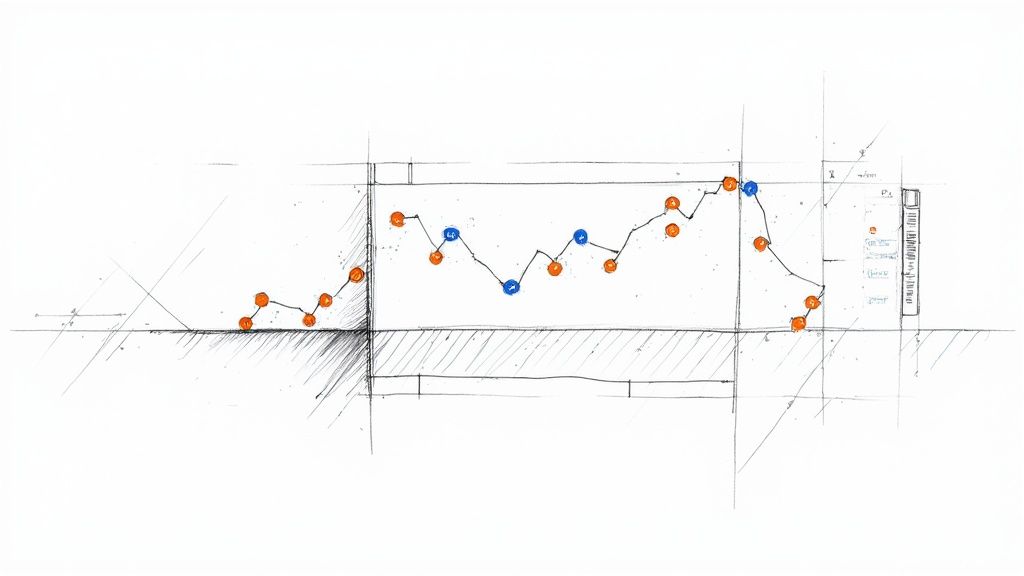
Ever notice how a flight to visit family costs $250 on a Tuesday but jumps to $550 the Friday before a holiday? That’s dynamic pricing. It’s one of the more complex types of ticketing where the price changes based on real-time demand.
If tickets are flying off the shelf for your Saturday pop-up, the price automatically inches up. If sales for a Thursday workshop are slow, the price might drop to fill empty seats. It's all about selling the right ticket at the right price at the right time.
Who Should Use This?
Honestly, probably not you. Dynamic pricing is for giants like Ticketmaster managing Taylor Swift tours. It works for events with huge, fluctuating demand. If you consistently sell out months in advance, maybe you're leaving money on the table.
But for a small community event, this approach feels corporate and can tick people off. Know your audience. Are they looking for a fair price from a creator they trust? Or are they trying to scalp tickets to the Super Bowl?
How to Get It Right
If you must, be transparent. People hate feeling ripped off.
Set Price Brackets: Don't let an algorithm run wild. Establish a clear floor and ceiling. Maybe your pottery class tickets range from $45 to $85, but never outside that window. This prevents sticker shock.
Communicate Clearly: Add a note on your ticketing page: "Prices may vary based on demand." It manages expectations.
Test and Monitor: Watch your social media comments like a hawk after you go live. Be ready to adjust. For one workshop, I saw a $10 price jump trigger a dozen angry emails. The extra $100 in revenue wasn't worth the bad blood.
If you’re curious about the mechanics, this video gives a solid breakdown of how the algorithms work.
2. Tiered/Category Ticketing
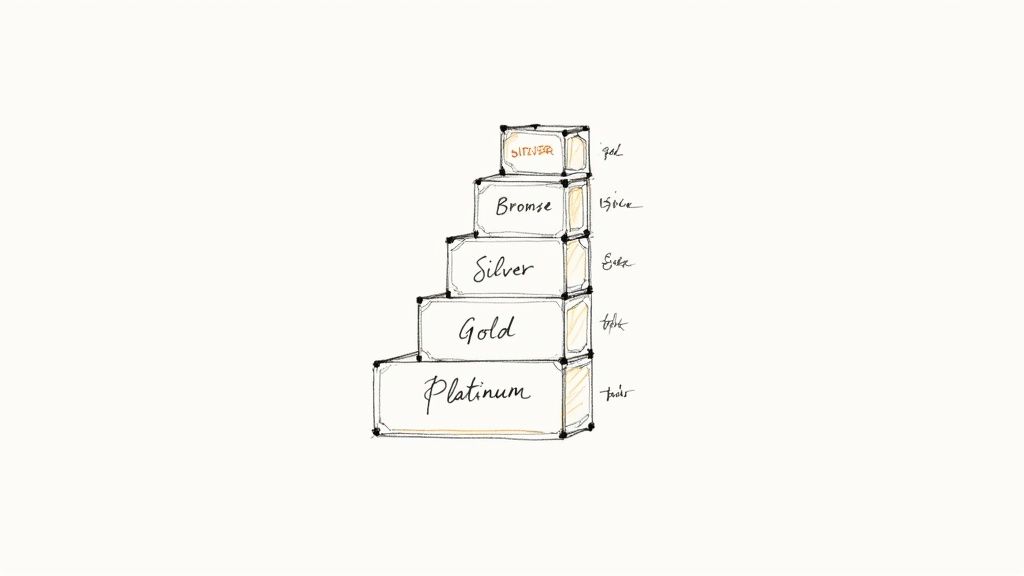
Ever gone to a concert and seen options for General Admission, the Pit, and a VIP section? That’s tiered ticketing. It's one of the most common types of ticketing where you create different "levels" of experience at different price points.
Instead of one flat price, you offer a menu. A "Bronze" ticket gets someone in the door. A "Gold" ticket includes a better view and a free drink. "Platinum" might offer front-row access and a meet-and-greet. It lets people choose what they can afford.
Who Should Use This?
This is a workhorse for almost any event. It’s great for music venues, food festivals, and even workshops. For a weekend craft market, you could offer a $10 one-day pass, a $25 weekend pass, and a $75 "First Look" pass that includes early entry and a tote bag.
If your event has clear ways to offer a better experience (closer seating, exclusive stuff), tiers can boost your income.
How to Get It Right
The value of each level has to be obvious. People need to feel like they’re getting what they paid for.
Define Clear Value: The jump from a $50 ticket to an $85 VIP ticket needs to feel real. List the perks: "VIP includes front-two-row seating, one complimentary cocktail, and a signed poster."
Visualize the Difference: For seated events, a simple color-coded venue map is a must. It instantly shows why one area costs more.
Limit the Best Tiers: Scarcity drives value. If you have 500 total spots, maybe only 30 are "Platinum." This makes the top tier feel exclusive. For a dinner series, I capped my "Chef's Table" tier at six seats. They sold out first, every time.
3. Presale and Early Bird Ticketing
Ever get that exclusive text from a band with a code for tickets before anyone else? That’s a presale. It’s one of the most common types of ticketing, where you offer a special group first dibs, often at a discounted "early bird" price.
It’s a great way to reward your most loyal followers, like your email list subscribers. This creates urgency and builds hype. It also guarantees a baseline of attendance before your main launch even begins.
Who Should Use This?
This strategy is a winner if you have an existing community. It works for pop-up chefs rewarding regulars, annual festivals building buzz, or a workshop instructor giving past students the first chance to sign up. If you have an email list, use it.
It’s less effective if you're starting from scratch. The point is to tap into a warm audience. If you don't have one, focus on building it first.
How to Get It Right
A good presale makes your insiders feel special.
Build Your List Early: Start collecting emails months before your event. Your email list is gold.
Set Clear Timelines: Tell people the exact date and time the presale starts and ends. Send a reminder one day before and one hour before. Confusing instructions just frustrate people.
Use Unique Codes: A generic link will get shared everywhere. Single-use codes help track who is buying and make the offer feel more personal.
Prepare for Hiccups: My first presale, my coupon code system broke. I spent an hour manually emailing new codes and apologizing. Now, I have someone ready to answer emails the moment the presale opens. Quick support turns a disaster into good customer service.
4. Flash Sale Ticketing
You’ve seen it: "First 100 tickets are 50% off. Go!" That’s a flash sale. It's a short-term promotion designed to create a massive spike in urgency. It’s less of a pricing strategy and more of a marketing event.
This isn’t about maximizing revenue per ticket. It’s a tool to jolt a slow sales cycle, clear out the last few seats, or reward your followers. The sudden announcement and strict time limit trigger a "fear of missing out" (FOMO) that can turn passive followers into buyers.
Who Should Use This?
Flash sales are perfect if you have a strong social media following or email list. Think a pop-up chef dropping a few seats for a secret dinner, or a local music venue running a "Flash Friday" deal to fill seats for a weekend show.
This model is less effective if you don’t have an engaged audience ready to act. Announcing a flash sale to an empty room won't do much.
How to Get It Right
A successful flash sale feels exciting, not chaotic. You have to be prepared for the surge.
Set Clear Limits: Be upfront. State exactly how many tickets are available ("50 tickets available") and when the sale ends ("Sale ends at midnight or when tickets sell out"). This creates real scarcity.
Use Countdown Timers: A visible countdown timer on your page is a powerful nudge. It encourages people to stop hesitating and just buy.
Prep Your Support: Before you hit "go," make sure someone is monitoring your email and DMs. Inevitably, a few people will have payment issues. Quick responses prevent frustration. I once lost three sales because my payment processor flagged a user's card and I didn't see the email for an hour. By then, they'd moved on.
5. Subscription/Season Pass Ticketing
How does your local theater keep the lights on? Chances are, they rely on season pass holders. This is subscription ticketing, where you trade one-off sales for bundled access over a period of time.
Instead of convincing someone to buy a ticket for every show, you sell them a single pass that gets them into multiple events. The customer gets a better deal, and you get predictable, upfront revenue. It's a powerful way to build a loyal community.
Who Should Use This?
This is the gold standard for organizations with a recurring calendar. Think regional theaters, indie cinemas, sports leagues, or a series of workshops. If you're hosting more than four similar events a year, this can turn casual attendees into dedicated fans.
For a one-off festival or a single pop-up dinner, it's overkill.
How to Get It Right
A good subscription program delivers consistent value and makes members feel special.
Offer Tiered Benefits: Create different levels. A "Flex Pass" might offer four tickets to any show for $100. A "VIP Pass" for $250 could include all eight shows, priority seating, and a free drink.
Create Exclusivity: Give subscribers more than just tickets. Offer perks like early access to seats, invitations to meet-and-greets, or members-only newsletters. Make them feel like insiders.
Be Flexible: Life happens. Offer a simple, no-hassle exchange policy so people can swap their tickets for another performance. A little flexibility goes a long way.
6. Paperless/Mobile Ticketing
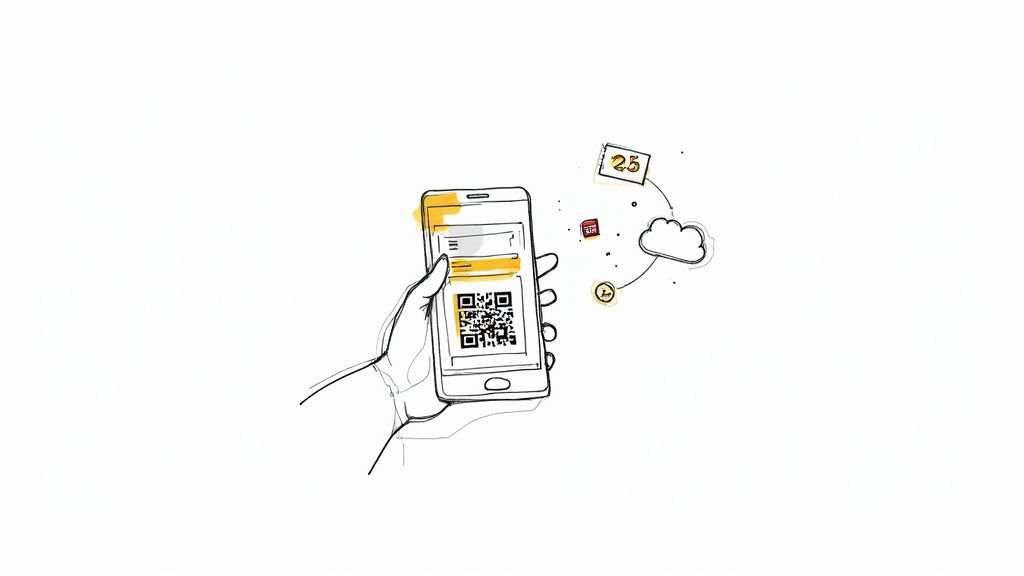
Remember frantically searching for that printed-out concert ticket? Thankfully, those days are mostly over. Mobile ticketing delivers tickets straight to a phone via email or SMS. Entry is just scanning a QR code.
This is the default for most modern events. It's fast, eco-friendly, and reduces the "I lost my ticket" panic. For organizers, it cuts printing costs and fraud, since digital tickets are much harder to counterfeit.
Who Should Use This?
Honestly, almost everyone. Pop-up chefs, workshop hosts, community markets—mobile ticketing simplifies life for you and your attendees. It’s the standard. The only exceptions might be very small gatherings or events for people with limited smartphone access.
How to Get It Right
Going digital is great, but a dead phone battery can still ruin someone’s night.
Have a Backup Plan: Keep a printed attendee list at the door. For a sold-out 150-person pop-up, we had three people show up with dead phones. Being able to check their name and ID saved them from being turned away and kept the line moving.
Communicate Instructions Clearly: Your confirmation email should be crystal clear. Include a bolded line: "No need to print! Just show this QR code on your phone at the door."
Test Your Scanners: Before doors open, do a few test scans with your own phone. Make sure your scanning app works quickly. A slow scanner is a recipe for a long, grumpy line.
7. Resale and Secondary Market Ticketing
Ever bought a ticket months in advance, only for a last-minute conflict to pop up? Resale ticketing provides an official, safe way for original ticket holders to sell their tickets to others. It’s a controlled system, not the wild west of scalping.
Think of it as an authorized marketplace for your event. Instead of people turning to sketchy forums, they use a platform you trust. The event organizer often sets price caps to prevent gouging and takes a small fee to keep things secure.
Who Should Use This?
This is a game-changer for events that sell out quickly. Think limited-seating workshops, exclusive pop-up dinners, or small-venue music shows. If you know there’s a waitlist, providing a safe resale option prevents no-shows.
For a weekly yoga class or a free park cleanup, it’s overkill. The goal is to manage scarcity, not to complicate a simple sign-up.
How to Get It Right
A good resale program is all about trust and clarity.
Communicate Policies Upfront: Be clear about your resale rules on the main ticket page. Can tickets be resold? Is there a price cap? When does the resale window close?
Set Fair Price Caps: To keep your community from feeling exploited, cap resale prices. Limiting the resale price to the original face value plus a 10-15% fee is a common approach. This lets sellers recoup their cost without profiteering.
Provide Buyer Guarantees: The biggest fear for secondary buyers is fraud. Your system must guarantee the resold ticket is authentic. This is where using an integrated platform is non-negotiable.
8. Lottery/Drawing Ticketing
What do you do when 10,000 people want one of the 100 spots at your supper club? A first-come, first-served model crashes your site and leaves thousands frustrated. A lottery flips the script. Instead of rewarding the fastest click, it gives everyone a fair shot.
You collect entries over a set period, then use a random drawing to select who gets to buy a ticket. It’s the great equalizer for events where demand wildly outstrips supply. It feels much fairer to your community.

Who Should Use This?
Lottery ticketing is a lifesaver for hosts of hyper-popular, limited-capacity events. It’s perfect for a famous chef's pop-up dinner or a limited-edition pottery workshop. If your last event sold out in 30 seconds and you spent the next week apologizing to fans, this model is for you.
For events with plenty of open seats, this adds needless complexity.
How to Get It Right
The key is trust. Your audience needs to believe the process is genuinely random.
Communicate Everything: Be radically transparent. Announce the exact entry window ("The lottery is open from May 1st at 9:00 AM to May 3rd at 5:00 PM"). State the number of tickets available.
Keep Entry Simple: The entry form should ask for the bare minimum: name and email.
Use a Verified Tool: Don't just pull names from a spreadsheet. Use a third-party service with a certified randomizer to draw winners. This protects you from accusations of favoritism.
Announce Results Promptly: Stick to your timeline. When the drawing is over, notify winners and non-winners immediately. Leaving people hanging is a bad experience.
9. Anchor Ticketing
Ever look at a software pricing page with three options: a $10 plan, a $25 plan, and a $99 plan? Suddenly, the $25 plan seems like a fantastic deal. That's anchor ticketing. It's a psychological strategy that uses a high-priced "anchor" to make other tiers look more attractive.
It’s about framing value. By presenting a premium, high-cost ticket (like an all-access VIP pass for $500), your standard $75 ticket suddenly feels reasonable. The anchor provides context and steers people toward the option you actually want them to buy.
Who Should Use This?
Anchor ticketing is perfect for events with distinct value tiers. Think multi-day festivals, workshops with different access levels, or a pop-up dinner with an optional wine pairing. If you have a "standard" and a "premium" experience, this model helps you sell more of both.
It’s useless for a single-price event. The strategy relies on comparison.
How to Get It Right
The value difference between tiers has to be crystal clear, so the price difference feels justified.
Make the Value Obvious: Don't just say "VIP." List what it includes. Your "$150 Pro Chef" ticket might include a front-row seat, a signed recipe book, and a photo, while the "$85 Foodie" ticket is for general seating. The value is tangible.
Position Your Anchor: Place the most expensive option first or make it the most prominent. This sets the price expectation high from the start.
Don't Hide the Standard Option: While the anchor draws the eye, make the path to your target ticket simple and clear. This is your bread and butter. Your goal isn’t to sell a ton of anchor tickets; it’s to sell more of your main offering.
10. Hold and Release Ticketing
Ever try to buy festival tickets the second they go on sale, find they’re “sold out,” then see a new batch appear a month later? That’s hold and release ticketing. It's a strategic way to manage inventory by not putting everything on sale at once.
Instead of dumping your entire stock on the market, you hold some back. You then release these tickets in planned phases. It can build anticipation, manage overwhelming demand, and give you a chance to adjust your strategy. It’s one of the most effective types of ticketing for creating sustained buzz.
Who Should Use This?
This method is a game-changer for events with high demand spread out over time. Think multi-day festivals or conventions. If your event has a long lead time, releasing tickets in phases keeps it in people's minds.
For a one-off, 50-person workshop, this is overkill. You want to sell those seats quickly. Holding tickets back might just create confusion.
How to Get It Right
Success hinges on clear communication. If people think you're manufacturing scarcity to mess with them, they’ll get frustrated.
Be Transparent About the Plan: Announce your release schedule upfront. Post it on your event page. "Phase 1: Early Bird tickets release June 1st. Phase 2: Main Sale tickets release July 15th."
Build Anticipation for Each Release: Treat each phase like a mini-launch. Send email reminders and post countdowns to get people excited.
Monitor Demand Signals: Watch how fast the first phase sells out. If tickets vanish in an hour, you know demand is red-hot. If sales are slow, you might reconsider your marketing push for the next release.
10 Ticketing Types Compared
| Ticketing Type | Implementation complexity | Resource requirements | Expected outcomes | Ideal use cases | Key advantages |
|---|---|---|---|---|---|
| Dynamic Pricing Ticketing | High — requires algorithms and real‑time systems | Data science, real‑time inventory, analytics, integrations | Revenue maximization, dynamic seat sell‑through, price volatility | High‑demand concerts, major sports, large arenas | Aligns price to demand, reduces unsold inventory |
| Tiered/Category Ticketing | Medium — tier design and seat mapping | Seat mapping, marketing, CRM, inventory controls | Segmented revenue, clear customer choices | Concerts, festivals, theaters, airlines | Appeals to varied budgets, easy to communicate |
| Presale and Early Bird Ticketing | Low–Medium — access controls and scheduling | CRM, email lists, code management, customer support | Early revenue, demand signal, built anticipation | Fan clubs, venue members, credit card partners | Rewards loyal fans, gauges demand early |
| Flash Sale Ticketing | Medium — timing and high‑traffic readiness | Marketing, scalable infrastructure, inventory caps | Rapid sell‑through, short‑term traffic spikes | Slow‑selling events, last‑minute inventory moves | Creates urgency, quickly moves tickets |
| Subscription/Season Pass Ticketing | High — complex allocation and billing | Billing systems, CRM, seat allocation, customer success | Predictable recurring revenue, higher LTV | Theaters, sports season tickets, membership models | Stable revenue, increases loyalty and attendance |
| Paperless/Mobile Ticketing | Low–Medium — digital delivery and scanning | Mobile apps, scanners, wallet integration, security | Faster entry, reduced fraud, better analytics | Most modern venues, festivals, large events | Lowers fraud/costs, enables transfers and analytics |
| Resale and Secondary Market Ticketing | High — marketplace and verification systems | Marketplace platform, anti‑fraud, legal/compliance, integrations | Increased liquidity, fee revenue, broader access | Sold‑out shows, high‑demand sporting events | Reduces illegal scalping, offers buyer protection |
| Lottery/Drawing Ticketing | Medium — randomization and compliance | Entry systems, verified randomization, legal review | Fair allocation, reduced bot pressure, uncertain revenue | Extremely high‑demand events (premieres, big tours) | Equitable access, prevents mass buyouts and crashes |
| Anchor Ticketing | Low — pricing presentation and psychology | Pricing strategy, UX/design, A/B testing | Higher average transaction value, tier steering | Tiered sales, VIP and premium offerings | Increases spend with minimal technical effort |
| Hold and Release Ticketing | Medium–High — phased inventory control | Demand monitoring, phased release tools, communications | Managed supply, multiple sales peaks, optimized pricing | Large festivals, major sporting events, tactical releases | Controls market saturation, enables price optimization |
So, Which of These Ticketing Types is Right For You?
We just walked through ten different types of ticketing. It’s easy to get lost and think you need a complex system for your local sourdough workshop.
You don’t.
For most creators, workshop hosts, and community organizers, the goal isn't to squeeze every last cent from a fluctuating market. The goal is to get people in the door, create an amazing experience, and get paid fairly. Most complicated ticketing models solve problems you probably don’t have.
The Real Takeaway: Start Simple and Stay Honest
Let's cut through the noise. What truly matters?
Clarity: Your pricing should be easy to understand. Tiered pricing or a simple Early Bird offer is usually more than enough.
Your Brand: The ticket-buying experience is the first interaction someone has with your event. It should feel like you, not some giant ticketing corporation.
Predictable Revenue: You need to know how much money you’re actually making. Complicated percentage fees make it impossible to budget. A flat fee per ticket is predictable.
Simplicity: You shouldn't need a developer just to sell a ticket. The setup should take minutes, so you can get back to planning the actual event.
These four points are the foundation. For 99% of small-to-medium events, a straightforward system is the winning ticket. Your energy is finite. Spend it on creating an unforgettable experience, not on managing ticketing complexity.
Most types of ticketing platforms are built for big players, leaving small creators with clunky tools and sneaky percentage fees. We’re building Ticketsmith to fix that. It’s a dead-simple platform for real people pouring their hearts into events. It has flat-fee pricing, custom branding so it looks like yours, and fast payouts. It works for five attendees or five thousand.