
So, are presale tickets cheaper? The short answer is: sometimes yes, often no, and a lot depends on what kind of presale you’re looking at.
For smaller events, presale can mean a real discount. For major concerts, presale usually means earlier access to the same face value tickets, not a lower price. In practice, the cheapest option is often an early-bird offer from an independent organizer—not an artist or credit-card presale for a huge tour.
How We Evaluated Whether Presale Tickets Are Actually Cheaper
We judged “cheaper” using four things, not one:
- Face value: Is the listed ticket price lower than the later public on-sale?
- All-in checkout price: Do fees erase the discount by the time you reach payment?
- Seat or inventory differences: Are you comparing the same section, tier, or ticket type?
- Event type: Is this an indie event using early-bird pricing, or a high-demand concert using presale mainly for access?
That last point matters more than most buyers realize. When I reviewed how presales are described across creator platforms and concert-ticket explainers, the biggest pattern was simple: independent events use presale to drive early revenue, while big tours use it to control demand and reward fan groups.
For this article, access-only presales at the same price did not count as cheaper. If a code only lets you shop earlier, that may still be valuable, but it isn’t a discount. We also treated “better value” and “lower price” as two different things, because getting face-value tickets before resale prices spike can save money overall even when the original ticket wasn’t discounted.
The Real Deal on Presale Ticket Prices
Here’s the clean verdict buyers usually want:
| Situation | Is presale cheaper? | What’s really happening |
|---|---|---|
| Early-bird presale for an indie event | Usually yes | Organizer offers a real discount to reward early buyers and bring in cash fast. |
| Artist, venue, or credit-card presale for a major concert | Usually the same price | You’re getting earlier access to standard inventory, not a lower base price. |
| Presale with premium sections, bundles, or heavy fees | Can feel more expensive | The listed price may look normal, but all-in cost rises because only premium inventory is left or fees stack up. |
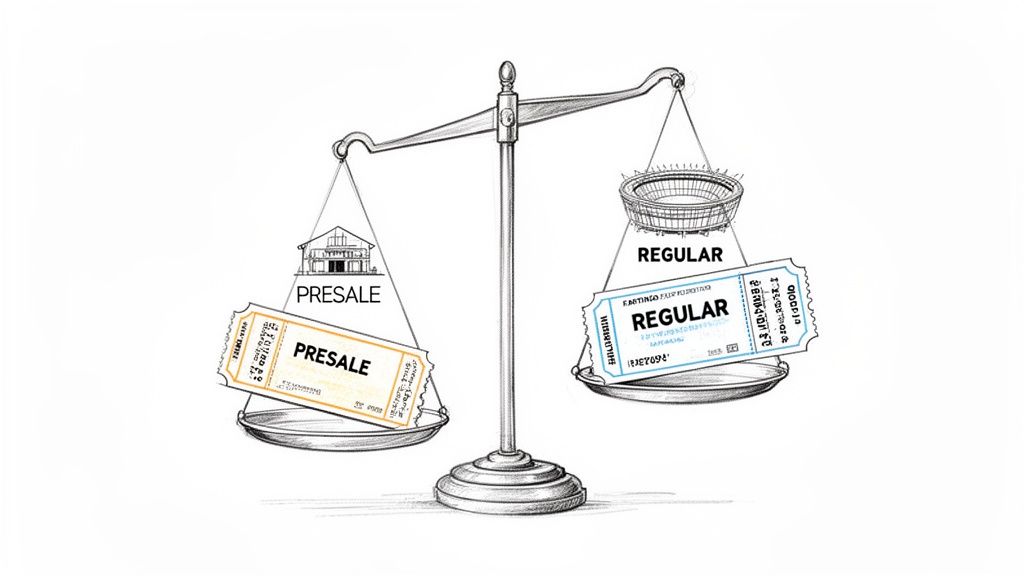
A presale is just a sales window. Whether it saves you money depends on why the organizer opened that window in the first place.
For independent creators, the goal is often momentum and upfront cash. That’s where real discounts show up. Ticketsmith’s own review of presale patterns found that indie events frequently use direct price cuts, with many early-bird offers landing in the 15% to 25% range and presale discounts appearing far more often at smaller events than on stadium tours, as outlined in this presale pricing breakdown.
A few practical examples:
- A local workshop may offer the first 30 tickets at $36 instead of $45. That’s a true presale discount.
- A neighborhood gig might release a first tier at $20, then move to $25 once the early batch sells out.
- A major arena concert may run an artist presale at $129 face value, then open general sale later at the same $129 for similar seats. The benefit is earlier access, not lower pricing.
I’ve seen this distinction confuse buyers again and again: they assume a presale code means a deal. It often just means a head start.
That’s especially true in concert ticketing. Guides from major marketplaces describe presales mainly as a way to give fans earlier access through fan clubs, venues, or partners—not as a promise of lower ticket prices, as explained in SeatGeek’s overview of how concert presales work.
So yes, presale can be cheaper. But only when the organizer is intentionally discounting the ticket, not when they’re controlling who gets first crack at buying.
When Presale Tickets Are Actually Cheaper
Presale is usually cheaper in one very specific setup: the organizer wants commitment early and is willing to trade a lower price for it.
That tends to happen with:
- workshops
- local gigs
- pop-up dinners
- community events
- first-release festival tiers
- small creator-led experiences
In those cases, the math is straightforward. A host may price a ticket at $40 during presale and $50 later because the earlier purchase helps cover deposits, staffing, or supplies. TicketSpice’s write-up on presale tickets also points out that smaller events commonly use presale discounts to reward early buyers and create momentum before launch.
Presale can also be cheaper in a second, less obvious way: not by lowering the original face value, but by helping you avoid resale inflation later. That’s common on high-demand concerts. SeatGeek notes that presales are often the best shot at buying before inventory gets pushed into the resale market, which can change the value equation fast in a hot on-sale.
In my experience, people talk past each other. One person means “Was the face value lower?” Another means “Did I spend less overall than I would have spent later?” Those are different questions, and both matter.
What would not count as cheaper:
- the same ticket price with a code-gated early window
- the same face value plus higher fees
- a presale that only exposes VIP or platinum inventory
- a bundle with merch or lounge access when you only wanted the basic ticket
If the only advantage is access, call it access. That’s still useful. It just isn’t the same thing as a discount.
Why Event Creators Offer Presales
Ever wonder why presales even exist? They aren't a random marketing gimmick. For independent organizers, they're a powerful tool.
Think about it from your side. If you're running a pop-up dinner, you need to know if you're cooking for 15 people or 50. A presale is your crystal ball. It tells you if you have a hit, early.
This early proof is more than a confidence boost. It’s about managing real risk.
Turning Hype into Working Capital
Let’s talk money. Most events have upfront costs. You need a deposit for a venue. You need to pay a designer. You might need to run some ads. Presales turn interest into cash flow.
That early money changes everything. It means you can pay vendors without using your own savings. You're funding the event with revenue from the event itself. That's a much healthier way to work.
For an indie host, getting that first wave of cash means you can breathe. You can focus on making the event great, not just on scraping by.
A presale isn't just selling a ticket early. It’s about funding your vision with real, committed attendees before the big costs hit.
This approach is so practical it's become standard. For a deeper look, you can read our guide on what presale tickets mean for event hosts. It’s a smart move for anyone building something for their community.
Building a Community of Insiders
Beyond the money, presales build a real community. Offering a special deal to your email list makes them feel like insiders. It's a real way of saying, “Hey, you’re important to me.”
This isn't just about loyalty. It’s about connection. People who buy presale tickets are your biggest advocates. They tell their friends. They share your event. They build real buzz.
That’s what it’s all about, right? Creating an experience people are excited for. With the right tools, you can set up a custom-branded presale page in minutes. It looks like yours. No code, no fuss, and no hidden percentage fees skimming your profits. Just a direct line to the people who believe in you.
The Two Kinds of Presale Pricing You’ll See
Presales are often presented as just “discount” or “exclusive access,” but buyers encounter more complexity in practice. A more useful way to think about it is by who is running the presale and why.
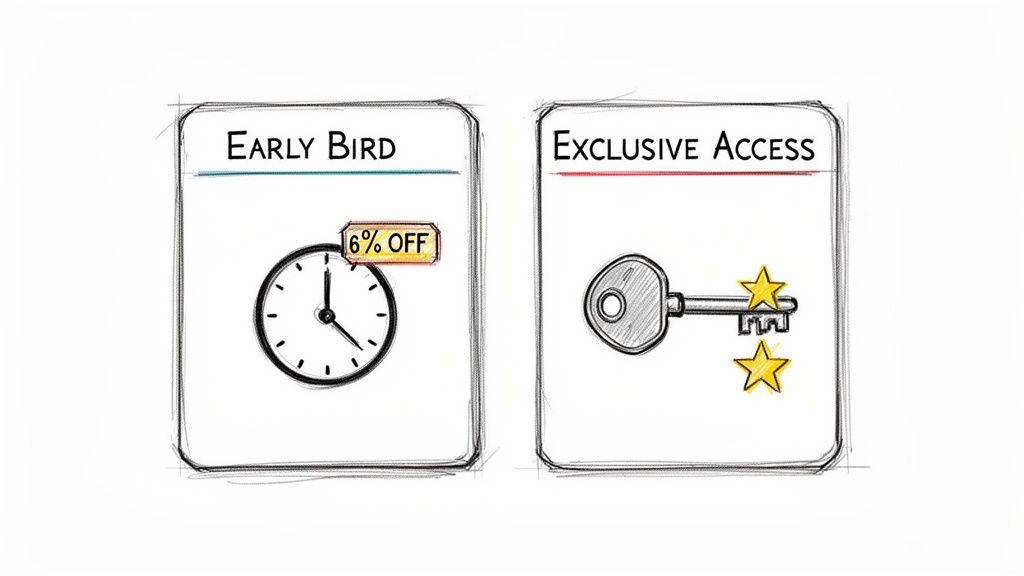
Presale Types Compared
| Presale type | Usually cheaper? | What buyers should expect |
|---|---|---|
| Early-bird / promoter presale | Usually yes | Real discount for buying before the main on-sale. Common for indie and local events. |
| Artist / fan-club presale | Usually the same price | Early access for subscribers or members. Better shot at inventory, not usually a lower face value. |
| Venue presale | Usually the same price | Access for venue newsletter members or past buyers. Helpful for seat choice, not known for discounts. |
| Credit-card / partner presale | Usually the same price or perk-based | Early access tied to a card or sponsor. Sometimes comes with extras, but not usually a ticket discount. |
Early-Bird and Promoter Presales
This is the category where buyers most often save actual money. The organizer is trying to get commitments early, prove demand, and reduce risk. That makes discounting logical.
A simple example: a creator launches 50 tickets at $24, then moves the next batch to $30. Same event, same admission, lower price for earlier action. That’s the clearest version of a cheaper presale. To get the numbers right on this kind of offer, check out our guide to setting up your early bird tickets.
Artist and Fan-Club Presales
These are often misunderstood. Artist presales are typically about access, not bargain pricing. You join a mailing list, fan club, or text alert system, get a code, and enter the queue before the public.
For big tours, that can be valuable because it improves your odds of getting seats before inventory thins out. But in most cases, the ticket itself is not cheaper just because the sale opened earlier. When I compare artist presales against general sale listings, the face values are often aligned; what changes is availability.
Venue Presales
Venue presales work similarly. The venue rewards its own audience—newsletter subscribers, members, or repeat buyers—with a head start. That may give you a better selection of sections or dates, but it usually doesn’t come with a lower base price.
Credit-Card and Partner Presales
These are tied to a bank, brand, or sponsor. Sometimes they include a separate seating allotment or a bundled perk, but that’s different from being cheaper. If the package includes lounge access, parking, or hospitality, your total may be higher than the standard ticket.
Why Concert Presales Often Aren’t Cheaper
Concert presales feel special because they happen earlier and allow access to seats before the public rush. But especially for major tours, the pricing strategy is usually built around demand management, not discounts. Promoters, venues, and ticketing partners want to control traffic, reward fan communities, and reduce the chaos of the main on-sale.
That’s why concert presales often help with seat selection more than price. Better access? Sometimes. Better deal? Not automatically.
Your Simple Presale Strategy for Any Event
Alright, for all the creators out there—the pop-up chefs, workshop hosts, and community organizers. This part is for you. Let's build a simple presale plan that works.
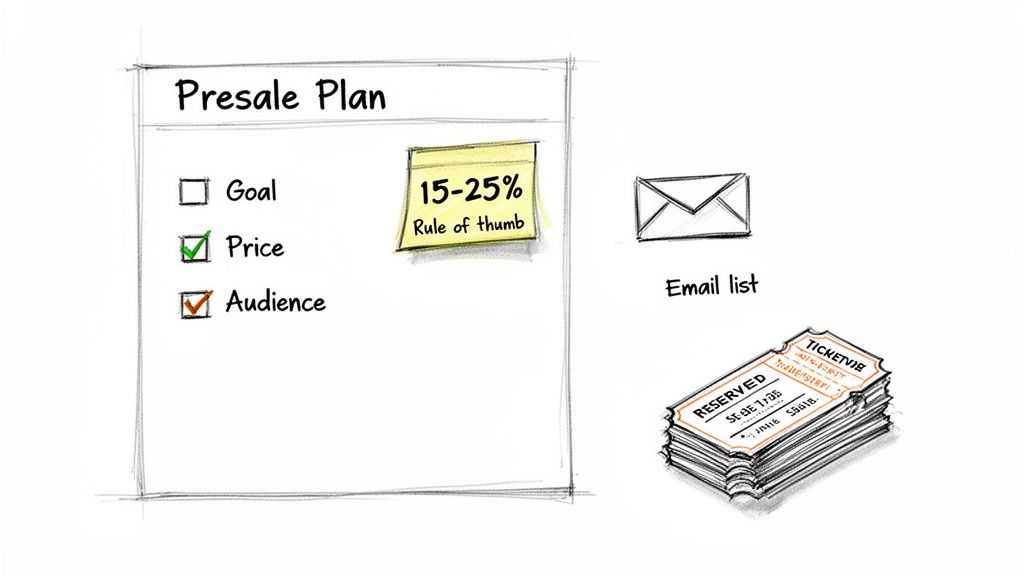
Running a presale doesn't have to be complicated. Just make a few smart decisions upfront. First, ask yourself: What’s my goal?
Are you trying to get cash to cover the venue? Or is your main goal to reward your die-hard fans? Your answer shapes every other choice. Be honest about what you need most.
Set a Price That Feels Right
Once your goal is clear, it's time for numbers. Don’t overthink it. A good rule of thumb is a 15-25% discount off the final price. This is enough to make early buyers feel smart, but not so much that you undercut your value.
For a $50 workshop, a presale price of $40 is perfect. For a $100 supper club, $85 works great. It’s a straightforward deal.
This is the classic reason presale tickets are cheaper. You’re trading a discount for commitment. That trade gives you momentum and working capital. It's a fair one.
Get the Word to the Right People
Now for the most important part. A presale isn’t a public announcement. It’s a private invitation. Your best tools are your email list and your social media followers. These people already know and trust you.
Don’t just blast the offer everywhere. Frame it as an exclusive thank-you to your most loyal supporters. This turns a simple discount into a real gesture of appreciation.
Your core audience is far more likely to jump on an early offer. Focus your energy there first. It’s a targeted approach that gets better results with less effort.
A Pop-Up Chef’s Presale in Action
Let's make this real. Imagine Maria is planning a pop-up dinner.
- Goal: Sell 50 seats at $120 each to cover ingredient costs upfront.
- Audience: She has a newsletter with 300 foodies who’ve attended before.
- Strategy: Maria offers 20 presale tickets to her subscribers for $95. That's a 20% discount.
She sends a simple, personal email about the dinner and the special price. Within two days, all 20 presale tickets are sold.
Just like that, Maria has $1,900 in the bank. She’s secured nearly half her sales. She's confirmed her event is a hit. She can buy supplies without worry. Plus, she made her biggest fans feel like VIPs.
This is the power of a simple presale. When you use a platform with flat-fee pricing, you get to keep that early revenue. No surprise percentage cuts. Just fast, secure payouts so you can create an amazing event. It works for 5 to 5,000 attendees.
How Ticket Buyers Can Spot a Good Deal
If you’re buying, the smartest move is to stop treating every presale as a bargain and start checking what kind of bargain—if any—you’re being offered.
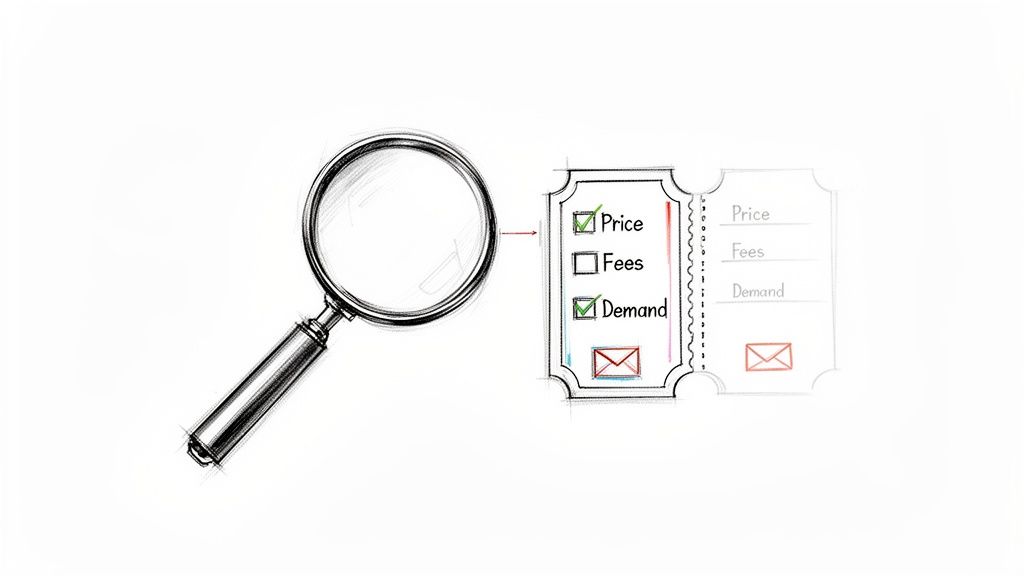
A Fast Presale Deal Checklist
Before you hit checkout, run through these five checks:
- Compare the face value to the later public price. If the same ticket tier is $45 now and will be $55 next week, that’s a real discount. If both are $45, the presale isn’t cheaper. It’s just earlier.
- Check the all-in price after fees. I’ve seen a low presale price look great until service fees pushed it close to the later general-sale total.
- Make sure you’re comparing the same inventory. Sometimes the presale only shows premium seats, VIP packages, or expensive sections. That doesn’t mean regular sale will be pricier; it may just mean the cheaper inventory isn’t available in that window.
- Read the refund and transfer rules. A discounted ticket with stricter terms can be a worse buy if your plans are uncertain.
- Ask whether the event is demand-driven or discount-driven. Small creator events often use price cuts. Major tours usually use access controls.
Learning the patterns behind events like Black Friday can teach you a lot about understanding broader promotional pricing strategies.
Main Risks of Buying During a Presale
Presales can be useful, but they come with a few traps:
- Rushed decisions: Limited timers and queue pressure push people to buy before comparing options.
- Dynamic pricing: On some major events, prices can move based on demand, so “early” doesn’t automatically mean “cheap.”
- Premium-only inventory: The presale window may expose higher-priced seats first.
- Nonrefundable add-ons: Parking, insurance, or VIP extras can get bundled in during a hurried checkout.
- Code confusion: A presale code gives access, not necessarily a discount.
The most common mistake I see is buyers assuming that because access is restricted, the price must be special too. Sometimes it is. Often it isn’t.
Do Presale Tickets Get Better Seats?
Sometimes, yes—but that’s not the same as saying they’re cheaper.
If you’re entering before the public on-sale, you may have a better shot at desirable inventory before it gets picked over. That matters most for reserved seating events. But for general admission shows or creator-led events with one ticket tier, “better seats” may not apply at all.
The Secondary Market Trap
What about waiting for last-minute deals on resale sites? Sure, you might get lucky. You also might end up with a fake ticket or paying far more than face value. It's a gamble.
Presales can be the safer move when demand is obviously high, because they give you a shot at buying from the original seller before resale prices distort the market.
This direct-from-creator approach also helps cut down on scalping. When you buy presale, you're not just getting a ticket. You're supporting a more direct and fair system.
If you're curious about how creators fight back, check out our guide on how to prevent ticket scalping.
For buyers, the practical takeaway is simple: presale is worth it when the discount is real, the fees still make sense, or the event is so hot that getting face value now beats chasing resale later.
What This Means for Event Hosts
Now, for you—the creator, the organizer—the answer is simpler. Yes. A thousand times, yes. Presales are one of the most powerful tools for killing risk and connecting with your audience.
Presales turn ticketing from a last-minute gamble into a predictable, cash-flow-positive part of your strategy.
You don't need a huge marketing budget to pull this off. A smart presale strategy is often all it takes. You get your event funded by the people who can't wait to be there.
It’s about building something real, one ticket at a time. Your passion is the main event. Ticketing should just be the easy part.
Still Have Questions About Presales?
A few quick answers to the buyer questions that come up most often.
What are the risks of buying during a presale?
The biggest risks are rushing, overpaying for premium inventory, and assuming the code itself means a deal. On some events, the presale window opens with expensive sections, VIP bundles, or add-ons that make the total climb fast. If you don’t check the final price and terms, a “special access” offer can turn into an expensive impulse buy.
What is the difference between presale and normal tickets?
Usually, the ticket itself is the same; the difference is when you’re allowed to buy and which inventory is available. In a true early-bird presale, the earlier window also includes a lower price. In an artist, venue, or partner presale, the main benefit is early access before the general public, often at the same face value.
Is presale cheaper than normal tickets?
Sometimes, especially for independent events using early-bird pricing. A local event may sell the first batch at $35 and later raise the price to $45. But for many concert presales, the base ticket price is identical to normal sale, and the only difference is access; fees or premium-only inventory can even make the checkout total feel worse.
Do presale tickets get better seats?
Sometimes, because buying earlier can mean more selection. That matters most for reserved seating events where inventory is released in waves. But better seats do not automatically mean lower prices, and some presales mainly surface high-priced seats first.
How Do I Get a Presale Code?
Getting a presale code usually comes down to being a true fan. Organizers want to reward people who are already paying attention.
Here are the most common ways to get on the list:
- Join the newsletter: This is the big one. Creators almost always send codes to email subscribers first.
- Follow on social media: Many artists drop codes for their followers.
- Be a past customer: If you've bought tickets from an organizer before, you might be on a special list.
It’s all about showing support before the general public catches on.
Can Presale Tickets Actually Sell Out?
Yes, absolutely. And they often do, fast. Organizers only release a limited batch of tickets for a presale. It’s not an infinite supply.
That limited allocation is part of why presale can be valuable. For discounted indie events, it rewards decisive buyers with a lower price. For large concerts, it can be your best chance to grab standard-price tickets before the market gets more chaotic.
Ready to launch your own presale? With Ticketsmith, you can set up a beautiful, custom-branded ticketing page in minutes. Enter your email below and we'll be in touch when we're ready.
| Presale Type | Organizer's Goal | Is It Cheaper? | Best For |
|---|---|---|---|
| Early Bird Discount | Build momentum, get upfront cash, reward fans. | Yes, almost always. | Indie creators, workshops, local gigs, new events. |
| Exclusive Access | Gauge demand, reward fan clubs, create buzz. | Rarely. Price is for access, not savings. | Major concerts, festivals, big sporting events. |