
Early bird tickets are discounted tickets sold before standard pricing starts. For buyers, that usually means paying less for the same event access. For organizers, it means getting early revenue, a clearer read on demand, and a real deadline that pushes people to act.
For anyone putting on an event, they’re one of the simplest ways to reduce uncertainty. In our experience with event creators, the best early bird offers do two jobs at once: they reward your quickest supporters and give you a useful sales signal long before launch week.
How We Evaluated Early Bird Ticket Strategies
This advice is based on the parts of early bird pricing that change outcomes: discount size, sale length, scarcity model, and fit for the event type. Common discount guidance, practical timing windows, and whether a strategy makes sense for workshops, festivals, conferences, and smaller local events are covered.
The biggest pattern is that good early bird offers are usually meaningful, but not reckless. Industry guidance commonly puts the discount in the 10% to 25% range, with warnings that going beyond 30% can make later pricing feel inflated or train buyers to hold out for deals, as explained in Xola’s early bird pricing blueprint. Timing matters too: many early bird windows run for weeks rather than days, and a practical benchmark is 3 to 4 weeks inside a 12-week sales cycle, while larger events may use 4 to 8 weeks, according to Eventist’s pricing strategy guide.
In our review, the strongest setups were easy to explain in one sentence: a clear discount, a clear deadline, and a clear cap if needed. The weakest offers were either so small nobody cared, or so generous they undermined the standard ticket that came after.
Why Early Bird Tickets Actually Work
Early bird tickets are a discounted ticket tier sold before the standard ticket price. They do not usually provide a different experience or access to a special area; in most cases, it’s the same event access at a lower price for people who commit early.
That’s the plain-English meaning: buy earlier, pay less. Organizers use that lower introductory price to reward early supporters, create urgency, and lock in demand before the main sales period begins.
The difference between an early bird ticket and a standard ticket usually comes down to price, timing, and availability. Early bird tickets are available first, cost less, and are only sold during a limited window or until a fixed number runs out. Standard tickets come later, cost more, and remain on sale after the early offer ends.
Let's be real. Pouring your heart into an event—a workshop, a pop-up dinner, a local festival—is a constant cash flow battle. You have deposits to pay long before anyone walks in.
That’s why early bird tickets work so well in practice. They aren’t just a marketing trick; they pull forward revenue and give you an early read on whether your offer is landing.
Fuel Your Event From Day One
Treat those early sales like seed money. That first bit of cash covers upfront costs. Suddenly, the venue deposit doesn't seem so scary.
This is huge for smaller creators. Getting money in early means you can focus on making the event incredible, not just worrying about breaking even. It’s the difference between planning with confidence and planning with anxiety.
Gauge Real Interest Before You Go All In
An early bird sale is the ultimate reality check. It tells you, right away, if your event idea has legs.
A flood of early sales means you're onto something. If things start slow, you have time to tweak your marketing before you've invested too much.
Ticket sales often follow a U-shaped curve. A big spike at the beginning, another right before the event. A strong early bird window can account for 30–40% of total sales. It gives you a reliable forecast. You can dig into sales pattern data over at Afton Tickets.
In our experience, early bird pricing earns its keep. A quick burst of sales in week one is far more useful than vague enthusiasm in your DMs.
Selling tickets shouldn't feel like wrestling a complicated machine. You need a simple page that looks like your brand, gets you paid fast, and doesn't skim a percentage off the top. That's it.
Build Your Hype Machine
Every early bird ticket sold creates a ripple of promotion. These people aren't just attendees; they're your first ambassadors. They bought early because they're excited.
They will:
- Blast your event on social media.
- Tell their friends about it.
- Build the kind of organic buzz no ad budget can buy.
This creates momentum. People see tickets selling and get a serious case of FOMO. It’s social proof, showing everyone else your event is the place to be.
How to Price and Structure Your Early Bird Offer
Alright, let's talk numbers. Pricing your early bird tickets feels like a dark art, but it's really just finding a sweet spot.
You need a discount tempting enough to make people act now. But not so deep that it guts your budget. Nail this, and you’ll cover those initial costs.
Finding Your Discount Sweet Spot
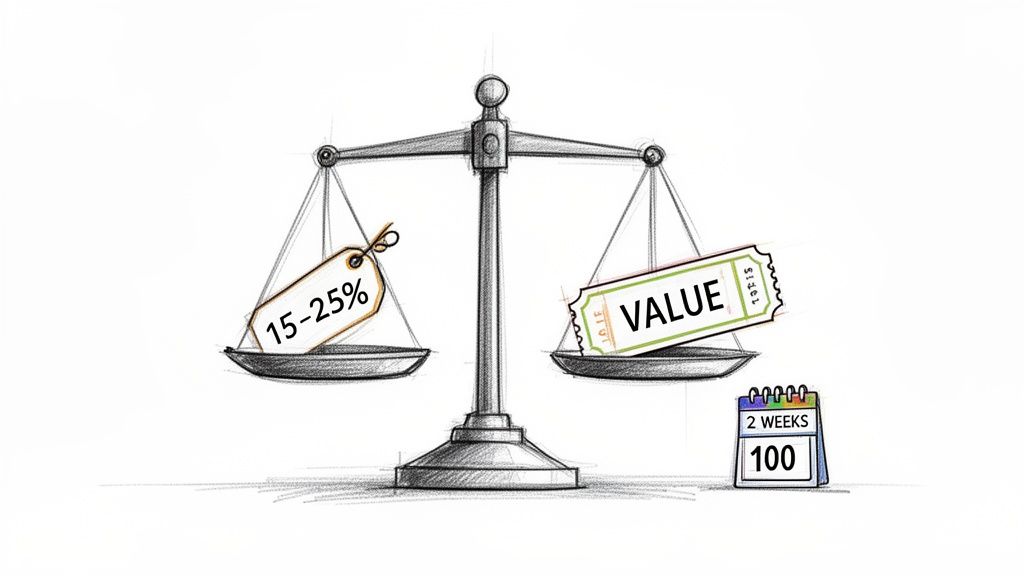
The magic number is usually between 15% and 25% off the standard price.
Anything less than 15% isn’t enough of a nudge. Go much higher than 25%, and you risk making your regular price look inflated later.
Think of it in practical terms:
- A five-hour pottery workshop: Standard ticket is $100. An early bird price of $80 (20% off) feels like a real win.
- A local food festival: General admission is $40. An early bird price of $32 (20% off) is an easy "yes."
That range lines up with broader guidance from Xola’s early bird pricing overview, which notes that smaller discounts often fail to change behavior, while steeper ones can create pricing problems later. In our review, 20% off was the easiest offer to explain and the easiest for buyers to instantly understand.
Before you set a price, calculate your break-even point. Tally up your fixed costs—venue, permits, staff—and figure out the minimum you need to bring in. Your early bird sales should get you close. Hitting that goal early is a massive confidence boost. This also helps answer the question, "are presale tickets more expensive?"
Time vs. Quantity: The Great Debate
Next, you have to limit the offer. That creates urgency. You have two main levers.
1. Time-Based Scarcity (The Clock is Ticking)
This is your classic "sale ends in two weeks" approach. It's simple and easy to understand. It works well when you need to hit planning milestones, like catering headcounts, by specific dates.
2. Quantity-Based Scarcity (Get 'Em Before They're Gone)
This is the "first 100 tickets" model. It’s a powerhouse for creating social proof. When people see only a limited number of discounted tickets exist, it triggers a fear of missing out. Seeing a "Sold Out" banner on your early bird tier is one of the best marketing assets you can have.
For many independent creators, a hybrid approach is perfect: "Get 20% off for the next two weeks or until the first 75 tickets are gone—whichever comes first!" You get the best of both worlds.
Early Bird Strategy Comparison
Choosing between a time-based or quantity-based limit isn't one-size-fits-all. Each has pros and cons.
| Strategy Type | Best For | Psychological Trigger | Potential Downside |
|---|---|---|---|
| Time-Based | Large events, community festivals. | Urgency. The deadline creates a clear call to action. | Can lead to a big sales spike right before the deadline. |
| Quantity-Based | Niche workshops, high-demand events. | Scarcity & Social Proof. A limited number feels exclusive. | Harder to predict sales velocity. Can sell out too fast or slow. |
The right structure is about knowing your audience. A niche workshop might thrive with a quantity limit. A larger festival could benefit from a time-based deadline.
The goal is to shift sales from the last minute to the beginning of your sales cycle. Research from the events ticketing market shows that moving just 10% of late sales to an early bird tier can dramatically improve your financial forecasting.
Getting Your Ticket Tiers Live in Minutes
Okay, let's get your tickets set up. I know this can feel like a technical hurdle, but it doesn't have to be.
You can go from an idea to a live ticketing page in the time it takes to brew coffee. The point is to get this done fast so you can get back to planning the actual event.
Setting Up Your First Ticket Tier
First, you’ll create the actual ticket. Give it a clear name, like "Early Bird: General Admission." Set the price and decide how many are available.
You’ll also need to define the sales window. A good ticketing platform lets you schedule the precise start and end times for your offer. This is a lifesaver. No more waking up at midnight to manually shut down a sale. You just set it and forget it.
This screenshot gives you a peek at how straightforward the setup can be. No code, no jargon. Just simple fields.
What you see there is pretty much the entire process. It’s designed for creators who are juggling a million other things. It can be set up in minutes.
Why a Simple Setup Is a Game-Changer
When setup is quick, you gain flexibility. Have an idea for a flash sale? Spin up a new ticket tier in five minutes. Want to test a VIP package? Easy.
This is also where flat-fee pricing shines. When you set your price at $80, you know exactly what you'll get for every sale. No surprise percentage cuts eating into your profit. What you earn is what you keep.
For a more detailed walkthrough, we made a full guide on how to create tickets for an event that breaks down every step.
Your ticketing page should look and feel like your brand, not ours. With custom branding options, your attendees get a seamless experience. It’s your event, your style.
The goal is to remove technical roadblocks. It shouldn't matter if you're selling five tickets for a workshop or 5,000 for a festival. The tools you use should support your vision, not get in the way.
Writing Copy That Sells Early Bird Tickets
Your words matter. A lot. A generic "Buy Now!" button won't cut it.
The copy for your early bird announcement is your first chance to connect with your biggest fans. You need to convince them to act now.
The goal is to create urgency without sounding like a desperate salesperson. It's about communicating the heart behind your event and making people feel smart for getting in early.
The Three Key Ingredients
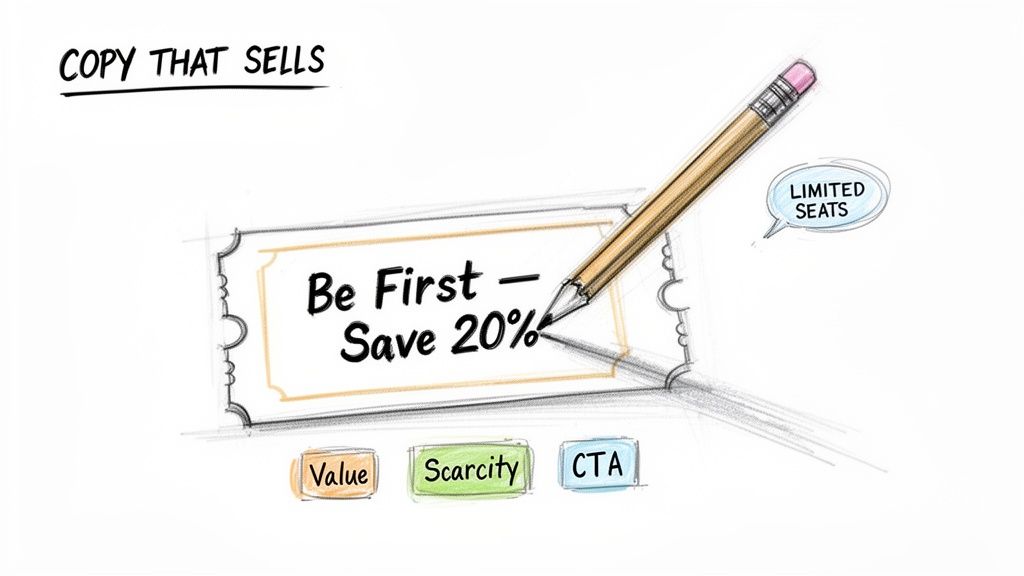
Every effective early bird announcement needs three things. Get these right, and you're golden.
- Clear Value: Don't just say it's cheaper. Frame it as a reward for being a true supporter.
- A Touch of Scarcity: Remind people the offer won't last forever. Use your time or quantity limits for a gentle nudge.
- A Direct Call to Action (CTA): Tell them exactly what to do next. "Grab your spot" is better than a vague "learn more."
This isn't about tricking people. It's about clearly communicating the opportunity.
Writing For Email
Email is your most powerful channel for selling early bird tickets, because these people have already raised their hand. Don't waste the opportunity. To get them to open it, brush up on email subject line best practices.
If you want a fuller campaign framework beyond the subject line, this step-by-step playbook via Countdown Calendar is a useful companion. In our experience, the best launch emails are the ones that state the offer in the first two lines instead of hiding it behind a long intro.
Here’s an example that gets straight to the point:
Subject Line: Be the first! Early bird tickets for [Event Name] are live.
Body: Hey everyone,
It's happening. The first batch of tickets for [Event Name] is officially available, and you're the first to know.
As a thank you, you get first dibs on early bird tickets. There are only * 75 available * at this price, and they’ll be gone after [Date].
Grab yours now before they disappear.
[Link to your ticket page]
See? Short, direct, personal. It respects their time and creates genuine urgency.
Simple Copy Templates For Your Announcement
Don't reinvent the wheel. Steal these short-and-sweet templates. Just fill in the blanks, make them your own, and watch the sales come in.
| Channel | Headline Idea | Body Copy Snippet | Call to Action |
|---|---|---|---|
| Instagram Post | It's Go Time! | The wait is over. The first 50 tickets for our [Type of Event] are now live at a special early bird price. | Snag yours before they're gone! Link in bio. |
| Email Newsletter | Your Early Access to [Event Name] | As a thank you for being a subscriber, you get first crack at our discounted early bird tickets. This price ends on [Date]. | Get your ticket now. |
| Facebook Event | First Call for [Event Name]! | We're releasing a limited number of early bird tickets for just $XX. Once they're sold out, the price goes up. | Claim your spot today. |
| Twitter / X | Ready? Early bird tickets for [Event Name] are ON SALE NOW. | We’ve got a limited batch of tickets for our biggest fans. Save 20% if you act fast. #YourEventHashtag | Get your early bird tickets here: [Link] |
The common thread is simplicity. Clear, punchy sentences win every time. Your audience is busy. Make it easy for them to understand the offer and take action.
How to Promote Your Early Bird Launch
Hitting 'publish' and hoping for the best isn't a strategy. You need a simple plan to get the word out.
This doesn't have to be complicated. A well-timed email and a few sharp social media posts can work wonders. The goal is focused effort, not just shouting into the void.
Nail Your Core Channels
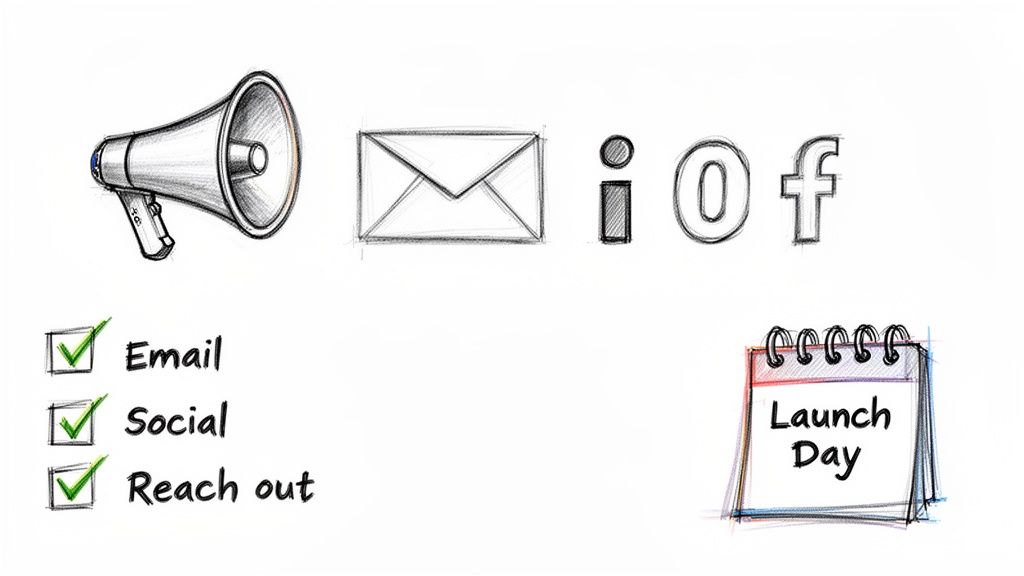
Let's start with the essentials. These are the non-negotiables for locking in your first sales.
- Your Email List: Think of this as your VIP club. Send them a dedicated announcement a few minutes before you post anywhere else.
- Social Media: Get your posts ready ahead of time. Create a clean graphic with the key details. Schedule two or three reminders over the first few days.
- Personal Outreach: Never underestimate a direct message. Pull a list of 10 people from past events who were super enthusiastic. A quick, personal note can be more powerful than a hundred generic posts.
For a deeper dive into building out a full promotional calendar, check out our guide on effective event promotion strategies.
Create a Coordinated Launch Moment
The trick is to make this all happen at once. Pick a launch time—say, Tuesday at 10:00 AM—and have everything ready to go.
When your audience sees the announcement everywhere around the same time, it creates momentum. It signals this isn't just another event. It's the event.
Your launch day isn't about hoping people stumble upon your ticket page. It's about leading them directly to it.
Extend Your Reach
Once your core channels are humming, you can start reaching new people. You don't need a massive budget.
Consider reaching out to a few friendly local bloggers. To really amplify your message, you might explore specialized influencer marketing strategies for events.
A single share from the right account can introduce your event to a whole new audience. Just make it easy for them by providing all the info and images they need.
What to Do After the Early Bird Sale Ends
Your early bird sale just ended. That first wave of cash is in your account, which is a fast, secure payout straight to you. You can breathe a little easier.
But don't put your feet up just yet. This transition is a pivotal moment.
Transition Smoothly and Analyze Your Data
First, the switch. This needs to be a clean break. The moment the early bird period is over, your standard pricing should kick in automatically.
Nothing kills future urgency like a deal that's still active after it "expired." It trains your audience to ignore deadlines.
The day before your sale ends is perfect for a "last chance" message. A simple email saying, "Hey, prices go up tomorrow!" is effective. It pushes procrastinators over the finish line.
Once the sale is over, look at the numbers. How many tickets did you sell? This early data is gold. It’s your most reliable indicator of overall demand.
If you sold 75 tickets when you were hoping for 50, you've got a hit. If sales were slower, that's okay. Now you have time to adjust your marketing.
Your early bird sales numbers are your crystal ball for forecasting total attendance. This isn't a vanity metric; it helps you make smart decisions about where to put your marketing budget.
This initial sales spike isn’t the end of your launch. It’s the foundation. Now you can move forward with confidence, knowing you have a validated event and the funds to make it amazing.
Frequently Asked Questions
What do early bird tickets mean?
Early bird tickets are discounted tickets sold before the standard ticket price begins. The buyer usually gets the same event access as everyone else, just at a lower price for committing earlier.
How do early bird tickets work?
They work by offering a lower price for a limited time or for a limited number of tickets. Once that window closes or that batch sells out, the price moves to the standard tier. In our experience, the clearest offers are the easiest to convert: one discount, one deadline, no fine print.
How long do early bird tickets usually last?
Most early bird offers last for weeks, not just a weekend flash sale. A common benchmark is 3 to 4 weeks within a 12-week sales cycle, while conferences and larger events often use 4 to 8 weeks, according to Eventist’s timing guidance. Smaller local events may keep it tighter if they need a faster demand check.
Are early bird tickets cheaper than standard tickets?
Yes, that’s the whole point. They’re usually priced below the standard ticket to reward early commitment, with common discounts falling around 10% to 25%, based on Xola’s pricing guidance. If the price isn’t meaningfully lower, most buyers won’t feel any reason to act early.
What’s the difference between an early bird ticket and a standard ticket?
The main differences are when it’s sold, how much it costs, and how long it’s available. Early bird tickets come first, cost less, and are limited by time or quantity; standard tickets come later at the regular price and usually stay available longer. Access is often identical unless the organizer explicitly adds perks.
Is early bird pricing worth it?
Usually, yes—if the discount is sensible and the deadline is real. It’s worth it for buyers who already plan to attend, because they save money on the same event. It’s worth it for organizers when they need early cash flow, a demand signal, and a stronger launch than “tickets are live.”