
To be honest planning an event can feel like trying to build a plane while it's taxiing down the runway. A million tiny details. All the pressure. You’re trying to create something great for your guests, whether it's a pop-up dinner for twenty or a local workshop for two hundred.
This is a no-fluff guide with actual event management tips for beginners. We're skipping the vague advice and focusing on what works. We’ll cover budgets, venues, timelines, and even ticketing. Let’s get started.
1. Start with a Comprehensive Event Planning Checklist
Before you book a venue or design a flyer, you need a roadmap. An event planning checklist is that roadmap. It turns a giant, scary idea into small, manageable tasks.
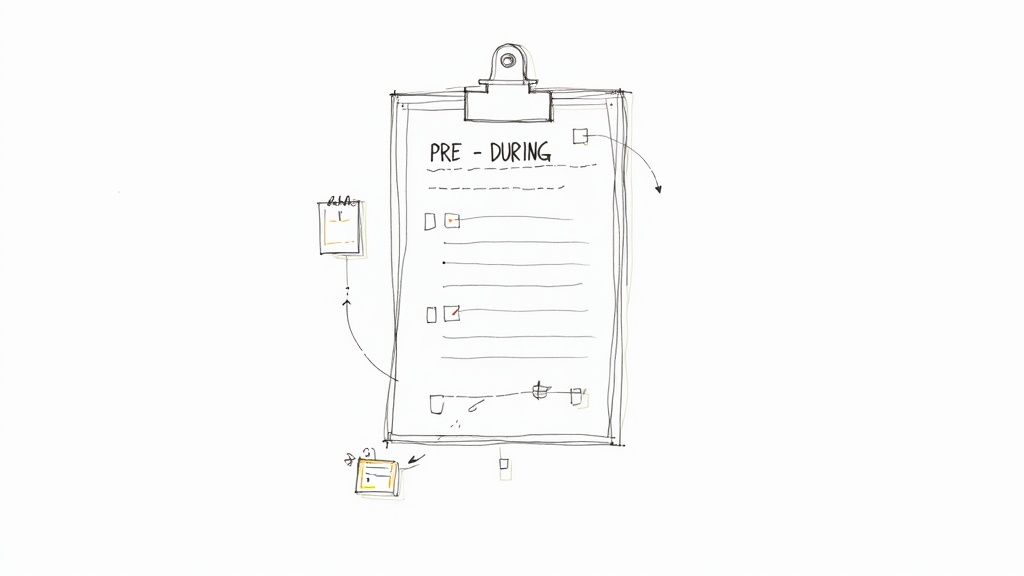
This is one of the most crucial event management tips for beginners. It stops things from falling through the cracks. For a pop-up dinner, this means tracking ingredient orders. For a workshop, it means coordinating with speakers and prepping materials.
How to Make Your Checklist Work for You
A good checklist is a living document, not a dusty file. You can start with an event planning checklist template as your base.
Here are a few ways to make it better:
Categorize and Color-Code: Group tasks like Marketing, Venue, and Vendors. Assign a color to each. It gives you a quick visual of where to focus.
Add a "Buffer" Column: For every deadline, add an earlier "internal" deadline. This builds in a buffer for the delays that always happen.
Make It Collaborative: Use Google Sheets or Asana. Share it with your team. Everyone stays on the same page.
For more inspiration, check out this detailed event planner checklist sample.
2. Define Clear Budget Parameters and Track Expenses Rigorously
Money is everything. A budget isn't just about limiting spending. It's a plan that dictates what’s possible. Getting this right from the start protects you from a massive financial headache later.
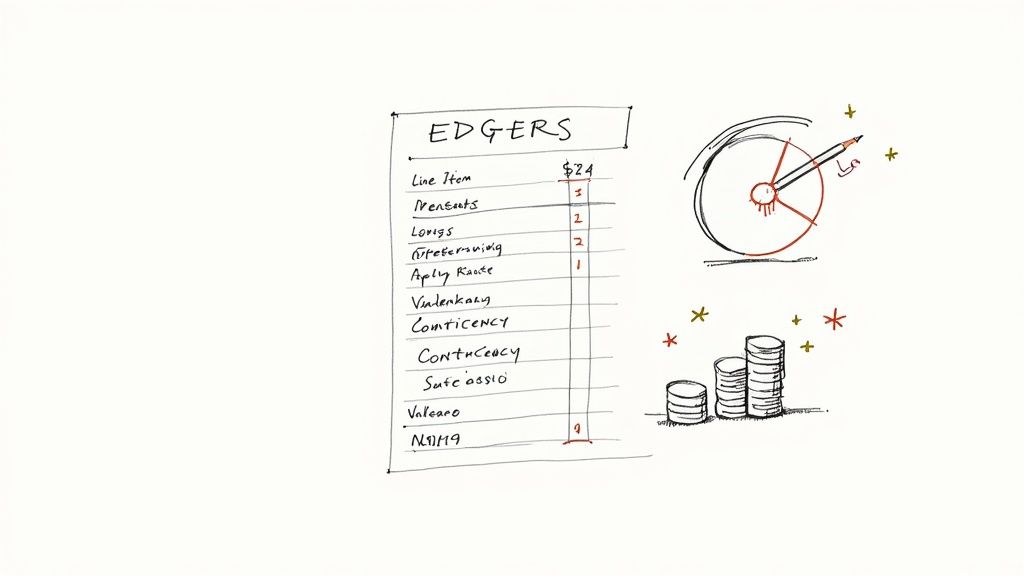
This is one of the most critical event management tips for beginners. It forces you to be realistic. Before you book that cool, expensive venue, your budget tells you what you can actually afford. For a pop-up dinner, this means knowing your per-plate cost down to the cent.
How to Make Your Budget Work for You
Your budget should guide every decision. It’s your financial command center. And you don’t need to guess on ticket pricing. Charge a fair price and sell it on a platform that doesn't skim a percentage off the top. Look for flat-fee pricing.
Here are a few ways to master your event finances:
Itemize Everything and Get Multiple Quotes: Don't just list "Venue." Break it down: rental fee, insurance, cleaning. Get at least three quotes for every major cost.
Build a Contingency Fund: Things go wrong. A speaker cancels. The sound system fails. A contingency fund of 10-15% of your total budget is your safety net.
Track in Real-Time: Use a simple spreadsheet. Log every single expense as it happens. Waiting until the end of the month leads to nasty surprises.
Creating a solid financial plan is the bedrock of a successful event. For a practical guide, check out this breakdown on budgeting for an event.
3. Build Strong Vendor Relationships and Negotiate Effectively
Your event is only as strong as its weakest link. And often, that link is a vendor. Success isn't about finding the cheapest caterer. It's about building genuine partnerships.
Think of vendors as an extension of your team. When your florist knows your style, the whole process is smoother. For a pop-up, it’s a supplier who rushes over a last-minute ingredient. You’re building something with heart, so work with people who get that.
How to Make Your Vendor Relationships Work for You
Building rapport is simple. Be a client that vendors want to work with again.
Here are a few ways to foster great partnerships:
Document Everything: Get written quotes and contracts. Verbal agreements are a recipe for disaster. An email trail is your best friend if a dispute arises.
Negotiate Beyond Price: Can't get a lower price on rentals? Ask for a longer rental period or free delivery. These value-adds can save you money.
Communicate Consistently: Don't go dark after signing the contract. Send check-in emails at key intervals. A final confirmation a few days prior ensures everyone is aligned. When ordering merch, you need items people actually want. For help, check out these 15 tips for choosing the best promotional products.
4. Create a Detailed Event Run-of-Show and Timeline
If your checklist is the roadmap, the run-of-show is your minute-by-minute GPS on event day. It’s a detailed schedule that outlines every single action, from vendor arrival to the final sweep.
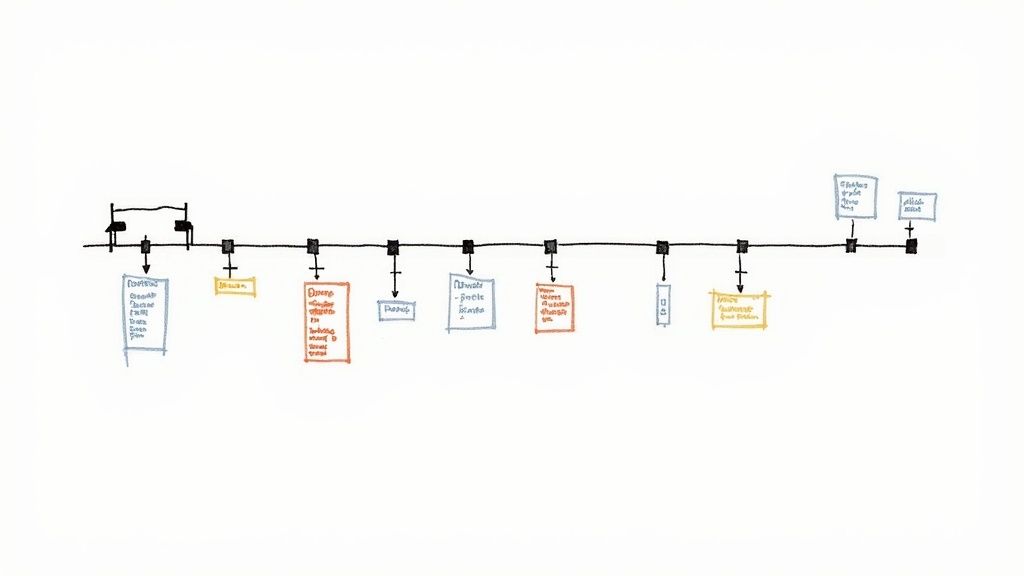
This is one of the most important event management tips for beginners. It kills confusion. When the keynote speaker is late, your run-of-show tells your team how to pivot. For a music showcase, it details set times and sound checks. It turns chaos into a well-oiled machine.
How to Make Your Run-of-Show Work for You
A great run-of-show is specific, clear, and shared with everyone.
Here are a few ways to make it indispensable:
Assign Names, Not Roles: Instead of "AV Tech," write "Sarah Chen." This creates direct accountability. No one can say, "I thought someone else was doing that."
Build in Buffer Time: Life is messy. Add a 10-minute buffer between sessions. This cushion absorbs small delays without derailing your entire schedule.
Create Different Versions: Your lighting tech needs technical cues. Your volunteers need a simpler one with their specific duties. Tailor the document to the audience.
By scripting out the day, you empower your team to act decisively.
5. Prioritize Clear and Consistent Communication with All Stakeholders
An event doesn't run itself. It’s powered by people. And people need to be on the same page. Clear communication connects your team, vendors, and attendees.
This is one of the most essential event management tips for beginners. It builds trust. Consistent updates show your client you’re on top of things. A reliable email schedule gets attendees excited and informed.
How to Make Your Communication Work for You
Great communication isn't about sending more emails. It’s about sending the right information to the right people at the right time. Your goal is clarity, not noise.
Here are a few ways to make it happen:
Establish Primary Channels: Don't let details get lost between texts, DMs, and emails. Use a Slack channel for your team. Use a specific email thread for each vendor. Use your ticketing platform’s email tool for attendees.
Create a Cadence: People like predictability. Send weekly status updates to your main client every Friday. Schedule attendee emails to go out 10 days before, three days before, and the morning of the event.
Document Everything: After a call, send a quick follow-up email summarizing what was decided. This creates a paper trail that saves you from "he said, she said" arguments later.
Simple communication rules create a smooth, transparent process.
6. Scout Venues Thoroughly and Understand Logistics
Your venue is more than a backdrop. It’s the physical foundation of your event. Choosing the right one goes way beyond looks. A great-looking space with terrible parking or spotty Wi-Fi can sink a perfect workshop.
This means digging into logistics that photos can’t show you. A wedding planner might visit a venue at the same time of day as the ceremony to see the actual lighting. A conference organizer should check if the breakout rooms are really big enough. These details matter.
How to Make Your Venue Scout Effective
Don't just walk through the front door. Treat your site visit like a dress rehearsal.
Here are a few things to check off your list:
Visit Twice: Go once during business hours to talk to staff. Go a second time under conditions similar to your event. See what a rainy Tuesday evening feels like there.
Test Everything: Don't take their word for it. Check the Wi-Fi signal in the corners. Test the acoustics. Flip the light switches.
Read the Fine Print: Get a copy of the contract. What are the noise restrictions? What’s the cancellation policy? Are there hidden fees for cleaning?
Ask About Access: Find loading zones, emergency exits, and confirm the parking is realistic for your number of attendees.
7. Implement a Registration and Check-In System
The first impression of your event starts when someone arrives. A clunky check-in process creates a line of frustrated guests. A smooth system sets a professional, welcoming tone.
This isn't just about ticking names off a list. For a workshop, it ensures you have the right number of materials. For a pop-up dinner, it helps manage dietary restrictions. This is the simple stuff that makes everything run smoothly, whether you have five attendees or 5,000.
How to Make Your Check-In Work for You
A great check-in system should be simple for you and seamless for your guests.
Here are a few ways to get it right:
Go Digital First: Use an online system for pre-registration. This cuts down on-site wait times. Setting up a simple, branded page that looks like yours is a game-changer. For more details, explore the ins and outs of online ticketing for events.
Staff for Success: Have at least one person at check-in for every 100 attendees. If you expect a big rush at the start, add another person.
Have a Plan B: Technology is great until it isn’t. Always have a backup. A printed list of attendees and a few pens can save you if the Wi-Fi dies.
Prepare Name Badges: A simple name badge helps people connect. It can include their organization or a fun ice-breaker question.
8. Plan for Problem-Solving and Maintain Flexibility
No event goes exactly as planned. That’s not failure. It’s just reality. The difference between a minor hiccup and a total disaster is your ability to handle problems calmly.
This mindset is one of the most valuable event management tips for beginners. It transforms panic into prepared action. For an outdoor market, it means a backup plan for rain. For a conference, it's knowing who to call if the speaker's flight is canceled.
How to Make Your Contingency Plan Work for You
A good backup plan isn't a 100-page document. It's a clear, actionable guide for your most likely problems.
Here are a few ways to build in flexibility:
Identify Your Top Five Risks: You can’t plan for everything. Brainstorm the five most probable issues. A tech workshop might worry about Wi-Fi failure. A food festival might worry about a power outage.
Create "If-Then" Scenarios: For each risk, create a simple plan. "If it rains, then we will move all vendors inside to the community hall." This removes guesswork under pressure.
Build a Financial Buffer: Things break. Earmark 10-15% of your total budget for unexpected costs. This prevents a small surprise from becoming a major crisis.
Anticipating problems isn't pessimistic. It's professional.
8-Point Event Management Tips Comparison
| Item | Implementation complexity | Resource requirements | Expected outcomes | Ideal use cases | Key advantages |
|---|---|---|---|---|---|
| Start with a Comprehensive Event Planning Checklist | Low–Medium — straightforward to create but needs ongoing updates | Time to draft and maintain; basic tools (sheets, project apps); team input | Complete task coverage; fewer omissions; clear ownership | Small–medium or recurring events; early-stage planning | Ensures completeness; easy delegation; reusable templates |
| Define Clear Budget Parameters and Track Expenses Rigorously | Medium–High — detailed itemization and continuous tracking | Financial tools (Excel/QuickBooks/event software); vendor quotes; finance time | Controlled spending; accurate ROI; fewer financial surprises | Budget-sensitive, sponsored, or large events | Prevents overruns; data-driven decisions; stakeholder confidence |
| Build Strong Vendor Relationships and Negotiate Effectively | Medium — ongoing relationship management and negotiation skills | Time for meetings; contract review; vendor management processes | Better pricing/terms; reliable service; priority support | Frequent events, destination events, vendor-dependent productions | Greater flexibility; higher service quality; referrals |
| Create a Detailed Event Run-of-Show and Timeline | High — minute-by-minute planning and technical coordination | Significant planning time; coordination with staff/vendors; scheduling tools | Smooth execution; clear roles; efficient transitions | Multi-stage events, performances, speaker-driven conferences | Eliminates day-of confusion; precise timing; rehearsal-ready |
| Prioritize Clear and Consistent Communication with All Stakeholders | Medium — requires discipline and defined protocols | Communication platforms (Slack, email); templates; designated POCs | Aligned stakeholders; faster issue resolution; fewer errors | Large teams, multi-vendor events, client-facing projects | Reduces miscommunication; professional impression; faster decisions |
| Scout Venues Thoroughly and Understand Logistics | Medium–High — multiple site visits and technical assessments | Time for visits; technical tests (AV, power, Wi‑Fi); travel and checklists | Accurate logistics plan; realistic vendor quotes; fewer surprises | Outdoor events, unfamiliar venues, high-capacity gatherings | Prevents logistical issues; ensures compliance; informed planning |
| Implement a Registration and Check-In System | Medium — platform setup and on-site staffing required | Registration software (Eventbrite, Splash); check-in staff; backup systems | Faster entry; attendee data capture; sponsor metrics | Conferences, ticketed events, large public gatherings | Improves attendee experience; provides data; reduces bottlenecks |
| Plan for Problem-Solving and Maintain Flexibility | Medium — contingency planning and decision protocols | Backup vendors; contingency budget; trained staff; crisis kit | Faster recovery from issues; preserved reputation; calmer team | Outdoor/high-risk events; events with many moving parts | Minimizes disruption; enables rapid decisions; protects reputation |
Your Turn to Make Something Happen
You just absorbed a ton of information. Checklists, budgets, vendors, timelines. The works.
But let’s be real. Reading about event management is like reading about how to ride a bike. Helpful, yes. But the real learning happens when you get on and start pedaling. You’re going to wobble. That’s part of the process.
The most crucial of all the event management tips for beginners is this: just start.
The Real Takeaway Isn't a Tip, It's an Action
Your first event doesn’t need to be perfect. It just needs to happen. The goal is to get a win on the board. Host that ten-person workshop. Organize that pop-up dinner. Get your community together.
Each event is a live-fire exercise. You'll learn more from one chaotic but successful small event than from a hundred articles. You’ll figure out your own systems. You’ll find out which vendors are actually reliable. This is the experience no guide can teach you.
So, your next step isn’t to find another article. It's to pick one idea from this list and apply it.
Action Step 1: Open a new document and draft a simple checklist for your event idea. Just the big stuff.
Action Step 2: Sketch out a bare-bones budget. What are your three biggest expenses?
Action Step 3: Email one potential vendor or venue. Just ask for their rates. That's it.
These small actions build momentum. They turn abstract ideas into real progress. You are now moving from planner to doer. The feeling of seeing people connect because of something you built from scratch is incredible. You’re not just managing logistics; you’re creating experiences.