
You poured your soul into a pop-up dinner, a weekend workshop, or a local market. You planned every detail. Now you just need people. A lot of them.
We’re going to walk through ten specific, field-tested event promotion strategies that get people to show up. You’ll get real examples from small-scale organizers who’ve been exactly where you are.
This guide is for the pop-up chef trying to sell out 40 seats, the instructor launching a ceramics course, and the community organizer who needs to fill a park. Forget the marketing jargon. Let's get those seats filled.
1. Social Media & Local Influencers
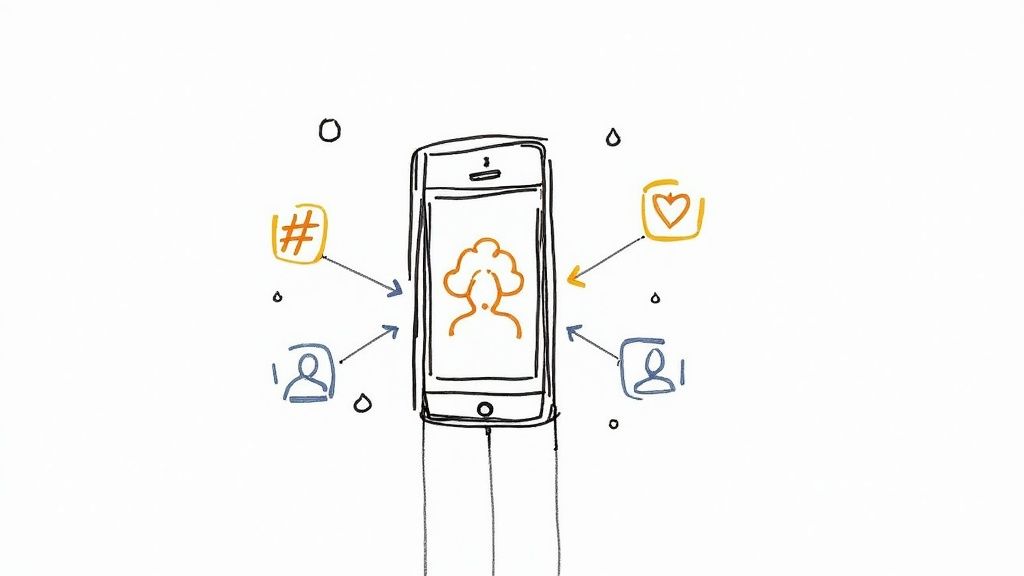
This one feels obvious, but most people post a flyer and hope for the best. A solid social plan is less about shouting and more about starting conversations. This means creating content people want to share and teaming up with local folks who have a real connection with their followers.
Think of it as digital word-of-mouth. It builds buzz that a simple ad can't buy.
Why It Works for Small Events
Social media is a great equalizer because you don't need a massive budget. Partnering with a "micro-influencer" (someone with 1,000 to 10,000 followers) can be more effective than a generic Facebook ad. Their audience trusts them.
It's one of the most direct event promotion strategies for building a community before the doors even open.
Quick Implementation Checklist:
Find Your People: Search local hashtags on Instagram for food bloggers or artists whose audience matches yours. Offer two free tickets for a few posts. It’s an affordable and honest start.
Create a Unique Hashtag: Make something short and specific, like
#OaklandPotterySlam24. Put it on everything. This organizes all user-generated content in one place.Post Behind-the-Scenes Stuff: People love seeing the process. A Reel of you sourcing ingredients at the market. A quick video of you setting up the space. It builds a human connection.
Engage, Don't Just Broadcast: Reply to comments. Thank people who share your posts in their DMs. It shows you’re a real person and builds loyalty.
2. Email Marketing That People Actually Read
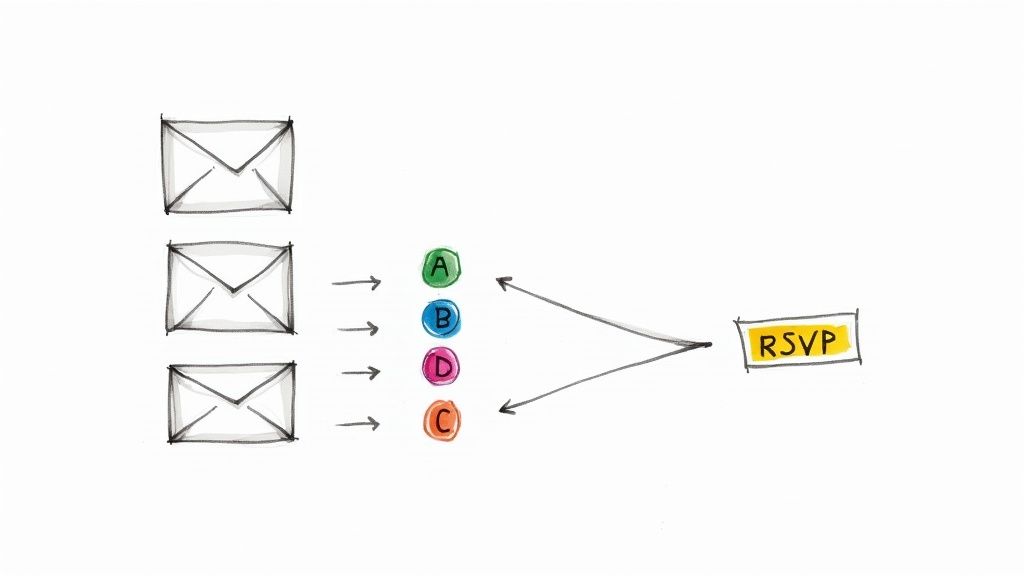
Your email list is one of the only channels you truly own. No algorithm can hide your posts. Just remember that this is about sending the right message to the right people, not just blasting everyone with the same invite.
Everyone loves to receive a personal letter, over a flyer stuck to your door. It respects your audience and gets better results.
Why It Works for Small Events
Your past attendees are your most likely future customers. Segmentation lets you treat them like VIPs. Send a special early-bird offer to people who came to your last two events. Or a "we miss you" discount to those who haven't attended in a while.
This is one of the most effective event promotion strategies for driving repeat attendance because people feel seen.
Quick Implementation Checklist:
Segment Your List Now: Don't wait. Start with simple groups like "First-Time Attendees" and "Repeat Customers." Export attendee lists from past events. Send a slightly different email to each, acknowledging their history with you.
Use a Simple 3-Email Sequence: You don't need a complex funnel. Start with an announcement. Follow up with a "one week left" reminder that shares a new detail. End with a "last chance" 24-hour notice. This creates urgency without being annoying.
Write Subject Lines for Humans: Avoid spammy, all-caps yelling. Try "Our next pottery workshop is here." Or "Seats are filling up for the May supper club." Keep it under 50 characters.
Personalize Beyond the First Name: Use merge tags to include the name of the last event they attended. A line like, "If you enjoyed our Sourdough Basics class, you'll love this one," is incredibly powerful. It shows you're paying attention.
3. Content Marketing & Telling a Good Story
This is about creating genuinely useful or interesting stuff that tells the story behind your event. Think blog posts or short videos that give people a reason to care long before they buy a ticket.
You're building a narrative, not just selling. This makes your event feel like an experience people want to be part of.
Why It Works for Small Events
You’re a local chef with a passion, or a maker who wants to share a skill. Content marketing lets you showcase that. A blog post about why you chose a particular farm for your pop-up dinner is more compelling than a simple menu. It builds a personal connection.
This is one of the best event promotion strategies for attracting an audience that is genuinely invested in your mission.
Quick Implementation Checklist:
Tell the "Why" Story: Write a short blog post (500 words is fine) about why you started this workshop or what inspired the market. Share it in your newsletter. Link to it from your social bio. It gives people the human story.
Create Teaser Content: Have speakers? Record a 60-second video interview with each. Ask them one compelling question. Post these clips in the weeks before the event.
Repurpose Attendee Testimonials: Ask past attendees for a quote or a short video. Turn the quote into a simple graphic on Canva and share it. Social proof is incredibly powerful. It shows new people your event is worth their time and money.
Answer Questions Proactively: What are the top five questions people ask? "What should I bring?" "Is there parking?" Write a simple blog post or FAQ page answering them. It saves you time and shows you're an organized host.
4. Paid Ads That Don't Waste Your Money
Sometimes you need to guarantee your event gets in front of the right people. Paid ads let you buy that visibility. It's about paying to show up in very specific places for very specific people.
Think of it as renting a billboard that only appears to people who are already interested in what you’re offering.
Why It Works for Small Events
Paid ads level the playing field. For a small budget, you can get specific. Hosting a vegan baking workshop in Brooklyn? Facebook ads let you target users in a five-mile radius who are interested in "veganism" and "baking." This precision cuts through the noise.
This is one of the fastest event promotion strategies for a final ticket sales push.
Quick Implementation Checklist:
Set Up Your Pixel: Before you spend a dollar, install the Facebook Pixel or Google Ads tag on your ticketing page. This code tracks who visits and who buys. It's essential for measuring your return.
Target Your Past Attendees: Your best customers are your past customers. Upload your list of previous attendees to Facebook to create a "Custom Audience." Run ads directly to them or create a "Lookalike Audience" to find new people with similar interests.
Start with Retargeting: The most cost-effective ad targets someone who already visited your event page. Set up a simple campaign on Facebook or Google that shows an ad only to people who visited your site in the last 30 days. It’s a warm audience.
Run Geo-Targeted Search Ads: Bid on keywords like "pottery class near me." A Google Search Ad puts you at the top when someone is actively looking for an event like yours.
5. Partnerships That Actually Make Sense
This isn't about slapping a corporate logo on a flyer. It’s about teaming up with other local businesses your attendees already trust. Good partnerships give you access to a whole new audience and can even help pay for the event.
When a cool local brewery sponsors your food pop-up, their regulars are more likely to show up. It’s a powerful endorsement.
Why It Works for Small Events
You don’t need a giant sponsor. A partnership with the yoga studio down the street can be just as effective. These hyper-local collaborations feel authentic and let you both cross-promote to the exact same type of customer.
This is one of the most cost-effective event promotion strategies because it relies on shared audiences, not your ad budget.
Quick Implementation Checklist:
Make a “Dream Partner” List: Think of five local businesses whose customers would love your event. A floral workshop host could partner with a coffee shop. A pop-up chef could team up with a craft cidery.
Create Simple Sponsorship Tiers: Don't overcomplicate it. For $150, a local business gets their logo on your ticketing page, three social media shout-outs, and a table at the event. Make the value crystal clear.
Provide a Promo Kit: Make it easy for partners to promote you. Send them an email with pre-written social media copy, a few great photos, and a direct link to the ticket page. The less work they have to do, the better.
Track Your Referrals: Give each partner a unique discount code, like
BREWERY10. This lets you see exactly how many ticket sales they drove, proving the partnership's value.
6. PR & Getting Local Media to Care
Getting a local publication to write about your event is a gold-star recommendation. It's "earned media," meaning you didn't pay for it, and it carries more weight than an ad. This is about creating a story so interesting that journalists want to cover it.
Craft a newsworthy angle, not just an announcement. This approach builds massive credibility.
Why It Works for Small Events
You don't need a fancy PR agency. A well-written email to the right local blogger can land you a feature that fills every seat. Local news outlets are often hungry for community stories, especially if your event has a unique hook.
This is one of the most effective event promotion strategies for building legitimacy. For more, check out our guide on how to publicise an event on ticketsmith.co.
Quick Implementation Checklist:
Find Your Angle: "Local Chef Hosts Pop-Up" isn't a story. "Local Chef Revives Lost Family Recipes in One-Night Pop-Up" is a story. What makes your event different? Lead with that.
Build a Simple Media Kit: Create a Google Drive folder with three-to-five high-res photos, a one-page doc with the event's who, what, where, when, and why, and short bios for key people. Link to this in your email.
Target the Right People: Find the specific journalist who covers food or art in your town. Send them a personal, concise email explaining why their readers would care. Mention a recent article of theirs you liked.
Time It Right: Send your pitch about three weeks before your event. This gives reporters enough time. A follow-up email a week later is fine. Don't be a pest.
7. Community Building & Grassroots Marketing
This is about turning attendees into advocates before your event starts. Create a space—like a Facebook Group or a local Meetup—where your people can connect. It’s less about promotion and more about creating a movement.
Build a fan club, not just an audience. When people feel like they belong, they do the marketing for you.
Why It Works for Small Events
A loyal community is your biggest asset. For a pop-up dinner, a Facebook Group lets guests share recipes and get excited. This creates a powerful network effect that advertising can't replicate.
This is one of the most sustainable event promotion strategies because the energy sticks around for the next one. For a deeper look, check out this guide on how to organize a community event.
Quick Implementation Checklist:
Create the Space Early: Set up a Facebook Group or Discord server at least two months out. Invite a few "seed members"—your most loyal past attendees—to get conversations started.
Give Them Exclusive Content: Share behind-the-scenes photos, ask for input on the event playlist, or offer a small discount only for group members. This makes them feel like insiders.
Facilitate, Don't Dominate: Your job is to start conversations. Ask open-ended questions like, "What are you most excited to learn?" or "Who was your favorite vendor last year?"
Create Referral Incentives: Empower your community to spread the word. Offer a simple incentive, like "Bring a friend and you both get a free drink."
8. SEO for Events (Yes, Really)
SEO isn't just for e-commerce sites. It's the long game. Ads give you a quick spike, but good SEO brings a steady stream of people who are actively searching for what you offer. It’s about making your event page easy for Google to find.
Think of it as a permanent, digital billboard where your ideal attendees are already looking.
Why It Works for Small Events
You're competing for local attention. When someone types "pottery classes in Oakland," you want to be the first thing they see. This isn’t about outranking massive corporations. It’s about being the most relevant answer for a specific, local query.
It’s one of the few event promotion strategies that builds on itself. The work you do today can bring in attendees for months without more ad spend.
Quick Implementation Checklist:
Target Hyper-Local Keywords: Don't just target "cooking class." Target "sourdough baking workshop in Silver Lake." Use these terms in your event title and description.
Create a Google Business Profile: This is non-negotiable for events tied to a physical location. It’s free and puts you on Google Maps. Post updates and photos to keep it active.
Optimize Your Event Page Details: Your event page is your most important SEO asset. A platform like Ticketsmith creates clean, fast-loading event pages that Google loves. Just focus on writing a clear, compelling description.
Get Local Backlinks: A backlink is a link from another website to yours. Ask the coffee shop where you put up a flyer to add your event to their community calendar online. Ask partners to link to your ticket page.
9. Experiential Marketing (Give a Free Taste)
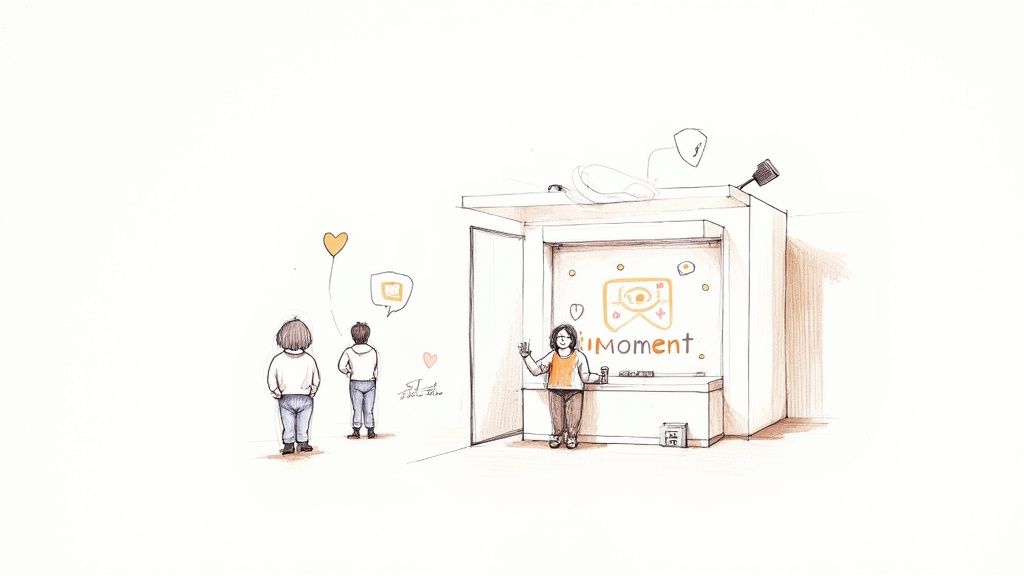
Sometimes, the best way to promote an event is with a smaller one. Give people a free, bite-sized taste of what your main event offers. It’s creating a memorable, interactive moment that makes people need to experience the full thing.
Think pop-up food tastings or a mini-workshop at a local market. Create an experience so compelling that attendees become your marketing team.
Why It Works for Small Events
An experience cuts through the digital noise. For a pop-up dinner, a free sample is more convincing than a Facebook ad. For a workshop, a five-minute demo shows your expertise better than an email can.
This is one of the most powerful event promotion strategies because it proves the value of your event before anyone spends a dollar.
Quick Implementation Checklist:
Create an "Instagrammable" Moment: Design your pop-up or booth with a photo op in mind. A unique backdrop or beautiful food presentation encourages social sharing.
Partner with a High-Traffic Location: Set up your tasting station at a busy farmers' market or your workshop demo inside a popular local bookstore. This puts you directly in front of your ideal audience.
Capture Leads On-Site: Have a simple way to collect email addresses. Use a tablet with a signup form offering an early-bird discount for your main event. A QR code linking to your event page works perfectly.
Train Your Ambassadors: Make sure everyone can explain the main event in one or two clear sentences. Consistent, enthusiastic messaging is key.
10. Referral Programs That Actually Work
This is the ultimate "let your attendees do the marketing" move. Instead of just hoping for word-of-mouth, you actively reward people for bringing their friends. A referral program turns your early ticket buyers into a motivated sales force.
It’s about making sharing easy and valuable. A simple link or unique code can empower your biggest fans to fill seats.
Why It Works for Small Events
A recommendation from a friend carries far more weight than any ad. For a pop-up dinner or a workshop, this personal endorsement is gold. You’re not just selling a ticket; you’re building a group of people who want to be there together.
This is one of the most effective event promotion strategies because it taps into existing social circles and drives ticket sales with minimal ad spend.
Quick Implementation Checklist:
Make the Incentive Worth It: Don't offer a measly 5% discount. Offer something compelling, like "Bring a friend, your ticket is 50% off." The reward needs to be strong enough to make someone act.
Create Unique, Trackable Codes: Give your first ten ticket buyers a unique discount code to share (e.g.,
JESSICA15). This makes them feel special and lets you track who is driving referrals.Reward Both Sides: The best programs benefit both people. For example, the referrer gets a $10 credit, and their friend gets 15% off their first ticket. It makes the referrer look good for sharing a real deal.
Keep It Simple: The process has to be dead simple. Give your referrers a pre-written message they can copy and paste. Something like: "Hey! I'm going to this cool pottery workshop on the 15th. Use my code
SARAH15for 15% off. We should go together." Remove all friction.
Okay, One Last Thing: The Tickets.
We’ve covered a lot. The best event promotion strategies are a blend of tactics that feel authentic to you. A pop-up chef's playbook will look different from a community organizer's. That's how it should be.
If you walk away with one thing, let it be this: successful promotion is about connection, not just broadcasting.
It’s about being human. Share the behind-the-scenes chaos. People connect with real stories, not polished press releases.The hard work is in the promotion. Getting paid for it shouldn’t be.
All these strategies lead to one critical moment: the ticket purchase. This is where your hard work pays off. You don't need a clunky, expensive ticketing platform skimming your profits.
Frankly, most ticketing platforms are a mess. They’re complicated, they take a percentage of your revenue, and they splash their branding all over your event page. I'm helping build Ticketsmith to fix that. It’s a simple, flat-fee ticketing platform made for real people pouring their hearts into events.
You can set it up in minutes. Your branding, your page. It works for five people or 5,000. And payouts are fast and secure, right to your account. I use it for my own workshops and it saves me about $240 in fees per event compared to the big guys. Its one flaw? It's not out yet.
We’re currently in waitlist mode. Join us at ticketsmith.co and we'll let you know the moment we’re live.