
Running a workshop is a great way to share what you know and build a community. But coming up with professional development workshop ideas that aren't just recycled corporate jargon? That’s hard.
Most professional development events are a chore. They're packed with abstract theories and cheesy icebreakers that make you want to hide in the bathroom. Your attendees want real skills, not buzzword bingo. They need no-nonsense training they can use tomorrow to grow their business or lead their team.
To create something people will pay for and talk about, you need to understand how adults learn. Mastering a few core adult learning principles is the difference between a workshop people forget and one they rave about for months.
I kept this list focused on sessions that solve a clear work problem, transfer a skill fast, and can still feel useful with a small group and a modest budget. That matters because professional development is no longer a niche perk; the American Statistical Association notes that about 78% of U.S. organizations now offer or require it.
How I Picked These Professional Development Workshop Ideas
These ideas were not chosen for how they sound on a brochure; they were selected based on five filters that matter when you’re the person hosting, selling, or facilitating the session.
The criteria I used
- Practical skill transfer: Attendees should leave with something they can apply this week, not just a fresh notebook full of quotes.
- Real organizer demand: These are topics people repeatedly need help with when they start hosting events, managing small teams, or turning a service into a business.
- Ease of delivery: I favored formats that can work as a half-day session, short intensive, or repeatable live workshop without a giant production budget.
- Revenue potential: Some topics are easier to package into paid trainings, internal team sessions, or sponsor-friendly community events.
- Fit for small teams and creators: A lot of workshop lists assume a corporate L&D department. This one is built for small businesses, event hosts, consultants, and community leaders.
What I left out on purpose
I skipped vague morale sessions, trend-chasing topics that age out in six months, and anything that depends on a celebrity facilitator to feel valuable. I also left out overly academic topics that are better as courses than workshops. In my experience, the best sessions have a visible before-and-after: clearer decisions, a better process, stronger messaging, or fewer mistakes.
A quick way to choose from the list
If your audience needs a tactical skill, start with marketing, pricing, event logistics, or automation. If they need a people skill, start with leadership, customer experience, or public speaking. If they’re trying to build a stronger organization over time, DEI, legal risk, and growth strategy are better fits.
This guide skips the fluff. Here are ten workshop ideas built for small creators, community organizers, and anyone pouring their heart into an event. No trust falls, I promise.
1. Leadership and Management Skills Workshop
Going from doing everything yourself to leading a team is where a lot of smart operators stall out. A strong leadership workshop helps people move from “I can do this” to “I can help a team do this well.” That makes it one of the most useful business workshop topics for founders, department leads, and newly promoted managers.
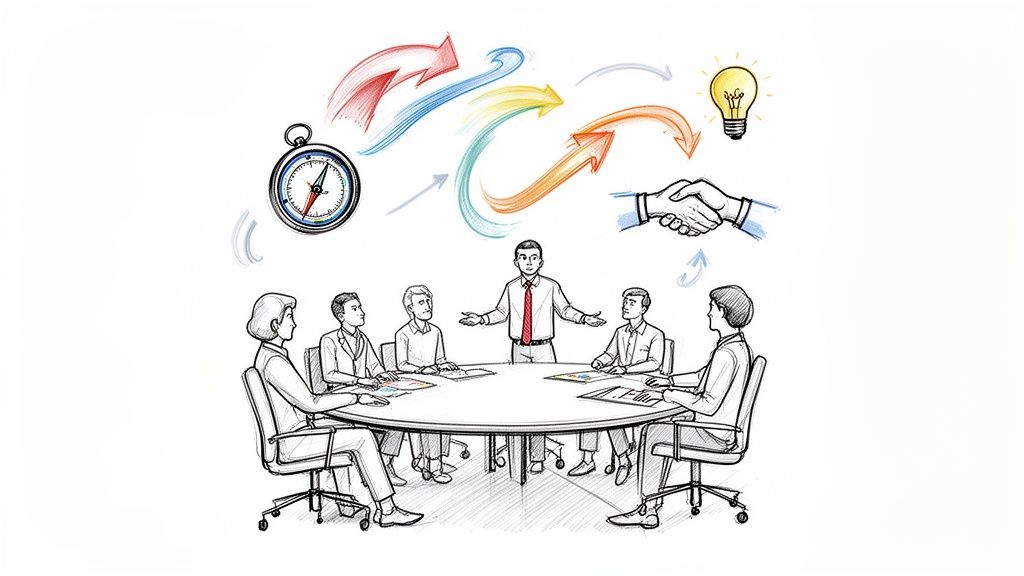
I’d make this session concrete fast: delegation decisions, expectation-setting, feedback habits, conflict repair, and what to do when a team stops trusting leadership after a rough season. That last piece gets ignored in generic management training, but it’s often the reason teams underperform. Workplace trust is strongly tied to performance, stress levels, and retention according to research summarized by Harvard Business Review.
Best fit teams
This works best for small companies, event teams, nonprofits, and creator-led businesses where someone became “the manager” before they were ever trained to manage. It’s also a smart internal workshop when the team is dealing with change, mixed communication styles, or tension after a reorganization. For a deeper look at coordination, check out this guide on essential event management skills.
Session angles that actually get buy-in
A broad leadership session sounds respectable, but a trust-focused session usually gets better attendance when the team has a specific pain point: morale is shaky, feedback conversations keep blowing up, or people don’t understand why decisions are being made. In that case, “leadership” can feel abstract, while “rebuilding trust after rapid change” feels timely and honest.
When I’ve seen these sessions work best, the facilitator doesn’t stay at the theory level. They use real scenarios: missed handoffs, defensive one-on-ones, tension between ops and creative, or a manager who keeps rescuing instead of delegating. Adults open up faster when the examples sound like Tuesday, not a textbook.
Sample workshop titles people would attend
Here are title and theme ideas you can use as-is or adapt:
- Rebuilding Trust After Change
- Feedback Without Defensiveness
- Psychological Safety for New Managers
- Conflict Repair Before It Becomes Culture
- Decision-Making Transparency for Team Leads
- How to Delegate Without Hovering
- Hard Conversations That Don’t Wreck the Team
- Leading Peers After a Promotion
- Manager Communication That Builds Confidence
- Trust First: The Leadership Skills Teams Actually Notice
If your audience is early-career managers, keep the scope narrow and practical. If the room is full of founders or senior leads, build in discussion around role clarity, change communication, and how trust gets damaged by inconsistency, not just bad intent.
A workable delivery format
- Format: Half-day for new managers, full-day for leadership teams working through active issues.
- Pre-work: Ask attendees where team friction shows up most often: feedback, priorities, accountability, or decision clarity.
- Activities: Role-play a one-on-one, a repair conversation, and a delegation handoff.
- Materials: Give them a feedback framework, meeting agenda template, and decision-rights worksheet.
- Group size: Keep it around 15 to 20 people if you want honest discussion instead of performative participation.
2. Digital Marketing and Social Media Strategy Workshop
Having a great idea is half the battle. Getting people to show up is the other half. This workshop demystifies digital marketing and teaches organizers how to fill their events without a huge budget.
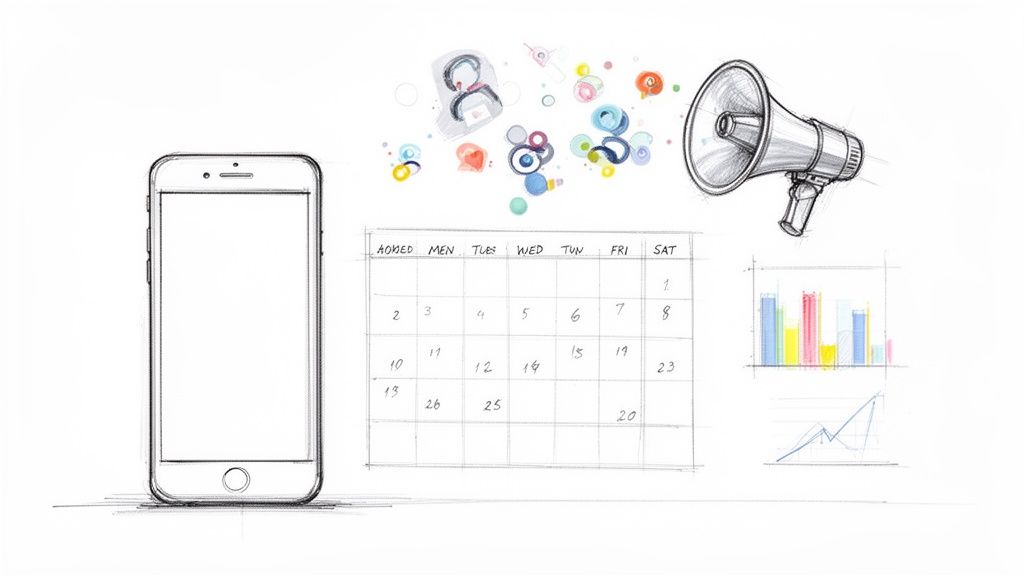
This session cuts through the noise of algorithm changes and vanity metrics. It focuses on practical, low-cost strategies that sell tickets. Attendees learn how to create a simple content calendar, write compelling event descriptions, and use Instagram or TikTok to generate real buzz.
Why It Works
This is essential for pop-up chefs, course instructors, and anyone who doesn't have a marketing team. It provides skills that directly impact attendance and revenue. For more on integrating these tactics, explore these tips on marketing and events.
How to Run It
- Format: A three-hour interactive session with time for Q&A and live critiques.
- Content: Ask attendees for links to their social media pages beforehand. Use their real pages as examples for improvement during the workshop.
- Materials: Provide swipe files of good promotional emails and social media posts. Offer a simple content calendar template. For extra pre-reading on audience growth, I’d point attendees to this guide over at Flexwork Podcast Studios.
- Ticketing: Use a tool that lets you easily share the ticket link. This reinforces the lesson of making the path to purchase as simple as possible.
- Promotion: Ask things like, "Struggling to sell out your workshops?" or "Learn the simple social media strategy that fills seats."
3. Financial Management and Pricing Strategy Workshop
Pricing your tickets can feel like a total guessing game. This workshop pulls back the curtain on the numbers. It teaches organizers how to price for profit without scaring people away.
Mastering your finances is the difference between a passion project and a real business.
This session goes beyond simple cost-plus formulas. It dives into the psychology of pricing and helps organizers create strategic tiers and manage budgets. The goal is to make people confident in their numbers.
Why It Works
This workshop is a must for anyone selling tickets or services. It provides practical tools like pricing calculators and budget templates that people can use right away. The skills learned here directly impact revenue, offering a clear return on investment.
How to Run It
- Format: A three-hour interactive session works well. Leave time for individual pricing exercises.
- Content: Focus on cost-plus and value-based pricing. Use real-world case studies to show how a price increase, when justified, can boost sales.
- Materials: Provide spreadsheet templates for event budgets and a simple pricing calculator. This guide on budgeting for an event is great pre-reading.
- Ticketing: Use tiered pricing for the workshop itself to demonstrate the concept. For example, early-bird and standard tickets. A flat fee pricing structure with no hidden percentage skims makes your own costs predictable.
- Promotion: Attract people with questions like, "Are you charging what you're worth?"
4. Customer Experience and Retention Workshop
Getting someone to attend your event once is a win. Getting them to come back again and again? That’s how you build a business.
This workshop focuses on turning one-time attendees into a loyal community who bring their friends.
This session is all about practical strategies for creating memorable experiences. It covers everything from the first email to the post-event follow-up. It's about building genuine relationships, not just transactions.
Why It Works
This workshop is essential for any event host. It ends the endless cycle of finding new customers. The skills taught here help organizers design experiences that people talk about, leading to powerful word-of-mouth marketing.
How to Run It
- Format: A three-hour interactive session allows time for group exercises.
- Content: Focus on creating journey maps for different types of attendees. Teach simple Net Promoter Score (NPS) methods to measure satisfaction.
- Materials: Provide email templates for pre-event hype and post-event feedback. Offer a checklist for designing on-site touchpoints.
- Ticketing: Keep the group under 25 people for personalized feedback. A good ticketing tool makes it easy to manage registrations and communicate with attendees.
- Promotion: Ask, "Want your events to sell out before you even announce them?"
5. Public Speaking and Presentation Skills Workshop
Nothing kills a great idea faster than a shaky delivery. This workshop is for anyone who needs to stand in front of a room and hold people's attention.
It turns nervous energy into confident stage presence. It’s a vital workshop because how you say something is just as important as what you say.
This isn’t about becoming a perfect, robotic speaker. It’s a practical session on storytelling, managing an audience, and structuring a presentation that lands. Participants learn to open strong and connect with people on a human level.
Why It Works
This workshop is transformative for anyone leading classes or hosting events. The skills are immediately useful. It builds the confidence needed to engage a crowd, sell a product, or teach a skill effectively.
How to Run It
- Format: A full-day session works best. It allows for lots of practice and personalized feedback.
- Content: Practice, practice, practice. Have each attendee present for three to five minutes and get feedback from the group.
- Materials: Provide simple presentation templates and a one-sheet guide on handling Q&A.
- Ticketing: Keep the group under 12 to guarantee everyone gets individual attention. A good tool lets you set a hard attendance cap with no fuss.
- Promotion: Attract people with, "Do you dread public speaking? Let's fix that," or "Turn your good ideas into unforgettable presentations."
6. Event Planning and Logistics Workshop
A great event feels like magic. Behind the curtain, it's all about solid logistics. This workshop is for anyone who's ever felt the panic of a missing cable or a double-booked vendor.

It turns chaos into a calm, repeatable process.
This session dives into the nitty-gritty of what makes an event run smoothly. We're talking timeline creation, vendor management, and contingency planning. It’s about checklists and templates, not theory.
Why It Works
This is a must-have for anyone scaling their events. It demystifies the operational side of event management. Attendees walk away with tools that reduce stress and prevent costly mistakes.
How to Run It
- Format: A full-day immersive is ideal. Morning for pre-planning, afternoon for day-of execution.
- Content: Run a group exercise where teams plan a mock event from start to finish. Include building a budget and a run-of-show.
- Materials: Provide a digital toolkit with templates for timelines, vendor contact sheets, and day-of checklists.
- Ticketing: Aim for a group of 20 to 25. Custom branding on your event page helps you look professional from the start.
- Promotion: Ask direct questions: "Worried you'll forget an important detail for your next event?"
7. Business Growth and Scaling Workshop
Once your events are working, the next challenge is usually less about hustle and more about design. This workshop should help people answer harder questions: what to standardize, what to stop doing manually, what to charge more for, and which parts of the business deserve expansion.
It’s also the best place in this list to cover broader business workshop ideas without creating a whole separate category. Done well, this session can serve solo founders, growing teams, and established operators who need a sharper growth plan instead of more effort.
Where growth workshops are most useful
This workshop serves the ambitious creator who has mastered their craft but is now facing business owner challenges. It provides a clear roadmap for expanding without burning out. For a look at the first steps, check out this guide on scaling your events business.
I like this topic because it can be shaped around business maturity. A new business may need help choosing one profitable offer and validating demand. A growing business usually needs better pricing, retention, systems, and partnerships. A team-led business often needs SOPs, delegation structure, reporting, and founder time management.
Business workshop topics worth building sessions around
If you want a cluster of workshop topics that can become standalone paid sessions, these are strong options:
- Offer design: Clarify what you sell, for whom, and why it’s different.
- Customer research: Turn interviews, surveys, and support messages into decisions.
- Pricing strategy: Raise confidence around packages, tiers, and margins.
- Retention systems: Build repeat purchase flows instead of relying on constant new leads.
- Referral engines: Create easy-to-share offers and post-purchase prompts.
- Partnerships: Identify collaborators, sponsors, affiliates, or venue partners.
- Operations SOPs: Document repeatable tasks before scaling exposes every weak spot.
- Founder time management: Separate CEO work from busywork.
- Dashboard metrics: Pick a handful of numbers that drive decisions.
- Team handoffs: Reduce errors when work moves between marketing, ops, and delivery.
- Upsells and add-ons: Increase revenue without always needing a bigger audience.
- Audience segmentation: Match offers and messaging to different customer types.
The U.S. Small Business Administration’s business guide emphasizes planning, funding, marketing, and operations as core growth levers, which lines up with what I’d include here. Most “scaling” workshops fail because they stay inspirational; the useful ones force tradeoffs and prioritization.
Match the topic to the audience stage
- New business: offer design, customer research, early pricing, basic marketing systems.
- Growing business: retention, referrals, partnerships, SOPs, metrics, capacity planning.
- Team-led business: delegation, hiring handoffs, reporting rhythms, process documentation, founder role redesign.
If you’re hosting for mixed experience levels, I’d break the room into stage-based groups for exercises. Otherwise the newer attendees feel lost and the advanced ones feel like they’re back in Business 101.
Formats that make this easier to sell
- Sprint workshop: Best when attendees need to leave with one finished asset, like a revised offer stack or 90-day growth plan.
- Teardown clinic: Great for reviewing real funnels, pricing pages, customer journeys, or event offers live.
- Roundtable lab: Better for more experienced founders who learn from comparing systems and decisions.
What to include in the session
- Format: Full-day intensive or a two-part series with implementation homework.
- Content: Focus on bottlenecks, margin, repeatability, and what can be delegated or automated.
- Materials: Financial projection sheet, systems audit worksheet, partnership tracker, and a simple KPI dashboard.
- Ticketing: Limit the group to 10 to 15 serious operators if you want candid discussion and stronger outcomes.
- Promotion: Position it as strategic clarity, not “hustle harder.”
8. Diversity, Equity, and Inclusion in Events Workshop
Creating spaces where everyone feels welcome is essential for building strong communities. This workshop moves beyond buzzwords to provide practical tools for hosting inclusive events.
This session teaches organizers how to see their events through a new lens. It covers writing inclusive marketing copy, selecting diverse speakers, and providing accessibility options. The goal is to build belonging from the ground up.
Why It Works
This workshop is critical for anyone who hosts public events. It provides a framework for identifying and removing barriers that prevent people from attending. It helps you attract a wider audience, foster a positive environment, and build a reputation as a thoughtful organizer.
How to Run It
- Format: A three-hour interactive session or a two-part series.
- Content: Start with an accessibility audit of a fictional event. Use real-world scenarios to discuss unconscious bias and how to create ground rules for respectful dialogue.
- Materials: Provide checklists for event accessibility and templates for inclusive language guides.
- Ticketing: Offer tiered or sliding-scale pricing to make the workshop itself accessible. A good ticketing tool lets you create different ticket types and prices easily.
- Promotion: Ask, "Is your welcome mat out for everyone?" or "Learn how to build events where every guest feels like they belong."
9. Technology Tools and Automation Workshop
Manual data entry and repetitive tasks are the enemies of creativity. This workshop rescues organizers from spreadsheet hell by teaching them how to automate their workflows.
It's for anyone looking to scale their events without burning out.
This session is a hands-on guide to digital tools that save time. It covers everything from ticketing systems to scheduling social media posts and creating automated email sequences. The goal is to build an integrated operational machine.
Why It Works
This workshop provides immediate, tangible value. Participants leave with a clear roadmap for which tools to use and how to connect them. Covering practical applications like Zapier integrations or Mailchimp sequences empowers hosts to focus on the event, not the admin. To stay current, it's also worth covering the best AI tools for digital marketing.
How to Run It
- Format: A three-hour, hands-on lab where attendees bring laptops and set up accounts.
- Content: Focus on a core "event tech stack." Show how to integrate a ticketing platform with an email service and a social media scheduler.
- Materials: Provide a curated list of top tools with pros, cons, and pricing, plus setup guides.
- Ticketing: Use a tool that offers fast, secure payouts. This shows attendees a real-world example of a smooth registration process from the start.
- Promotion: Ask a simple question: "Spending more time on admin than your actual event? Let's fix that."
10. Legal Compliance and Risk Management Workshop
Ignoring the legal side of an event is like building a house without a foundation. This workshop tackles the scary but essential world of contracts and risk management. One small oversight can cause huge problems.
This session demystifies the legal jargon. It covers practical topics like creating solid waivers, understanding what insurance you need, and managing attendee data according to privacy laws. It’s about building a protective layer around your event.
Why It Works
This workshop is a must-have for festival coordinators, pop-up hosts, and anyone whose event involves risk. It provides clear steps to protect your business and your attendees. The knowledge gained here prevents costly legal mistakes and builds trust with your community.
How to Run It
- Format: A focused three-hour session is perfect.
- Content: Partner with a local business attorney to provide credible information. Focus on common scenarios like vendor disputes or attendee injuries.
- Materials: Provide template documents like a basic waiver, a vendor contract checklist, and a data privacy policy.
- Ticketing: Keep the group size manageable to allow for a detailed Q&A. Use a system that manages registrations and attendee data in a compliant way.
- Promotion: Ask direct questions like, "Is your event legally protected?"
Top 10 Professional Development Workshops Comparison
| Workshop | Best for | Prep time | Budget reality | Skill type | Best format |
|---|---|---|---|---|---|
| Leadership and Management Skills Workshop | New managers, founders, team leads | Medium | Medium | Leadership development | Half-day or full-day interactive |
| Digital Marketing and Social Media Strategy Workshop | Solo hosts, creators, lean teams | Low-Medium | Low | Tactical skills | 3-hour working session |
| Financial Management and Pricing Strategy Workshop | Service providers, event hosts, small businesses | Medium | Low-Medium | Tactical skills | 3-hour workshop with calculators |
| Customer Experience and Retention Workshop | Community builders, repeat-event hosts | Medium | Low-Medium | Tactical + strategic | Interactive mapping session |
| Public Speaking and Presentation Skills Workshop | Facilitators, educators, hosts | Medium | Medium | Performance + communication | Full-day practice lab |
| Event Planning and Logistics Workshop | Organizers managing complex events | High | Medium | Tactical operations | Full-day immersive |
| Business Growth and Scaling Workshop | Established operators, founders, studios | High | Medium-High | Strategic business development | Intensive or cohort format |
| Diversity, Equity, and Inclusion in Events Workshop | Public-facing teams, community orgs | Medium | Medium | Leadership + operations | 3-hour session or series |
| Technology Tools and Automation Workshop | Growing teams buried in admin | Medium | Medium | Tactical systems | Hands-on laptop lab |
| Legal Compliance and Risk Management Workshop | Organizers with liability exposure | Medium-High | Medium-High | Risk reduction | Focused expert-led session |
If you’re choosing a topic for the first time, use four filters: audience goal, budget, prep time, and the kind of outcome people want. Tactical sessions usually sell faster because attendees can picture the result. Leadership sessions often create deeper impact, but they need stronger facilitation and better framing.
| Title | Implementation complexity | Resource requirements | Expected outcomes | Ideal use cases | Key advantages |
|---|---|---|---|---|---|
| Leadership and Management Skills Workshop | Medium — interactive facilitation and practice | Skilled facilitator, venue/time, role-play materials | Stronger team management, better decisions, improved delegation | Hosts scaling operations, event coordinators, nonprofit leaders | Improves event management quality and participant retention |
| Digital Marketing and Social Media Strategy Workshop | Medium — platform-specific tactics and content work | Social platforms, content tools, analytics, ongoing time | Increased visibility, higher ticket sales, measurable ROI | Workshop hosts, pop-up organizers, small venues, community planners | Cost-effective, data-driven promotion with immediate tactics |
| Financial Management and Pricing Strategy Workshop | Medium–High — financial analysis and modeling | Spreadsheets/financial software, financial data, possible accountant | Optimized pricing, higher profitability, clearer budgets | Hosts, fitness providers, pop-up chefs, nonprofits | Increases profitability and enables data-driven pricing |
| Customer Experience and Retention Workshop | Medium — process design and consistent execution | Communication tools, survey systems, templates, staff time | Higher retention, greater lifetime value, more referrals | Workshop hosts, wellness providers, pop-up organizers, venue managers | Builds loyalty and reduces marketing costs through retention |
| Public Speaking and Presentation Skills Workshop | Medium — practice-intensive with feedback loops | Coaching, recording/video tools, rehearsal time | Improved presenter confidence, audience engagement, event quality | Instructors, facilitators, event hosts, keynote speakers | Enhances credibility and participant engagement |
| Event Planning and Logistics Workshop | High — coordinating many moving parts | Checklists, vendor contacts, tech setups, significant planning time | Smoother execution, fewer oversights, scalable events | Hosts, pop-up organizers, festival coordinators, venue managers | Reduces day-of risk and creates repeatable systems |
| Business Growth and Scaling Workshop | High — strategic change and systems building | Team hiring, automation tools, funding, strategic coaching | Scalable operations, diversified revenue, reduced owner dependency | Successful hosts expanding, studio owners, nonprofit directors | Enables profitable scaling and operational efficiency |
| Diversity, Equity, and Inclusion in Events Workshop | Medium–High — ongoing cultural and accessibility work | Accessibility investments, training, inclusive materials | Broader audience, stronger community, reduced reputational risk | Hosts, nonprofit coordinators, community organizers, DEI advocates | Expands market reach and aligns events with social responsibility |
| Technology Tools and Automation Workshop | Medium–High — integrations and tool training | Software subscriptions, integrations, hands-on training | Time savings, fewer errors, better attendee data and reporting | Tech-hesitant hosts, growing organizers, small businesses | Automates tasks and enables scaling with improved accuracy |
| Legal Compliance and Risk Management Workshop | High — jurisdictional legal complexity | Legal counsel, template documents, insurance, compliance resources | Reduced liability, regulatory compliance, clearer policies | Organizers with liability concerns, nonprofits, corporate planners | Protects business, avoids penalties, builds attendee trust |
Good starting points for first-time hosts
- Digital Marketing and Social Media Strategy if your audience wants immediate wins.
- Financial Management and Pricing Strategy if they need a clear ROI.
- Public Speaking and Presentation Skills if you can coach live and keep the group small.
These are easier to scope, easier to market, and easier to prove useful in one session.
Strong choices for internal company teams
- Leadership and Management Skills for new or stretched managers.
- Customer Experience and Retention for service, ops, or event teams.
- Diversity, Equity, and Inclusion in Events when inclusion and accessibility need practical follow-through.
These work well when the goal is behavior change across a team, not just an individual skill boost.
Strong choices for public, revenue-generating events
- Business Growth and Scaling for experienced founders and operators.
- Technology Tools and Automation for audiences that value efficiency.
- Event Planning and Logistics for organizers who will pay to avoid expensive mistakes.
In my view, the sweet spot for paid public workshops is a topic with a painful bottleneck and a visible outcome. “Be a better leader” is broad. “Fix your delegation system and stop becoming the team bottleneck” is easier to sell.
Now It’s Your Turn to Host
We just walked through ten solid professional development workshop ideas. Each one is a real opportunity to create a valuable, paid learning experience. You don't need a giant budget. You just need a specific problem to solve and the willingness to guide others through it.
The biggest takeaway? You're already qualified. Your experience, whether in planning pop-ups or navigating social media, is exactly what someone else needs to learn. People are paying for your perspective and your hard-won lessons.
Turning Ideas into Action
So, where do you start? Don’t get stuck picking the "perfect" topic.
- Choose one idea that excites you. Your enthusiasm is your best marketing tool.
- Define your audience narrowly. Instead of "Digital Marketing," try "Canva & Instagram Reels for Etsy Sellers." Specificity sells.
- Start small. Aim for five to ten people for your first workshop. This lets you test your material and build confidence.
The goal is to get a win. A successful small event is far more valuable than a big, perfect event that never happens.
A workshop is only one format, though. Some audiences do better with mini-summits, lunch-and-learns, office hours, peer hot seats, expert panels, working sessions, or short cohort intensives. I’d choose based on the result you want:
- Pick a single workshop when the audience needs one focused skill and a clear takeaway.
- Pick a series when the skill takes repetition, accountability, or homework between sessions.
- Pick a mixed-format event when you want both teaching and community, like a panel plus office hours or a keynote plus working session.
A simple decision rule helps. If your audience is small and hands-on, run a workshop or lab. If it’s larger and mixed-skill, use a panel, mini-summit, or lunch-and-learn with optional breakouts. If the goal is implementation, choose a cohort intensive or recurring office hours instead of a one-and-done talk.
That matters because not every professional development event needs to look like a traditional training room. Some of the strongest sessions I’ve seen were compact and practical: a 90-minute teardown clinic, a monthly expert Q&A, or a peer hot-seat roundtable where attendees left with real fixes, not just notes.
The magic of a great workshop is connection. It’s about creating a space where people can learn a new skill and meet others who get it. When you focus on delivering real value, you're not just selling a ticket. You're building a community.
This list is just a jumping-off point. Take these concepts, twist them, and make them your own. The world needs more people like you who are willing to share what they know.
Go on, get hosting.
Frequently Asked Questions
What are examples of professional development workshops?
Examples include leadership training, pricing strategy, public speaking, customer retention, event logistics, automation, and legal risk management. Good workshops teach a specific skill, solve a real work problem, and give attendees something usable right away instead of staying at the motivational level.
What are some good professional development topics?
Good topics usually sit at the intersection of demand and usefulness: communication, management, digital marketing, pricing, inclusion, operations, and systems. I’d prioritize topics that produce a visible change in how people lead, sell, organize, or make decisions.
What are some good professional development courses?
Courses are a better fit than single workshops when the topic needs depth, practice over time, or assessment. Strong options include project management, data analysis, leadership fundamentals, communication, and presentation training; organizations like the American Psychological Association highlight ongoing webinar series as a practical model for skill building.
What are the 5 P's of professional development?
Different organizations define the 5 P’s differently, but a practical version is purpose, plan, practice, people, and progress. In plain English: know why the skill matters, build a learning plan, apply it in real work, get feedback from others, and measure improvement over time.
How do I choose between a workshop topic and a broader professional development event?
Choose a workshop when you can teach one skill well in a short window. Choose a broader event when the audience needs multiple perspectives, networking, or ongoing support. For example, a pricing workshop fits one focused result, while a mini-summit on business growth may combine pricing, retention, partnerships, and founder systems.
Are short workshops still effective?
Yes, if the scope is tight and the session is designed for application. You can see the same principle in current PD offerings like the Data Paths workshop calendar, which uses targeted sessions and follow-up support rather than trying to teach everything at once.
Ready to sell tickets for your first workshop? Ticketsmith makes it dead simple to create a beautiful, custom-branded event page in minutes. No code needed. We handle the payments securely, offer flat-fee pricing with no hidden cuts, and get you paid fast. We're built for real people pouring their heart into events.