
Here’s a truth about event marketing: great events don't magically sell out. It isn't some last-minute ad blitz. Instead it is about building an audience that’s excited to buy the moment you announce something new.
Your Marketing Starts Before You Have an Event
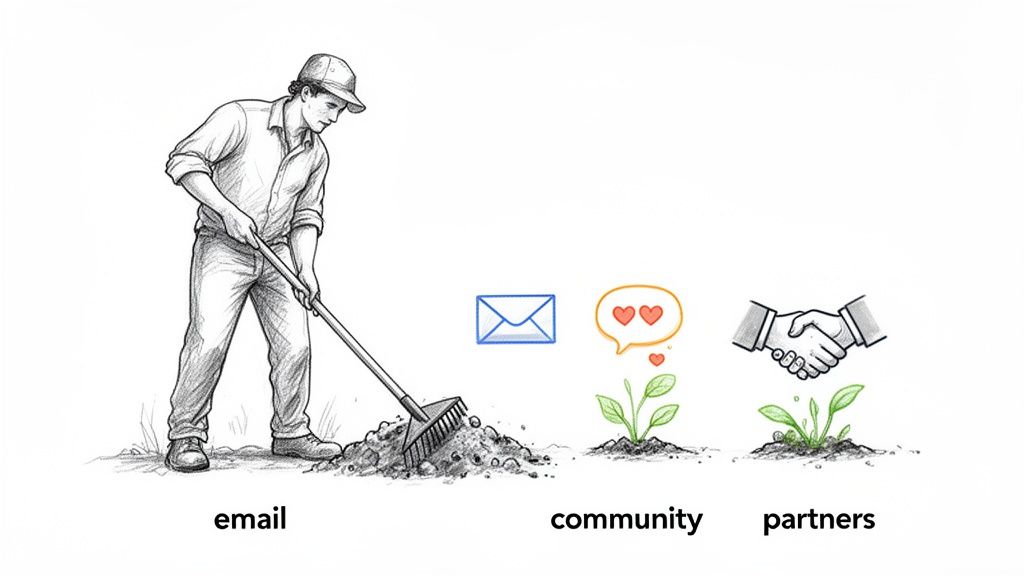
Stop thinking about marketing as something you do after you’ve planned your event. The best events sell out because you did the work months ago. Think of it as warming up the soil before you plant the seed.
Your real job is to build a small, loyal group of people who trust you.
This doesn't have to be complicated or expensive. It’s about making real connections and offering value first. When you give before you ask, the sale feels natural, not pushy.
Start with Who You’re Serving
Before you write a single email, you need a clear picture of who your event is for. If you sell to everyone, you sell to no one. Understanding how to identify your target audience guides every decision you make.
The goal isn’t to find customers for your event. It’s to create an event for your customers. Knowing who they are makes that much easier.
Once you know who you’re talking to, focus on these three things to build your pre-event audience:
A Simple Email List: This is your most valuable tool. It’s a direct line to your biggest fans, and you own it. You don’t need fancy software, just a way to collect emails from interested people.
A Real Community (Not Just Followers): Use social media to have actual conversations. Ask questions. Share behind-the-scenes stuff. The goal is engagement, not a huge follower count. A hundred engaged fans are worth more than ten thousand silent ones.
Local Partnerships: Who else serves your ideal audience? A pop-up chef can partner with a local brewery. A yoga teacher can team up with a wellness cafe. These partnerships introduce you to new people who already trust your partner.
Building these assets takes time, but it’s the most reliable way to sell out events. You’re not just building hype for one launch. You’re building an audience for everything you do next. For a complete walkthrough, check out this guide on how to create an event from scratch.
Building Buzz Before Your Launch
Now that you've warmed up your audience, it's time to tease the event. This is where the fun begins. You're going to turn the weeks before tickets go live into their own mini-event.
Think of it like a movie trailer. Show just enough to get people hooked. Make them circle a date on their calendar for the big reveal. This isn't a massive campaign. It's a simple process that builds real anticipation.
Crafting Your Pre-Launch Timeline
A good pre-launch follows a rhythm. Map out your key messages for the two or three weeks before your ticket sale date.
It could look something like this:
Three Weeks Out: Start with a vague "Something's coming" message. Post a cryptic photo on Instagram. Send a mysterious email with a subject like "clearing my calendar for this..."
Two Weeks Out: Reveal a little more. Announce the event theme or share a picture of the venue. This is the perfect time to launch a simple "Coming Soon" page to capture emails for a first alert.
One Week Out: Give your most loyal fans the inside scoop. Send an email to your list revealing the date and maybe a special guest. This rewards the people who supported you from the start.
This slow drip of information keeps you top of mind. It trains your audience to pay attention because they don’t want to miss what's next.
The point of a pre-launch is to make launch day feel inevitable. People shouldn't be deciding if they want to come. They should just be waiting for the link to buy.
The Power of a Simple Landing Page
That "Coming Soon" page is your most important tool during this phase. It doesn't need to be fancy. It just needs to be clear, on-brand, and have one job: collect email signups.
This page becomes the hub for all your pre-launch hype. Every social post and teaser email should point here. Setting up a page with custom branding takes minutes and makes you look professional.
It also gives you a dedicated list of super-interested people to email the second tickets go live. Some hosts even offer a special presale just for this list. If you're curious, we broke down how presale tickets work and why they create so much urgency.
Nailing Your Ticket Sales Launch
The day your tickets go on sale should feel like a party, not a panic attack. If you’ve built buzz, this is the moment your audience has been waiting for. The goal now is to make it incredibly simple for that excitement to turn into sales.
A huge part of a successful launch is how you structure your pricing. It's not just about picking a number. It's about psychology.
This pre-launch phase builds anticipation that flows right into your ticket launch. It converts weeks of hype into immediate action on day one.
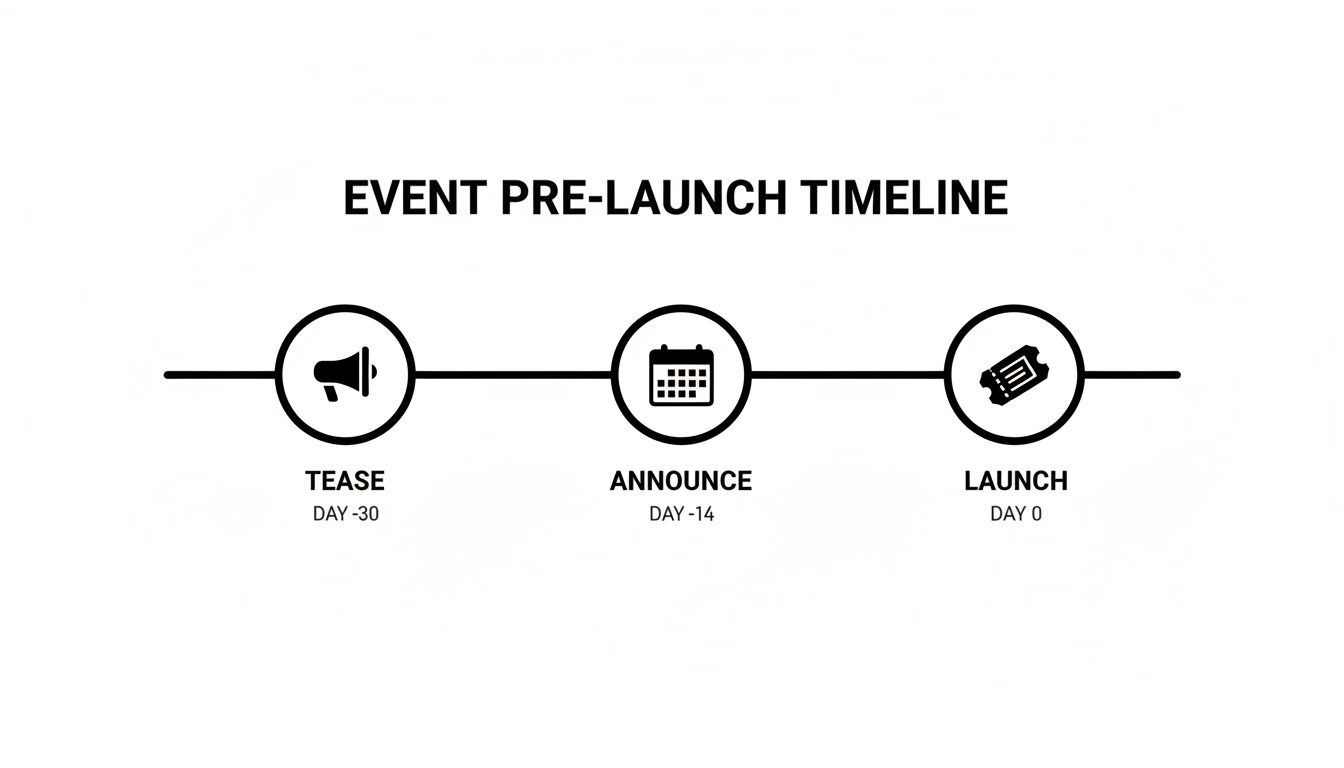
Every step is designed to make launch day a success before it even happens.
Using Price to Create Urgency
Early-bird pricing is a classic for a reason. You reward your most enthusiastic fans and create urgency for everyone else. But there's a right way and a wrong way to do it.
Don't offer a vague discount. Be specific and create real scarcity.
Tier 1: Early Bird: Offer a real discount, like 20% off. But only for the first 48 hours or the first 50 tickets sold. This gives people a real reason to act fast.
Tier 2: General Admission: This is your standard price for the awesome experience you're providing.
Tier 3: VIP or Bundled Offer: Appeal to your biggest supporters. Bundle in premium seating, some merch, or a pre-event meet-and-greet.
This tiered approach speaks to different buyers without devaluing your main offer. It gives people choices and makes the decision to buy easier.
Your Ticket Page Is Your Most Important Page
Think about it. All your marketing and events work leads to one place: the ticket page. If this page is slow, confusing, or looks sketchy, you will lose sales.
This one page has one job. Make buying a ticket ridiculously easy. You need a platform that lets you set up in minutes, no code needed. Your branding should be front and center so it feels like your event, not some generic site.
A clunky checkout is the digital version of a locked door at your venue. People will just leave. Make sure your payment process is fast, secure, and totally transparent.
This is where hidden fees can kill your momentum. A flat-fee pricing structure means attendees aren't surprised by "service fees" at the last second. Fast, secure payouts should go straight to your account. You did the work. You shouldn't have to wait for your money.
The online ticketing world is massive for a reason. It's projected to hit $53.43 billion in 2025 and climb to $69.25 billion by 2029, because mobile makes it easy to buy on impulse. Your setup needs to be just as smooth. For a deeper dive, our guide shows how to sell tickets online for an event and turn interest into attendance.
How to Keep Sales Moving
So, your tickets are live. The launch day rush was awesome, but now… crickets.
Welcome to the “messy middle.” This is where many event hosts lose steam. But this is your biggest opportunity to build real momentum.
The goal isn't to blast everyone with "BUY NOW!" emails. It's about consistent, gentle reminders that your event is happening and they don't want to miss it. Think of it as stoking a fire, not setting off fireworks. Small, steady actions keep the sales coming.
Show, Don’t Just Tell
Your most powerful tool right now is social proof. People want to go where other people are going.
Instead of posting another generic "Buy tickets!" graphic, try these moves:
Share Attendee Spotlights. Someone buys a ticket and gets excited on social media? Share it. A quick, "So excited to have you join us!" makes them feel valued and shows others that people are committing.
Answer Questions Publicly. Turn common questions from DMs into public content. A simple post like, "Someone asked if we'll have vegan options... YES, and they're going to be amazing," is helpful and shows you’re listening.
Lean on Local Partners. Got a favorite local coffee shop? Team up for a cross-promotion. They could offer a small discount to your ticket holders. In return, you get your event in front of their audience.
This approach shifts your marketing and events strategy from a one-way broadcast into a real conversation.
The middle of your sales cycle isn't about shouting louder. It's about making your event feel like an exciting gathering that people are already joining.
Dipping Your Toes into Paid Ads
Paid ads can sound scary, but they don't have to be. You don’t need a massive budget to run a simple campaign on Instagram or Facebook.
Seriously, start small. A $50 budget can go a long way.
Your goal here is clarity. Create a simple graphic with the event date, a compelling photo, and a clear call to action like "Grab Your Spot." Make sure that link goes directly to your simple, custom-branded ticketing page. A platform that sets up in minutes and offers a flat fee is perfect for this. No one wants to click an ad just to get hit with surprise fees.
Global demand for tickets is intense right now. Major players sold over 130 million tickets for events through mid-2025, a 6% jump from the previous year. You can learn more about these ticketing trends to see how this enthusiasm helps even smaller creators. Just be ready with an easy checkout when they click.
And if your pricing feels stale, our guide on what dynamic ticket pricing is can offer some fresh ideas.
The Final Push and Day-Of Tactics
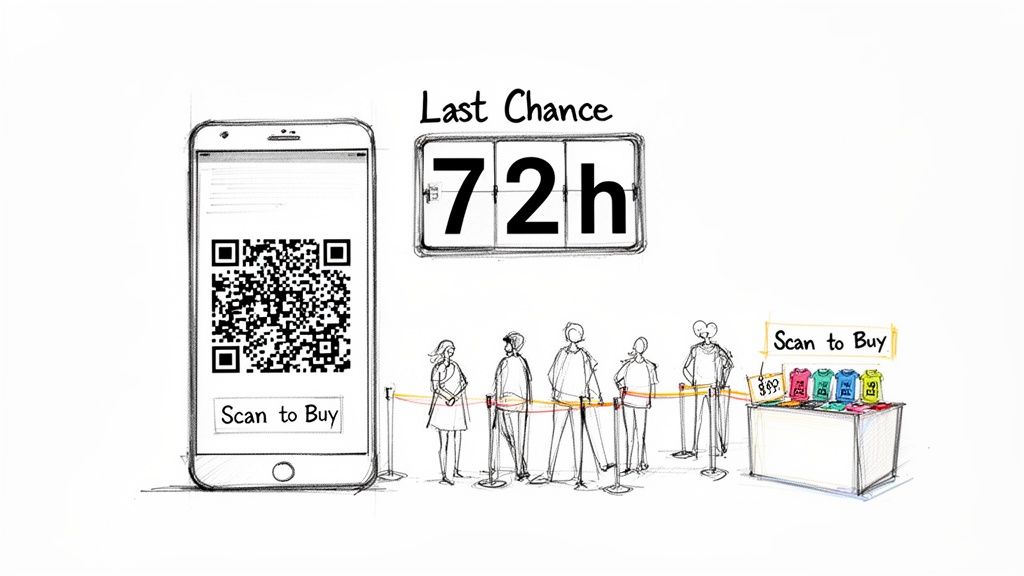
The last 72 hours before your event are different. The slow burn is over. Now it’s all about urgency. Your best friend is good old-fashioned Fear Of Missing Out (FOMO).
This is when you can be more direct. It's time to make it clear that the window to join is closing. A simple, focused communication plan for this final countdown is your ticket to a sold-out event.
The Last Chance Countdown
You don't need to bombard people, but you need to be in their inbox and on their feed. A simple, timed sequence works wonders.
Here’s a straightforward plan:
72 Hours Out: Send a "Last Chance" email. The subject can be "Our event is this week." Inside, spotlight one irresistible experience, like a special guest or the incredible food.
24 Hours Out: This is your final call. An email with a subject like "Doors close tonight" creates real urgency. Keep the copy short and focused on the deadline.
Day Of: Post a "See you tonight!" message on social. Share a picture of the setup or a behind-the-scenes video to build hype. This gets attendees excited and snags last-minute deciders.
This final push in your marketing and events plan often separates a good turnout from a great one. People are busy. These final reminders cut through the noise.
Marketing Doesn't Stop at the Door
Just because the doors are open doesn't mean sales have to end. Someone will show up who forgot a ticket, or an attendee will bring a friend. Make it painfully easy for them to pay you.
The worst experience is a sold-out sign and a shrug. A simple QR code at the entrance is the modern box office. No cash, no clunky card readers. Just scan and go.
This is where having a mobile-friendly ticket page is non-negotiable. Have a QR code printed and placed at your check-in table. It should link directly to your ticket page. This takes minutes to set up, looks professional, and captures revenue you would have otherwise lost.
This approach works for any size crowd, from five people in a workshop to 5,000 at a festival. It’s all about being prepared.
The Easiest Upsell Ever
You've got a room full of people who already like what you do. They’re a captive audience. This is the best time for a low-pressure upsell.
Selling merchandise? Have it on display. Announcing your next workshop? Mention it from the stage and tell everyone they'll get an early-bird link tomorrow. It’s not about being pushy. It’s about making relevant offers to people who are already engaged.
This isn’t just about making extra money. It’s about using the energy of the current event to build a bridge to your next one. You can turn today’s attendees into tomorrow’s loyal fans.
What to Do After the Event Ends
The event is over. You’re exhausted but buzzing. It's tempting to collapse and forget about it for a week.
Don’t do that. The work you do right now is what turns one-time attendees into lifelong fans.
Your post-event marketing is just as important as your pre-launch hype. This is your chance to solidify the community and build momentum for what's next. The goodwill is at its peak. It's time to use it.
Send a Simple Thank You Email
Within 24 hours, email every ticket holder. Don't overthink this. The goal is to be prompt and personal, not perfect.
Here’s a simple structure:
Subject: Thanks for making [Event Name] incredible!
Body: Start with a genuine thank you. Share one or two of your favorite moments and link to a photo gallery. Ask for feedback with a simple one-question survey: "What was your favorite part?"
Call to Action: This part is key. End with a link to a waitlist for your next event. This captures their interest while they're most excited.
This one email makes people feel appreciated, gathers useful feedback, and starts the marketing for your next project.
Analyze What Actually Worked
Now it’s time for a quick, honest look at your sales data. You don't need to drown in spreadsheets. Just find simple patterns to make your next event even better.
Ask yourself these three questions:
Which ticket type sold the most? Was the VIP bundle a surprise hit, or did everyone go for the standard ticket?
When did most sales happen? Did the early-bird rush account for 60% of your sales? Or was it the last-minute push?
Where did buyers come from? If you track links, did that influencer partner actually drive sales, or just a bunch of likes?
The answers aren't just data. They are a conversation with your audience about what they value and when they’re ready to buy. Listen.
To keep the conversation going, repurpose your recorded sessions and highlights. Slicing them into short-form content for social media extends the life of your event. You can learn more about creating YouTube Shorts from existing video to get started.
A Couple of Common Questions
How much should I actually spend on event marketing?
There's no magic number. A solid rule of thumb is to earmark around 10% to 15% of your projected event revenue for marketing.
But if this is your first event, you’ll probably need to push that number higher. You're not just selling tickets. You're building a brand from scratch. My advice? Start smart. Focus on your email list and organic social media before you spend a ton on ads.
Okay, so when should I start promoting this thing?
Yesterday. The sooner the better.
The right timeline depends on your event's scale. For a small workshop, start building buzz four to six weeks out. For a bigger conference, give yourself at least three to four months. Consistent, early effort always beats a last-minute panic.
Ready to make ticketing the easiest part of your event plan? Ticketsmith is built for real people pouring their hearts into events. Get a beautiful, custom-branded page in minutes with flat-fee pricing and fast payouts. No hidden fees, ever. See how simple it can be.