So, you want to create an event. The goal isn't to tackle a giant, complicated project. It's about making a series of small, smart decisions that add up to something great.
Lets walk you through it.
Start with Your Event's 'Why'
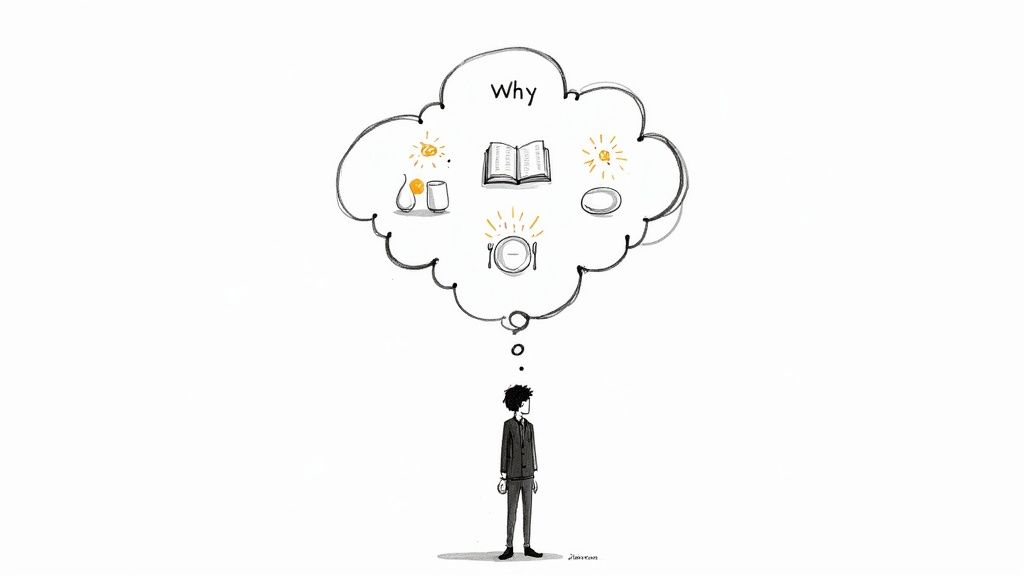
It's tempting to jump right into picking a venue or designing a flyer. Resist that urge. The best events start with a simple question: "Why am I doing this?"
Your answer doesn't need to be some grand mission statement. It just needs to be real.
Are you hosting a workshop to teach pottery and share your passion?
Is it a pop-up dinner meant to build a local food community?
Are you launching a zine and just want to generate some buzz?
Knowing your "why" is the foundation for everything else. It becomes your filter. It helps you weed out bad ideas and focus on what actually matters. When you know the goal, you know what a "win" looks like.
Who Is This For, Exactly?
Once you have your "why," the next question is "who?" Please, don't say "everyone." An event for everyone is an event for no one.
Picture one specific person you’d love to see walk through the door. What are they like? What do they care about? What problem are you solving for them?
Getting specific about your audience feels like you're narrowing your potential. It actually does the opposite. It makes your message sharp and your event irresistible to the right people.
For instance, ditch "people interested in cooking." Try "busy young professionals who want to learn three impressive weeknight pasta recipes." See the difference? Suddenly, your marketing copy and ticket price become easier to figure out.
If you want to dig deeper, there are great resources on how to identify your target audience.
Nailing your "why" and "who" first will save you from countless headaches later.
Nail the Details: Venue, Date, and Format
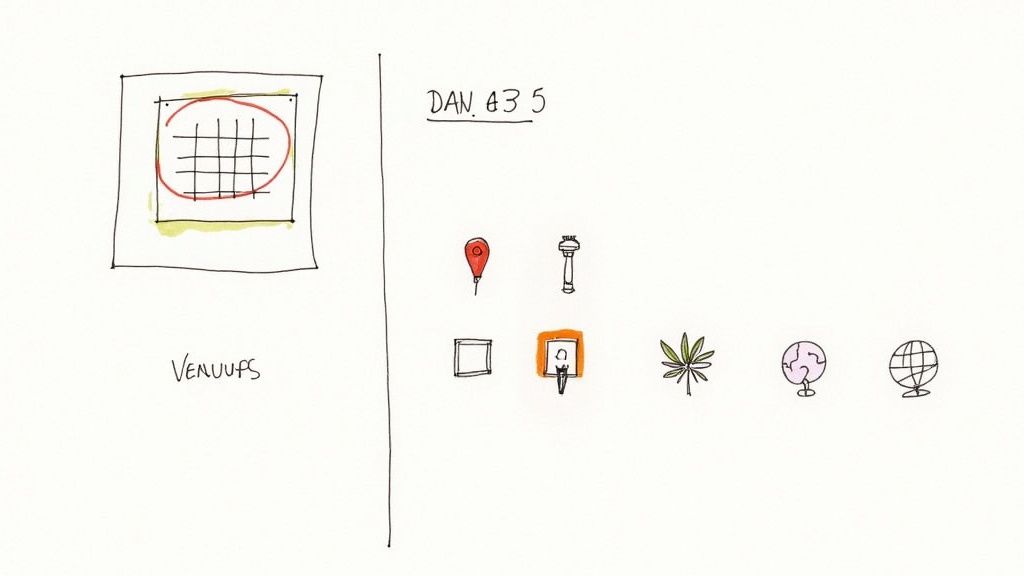
Alright, you know why you're hosting this and who it’s for. Now for the "where" and "when."
Picking a date seems easy, but it's a classic trap. Before you circle a day on the calendar, do a quick sanity check.
Is there a major holiday that weekend? A huge local festival? Anything that would force your ideal person to choose? A quick search of your city's event calendars can save you a world of hurt.
Picking the Perfect Place
Got a few potential dates? Time to find a home for your event. Forget those beige hotel conference rooms. Your space needs to match the feel of your event.
You don't need a massive budget to find a great spot. Think creatively.
For a hands-on workshop: Look into an art gallery, a community garden, or a local maker space.
For a pop-up dinner: How about a brewery's private room, a cozy bookstore after hours, or even a well-designed photo studio?
These spots often have a built-in atmosphere, which means less decorating work for you. Always ask what's included. Tables? Chairs? A sound system? Knowing this upfront prevents last-minute scrambles.
The right venue does more than just hold people. It sets the tone before anyone walks in the door. It’s your silent partner.
In-Person, Virtual, or Both?
Finally, let's talk format. This decision shapes everything else.
In-person: The gold standard for connection. Think workshops, intimate dinners, or local meetups. You can't beat the energy of a room full of people.
Virtual: Perfect for reaching a global audience without venue costs. Works great for talks, panels, and classes where the info is the main draw.
Hybrid: A mix of both worlds. The energy of a live audience and the reach of a virtual one. Be warned: it's the most complex to pull off. You’re basically running two events at once.
The industry is leaning into flexible formats. While 60% of event revenue still comes from in-person gatherings, nearly 75% of organizers are adopting hybrid models. You can dig into more event industry statistics to see the full picture.
Choosing the right format isn’t about chasing trends. It's about matching your "why" to the best experience for your guests. A five-person pottery class has different needs than a product launch for 5,000. Pick the format that serves your goal.
Budgeting and Pricing Without the Headache
Talking about money, this is where many creators get stuck: staring at a spreadsheet and sweating. It doesn’t have to be a nightmare.
Your budget is just a list of money coming in and money going out. That’s it. Before you can decide what to charge, you need a realistic guess of your total costs. The goal isn't perfect accuracy. It's about avoiding nasty surprises.
Tallying Up the Costs
Start a running list of every possible expense. Some are obvious, like the venue. But it’s the little things that trip you up.
Don’t forget costs like:
Permits and Insurance: Check with your city or venue. A one-day liability policy is often mandatory and surprisingly affordable.
Marketing Materials: This could be a $20 Canva Pro subscription for graphics or the cost of printing flyers.
Supplies and Rentals: Think name tags, markers, chairs, and AV equipment if they aren't included.
Payment Processing Fees: This is a big one. Even a small percentage adds up. Look for ticketing platforms with transparent, flat-fee pricing so you know exactly what you’ll pay.
This doesn't have to be a monster spreadsheet. A simple list in a notes app works fine to get started. If you want more structure, our guide on budgeting for an event has a simple template you can borrow.
Here’s a basic table to help you visualize things.
Simple Event Budget Breakdown
A sample budget to help you track common expenses and potential income for a small-scale workshop or pop-up.
| Expense Category | Estimated Cost | Actual Cost | Notes (e.g., 'Donated by sponsor') |
|---|---|---|---|
| Venue Rental | $300 | ||
| Marketing & Promotion | $50 | Social media ads, flyers | |
| Supplies (e.g., notebooks) | $75 | ||
| Refreshments | $100 | ||
| Speaker/Instructor Fee | $250 | ||
| Ticketing Platform Fees | $45 | Based on 30 tickets @ $1.50 fee | |
| Total Expenses | $820 | ||
| Ticket Sales (30 x $40) | $1,200 | ||
| Projected Profit | $380 |
This layout makes it easy to see where your money is going.
Setting Your Ticket Price
Once you have a rough total for expenses, you can think about pricing. This is part art, part science. Your price needs to cover costs, reflect the value you’re providing, and feel fair to your attendee.
Start by snooping. What are other workshop hosts in your area charging for a similar experience? This gives you a solid baseline.
From there, you can get creative.
Early-bird discounts are a fantastic way to reward your most eager fans and get some cash flow early. It creates a natural sense of urgency and helps you gauge interest.
Tiered ticketing is another smart move. A "General Admission" ticket gets you in, while a "VIP" ticket might include premium seating or a special swag bag. This lets you cater to different budgets.
The global events industry was valued at $1.4 trillion in 2024. There's a huge opportunity for independent creators. You can explore more event marketing trends to see the potential.
Selling Tickets The Easy Way
You’ve poured your heart into planning. Now you need to get people in the door. Your ticketing setup can make your life a breeze or create a world of pain.
Don't settle for a clunky, third-party page. Your ticketing page is your virtual front door. It needs to feel like part of your brand and build trust.
The whole point is to get this done fast. You should be able to spin up a beautiful event page in minutes, no code needed. Just upload your logo and pick your brand colors. It should look like your event, because it is.
Set Up Your Tickets Your Way
You need flexibility, not complexity. Your tickets shouldn't be one-size-fits-all. Setting up different ticket types gives you more control and offers your attendees better options.
Consider a few simple tiers:
Early Bird: A classic for a reason. It rewards your biggest fans and helps you lock in early sales.
General Admission: Your standard, no-fuss ticket.
VIP or Bundled Tickets: Offer something extra. This could be premium seating or a free drink. It’s a great way to increase your average ticket value.
A good ticketing platform shouldn't punish you for this. Whether you’re selling five tickets or five thousand, the setup should be just as straightforward.
Getting Paid Should Be Simple
And now for the most important part: the money. You should never have to chase your earnings. Look for a system that sends cash straight to your account with fast, secure payouts.
The other major trap is pricing. Confusing, percentage-based fees are designed to skim your profit. A flat fee per ticket is the honest approach. You know exactly what you’ll pay on every sale. You did the work. You should keep the revenue.
Finding a system that combines easy setup, custom branding, and fair pricing is a chore. That’s why we put together a guide on choosing the best ticketing platform for your events.
Promoting Your Event Without a Big Budget
You've built a fantastic event. Now, how do you get people in the door without dropping a fortune on ads? Good news. You don't have to. Smart, focused promotion beats a big budget.
It starts with your event description. Ditch the boring list of features. Talk about the benefits. What will attendees learn, feel, or experience?
Instead of "three-hour pottery workshop," try "spend a relaxing afternoon learning to make a coffee mug you’ll actually use every day." People buy experiences.
Start With the People You Already Know
Your most powerful marketing tool is the audience you already have. Your email list and social followers are your warmest leads. They already trust you.
Don't just blast them with a link. Share behind-the-scenes glimpses of your planning. Talk about why you're so excited. This isn't corporate marketing. It's just you sharing your passion.
For a deeper dive, we've got a list of other event promotion strategies you can check out.
Turn Attendees Into Advocates
Those first few people who buy tickets are solid gold. They aren't just customers. They're your founding members. Make them feel special.
Send a personal thank-you email. Give them a discount code to share with a friend. When you create an event, you're building a tiny community. Empower these early believers to spread the word.
Don't underestimate early buzz. A handful of enthusiastic advocates sharing your event is more powerful than a thousand generic ads.
Find Your Partners in Crime
You don't have to do all the work alone. Team up with other local creators or small businesses whose audiences overlap with yours.
Hosting a pop-up dinner? Partner with a local brewery to cross-promote.
Teaching a yoga workshop? Collaborate with a nearby health food store.
Running a zine fest? Reach out to indie bookstores and cool coffee shops.
A simple shout-out on their Instagram can introduce your event to a whole new group of people. If you want to get tactical, a good guide to social media marketing for small businesses can offer smart strategies.
Focusing on a great experience and using smart, personal outreach is a winning combination.
Running a Smooth Event and Following Up
The big day is here. Your main job now isn’t to run around with a clipboard. It’s to be a great host.
A little prep work is what allows you to stay calm. A simple day-of checklist can be an absolute lifesaver. It doesn't need to be fancy.
The Sanity-Saving Checklist
This isn't about micromanaging. It’s about getting the boring stuff out of the way so you can focus on your guests.
Final Tech Check: Test the microphone, projector, and Wi-Fi one last time. Seriously. One more time.
Signage is Up: Make sure people can easily find the entrance and the bathrooms.
Volunteer Briefing: If you have help, gather them for a quick five-minute huddle.
Your "Go Bag": Have a small bag with essentials. Think phone charger, tape, extra pens, and a granola bar.
The goal is simple: handle logistics ahead of time so you can be present. Talk to people. Enjoy the event you worked so hard to create.
The event isn't over when the last person leaves. The most important part might be starting. This is where you turn attendees into a loyal community.
The Follow-Up That Matters
Don’t let the momentum fade. The post-event follow-up is a small effort with a huge payoff. It shows you care.
A day or two after, send a short, personal thank-you email to everyone who came.
This is also your chance to get honest feedback. Pop a link in that email to a super-short survey (three questions, max). Ask what they loved and what could be better. People appreciate being asked, and their answers are pure gold.
Finally, share some highlights. Post a few great photos on social media. These small, thoughtful touches are what people remember. They’re what make someone excited to buy a ticket next time.
Got Questions? We've Got Answers.
We get it. The moment you decide to host an event, a million questions pop up. Here are a few of the most common ones we hear from creators.
How Far in Advance Should I Start Planning?
There’s no magic number, but here’s a good rule of thumb: for a small-to-medium event (think 20-100 people), give yourself eight to twelve weeks.
That gives you enough breathing room to lock down a venue, plan your promotion, and sell tickets without panicking. For something bigger, you'll want at least four to six months.
What’s the Biggest Mistake First-Timers Make?
Easy. Not having a crystal-clear "why" or a specific audience. When you create an event for "everyone," it usually connects with no one. Your message gets muddy and your marketing falls flat.
The second biggest misstep? Underestimating the little costs. Things like payment processing fees, event insurance, or printing flyers add up fast. Do yourself a favor and build a 10-15% contingency buffer into your budget from day one.
Have a clear, simple refund policy from the start. Display it on your ticketing page. Being upfront prevents a world of confusion later.
Your policy could be "no refunds" or "refunds available up to seven days before the event." A good ticketing system makes processing any refunds a breeze, keeping things simple for you and your attendees. It's a small detail that builds a ton of trust.