
Thinking about opening a restaurant? That dream usually hits a brick wall made of five-year leases and soul-crushing overhead.
Enter the pop-up. It's your secret weapon. A low-risk way to see if your food actually has an audience. And, just as important, if you even like the beautiful chaos of running a kitchen.
This isn’t just a trend. It's a smart way to do business. You get the freedom to create, experiment, and connect directly with people eating your food. You're not just a chef. You're an event creator.
That's a powerful shift. You can dive deeper into this way of thinking in our guide on how to start an event business.
The Low-Risk, High-Reward Model
Think of a pop-up as a live-action business plan. Instead of sinking your life savings into a building, you can spend a few thousand dollars (or less) to see if your idea has legs. If it takes off, great. If it flops, you haven't lost your shirt. You just learned a valuable lesson.
This model is catching on for a reason. New pop-up restaurant openings jumped by 105% across the U.S. between April 2022 and March 2023. This growth shows pop-ups are now mainstream. They often team up with breweries and bars to draw built-in crowds.
The real magic of a pop-up is that it’s temporary. You create scarcity and excitement that a permanent restaurant struggles to match. It's an event, not just another meal.
Test Your Concept and Build a Following
A pop-up lets you throw your culinary ideas out into the wild. Does your vegan taco concept have a market? Will anyone actually pay for a ten-course menu inspired by 90s cartoons? You get immediate, honest feedback from paying customers. That’s worth more than praise from friends.
Even for something temporary, you should be prepared. Using an ultimate checklist for opening a restaurant gives you a solid framework for planning.
With every event, you're not just selling food. You're building a community. People follow you on Instagram. They sign up for your email list. They get excited for your next announcement. This is how you build a loyal following before you even think about a lease. By the time you’re ready for a permanent spot, you’ll have a line out the door on day one.
Developing Your Concept and Menu
Let’s be clear. Just cooking “good food” isn’t enough. That’s a tough pill to swallow, but it's true when you're asking people to show up for a one-night-only thing. Your pop-up needs a hook. A story. Something that gives people a serious case of FOMO if they miss it.
A strong, clear concept makes every other decision simpler.
What’s Your Angle?
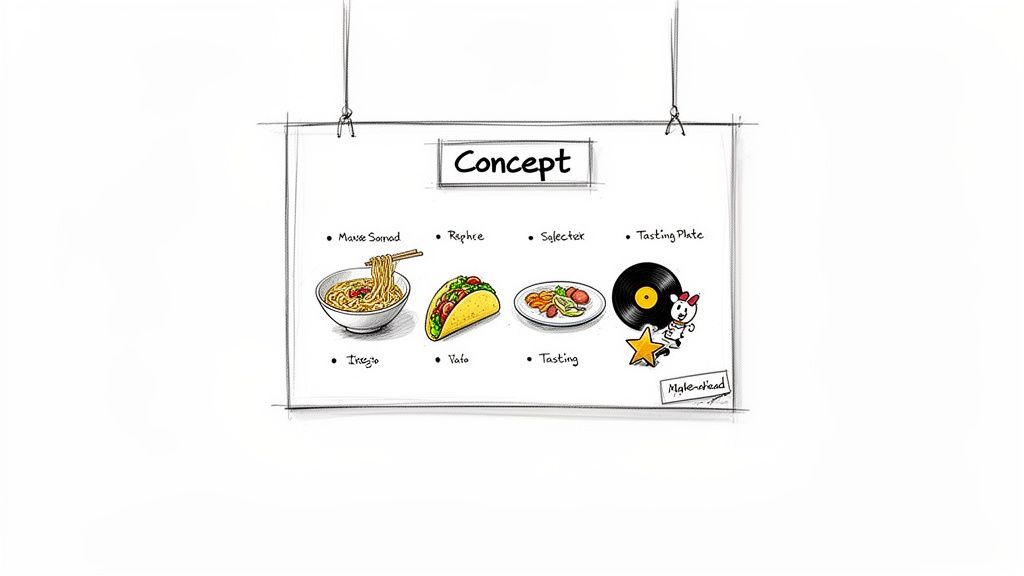
Your concept is the one-sentence answer to, "So, what's this thing you're doing?" It needs to be specific.
Is it a ten-course tasting menu inspired by 90s cartoons? A late-night ramen shop that takes over a record store? A vegan taco stand at the local brewery? Each of these paints a picture. They have personality.
The data backs this up. A 2023 survey showed that 76% of 'experiential diners' go to pop-ups for their surprising themes and locations. Even better, 75% of them are willing to pay more for it. People are hunting for these unique events. A sharp concept gets you noticed.
Your concept isn't just about the food. It's the music, the location, the story you tell. It’s the whole experience you’re creating for a few short hours.
For example, a pop-up focused on historical recipes might work in a museum. A casual dumpling night is a perfect fit for a cozy bar. This is a similar approach to what makes a supper club special. We break this down in our guide on how to start a supper club.
Need some inspiration? Sometimes the best ideas come from mashing two unexpected things together.
Pop-Up Concept Idea Starter
| Cuisine Focus | Potential Venue or Theme | Why It Works |
|---|---|---|
| Bao Buns & Dumplings | An independent movie theater | Sell tickets as a "Dinner & a Movie" event. Serve food before a cult classic screening. |
| Artisanal Pizza | A local craft brewery | The pairing is a classic for a reason. Low overhead, high demand, and a built-in audience. |
| High-End Vegan Tasting Menu | An art gallery or a plant shop | The elegant, beautiful surroundings match the food's aesthetic. It creates a cohesive, premium feel. |
| Late-Night Tacos | Inside a beloved dive bar | Serve hungry patrons after the main kitchen closes. The casual atmosphere is a perfect match. |
| Seafood Boil | A public park or community garden | Creates a communal, festive mood. It feels like a big, fun party rather than a formal dinner. |
Hopefully, that gets the wheels turning. The key is to find a combination that feels authentic to you and exciting to your potential guests.
Designing a Smart and Profitable Menu
Once you've nailed your concept, it's time to build the menu. This isn't your forever-restaurant menu. This is your "right now" menu. Built for speed, profitability, and a temporary kitchen.
The golden rule? Keep it small. A focused menu of three to five amazing dishes is far better than a sprawling list of ten mediocre ones. It cuts waste, simplifies your shopping, and helps you execute flawlessly under pressure.
Think about your menu with these principles:
- Prep-heavy, finish-light: Choose dishes where you can do most of the work beforehand. Think braised meats, complex sauces, or pre-portioned doughs. On-site, you should focus on assembly, searing, and plating.
- Ingredient overlap: Can the pickled onions for your tacos also garnish a salad? Smart ingredient use cuts costs, waste, and mental clutter.
- "Wow" factor vs. labor: Find the sweet spot. A stunning dish is great for Instagram. Not if it takes one person ten minutes to plate while orders pile up. Your sanity is worth more.
And be honest about your kitchen space. It's probably just a couple of stainless steel tables. You won't have a fully stocked pantry. A complicated dish that requires three different pans is a recipe for disaster.
Your goal is a menu that’s not just delicious, but operationally bulletproof. It should delight guests without driving your tiny team insane.
Navigating Permits and Legal Requirements
Okay, let’s talk about the least glamorous, most important part: the paperwork. Nobody gets into cooking because they love forms. But ignoring this is the fastest way to get shut down.
Think of it like prepping your ingredients. You have to do it. Doing it right makes everything else run smoothly. Trying to wing it guarantees a surprise visit from a health inspector and a hefty fine. I’ve seen it happen. A friend paid a $750 penalty for “forgetting” a temporary event permit. His pop-up's profits vanished instantly.
The Essential Paper Trail
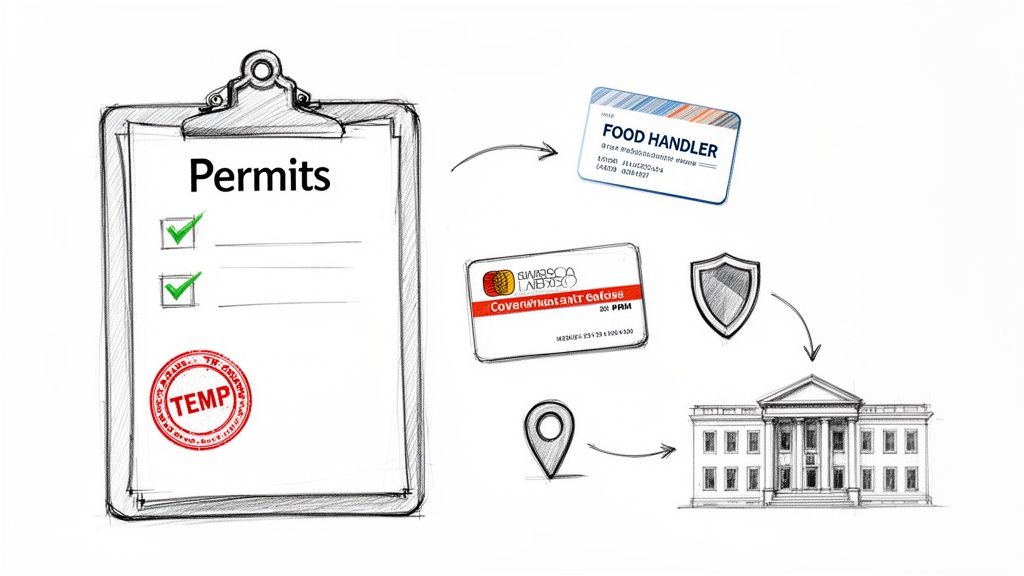
The rules change from city to city. Your first stop should always be your local health department’s website. Search for "temporary food facility permit" or "special event permit." This is usually the main one you’ll need.
Don't just skim the page. Download the actual application. It’s often a clunky PDF, but it contains everything the government expects from you. This process is your first real test in learning how to start a pop up restaurant legally.
Here’s a general list of what you’ll likely need:
- Temporary Food Facility Permit: This is the big one. It gives you legal permission to sell food for a limited time. Apply for this at least 30 days in advance. Seriously.
- Food Handler's Card: Most places require that at least one person on-site (that’s you) has this certification. It’s an easy online course that takes a few hours and costs around $10. Just get it done.
- Business License: Even for a temporary gig, your city wants its cut. You’ll likely need a basic business license to operate legally.
- Liability Insurance: This is non-negotiable. If a guest gets sick or trips over a cord, you are personally on the hook without it. A short-term event policy is surprisingly affordable.
The goal isn't to become a lawyer. It's to do enough homework to operate legally and confidently. Get this right so you can focus on the food.
Finding Your Local Rules
The maze of local regulations can feel overwhelming. The secret is knowing who to ask. Your county's public health department is your main source of truth. Find their number and call them.
Yes, a real phone call.
Explain what you’re doing in simple terms. "I’m planning a one-day pop-up restaurant at a local brewery and need to know which permits I need." Government employees are often helpful when you’re polite and have specific questions. They deal with confused people all day. Be the one who did some homework first.
Your venue partner can be a huge help here. If you're popping up at a brewery, gallery, or community kitchen, they’ve hosted events before. They know what the health department requires. Ask for a copy of a previous event permit application to use as a guide. Don't reinvent the wheel.
Securing a Venue & Selling Tickets
Alright, you have a killer concept and a drool-worthy menu. Now, you need a stage.
This is where the rubber meets the road. Your venue could be anywhere. A local brewery, an art gallery, a friend’s backyard. The trick isn’t just finding a space. It’s finding a partner who gets what you’re doing.
Pitching your pop-up to a potential venue is like a first date. Show up prepared. Be confident. Make it clear why a collaboration is a win for them, not just you. You’re not just asking for a room. You’re offering to bring new energy and a new crowd through their doors.
Pitching to Potential Venues
Don't fire off a generic email. Show up with a simple, one-page summary of your concept, your menu, and a few dates. Be specific.
Instead of, "I want to do a pop-up," try this: "I'd like to host a 40-seat, ticketed 'Late-Night Ramen' event on a Tuesday—your traditionally slow night—to bring in a fresh crowd." See the difference? One is a vague idea. The other is a business proposal.
My checklist for a great venue partner:
- Existing Infrastructure: Do they have tables, chairs, and a dishwasher? The less equipment you have to rent and haul, the better. Trust me.
- A Built-in Audience: Popping up in a popular brewery or coffee shop gives you instant access to their regulars. It's a massive marketing shortcut.
- A Clear Agreement: Get everything in writing. No handshake deals. Does the venue want a flat fee or a percentage of sales? Who’s responsible for cleanup? A simple one-page agreement prevents awkward conversations later.
Once you’ve locked in a date and place, it’s go-time. You have to get people in the door.
The Only Sane Way to Sell Tickets
Seriously. Do not rely on Instagram DMs and a flood of Venmo requests. It’s a recipe for disaster. It’s messy, unprofessional, and makes tracking money a nightmare.
Pre-selling tickets is the only sane way to run a pop-up. Period.
It accomplishes three critical things:
- Secures Revenue Upfront: This is huge. You have cash in hand to buy ingredients. No more spending your own money and hoping people show up.
- Slashes No-Shows: When people pay for a ticket, they come. This dramatically cuts food waste and ensures your tables are full.
- Informs Your Prep: You know exactly how many people are coming. No more guessing means you buy the right amount of ingredients.
Setting up a simple, clean ticketing page is non-negotiable. This isn’t a nice-to-have. It's a core part of your operation.
A good ticketing page lets customers buy tickets in a few clicks. This provides a professional, seamless experience from their very first interaction with your brand.
Choosing the Right Ticketing Tool
You don’t need a complicated system built for concert venues. You need something simple you can set up in minutes, no code needed. Look for a tool that lets you add your own logo and branding, so it feels like your event.
The most important factor? The pricing model. Avoid platforms that skim a percentage off every ticket. A flat-fee pricing model means you keep more of your hard-earned money.
Fast, secure payouts are also non-negotiable. You need that cash to hit your bank account quickly so you can buy ingredients. Whether you're selling tickets for five people or five thousand, the right tool makes the process smooth for you and your guests. If you want to dive deeper, we have a guide on choosing the right reservation software for your event.
This streamlined approach isn't just about convenience. It’s about profitability. Pop-ups often net 20-30% higher profit margins than traditional restaurants. This is driven by smart collaborations and the glorious absence of fixed rent. Getting your venue and ticketing dialed in is the foundation of that success.
Marketing Your Pop-Up to Sell Out
You can cook the best food in the world, but if nobody knows about it, you're just cooking for yourself. Marketing your pop-up isn't about fancy campaigns. It's about creating real buzz and a friendly sense of urgency.
Your job is to give people a reason to stop scrolling and pay attention. The good news? You don’t need a marketing degree. You just need a story and a smartphone.
Your Story Is Your Strongest Asset
People don’t just buy a ticket. They buy into your vision. Your personal story is the hook that turns a casual follower into a paying guest.
Why are you doing this? What’s the inspiration behind the menu? Maybe you’re recreating your grandmother’s recipes from Naples. Maybe you’re obsessed with perfecting a single dish. Whatever it is, tell that story. People connect with passion, not just pretty food pictures.
Show the behind-the-scenes stuff, too. The trip to the farmers market. The failed experiment with a new sauce. This makes your pop-up feel personal and real.
Instagram Is Your Best Friend
For a pop-up chef, Instagram is your entire marketing department. It’s visual, it’s immediate, and it’s where food lovers live.
Your mission is simple: make people hungry and create a little FOMO.
- Take Great Photos: You don't need a pro camera. Just find good, natural light. Get near a window. Stay away from harsh kitchen fluorescents.
- Write Compelling Captions: Use your captions to tell your story. Don't just post "Tuna tartare." Say, "Finally perfected this tuna tartare after a week of testing. The secret is a dash of yuzu and toasted sesame oil. Only making 30 plates next Saturday." See the difference?
- Use Stories and Reels: Stories are perfect for showing the process. The sizzle of onions in a hot pan builds anticipation. Slap a countdown sticker on a story right before tickets go live to create a clear call to action.
Think of your social media as an invitation to an exclusive party. You're not just selling a meal. You're selling an experience people will talk about long after.
Collaborate with Local Food People
Forget paying big influencers. Instead, focus on building genuine relationships with local food bloggers, photographers, and other chefs in your city.
Make a list of five to ten local accounts that have an engaged audience, even if it’s small. These are the people whose followers trust their recommendations.
Don't just slide into their DMs with a cold pitch. Interact with their content for a few weeks first. Then, send a simple message. "Hey, I love your posts. I'm hosting a small pop-up on the 15th and would be honored if you'd come as my guest. No strings attached."
Most small creators are thrilled to be invited. An honest, excited post from them is worth more than any ad you could buy. If you're looking for more ways to get the word out, we’ve put together some tips on marketing events effectively.
This entire process is how you transform a simple meal into a sold-out event.
Nailing the Big Day: Your Event Execution Playbook
This is it. Game day. The day of your pop-up is a controlled storm. Success here has nothing to do with luck. It's all about relentless, obsessive preparation. Get this right, and you can actually enjoy the beautiful chaos you've created.
It All Starts Before Doors Open
Your prep timeline is your bible. This starts at least 48 hours out. It should detail every single task, from dicing onions to packing the van. By event day, you are not creating. You are assembling.
Your temporary kitchen needs to be a machine. Even if you're working off three folding tables, create logical stations for prep, cooking, and plating. Keep your workspace immaculate. A messy station slows you down and kills the mood.
This whole process is about building momentum that carries you through the event.
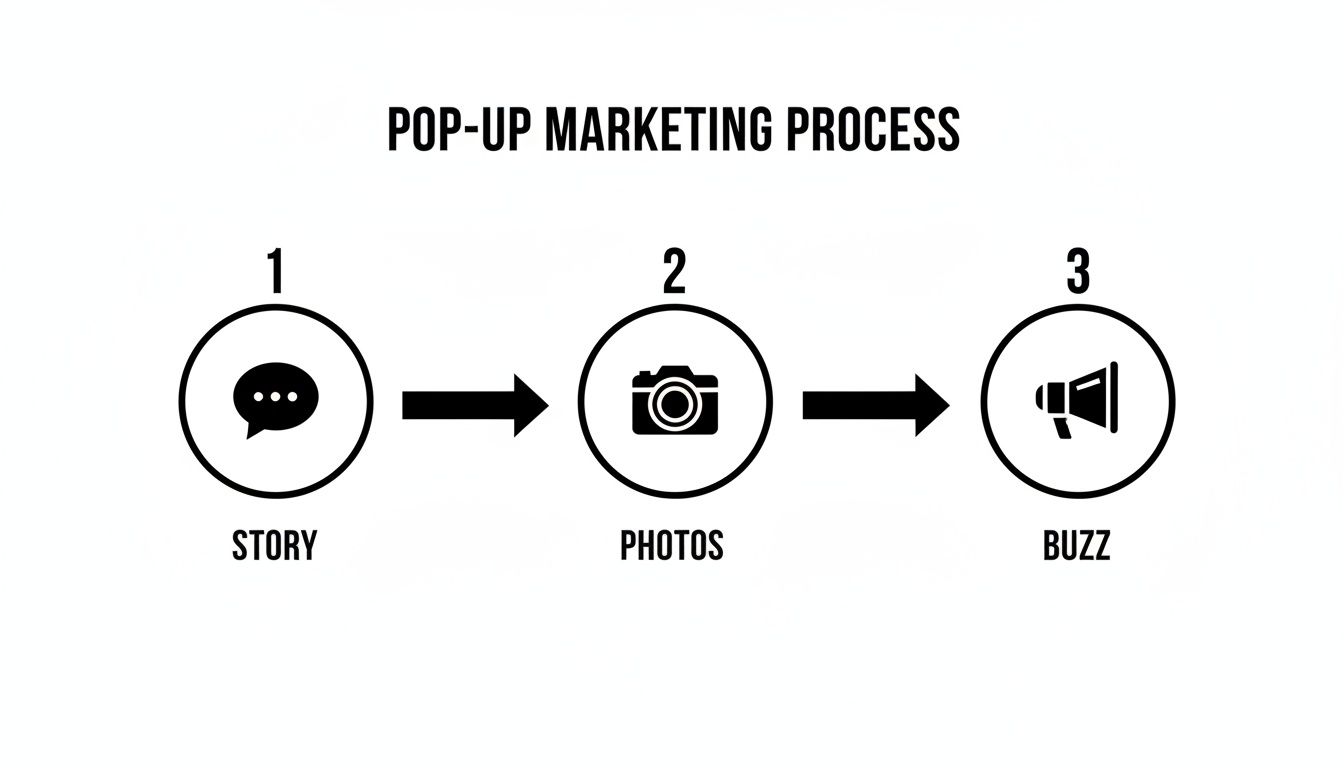
You tell your story, share incredible photos, and build buzz, all leading to a smooth, unforgettable day.
Managing the Flow of Service
Service is a dance. You're the choreographer. Walk through the entire guest journey yourself. Where do they check in? Is there a clear path to order? Where’s the bathroom? Don't leave these things to chance.
A smooth check-in sets the tone. This is where pre-selling tickets with a platform like Ticketsmith is a game-changer. Instead of fumbling with a cash box, you have a clean guest list on a tablet. Check them in, and they're off. It’s fast, professional, and lets you focus on hospitality, not transactions.
Remember the small stuff. It’s always the small stuff. Pack extra trash bags, tasting spoons, salt, a first-aid kit, and a phone charger. I keep a dedicated "Go Box" with these essentials and never leave without it.
If you plan on selling add-ons like drinks or merch, a reliable point-of-sale (POS) system is key. It keeps orders straight and transactions clean. It’s worth digging into some restaurant POS comparisons, including Square, to find a lightweight system that fits your needs.
Finally, have a plan for when things go wrong. Because something will. What's the plan if a breaker trips? What's your pivot if you run out of a key ingredient? Thinking through these "what if" scenarios means you'll react with a calm solution instead of panic.
The Essential Day-Of Checklist
To keep your head on straight, a checklist is your best friend. This table breaks down the essentials. Print it out, put it on a clipboard, and thank me later.
| Category | Task or Item | Status |
|---|---|---|
| Pre-Service | Confirm staff arrival times & duties | ☐ Done |
| Full kitchen setup & equipment check | ☐ Done | |
| Set up check-in station (tablet, list, pens) | ☐ Done | |
| Finalize music playlist & speaker setup | ☐ Done | |
| Run a test transaction on the POS system | ☐ Done | |
| Front-of-House | Extra menus printed | ☐ Packed |
| Signage (welcome, menu, directions) | ☐ Placed | |
| Ample trash & recycling bins | ☐ Placed | |
| Water station for guests | ☐ Stocked | |
| Back-of-House | "Go Box" with essentials (first aid, charger, etc.) | ☐ Packed |
| All prepped ingredients labeled & organized | ☐ Done | |
| Sanitizer buckets & clean towels at each station | ☐ Ready | |
| Fire extinguisher easily accessible | ☐ Located | |
| Post-Service | Breakdown checklist assigned to team members | ☐ Ready |
| Designated containers for leftovers & food waste | ☐ Ready | |
| Final cash out & POS report reconciliation | ☐ Ready |
Having a physical list to check off provides a huge sense of control and ensures no critical detail falls through the cracks.
Got Questions? Let's Get Them Answered
Alright, we've covered the big stuff. But I know you have nagging questions. It's the little details that can trip you up. Let's tackle the most common ones.
No fluff. Just straight answers.
What’s the Real Cost to Start a Pop-Up?
This is always the first question. The honest answer is: it really depends. But we are not talking about restaurant money here. You do not need a five-figure loan.
A simple, one-night event could run you anywhere from $500 to $3,000. The two biggest variables are your ingredients and your venue. Renting a full commercial kitchen will hit your budget harder than partnering with a brewery for a percentage of sales.
Your best friend for keeping costs down isn't skimping on quality. It's selling tickets in advance. When you have guaranteed revenue before you buy a single onion, you only purchase what you need. It changes the financial game.
How Do I Figure Out My Ticket Price?
Pricing feels like a mystical art, but it's mostly straightforward math. You have to track every single expense. Everything.
- Food Costs: Add it all up. Every herb, every pinch of salt.
- Your Labor: Pay yourself. I'm serious. Set an hourly wage and factor it in. Your time is valuable.
- Fixed Costs: This is your venue fee, equipment rentals, insurance, and permit costs.
- Ticketing Fees: If your platform takes a percentage, that needs to be in the equation. (A flat-fee platform makes your math a lot simpler).
Once you have that total, add your profit margin. Aim for 20-30%. Now, divide that final number by how many tickets you can realistically sell. Don't undervalue your work. People are coming for a one-of-a-kind experience. Price accordingly.
What are the Biggest Rookie Mistakes?
Oh, I've seen some trainwrecks. It usually comes down to a few classic mistakes. Here are the top three.
First, trying to do too much with the menu. You aren't running a kitchen with ten chefs. You're working off two induction burners in a corner. A simple menu executed flawlessly will always beat a complex, chaotic one.
Second, blowing off the legal stuff. The whole "ask for forgiveness, not permission" thing does not fly with health inspectors. Just do the paperwork. It will save you from getting shut down.
And third, not using a real ticketing system. Trying to manage sales through DMs and Venmo is pure chaos. It screams amateur and is a surefire way to lose track of money and your sanity.
Ready to stop wrestling with spreadsheets and start cooking? Ticketsmith lets you launch a beautiful, on-brand ticketing page in minutes. We handle payments and payouts with one simple flat fee, so you can focus on the food. Get started with Ticketsmith today.