
You need to sell tickets for your event. Let's make that happen.
First, you need an online page to describe your event, set your prices, and connect a bank account. The best tools I’ve found let you do all this in minutes. No code. No nonsense. They handle the payments securely and give you a page that looks like your brand, not theirs.
Find the Right Place to Sell Your Tickets
Before you can sell a single ticket, you need a home base. Think of it as your event’s digital storefront. This used to be a frustrating decision, filled with clunky software and confusing prices.
It doesn't have to be that way anymore.
The goal is to find a tool that just gets out of your way. If you're a pop-up chef or a workshop host, you're not a web developer. You shouldn’t have to learn code just to sell spots for your sourdough class. Look for a platform that promises setup in minutes. Your time is better spent making your event awesome.
Why Your Branding Matters
When someone clicks to buy a ticket, they should feel like they’re still talking to you. A generic, corporate-looking checkout page creates a weird disconnect. It can feel untrustworthy.
Custom branding lets you upload your logo and pick your colors. The entire experience from start to finish feels seamless. It’s a small detail that shows you care, which says a lot about the event itself.
Watch Out for Hidden Fees
This is the big one. So many platforms lure you in with a "free" setup, then skim a percentage off every single ticket you sell. That 5% fee might not sound like much, but it adds up fast.
Suddenly, a huge chunk of your revenue is just… gone.
A flat-fee pricing model is almost always a better deal. You pay a simple, predictable fee per ticket. No surprises. No weird math. You keep the money you actually earned.
Imagine you sell 100 tickets at $50 each. A platform taking 5% plus a transaction fee could cost you over $250. With a simple flat fee, you might only pay $100. That’s real money, especially when you’re just starting out.
Let's break down how these fees actually work.
Comparing Ticketing Platform Fee Structures
Here’s a quick breakdown of how ticketing platforms charge. This is where your money goes.
| Fee Type | How It Works | Best For |
|---|---|---|
| Percentage-Based | The platform takes a percentage (e.g., 2.5% - 7.5%) of each ticket's price. | High-volume, low-cost tickets where the fee per ticket stays small. |
| Fixed Fee | A flat amount is charged per ticket sold (e.g., $1.00 per ticket), regardless of the price. | Higher-priced tickets, as the fee doesn't scale with the price. |
| Hybrid (Percentage + Fixed) | A mix of both—often a percentage plus a small fixed amount (e.g., 2.5% + $0.99). | Often the most expensive and least transparent model. |
| Subscription/SaaS | You pay a monthly or annual fee to use the platform. They don't take per-ticket fees. | Organizers who run many events frequently and want predictable costs. |
Run the numbers for your event. But for most small to mid-sized organizers, a simple fixed-fee model gives you the most clarity and value.
Scalability from Five to Five Thousand
Your needs might be small today. They could grow tomorrow. Maybe your first pottery workshop has eight spots, but the next one has twenty. A good platform works for an intimate gathering just as well as a community festival.
You need a tool built for real people pouring their hearts into real events.
For virtual events, this is even more critical. You want to make sure your digital attendees have a smooth experience from purchase to login.
The right platform gives you fast, secure payouts straight to your account. It gives you a simple interface you don't have to fight with. And it gives you the freedom to focus on what really matters—creating an event people will love.
Design Your Event Page and Ticket Tiers
This is the moment your event starts to feel real. Your event page isn't just a sales form. It's your digital front door. It needs to tell a great story right from the jump.
The good news? You can forget about hiring a developer or wrestling with code. A good platform lets you build a beautiful, simple page in minutes. The point is to get people excited enough to click "buy" without any friction.
Make It Look Like Your Event
Your event has its own personality. Maybe you're hosting a cozy pop-up dinner or a high-energy fitness workshop. Your ticket page needs to reflect that.
Custom branding is a must. When someone lands on your page, it should feel like your event, not some generic portal. Simply uploading your logo and picking your brand colors creates a seamless, trustworthy experience. It's a small touch that helps you sell more tickets.
Creating Ticket Tiers That Make Sense
One size rarely fits all. Offering different ticket types, or tiers, is a smart way to serve different attendees and build early momentum. You don't need a dozen options. A few thoughtful ones will do.
Here are a few classic tiers that work for almost any event:
Early Bird: This is your secret weapon for creating buzz. Offer a limited number of tickets at a discount to reward people for committing early. It gets cash flowing and proves there's demand.
General Admission: Your standard, full-price ticket. This sets the baseline for your event's value.
VIP or Premium: This tier offers something extra. It could be front-row seating, a free t-shirt, or a complimentary drink. It’s a great way to boost revenue from your biggest fans.
Think of your ticket tiers as different ways for people to experience what you've created. Someone might be happy with the basics. Another person might pay more for a special touch. Give them that choice.
Just don't overcomplicate it. For a ten-person pottery class, one ticket type is probably fine. For a food festival with 200 attendees, three tiers could be perfect. Match the complexity to your event. If you need ideas, we put together a handy template for tickets for events you can use for inspiration.
Pricing Your Tickets Without Guessing
Figuring out what to charge can feel like a shot in the dark. Price too high, and you might scare people off. Price too low, and you leave money on the table.
Start by adding up all your costs: venue rental, supplies, marketing, you name it. Then, decide on a profit margin you’re comfortable with. Divide that total by the number of tickets you realistically expect to sell. Boom. You have a solid baseline price.
Don’t forget to factor in your time and expertise. You're not just selling a seat. You're selling an experience you poured your heart into. Value that accordingly.
None of this matters without a clean checkout process. A clunky, confusing payment page is where potential sales go to die. Make sure your platform provides a fast, secure payout system. Money should go straight to your account. This makes the whole process feel professional for both you and your attendees.
How to Promote Your Event (Even If You're Not a Marketer)
Alright, your event page is live. It looks great. The ticket tiers are perfect. Now… crickets.
This is the part where most creators freeze. You’ve built the thing. How do you get people to actually show up and buy? The good news is you don’t need a giant marketing budget. You just need to talk to people like a human.
Start with Who You Know
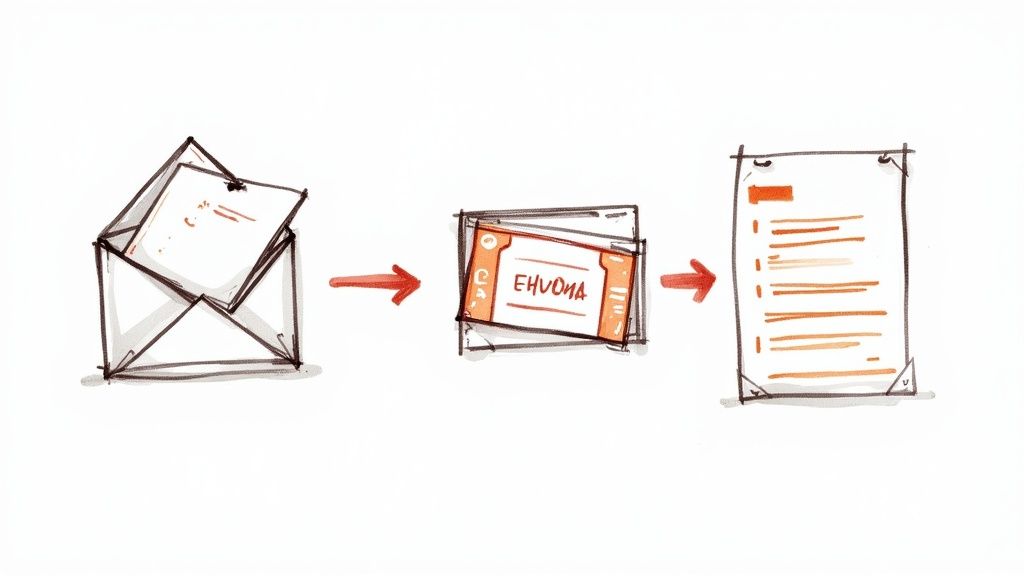
Before you think about running ads, just send an email. A real email to your friends, family, and past attendees. This isn’t a robotic marketing blast. It’s a personal note.
Something simple like this works wonders:
"Hey everyone, I’m so excited to finally announce my next pop-up dinner on the 15th! I’m trying something new with the menu, and I’d love for you to be there. Here’s the link to grab a spot. Hope to see you!"
This isn’t about being pushy. It’s about sharing something you’re passionate about with people who already support you. They’re your most likely first customers. Their early ticket sales create the momentum you need.
Use Social Media Without Sounding Like a Robot
Posting on social media can feel like shouting into the void. The trick is to stop selling and start sharing. People don't want a sterile ad. They want a peek behind the curtain.
Here are a few simple ideas:
Show your process. If you’re a pottery instructor, post a short video of you at the wheel. Talk about what makes this workshop special.
Introduce your partners. Teaming up with a local coffee shop? Post a photo of you both and talk about why you’re excited to collaborate. This doubles your reach.
Ask questions. Instead of just saying, "Buy tickets!" try asking, "What’s the one dish you’ve always wanted to learn how to make?" This starts a conversation.
The goal here is to be a real person, not a faceless brand. When you're trying to sell tickets, authenticity is everything. For a deeper look, we put together a guide with more actionable event promotion strategies.
Create Urgency Without Being Annoying
Nobody likes aggressive countdown timers. But a little genuine urgency gives people on the fence a gentle nudge. It helps them make a decision before it’s too late.
A great way to do this is by being totally transparent.
Instead of a generic "TICKETS SELLING FAST!", try something more honest: "Wow, we've already sold half the spots for the workshop! Only 10 seats left." It’s factual, exciting, and encourages people to act without feeling pressured. Highlighting the limited number of Early Bird tickets works the same way.
Remember, promotion isn't about tricking people into buying. It's about finding the right people who will genuinely love what you've created and making sure they don't miss out.
People are actively looking for cool things to do. Your job is just to help them find you. Consistent, honest communication is all it takes. Whether you're filling a five-person class or a five-hundred-person fair, these simple steps will help you sell out your event.
Manage Your Event Day Without the Chaos
The big day is here. After weeks of planning and promoting, the last thing you need is a chaotic check-in. First impressions matter.
This is where your hard work pays off. A smooth entry sets the tone for the entire experience. Thankfully, managing arrivals no longer requires a clipboard and a prayer.
Ditch the Paperwork and Go Digital
Remember flipping through a printed list, trying to find a name while a line of guests grows behind you? It’s a special kind of panic. Let’s not do that.
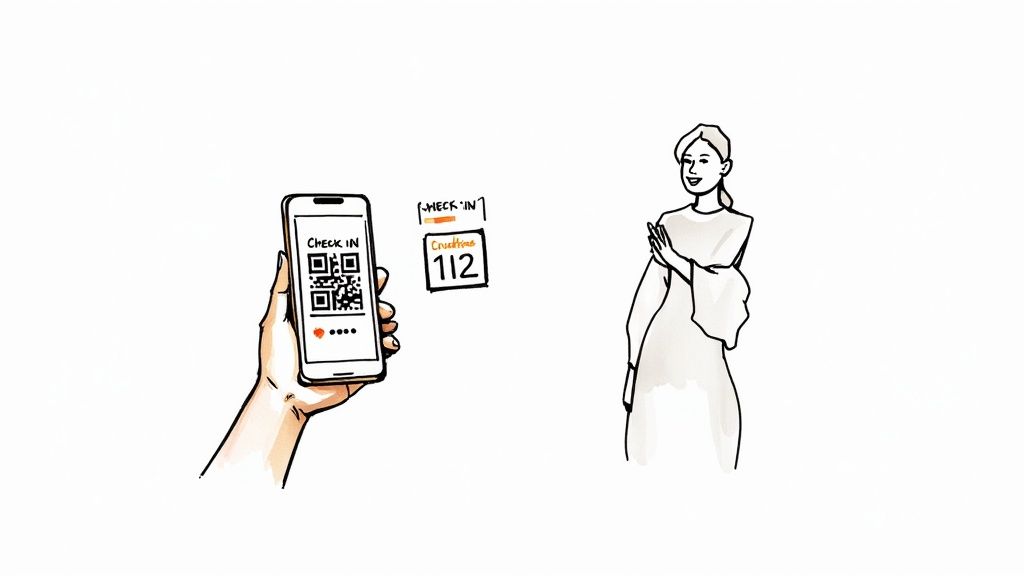
Modern ticketing platforms like Eventbrite or Ticket Tailor give you simple digital check-in tools, usually through an app on your phone. As attendees arrive, you scan the QR code on their ticket. The app instantly verifies it and marks them as checked in. It’s fast, foolproof, and makes you look like a pro.
This solves a few classic headaches:
No more duplicates. The system won't let the same ticket be scanned twice.
Real-time tracking. A quick glance tells you exactly who has arrived and who you’re still waiting on.
Team access. If you have volunteers, they can all log into the same system from their own phones to bust through the line.
It’s simple tech that makes a huge difference, whether you're welcoming five people to a workshop or 500 to a market.
Handling Last-Minute Sales at the Door
Someone will always show up without a ticket. It’s inevitable. Instead of turning them away (and turning down money), be ready to sell tickets on the spot.
A good ticketing system makes this easy. You just open your event page on a tablet or phone, take their payment through a secure processor like Stripe or PayPal, and issue a digital ticket. No clunky cash boxes or clumsy card swipers needed.
This isn't just about convenience. It's about maximizing revenue. Making it simple to buy a ticket at the door captures those spontaneous attendees.
Just make sure your platform can handle this smoothly. The whole process should take less than a minute. You don't want to be stuck at the door playing cashier while your event is happening.
Why Your Check-In Data Matters
Once the last guest leaves, you might be tempted to collapse. But hold on—there’s one final step: looking at the data.
Your ticketing platform should give you a clear, simple report. This isn't about getting lost in spreadsheets. It's about answering a few key questions with a quick glance.
Final Ticket Count: How many tickets did you actually sell, including at the door?
Attendance Rate: What percentage of ticket holders showed up? (This is a huge indicator of engagement.)
Ticket Tier Breakdown: Which tickets were the most popular?
This information is pure gold. If 80% of your attendees bought "Early Bird" tickets, you know to double down on that next time. If your "VIP" tier sold out instantly, maybe you can add more spots or increase the price for your next event.
This isn't boring admin work. It’s how you learn and make sure your next event is even more successful.
Get Paid And Prepare For Your Next Event
You did it. The event was a success. Now comes the part everyone looks forward to—getting paid. After pouring your heart into a project, the last thing you need is a long wait for your money.
Let’s talk about what happens after the curtain falls. This isn’t just about collecting the cash. It's about closing the loop and turning this year's happy attendees into next year's fans.
Don't Wait Weeks To Get Your Money
Some ticketing platforms hold your funds for days, or even weeks, after your event. It’s your money. You shouldn’t have to chase it down.
When you're choosing a service, look for one that offers fast, secure payouts directly to your bank account. The best platforms initiate the transfer within a day or two of your event's conclusion. This is a fundamental matter of respect for your work. You've got suppliers to pay and your own bills to cover.
A simple, transparent payout process is a non-negotiable. No bizarre holds. No confusing transfer windows. Just your earnings, sent straight to you.
Tackling Refunds And Cancellations
No one enjoys thinking about refunds. But having a clear policy in place before you sell a single ticket will save you a world of headaches.
Your policy doesn't need to be written by a lawyer. It just needs to be clear, easy to find on your event page, and fair to both you and your attendees. A good policy sets expectations and protects you from last-minute chaos.
Being upfront about your refund rules builds trust. People are more willing to hit "buy" when they know exactly what to expect if their plans change. It shows you're a professional.
Simple Refund Policy Checklist
Crafting a refund policy from scratch doesn't have to be complicated. The goal is to cover the most common situations clearly.
Here are the key points to include.
| Policy Point | Why It Matters | Example Wording |
|---|---|---|
| Refund Window | Defines the cutoff for requests. This protects you from losing money on last-minute cancellations. | "Full refunds are available up to seven days before the event. No refunds will be issued after this date." |
| How to Request | Tells people the exact steps to take. This prevents frantic DMs and missed emails. | "To request a refund, please reply to your ticket confirmation email with your request." |
| Processing Time | Manages expectations about when they'll see their money back. | "Approved refunds will be processed within five to seven business days." |
| Event Cancellation | Covers your bases if you have to cancel. This is crucial for maintaining your reputation. | "If the event is canceled by the organizer, all ticket holders will receive a full refund automatically." |
This simple framework covers most of the bases for a small workshop or pop-up. Just make sure it’s clearly visible on your ticket page.
The Follow-Up Email That Builds a Community
Your job isn't done when the last person leaves. There's one final step: the thank-you email.
A day or two after your event, send a short, genuine email to everyone who attended. This isn’t a sales pitch. It’s a simple gesture of appreciation.
Thank them for coming. A simple "Thanks so much for being there" feels personal.
Share a highlight. Include a great photo from the event or a link to a quick recap.
Ask for feedback (optional). A quick, one-question survey ("What was your favorite part?") can give you amazing insights.
Hint at what's next. End with something like, "Hope to see you at the next one!" to keep them engaged.
This is how you start building a real community around your work. These are the people most likely to buy tickets for your next event. You’ve finished strong, and now you’re ready to do it all over again.
Your Top Ticketing Questions, Answered
Alright, you’ve made it this far. You're serious about putting on a great event. But a few questions always seem to pop up right as you're ready to hit "publish."
Let's tackle the ones I hear most from creators just like you.
"Help! What if I Only Sell a Few Tickets?"
First, take a deep breath. This happens. Slow sales rarely mean your idea is bad. It almost always means your promotion needs a little nudge.
Go back to your core supporters. Send another personal email to that handful of people you know are interested and ask them to share it. The first ten tickets are always the hardest to sell. Once people see others are buying, they're much more likely to join.
"How Far in Advance Should I Start Selling?"
This depends on your event. A solid rule of thumb for small to medium-sized events is four to six weeks out.
For a one-day workshop, a month is usually plenty. For something bigger, like a festival, you might want to start three or four months in advance.
The goal is to find that sweet spot: giving people enough time to plan, but not so much that they forget. Launching "Early Bird" tickets about six weeks out is a perfect way to build initial momentum.
Don’t get hung up on the perfect timeline. Just get started. Getting the page live is more important than waiting for the “perfect” moment.
"Can I Sell Tickets at the Door?"
Absolutely, and you should be prepared to. People will always show up at the last minute. The key is to make it simple for them (and for you).
Using a platform that lets you sell tickets from a phone or tablet is a game-changer. You can take a secure card payment in seconds, and they're instantly checked in. It keeps your numbers accurate and saves you from fumbling with a cash box.
This simple feature can easily add an extra 5-10% to your total sales. It’s a no-brainer.
"What’s the Best Way to Handle Different Ticket Types?"
My best advice? Keep it simple. It’s tempting to create a dozen complicated ticket tiers. For most events, two or three is all you need. The trick is to offer clear value.
Early Bird: A discount for people who commit early.
General Admission: The standard price for the standard experience.
VIP/Premium: A higher price for something extra (better seating, a free drink, exclusive merch).
Each tier needs a distinct benefit. If someone can't understand the difference in ten seconds, it's too complicated. For most creators we work with, a simple Early Bird and a General Admission ticket is all they ever need to sell out.