
So, you need to sell tickets for your event. The good news? You can skip the clunky software, surprise fees, and headache-inducing setup that used to be the norm.
The best way to get it done is with a simple online tool. One that lets you build an event page, set your prices, and take payments securely.
We’re talking about platforms you can set up in minutes, no code needed. They let you use your own branding and charge a flat fee instead of skimming a percentage of your sales. This way, you're up and running fast and actually keep the money you earn.
Why Selling Tickets Online Is Easier Than You Think
Let's be real. You’re a pop-up chef, a workshop host, or a local organizer. You pour your heart into creating an amazing experience. The last thing you need is to wrestle with a ticketing system built for massive arenas.
This guide cuts through the noise. We're focusing on what actually works for small creators. Forget the enterprise-level features you'll never touch. We’re talking about the essentials.
What Actually Matters for Small Events
You're not Ticketmaster. And that's a good thing. You need a tool built for real people, not corporations.
Here’s what you should actually look for:
Fast Setup: You should get a live ticket page up in minutes. No developers, no dense manuals, no drama.
Your Branding: Your event page needs to look and feel like your event. Custom branding builds trust and gets people excited.
Honest Pricing: Hidden percentage fees are the worst. A simple, flat-fee model means you know exactly what you’ll make. No nasty surprises, just fast and secure payouts.
Grows With You: The right tool works just as well whether you’re selling five tickets for a pottery class or five thousand for a community festival.
There are a few ways to tackle this. But for most small events, one path is a clear winner.
Choosing Your Ticketing Approach: The Honest Breakdown
| Ticketing Method | Best For | The Good Part | The Catch |
|---|---|---|---|
| DIY (Google Forms + PayPal) | Tiny, informal gatherings with trusted friends. | It’s mostly free and you have total control. | Incredibly manual. You track everything. It can look unprofessional and is prone to errors. |
| Big-Name Platforms (Eventbrite) | Huge festivals or conferences needing maximum exposure. | Massive audience reach and powerful features. | The fees are killer. They often take a percentage and a flat fee, plus they plaster their branding everywhere. |
| Modern Ticketing Tools | Most independent creators, workshops, and small-to-medium events. | Super fast setup, flat-fee pricing, and your own branding. Designed for creators. | You'll handle most of your own marketing. Which you were probably going to do anyway. |
For most creators, a modern ticketing tool offers the perfect balance of simplicity, professionalism, and cost.
And this isn't a small trend. The online event ticket sales industry is on track to hit $12.5 billion in the U.S. by 2025. People like you are driving this growth, finding simpler ways to bring their communities together. You can read more about the growth of online ticketing to see the full picture.
Your ticketing platform should be an invisible partner. It does the heavy lifting so you can focus on creating an unforgettable event.
The goal is to make the process so smooth that attendees don't even think about it. They see your event, get excited, buy a ticket, and show up. That’s it. This guide shows you how to make that happen.
Create Your Event Page and Tickets
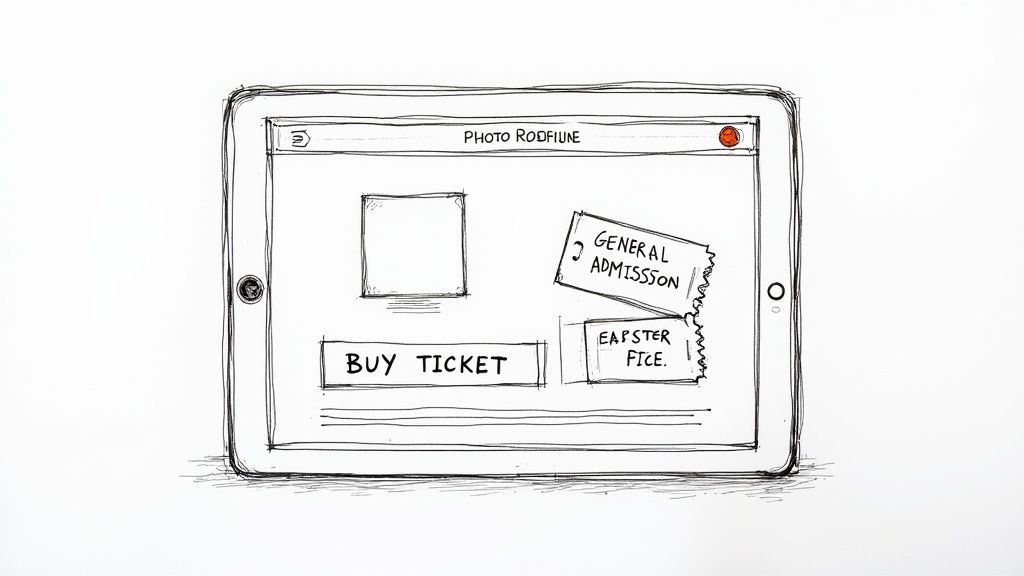
Think of your event page as your digital storefront. Its only job is to convince people to click ‘Buy.’
Let's make it a good one. Fast.
We're not building a complicated website here. Just a single, clean page that gets people excited without overwhelming them. You don't need code. Just upload your logo, plug in your brand colors, and add a few good photos.
This isn’t just about looking professional. Custom branding tells people this is a real event run by someone who cares.
Next, the description. Keep it short. What is the event? Who is it for? What will they get out of it? Answer those three questions and you’re golden. No one needs a long origin story.
Setting Up Your Ticket Types
Now for the tickets. You can keep this simple or get a bit more strategic. You don’t need an economics degree to price things right.
A few common options work well:
General Admission: The classic. One price, one ticket. Perfect for most workshops and pop-ups.
Early Bird: A great way to build momentum. Offer a limited number of tickets at a lower price to reward early birds. It creates urgency and gets cash in the door.
Tiered Tickets (VIP): This is for your biggest fans. Maybe a "VIP" ticket includes a free drink or a front-row seat. It gives them a way to support you more while getting something extra.
Remember, the fewer steps, the better. Every extra click is a chance for someone to get distracted. It's smart to use tactics that reduce shopping cart abandonment and make buying a breeze.
Pricing isn't just about covering costs. It's about communicating value. Don't be afraid to charge what your time is worth. People are paying for the experience only you can create.
This is also where your choice of ticketing platform really matters. If your platform skims a percentage off every sale, you're stuck doing annoying math to figure out your actual earnings.
Look for a platform with a simple, flat fee. That way, a $50 ticket means you get paid for a $50 ticket, minus a tiny, predictable fee. No surprises.
For a more detailed walkthrough, our guide on how to create event tickets breaks down the specifics. The goal is to make the entire process so smooth your attendees don't even notice it.
Getting Paid Without The Headaches
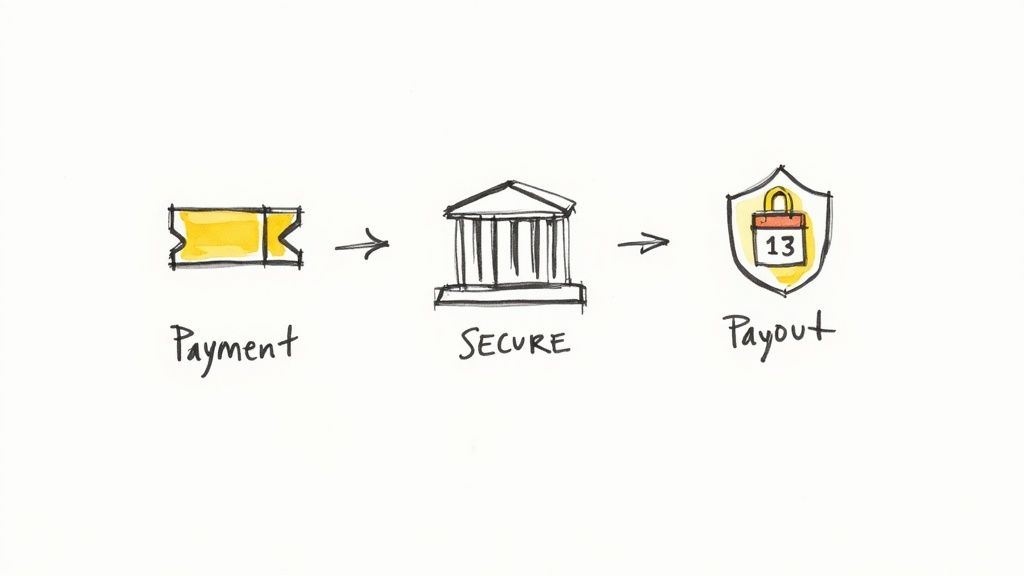
Let's talk about the part everyone really cares about: getting your money. It should be simple, secure, and fast. No excuses.
You shouldn't have to wait weeks after your event to see your funds. A solid ticketing system connects to your bank account through a trusted processor like Stripe. Payouts land directly where they belong. It’s your money. You should get it quickly.
Watching sales roll in is a thrill. Seeing the deposit land in your account should feel just as easy.
Why Transparent Pricing Is Non-Negotiable
Here’s a story I’ve heard a thousand times. You sell a ticket, but the platform skims a sneaky percentage, plus a payment processing fee. Suddenly, your $30 ticket only nets you $27.14. Those little cuts add up incredibly fast.
This is why transparent, flat-fee pricing is a game-changer.
Your ticketing platform's job is to move money from your attendee to you. It's a utility. It shouldn't get a cut of your revenue. Simple as that.
With a flat-fee model, you know your exact cost per ticket before you sell one. Maybe it’s $1 per ticket. That predictability is everything. It lets you price your event with total confidence.
No percentage skim: You keep the lion's share of your revenue.
Easy bookkeeping: Your costs are dead simple to track.
Attendee trust: You can avoid passing confusing "service fees" on to your buyers.
Connecting Your Bank and Cashing Out
Setting up payments should take minutes, not days. The best platforms handle this for you.
Typically, you'll connect a payment processor by logging into your account. The process is secure. You never have to give your direct bank details to the ticketing software itself.
Once connected, sales revenue flows right into your account on a regular schedule. This setup works whether you sell five tickets or five hundred. You get financial clarity from day one. Our guide on the best way to sell tickets covers the tech that makes this possible.
Spreading The Word and Selling Out
Alright, your event page is live. It looks sharp. Now what?
People won't just stumble upon it. You have to tell them it exists. But marketing doesn’t mean you need a huge budget. The most powerful tool you have is the clean, simple link to your ticket page.
Let's focus on the grassroots tactics that actually work.
Getting Your Link Out There
Now that your page is ready, it's time to share it. This isn't about spamming everyone. It's about sharing it with people who will be genuinely excited.
Here’s where to start:
Your Inner Circle First: Send a personal message to a handful of friends and supporters. Don't just blast a link. Tell them what you’re doing and ask them to pass it along. A personal touch goes a long way.
Your Existing Audience: You have an email list or a social media following. These are people who already like your work. Craft a genuine post explaining the event. A photo of you setting up or a short video makes a huge difference.
Niche Online Communities: Find the subreddit, Facebook group, or Discord server where your ideal attendees hang out. Read the rules, then share your event. Frame it as something valuable for the community.
The good news is that people are eager to get out and connect. The U.S. event promotion industry is projected to hit a massive $62.7 billion by 2025. You can tap into that energy.
Simple Marketing Checklist For Your Event
You don't need a massive plan. Just a few high-impact actions.
| Action Item | Where to Do It | Quick Tip |
|---|---|---|
| Personal outreach | Email, Text, DM | Pick 5-10 key people. Make each message personal. |
| Social media post | Instagram, Facebook, X | Use a great photo or short video. Tell the story behind the event. |
| Email newsletter | Your email list | Write a dedicated email, not just a mention in a larger newsletter. |
| Update your bio | Instagram, X, website | Put the ticket link directly in your bio. It's prime real estate. |
| Community share | Reddit, Discord, FB Groups | Find the right niche. Follow the rules and add value, don't just drop a link. |
Focus on doing these few things well. You'll build momentum without feeling overwhelmed.
Make Your Link Do The Heavy Lifting
Your promotion lives and dies by how easy you make it for people to buy. Your ticketing platform should give you one clean, shareable link that works everywhere. No long, clunky URLs.
Your job is to create the spark. Your link is the gasoline. Make it dead simple for people to find it, click it, and give you their money in under a minute.
This is why having your own branded page is so important. When someone clicks your link, they land on a page that looks and feels like you. It builds instant trust. To amplify your reach, pairing a great page with the right tools is key. You can explore some of the best email marketing software for ecommerce to help manage your campaigns.
Remember, you don't need to be everywhere. Pick two or three channels where your people are and focus your energy there. A few thoughtful posts are worth a hundred generic ones. For a deeper dive, check out our guide on simple event promotion strategies that actually work.
Managing Your Event On The Day
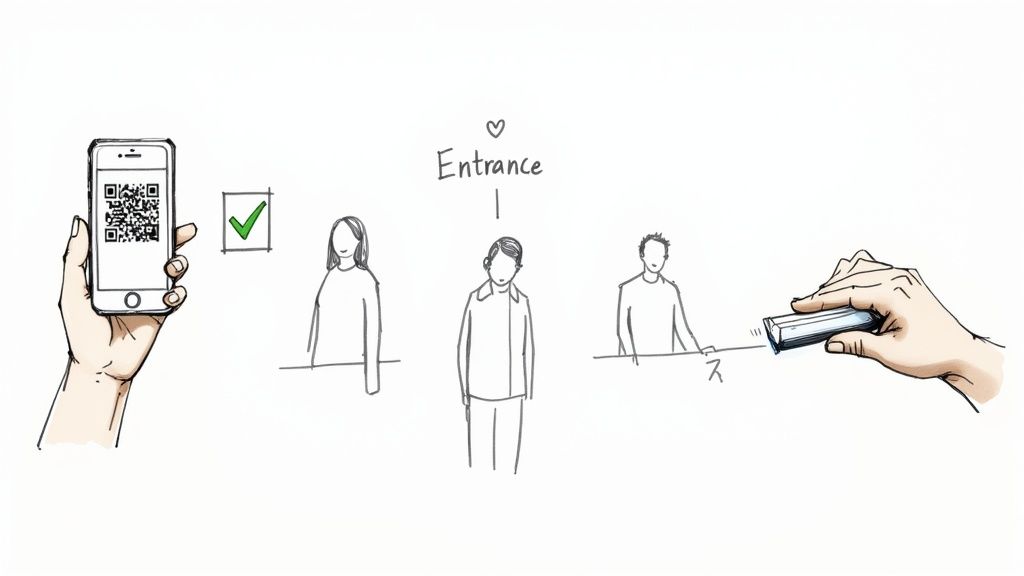
The day is finally here. Your job is to host an amazing experience, not play bouncer. Your ticketing system should make check-in painless.
Forget bulky binders and crumpled lists. A simple QR code scanner on your phone is all you need. The attendee shows their ticket, you scan it, and they’re in. It’s fast, kills lines, and makes you look like a pro.
The goal is a stress-free entry. Your focus should be on greeting people, not fumbling with tech.
Handling The Inevitable What-Ifs
No matter how well you plan, things happen. Someone will forget their ticket. Someone else will want to buy one at the door. A good system is built for these moments.
Your ticketing software should let you handle these common curveballs with ease:
Forgotten Tickets: Can you quickly look up an attendee by name or email? A search function is a lifesaver.
Last-Minute Sales: Can you process a credit card sale on the spot? This is perfect for walk-ins and turns a hassle into extra revenue.
Check-In Help: Can a volunteer easily help scan tickets without needing full access to your account?
A smooth check-in sets the tone for the entire event. When entry is quick and friendly, attendees walk in feeling welcomed. When it's slow and chaotic, they start the experience feeling frustrated.
Refund Policies and Communication
Headaches often start with fuzzy policies. Have a clear refund policy written on your event page from day one.
Be direct. State whether tickets are non-refundable, or spell out the cutoff date for requests. This transparency manages expectations and gives you a clear policy to point to if questions come up. It saves you from making tough decisions on the spot.
By choosing a tool that simplifies these on-the-day tasks, you free yourself up to actually enjoy the event you worked so hard to create.
The Event’s Over. Now What?
The last guest has left. High five. But your job isn’t quite done. This is your chance to harness all that great energy.
First, peek at your numbers. A decent ticketing platform will give you a simple report: how many tickets you sold, what you earned, and who showed up. This isn't about deep analytics. It’s about getting a clear snapshot of what worked.
Turn Attendees Into a Community
Next—and this is the part most hosts skip—thank your attendees. This simple step turns a one-time buyer into a loyal fan.
A quick follow-up email works wonders. It shows you appreciate them and gives you a chance to ask for feedback or hint at your next event. This is how you build real momentum.
Feel free to adapt this simple template:
Subject: Thanks for coming to [Event Name]!
Hey [Attendee Name],
Just wanted to send a huge thank you for being a part of [Event Name] last night. Seeing everyone connect/learn/enjoy made all the hard work worth it.
If you have two minutes, I'd love to hear what you thought. And if you took any great photos, feel free to share them and tag us!
We're already brainstorming what's next. To be the first to know, just stay on this list.
Cheers,
[Your Name]
Think of this as your secret weapon for growth. It's especially powerful now, as the online ticketing market continues to explode. The industry is projected to hit $69.25 billion by 2029, because digital tools make it easier for creators like you to connect with an audience. You can read the full research on ticketing trends if you want to see the numbers.
Answering Your Burning Questions
We've been in this game a while. A few questions pop up again and again. Let's get them out of the way.
First off, no, you don't need to be a registered business to sell tickets. Most modern platforms let you connect a personal bank account through a secure processor like Stripe. The money you make is yours. Just remember you'll need to sort out the taxes on your own.
How Much Should I Charge for My Event?
This is the million-dollar question. But there's a straightforward way to approach it.
Start with your hard costs. What are you paying for out of pocket?
The venue
Materials or supplies
Staff or collaborators
Marketing spend
Add all that up, then add a buffer for surprises. Because there are always surprises.
Next, think about the value you’re delivering. Is this a workshop teaching a rare skill? An experience people can't get anywhere else? Don't be afraid to charge what your time and expertise are worth.
Finally, do a quick sanity check. See what similar events in your area are charging. You don't have to copy them, but it gives you a feel for the local market. Underpricing can sometimes backfire and make your event seem less credible.
Other Common Questions We Hear
What if I have to cancel the event? This is why the right platform matters. It should make bulk refunds easy. More importantly, write a crystal-clear cancellation policy on your event page from day one. Transparency saves headaches.
Can I sell tickets at the door? Absolutely. A good ticketing tool will let you process credit card sales from your phone. It makes walk-up sales a breeze and keeps everything tracked in one place.
How far in advance should I start selling tickets? For smaller events like workshops or pop-ups, we’ve found that four to six weeks is the sweet spot. It gives people enough time to plan without being so far out that they forget.
The best advice is to just start. Seriously. Pick a platform, throw together a simple page, and get your link out there. You’ll learn more from selling your first ten tickets than from weeks of overthinking it.