You've got a skill, a recipe, or a community to gather. The hard part isn't the idea. It's turning that idea into a real event that people pay to attend.
Most lists of "ticketed event ideas" are full of vague concepts. They assume you have a huge budget and a marketing team. This isn't one of those lists. We've cut the fluff to give you practical ideas you can launch this month.
Here are event ideas broken down by type. We'll cover pop-up dinners, workshops, community classes, and more. For each idea, you'll get the pitch, who it's for, and what to charge. We also include simple marketing hooks and notes on how to set up your ticketing in minutes.
1. Masterclass Workshops & Skill-Building Sessions
Got a skill people want? Sell it. Masterclass workshops are hands-on events where you teach a specific skill to a small group. Think sourdough baking, watercolor painting, or even spreadsheet pivot tables.
People happily pay for a shortcut. They don't want to just watch a video; they want your direct feedback. This is a reliable event idea because the value is clear: attendees leave with a new skill.
Why It Works
This format turns your knowledge into revenue. You're not just doing the thing; you're teaching it. This builds a loyal community around your craft. The focused nature of a workshop also allows for higher ticket prices.
Quick-Start Guide
- Ideal Audience: Eager learners, hobbyists, or professionals looking to upskill.
- Pricing Model: Per-seat, flat fee ($75–$350+ depending on the skill and materials).
- Run-Time & Capacity: Two to four hours is the sweet spot. Keep it intimate with five to fifteen attendees for personal attention.
- Marketing Hooks: "Become a [Skill] Expert in One Afternoon" or "Hands-On [Topic] Workshop." Highlight the specific outcome.
- Ticketing Tip: You can set up tiered tickets easily. Offer a "Standard" ticket and a "VIP" option with a take-home kit. It's a simple way to boost revenue.
Key Insight: Don’t underestimate a waitlist. If your first workshop sells out, a waitlist proves demand for a second one. It’s the easiest market research you'll ever do. To start, you'll need a way to manage attendees without a lot of hassle. Finding some free software for event planning helps you get organized.
2. Pop-up Dining & Supper Club Events
Turn a great meal into a memorable event. Pop-up dining is about creating exclusive food experiences in unique, temporary spots. Think a supper club in an art gallery, a tasting menu on a rooftop, or a themed dinner in a private garden.
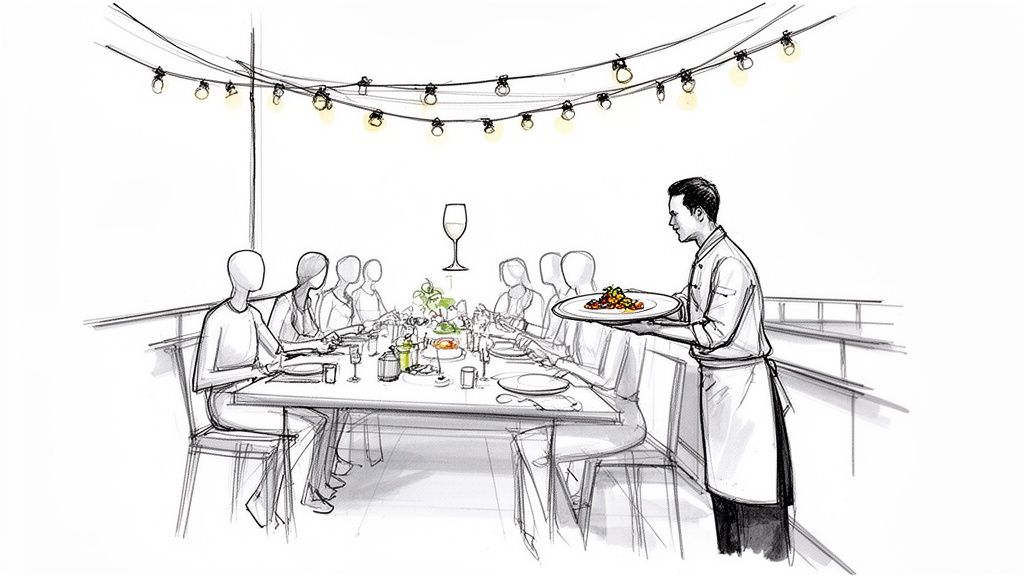
People aren't just paying for food. They're buying a story and a one-night-only community. This is a powerful idea for chefs because it combines scarcity with a premium experience. This lets you set higher prices and be creative.
Why It Works
This model turns your cooking skills into a high-demand, low-overhead business. You control the menu, the guests, and the atmosphere. It builds buzz and a following who feel like they're in an exclusive club. Because seats are limited, you can charge premium prices.
Quick-Start Guide
- Ideal Audience: Foodies, adventurous diners, and couples looking for a unique night out.
- Pricing Model: Per-seat, all-inclusive ticket ($125–$400+ covering everything).
- Run-Time & Capacity: Three to five hours. Keep it small with ten to thirty guests.
- Marketing Hooks: "A Secret Dinner Party," "One Night Only: A [Cuisine] Experience," or "Join Our Underground Supper Club." Emphasize exclusivity.
- Ticketing Tip: You can set up a custom event page in minutes to manage your guest list. Add a pre-sale "early bird" ticket for your mailing list to reward followers and build sales momentum.
Key Insight: Your story is your most valuable ingredient. Explain the theme, the chef's inspiration, and what makes the evening special. If you're just getting started, learning how to start a supper club gives you a solid framework.
3. Fitness Classes & Wellness Sessions
Turn sweat into sales. Fitness classes are ticketed events where you guide people through a physical or mindful practice. This can be anything from high-intensity training in a park to a sound bath in a studio.
People are looking for ways to improve their well-being. They'll gladly pay for a structured, motivating experience. This idea works because it taps into a consistent demand for health and self-improvement.
Why It Works
This model turns your passion for fitness into recurring revenue. It positions you as a trusted guide and helps you build a community of regulars. Offering unique or pop-up classes lets you charge more than a standard gym membership.
Quick-Start Guide
- Ideal Audience: Health-conscious individuals, fitness fans, beginners, and corporate teams.
- Pricing Model: Per-class drop-in ($15–$40) or discounted multi-class packs.
- Run-Time & Capacity: 45 to 90 minutes. Can be an intimate group of five or a large class of over 100.
- Marketing Hooks: "Sunrise Yoga in the Park" or "Unwind with a Guided Meditation." Focus on the feeling or the result.
- Ticketing Tip: Sell class passes or bundles, like a "5-Class Pack." A good system automatically prevents overbooking, so you never worry about an overcrowded class. It works for 5 to 5,000 attendees.
Key Insight: Build community beyond the session. Send a post-class email with a healthy recipe or a link to the class playlist. It shows you care about their journey, not just their attendance.
4. Networking Events & Professional Development
Don't just host a party. Host an event that helps people connect. Professional networking events are gatherings designed to help people find collaborators or learn what's next in their industry. It's about engineering meaningful conversations.
People will pay to expand their professional circle and sharpen their skills. You’re selling access and opportunity. This is a powerful event idea because its value is tied to career growth, which is a high priority for most people.
Why It Works
This model turns your network into a sellable product. You're a community builder. These events position you as an industry hub, attracting sponsors and speakers. The targeted nature also justifies premium ticket prices.
Quick-Start Guide
- Ideal Audience: Ambitious professionals, industry newcomers, job seekers, or specialists.
- Pricing Model: Tiered flat fee ($25–$150+). Offer early-bird rates and a premium tier with exclusive access.
- Run-Time & Capacity: Two to three hours for an evening event. Capacity can range from 30 to 200.
- Marketing Hooks: "Meet Your Next Co-Founder," "Insights from Industry Leaders," or "Level Up Your [Industry] Career."
- Ticketing Tip: Manage different attendee tiers easily. Create a "VIP Pass" that includes a pre-event Q&A with speakers. It’s a simple way to increase revenue while offering real value.
Key Insight: The biggest draw is often the speakers. Secure one or two notable names before you announce the event. Their reputation alone will drive initial ticket sales. To keep your costs in line, a solid event budget template is a must-have.
5. Festivals, Markets & Pop-up Experiences
Ready to go bigger? Festivals and pop-up markets let you create an entire world for attendees. These events bring together food, crafts, art, and music into one experience. Think local food festivals, holiday markets, or neighborhood art walks.
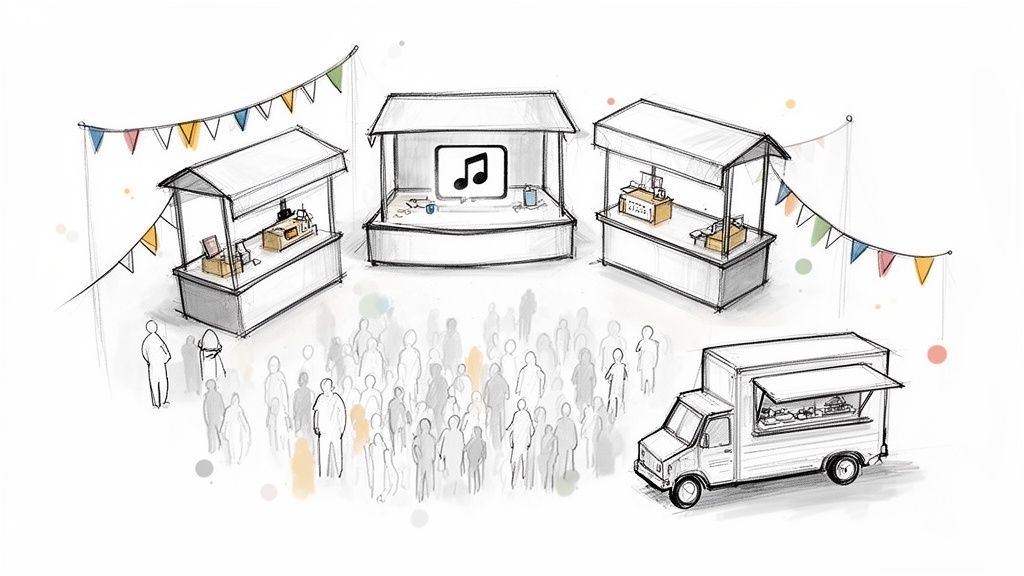
You're the curator of a great time. You bring the best local talent together. People pay for the convenience and atmosphere you've created. This is an event idea that scales well, from a small pop-up to a multi-day festival.
Why It Works
This model turns you into a community hub. You generate revenue from ticket sales (to attendees) and booth fees (from vendors). It also creates powerful cross-promotion, as each vendor brings their own audience.
Quick-Start Guide
- Ideal Audience: Community-minded locals, foodies, families, and fans of artisan goods.
- Pricing Model: Tiered admission ($10–$75+), vendor booth fees ($50–$500+).
- Run-Time & Capacity: A single day (six to eight hours) or a full weekend. Capacity can range from a few hundred to several thousand.
- Marketing Hooks: "The Best of [Your City] in One Place" or "Shop Local at the [Event Name] Market."
- Ticketing Tip: Manage multiple ticket types on one branded page that looks like yours. Create General Admission, VIP passes, and Vendor Passes. A flat-fee structure means you keep more of every ticket, with no hidden percentage skims.
Key Insight: Your vendors are your biggest marketing asset. Secure a few popular local names early to build buzz. Their participation validates your event and attracts others. Exploring some fresh concession stand ideas can also boost profits for your food vendors.
6. Charity Fundraisers & Nonprofit Events
Turn your cause into an event that matters. Fundraisers are ticketed events designed to rally support and raise money. Think beyond a donation button. Create an experience like a gala, a benefit concert, or a themed 5K run.
People want to contribute to causes they believe in. A well-run event gives them a memorable way to do it. The ticket is a direct investment in the good work you do. This makes it a powerful way to create financial and emotional impact.
Why It Works
This model turns passive donors into active participants. It creates a connection to your cause in a celebratory atmosphere. Events also attract new supporters and corporate sponsors who might ignore a standard fundraising email.
Quick-Start Guide
- Ideal Audience: Community members, philanthropists, corporate sponsors, and anyone passionate about your cause.
- Pricing Model: Tiered pricing showing donation impact (e.g., "$100 Ticket Feeds a Family for a Week").
- Run-Time & Capacity: Varies wildly, from a two-hour auction to a full-day fair. Capacity can be fifty to thousands.
- Marketing Hooks: "Party with a Purpose," "Run for a Cause," or "An Evening to Make a Difference." Always connect the event to the mission.
- Ticketing Tip: Add a "Donation" option at checkout. This allows attendees to add an extra contribution on top of their ticket price, increasing your total funds raised.
Key Insight: Transparency is key in fundraising. Clearly communicate how much of the ticket price goes directly to the cause. Using a platform with flat, upfront fees builds trust and assures donors their money isn't being eaten by hidden charges.
7. Corporate Retreats & Team Building Events
Companies are always looking for ways to boost morale, and they have the budget for it. Corporate retreats are pre-packaged experiences businesses buy to engage their employees. Think less about trust falls and more about curated days that build genuine connection.
You’re not selling a single ticket. You’re selling a solution to a company’s culture problem. This is a big-ticket item that can be a single-day workshop or a multi-day off-site. The value is clear: a happier, more cohesive team.
Why It Works
This is one of the most lucrative ideas because you’re selling to businesses. Companies set aside funds for employee engagement. You solve a major headache for HR managers who are often too busy to plan these events themselves.
Quick-Start Guide
- Ideal Audience: HR departments, team leads, and executive assistants.
- Pricing Model: Per-head fee or tiered packages based on team size.
- Run-Time & Capacity: Half-day (four hours) to multi-day events. Capacity can be a small team of ten or a company of 200+.
- Marketing Hooks: "The Ultimate Team Off-Site," "Recharge Your Team Culture," or "Build a Stronger Team in One Day."
- Ticketing Tip: Create a custom, private booking page for each corporate client. This allows them to manage their large group registration easily and gives the experience a professional, branded feel from the start.
Key Insight: Create proposal packages. Instead of one offering, present three options (e.g., Bronze, Silver, Gold) with different activities and prices. This makes the decision easier for clients. For a lasting impression, find inspiration for great corporate event goodie bags to elevate your offering.
8. Creative Workshops & Art Classes
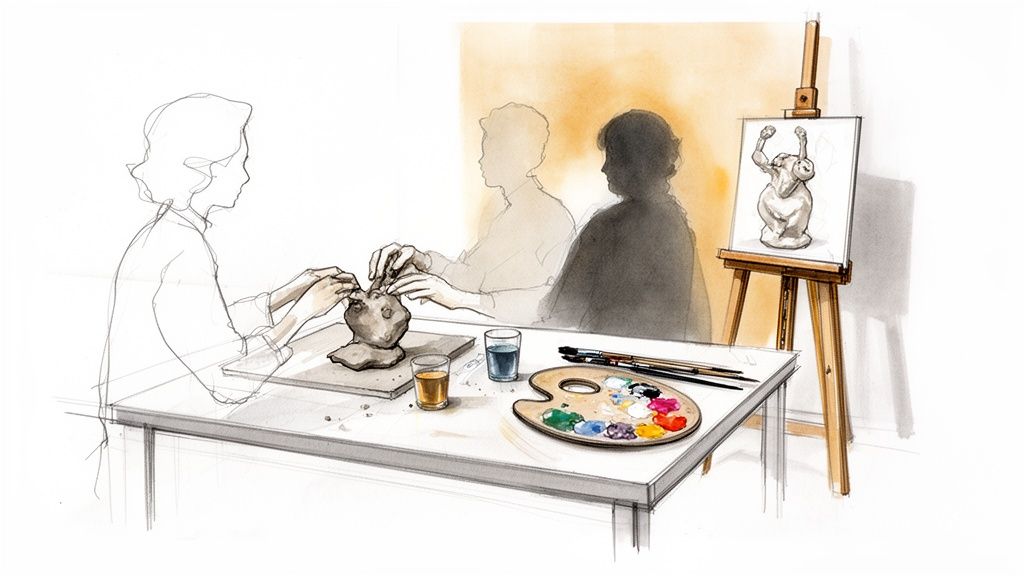
Unleash your community's inner artist. Creative workshops are events where attendees make something. Think pottery throwing, jewelry making, or a "paint and sip" night focused on fun.
People love experiences that result in a tangible souvenir. They're not just paying for a class; they're paying for the memory, the skill, and the object they get to keep. This makes it a fulfilling event for both the host and the attendee.
Why It Works
This model turns a passion for art into a recurring business. You provide the space, materials, and guidance. It creates an accessible entry point for beginners. The relaxed, social atmosphere encourages repeat customers and word-of-mouth marketing.
Quick-Start Guide
- Ideal Audience: Aspiring hobbyists, groups looking for a unique night out, and anyone needing a creative outlet.
- Pricing Model: Per-seat, flat fee ($55–$150+). Price should cover all materials and instruction.
- Run-Time & Capacity: Ninety minutes to three hours works well. Eight to twenty attendees keeps it manageable.
- Marketing Hooks: "No Experience Necessary," "Create & Take Home Your Own [Artwork]," or "Uncork Your Creativity: A Paint & Sip Experience."
- Ticketing Tip: Sell class packages or a series. Offer a single class ticket alongside a discounted "four-week pottery series" to lock in recurring revenue and build a loyal student base.
Key Insight: Seasonal themes are your best friend. A "Holiday Wreath Making" workshop in December or a "Watercolor Florals" class in spring practically sells itself. Plan your calendar around these key moments to create urgency.
9. Community Classes & Life Skills Workshops
Not all valuable skills are career-focused. Sometimes, people just want to learn how to manage their money or fix a leaky faucet. Community classes fill this gap by offering practical, real-world knowledge.
These events turn community centers and libraries into hubs for empowerment. They’re priced to be accessible, creating a space where neighbors can learn together. This idea builds social capital and offers tangible benefits.
Why It Works
This model meets a genuine need for practical education. You provide immediate value that attendees can apply the next day. It positions your organization as a community pillar. Partnerships with nonprofits or local government can provide funding and support.
Quick-Start Guide
- Ideal Audience: Community members, families, recent graduates, or anyone looking to learn practical skills.
- Pricing Model: Low-cost flat fee ($15–$50) or a suggested donation to ensure accessibility.
- Run-Time & Capacity: One to two hours per session. Can be small groups of ten or larger lectures of fifty or more.
- Marketing Hooks: "Master Your Budget," "Home Repair Basics for Everyone," or "Land Your Next Job." Focus on solving a common problem.
- Ticketing Tip: Offer tiered pricing, like a "Pay What You Can" option. Flat fees mean more of each ticket's value goes directly toward your mission, not to a processor. Get fast, secure payouts straight to your account.
Key Insight: Partnering with a local library or nonprofit is a huge win. They provide a venue and an existing audience, which cuts down your marketing work. If you're new to this, learning how to organize a community event is the perfect first step.
10. Virtual & Hybrid Webinar Series
Don't have a physical venue? No problem. Webinars turn your knowledge into an event that can reach a global audience. You're selling direct access to specialized information or professional development.
This format democratizes expertise. Anyone with an internet connection can attend. People pay for valuable content that solves a specific problem, all from their home or office. It’s one of the most scalable event ideas out there.
Why It Works
Webinars remove the overhead of a physical space while expanding your potential audience. You can position yourself as an authority, build an email list, and generate revenue at the same time. A hybrid option provides the best of both worlds.
Quick-Start Guide
- Ideal Audience: Professionals seeking development, niche hobbyists, or anyone needing specialized knowledge.
- Pricing Model: Tiered flat fee. Offer live-only access ($25+), a replay package ($45+), or a VIP bundle with bonus materials ($95+).
- Run-Time & Capacity: Sixty to ninety minutes is perfect. Capacity can be twenty to thousands.
- Marketing Hooks: "Exclusive Insights from an Industry Pro," "Level Up Your [Skill] in 90 Minutes," or "Join the [Topic] Virtual Summit."
- Ticketing Tip: Manage registrations for a recurring series easily. You can set up all the dates at once and let people buy a "season pass" or drop in for single sessions, automating the whole process.
Key Insight: Engagement is everything online. To keep your audience hooked, you need to understand the best practices for online teaching, from using polls to structuring your talk for impact. A good webinar feels like a conversation, not a lecture.
10 Ticketed Event Ideas Comparison
| Event Type | Implementation Complexity | Resource Requirements | Expected Outcomes | Ideal Use Cases | Key Advantages |
|---|---|---|---|---|---|
| Masterclass Workshops & Skill-Building Sessions | Medium — curriculum + instructor prep | Expert instructor, venue/equipment, marketing | Skill acquisition, certificates, premium ticket revenue | Professional development, specialized skills training | High perceived value, scalable, repeat attendees |
| Pop-up Dining & Supper Club Events | Medium–High — food logistics & permits | Chef, curated menu, venue, service staff, permits | High margin per seat, strong word-of-mouth, brand buzz | Chefs testing menus, intimate culinary experiences | Intimate premium experience, flexible themes |
| Fitness Classes & Wellness Sessions | Low–Medium — recurring scheduling | Instructors, studio/outdoor space, basic equipment | Recurring revenue, customer loyalty, class passes | Yoga, HIIT, corporate wellness, studio offerings | High retention, scalable schedules, membership revenue |
| Networking Events & Professional Development | Medium — curation & promotion | Speakers, venue/platform, marketing, sponsor support | Connections, sponsorship revenue, community growth | Industry meetups, conferences, career networking | Sponsorship potential, repeat attendance, scalable virtual options |
| Festivals, Markets & Pop-up Experiences | High — multi-vendor coordination | Vendors, large venue, permits, staff, staging | High foot traffic, multiple revenue streams, community reach | Community festivals, markets, multi-day events | Diverse income sources, strong local engagement |
| Charity Fundraisers & Nonprofit Events | Medium–High — compliance & donor care | Volunteers, sponsors, donor relations, venue | Fundraising, awareness, donor loyalty | Galas, charity runs, benefit concerts | Emotional engagement, sponsorships, media visibility |
| Corporate Retreats & Team Building Events | High — custom programming & logistics | Facilitators, offsite venue, catering, program design | Team alignment, measurable engagement, high ticket value | HR training, executive retreats, team-building | Predictable corporate budgets, premium pricing |
| Creative Workshops & Art Classes | Low–Medium — materials & instructor prep | Instructor, materials, studio space, tools | Take-home creations, steady repeat attendance | Pottery, painting, jewelry, craft workshops | Strong retention, upsell opportunities, community vibe |
| Community Classes & Life Skills Workshops | Low — accessible planning & outreach | Affordable venues, instructors, resource materials | Community impact, high participation, goodwill | Libraries, nonprofits, adult education | Accessible pricing, grant/sponsorship potential |
| Virtual & Hybrid Webinar Series | Low — technical setup and production | Streaming platform, presenter, recording tools | Wide geographic reach, high margins, content reuse | Online training, professional development, global audiences | Lowest overhead, highly scalable, recordable content |
The Hardest Part Is Starting. Make It Easy.
That’s a lot of ideas. But excitement doesn't sell tickets. Action does.
You could spend another month debating which idea is "right." This analysis paralysis is the biggest hurdle for most creators.
The secret isn’t finding the perfect idea. It’s picking a good-enough one and shipping it.
Your First Event Will Be Flawed. That’s the Point.
Your first event won't be perfect. You might order too few tacos. The speaker might run long. That’s not failure; it's market research. It’s how you learn what your community actually wants.
The goal isn't perfection. The goal is momentum. Getting that first event launched, selling that first ticket, and gathering real feedback is more valuable than a perfect plan that never leaves your notebook. Successful organizers start small, learn, and do it again, a little better each time.
Focus on What Matters (and Automate the Rest)
All these ideas create connection and deliver value. That's your job. Your focus should be on creating a fantastic experience and promoting it to the right people.
Your job is not wrestling with clunky software or confusing pricing. The logistics of selling tickets should be the easiest part. It should be fast, simple, and stay out of your way.
That’s why your ticketing tool matters. It's built for real people pouring their heart into events. A simple setup with no code needed and a branded page that looks like your event builds trust from the first click. It's the first step in a great attendee experience.
Ready to turn one of these ideas into reality? Ticketsmith makes it dead simple to create a beautiful, custom-branded event page in minutes. We have one flat fee, no surprise percentage cuts, and you get paid directly. Start selling your first ticket today.