
So you need to sell tickets for an event. There's a lot of options out there, and TicketTailor is just one of them. It was built for people actually running the show. The workshop hosts, nonprofit organizers, and pop-up chefs, and not massive corporations.
Its whole deal is respectable: simple, flat-fee pricing. They don't skim a percentage off every sale you make.
A Ticketing Platform for Real People
Think of TicketTailor as a tool designed to get out of your way. It’s for creators who just need a reliable way to sell tickets without hiring a developer or needing a marketing degree.
You can get set up in minutes. No code needed.
Create an event page, splash your own branding on it so it feels like yours, and connect your Stripe or PayPal. That’s it. Payouts go straight to your account, so they're fast and secure.
The platform is for a specific kind of organizer. You’re probably a good fit if you are:
A workshop host: Selling tickets for your pottery class without getting bogged down in software.
A nonprofit or charity: Putting on a fundraiser and needing every dollar to count.
A community event organizer: Your local festival needs a straightforward way for people to grab tickets.
A pop-up chef: You need a quick, branded page for your next supper club that you can set up this afternoon.
It works whether you have five attendees or five thousand. The idea is to give you a professional box office that doesn't feel like a generic, third-party site. This focus on simplicity and fair pricing is why so many small creators choose it. If you're curious, you can see how it stacks up in a comparison of the best ticketing platforms for events.
The TicketTailor Story: From Cabaret Club to B Corp
Most software companies are born in boardrooms. TicketTailor’s story is a little different. It started in 2010 with a real headache at a London cabaret club. The founder, Jonny White, was tired of ticketing fees and decided to build something better himself.
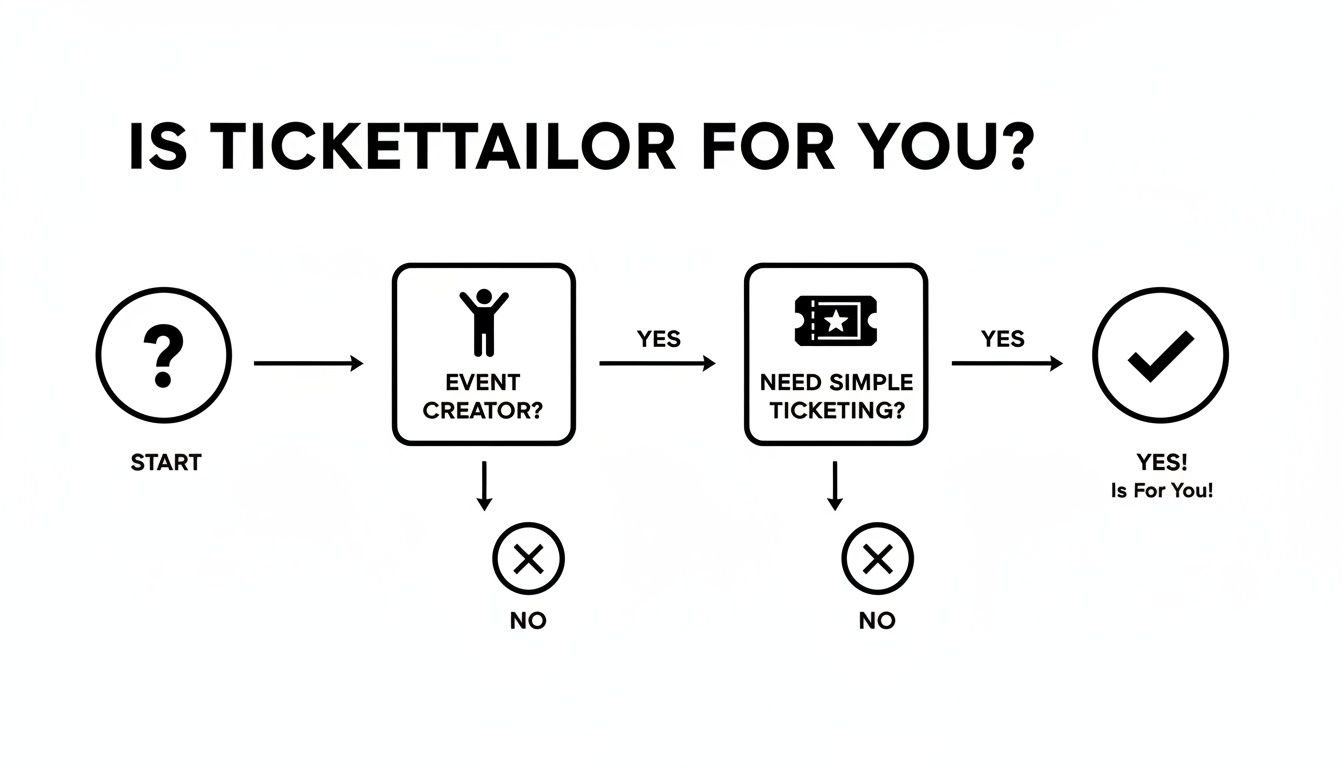
It’s that simple, problem-solving spirit that still defines the platform. This flowchart sums it up:
The Brickhouse Cabaret Club was the first client. By 2011, it was a full-time gig. A year later, the company was sold to Time Out magazine and quickly blew past 100,000 tickets sold. But Jonny bought the company back, determined to grow it his way.
Today, with an estimated revenue of $5.7 million and a footprint in 183 countries, TicketTailor proves that an ethical, low-fee model can compete.
From Side Project to B Corp
Getting the company back meant TicketTailor could focus on a different kind of growth. Instead of chasing venture capital, they doubled down on their values. In 2022, they became a certified B Corporation. That’s a tough certification for businesses meeting high standards for social and environmental impact.
This isn’t just a fancy badge. It’s a legal commitment to balance profit and purpose. For you, the event creator, it means you’re partnering with a company that’s genuinely invested in doing good. They donate one penny from every ticket to charity.
As a B Corp, TicketTailor is all about sustainable business. If that aligns with your own goals, you might find some useful ideas in resources about being environmentally friendly in business operations.
The company's DNA hasn't changed. It's still about helping real people put on amazing events, without the corporate nonsense. It’s a story of independence and building something that serves its community.
Core Features: How It Actually Works
So, how does TicketTailor actually help you sell tickets? It comes down to a few core tools that handle everything from setup to the final scan at the door. No fluff. Just the practical stuff.
The whole process starts with your event page, which you can create in minutes. This isn't some cookie-cutter page, either. You upload your own logos, pick brand colors, and add images to make it feel like your event. It’s your box office. It should look like it.
That branding is a bigger deal than you might think. When your attendees buy tickets, the experience feels consistent with your event. That builds trust from the start.
The Nuts and Bolts of Selling Tickets
Once your page is live, you have simple but powerful tools to manage sales. These are the features you’ll use day-to-day.
Flexible Ticket Types: You can create different tickets without any fuss. Think "Early Bird," "VIP," or "General Admission." This lets you set up pricing tiers easily.
Discount and Access Codes: Need to give a special price to a sponsor? Or send a hidden ticket link to your email list? You can generate unique codes for discounts or to unlock secret ticket types.
Donations and Merchandise: For fundraisers, you can add a donation option right on the checkout page. You can also sell add-ons like event t-shirts or drink vouchers.
The idea is to give you control without overcomplicating things. Everything is designed to be self-service. You’re not stuck waiting on a support ticket just to create a simple 10% off code.
From Online Sale to Event Day Check-In
Selling tickets online is only half the job. Getting people through the door smoothly is just as critical. TicketTailor has this covered.
When someone buys a ticket, they get an email with a unique QR code. That digital ticket is their key to entry. On event day, you or your volunteers can use any smartphone to scan tickets with the check-in app. The app is dead simple and tells you instantly if a ticket is valid.
It keeps lines moving and helps you ditch the old printed lists and highlighters. If you're curious about the tech, our guide on using a barcode for tickets breaks down the basics.
Here’s what that digital ticket experience looks like for your attendees:
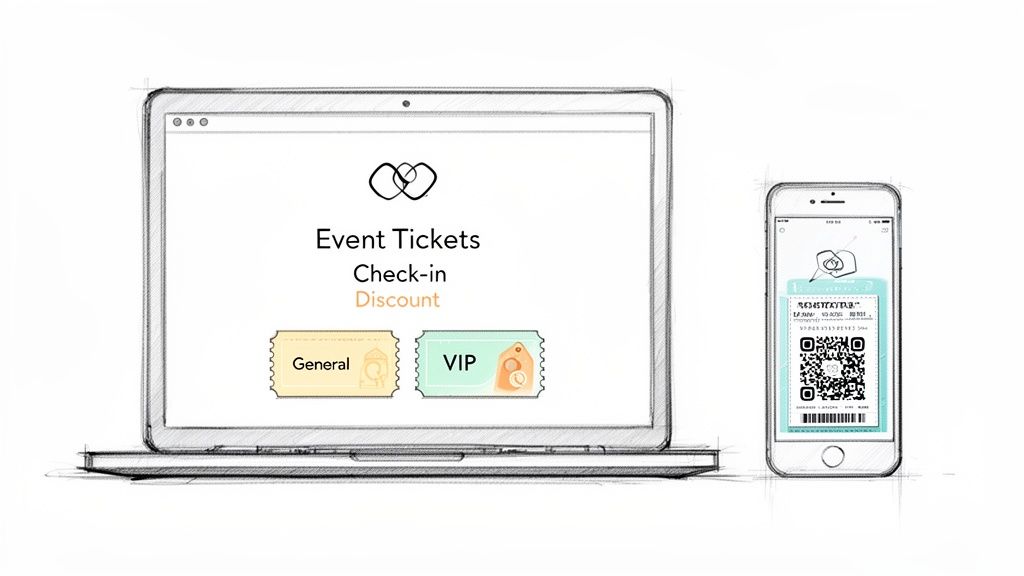
The image shows a clean, scannable ticket on a phone. That’s exactly what you want for a fast, modern check-in. All these features work together for a seamless flow, from purchase to entry.
TicketTailor's Pricing Explained: No Sneaky Fees
Pricing is where most ticketing platforms get you. They offer a "free" setup, then shave off a percentage of every ticket sold. Sometimes they even pass sneaky fees onto your attendees.
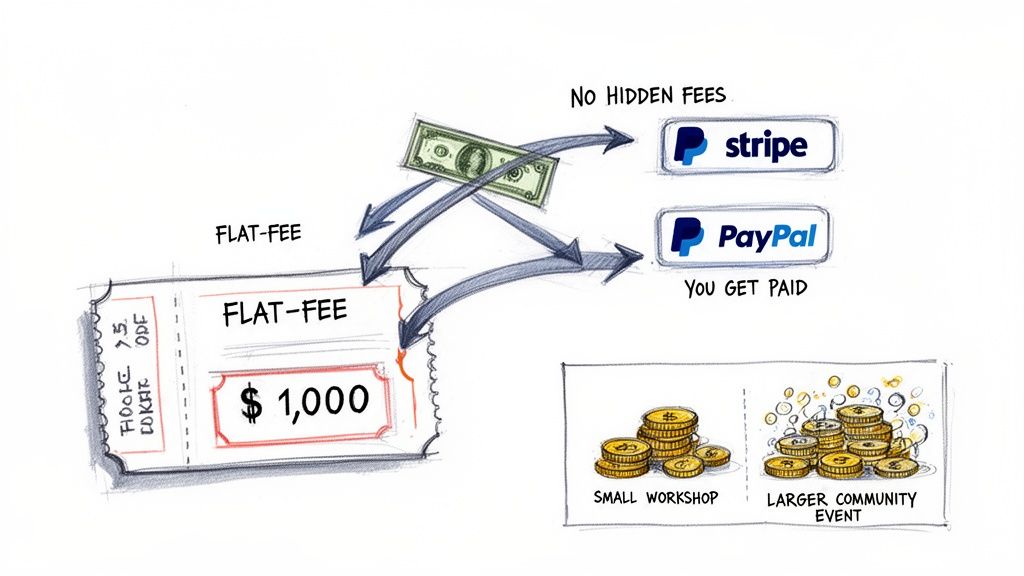
TicketTailor decided that model was broken. Instead, they use a simple, flat-fee structure. You pay a small, fixed cost for each ticket you sell. That’s it.
No percentage skims. No surprise bills. The money from your sales goes directly into your Stripe or PayPal account. You get your cash quickly and securely. It’s a breath of fresh air, especially for creators and nonprofits where every dollar counts.
How The Numbers Actually Work
Let's make this real. Imagine you're hosting a pottery workshop with 15 spots at $50 each. A platform taking a 5% cut would cost you $37.50. With TicketTailor, you pay a predictable flat fee per ticket that’s often much lower.
They offer a couple of ways to pay:
Pay-as-you-go: Perfect for one-off events. You pay a small credit for each ticket sold.
Pre-paid credit packs: If you run events regularly, you can buy ticket credits in bulk at a discount. This drops your per-ticket cost even further.
To give you a clearer picture, here’s a quick comparison of their pricing.
TicketTailor Pricing Tiers at a Glance
| Plan Type | Best For | Cost Per Ticket | Example Event (50 tickets) |
|---|---|---|---|
| Pay-as-you-go | One-off or infrequent events | Starts at $0.26 | $13.00 |
| Pre-paid (50 credits) | A few small events per year | $0.22 | $11.00 |
| Pre-paid (5,000 credits) | Frequent, high-volume events | $0.14 | $7.00 |
The more you sell, the less you pay per ticket. This transparent approach puts you in control. You know your exact costs upfront. This makes it easier to budget and price your tickets fairly.
When you're starting out, keeping costs low is everything. The clarity of a platform like TicketTailor fits that mindset, but it's always smart to see what else is out there, like the options in guides to free event planning software.
Why Nonprofits Love TicketTailor
Nonprofits operate on a different wavelength. They need tools that are affordable, simple, and don't clash with their mission. So it's no surprise that many charities and fundraisers have made TicketTailor their platform of choice.
A huge part of the appeal is the company's ethical backbone. They’re a certified B Corp. That's a tough certification that legally commits them to balancing profit and purpose. For a nonprofit, partnering with a company that just gets it feels right.
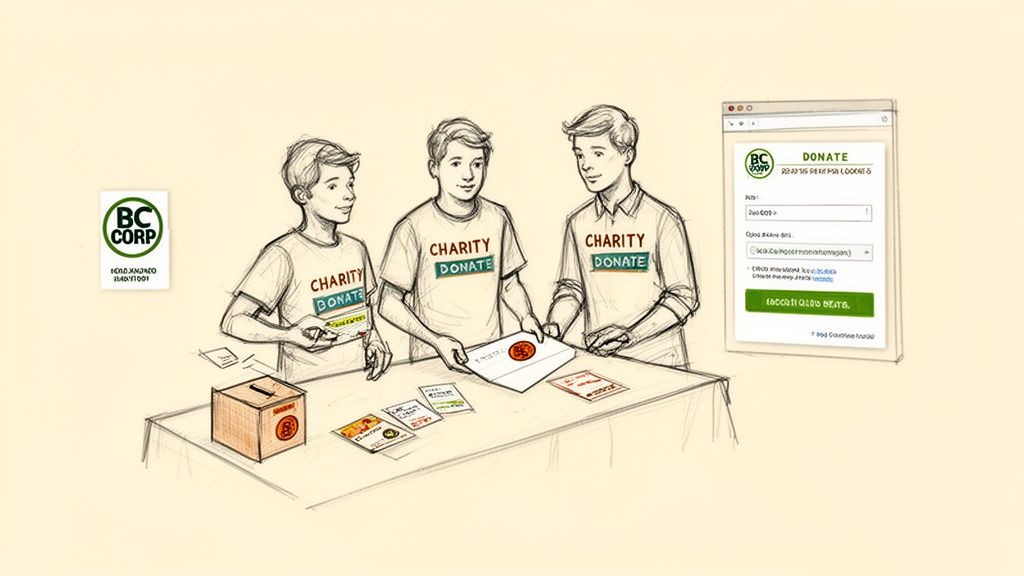
More Than a Ticketing Tool
TicketTailor's focus on "growing better, not bigger" isn't just marketing. They back it up by donating one penny from every ticket sold, which added up to over £140,000 (roughly $183,310) in 2022 alone. They've built a purpose-driven company that connects with fundraisers.
Beyond the feel-good alignment, the platform has practical features that are a game-changer for nonprofits.
Accepting Donations: You can flip a switch to add a donation option on the checkout page. This makes it easy for supporters to chip in extra when they buy tickets.
Transparent Pricing: The flat-fee model is a huge relief. More money from every ticket goes straight to your mission, instead of getting eaten by surprise percentage-based fees.
Easy for Volunteers: The platform is so straightforward that volunteer teams can get a branded event page running in minutes. No coding. No headaches.
Finding the Right Fit for Your Cause
For nonprofits, choosing a platform is about finding a partner that shares your values. TicketTailor's combination of ethical business and simple tools makes it a strong contender. Still, it's always smart for nonprofits to explore the full landscape of the best fundraising platforms for nonprofits to get a broader perspective.
While TicketTailor is a fantastic choice, it's worth mentioning alternatives. We’re building our own platform, Ticketsmith, from the same cloth. We believe in empowering small creators with flat-fee, transparent pricing. We’re building Ticketsmith with a laser focus on making ticketing simple and fair for workshop hosts and the community heroes running their first fundraiser.
The Good and The Not-So-Good: An Honest Look
No tool is perfect for everyone. It’s important to see the full picture before you commit. So let’s be direct about where TicketTailor shines and where you might feel a pinch. This is about making sure the tool fits the job.
TicketTailor's biggest strength is its straightforwardness. It was built for creators who need to get an event page live yesterday. If you can use email, you can set up a professional-looking box office in minutes. It just works.
The branding control is another huge win. Your event page looks like your brand, not a generic marketplace. For anyone pouring their heart into an event, this is a massive deal. It keeps the ticket-buying journey personal and trustworthy.
The core philosophy is clear: give small organizers the tools to look professional and keep their money. The flat-fee pricing means you're not punished just because your event is a success.
Where You Might See Trade-Offs
Okay, so what’s the catch? The simplicity that makes TicketTailor great also defines its limits. If you're running a massive festival with assigned seating in a 10,000-seat arena, this probably isn't the tool for you.
Complex Seating Charts: It’s designed for general admission or simple tiered ticketing. It doesn't handle intricate, pick-your-own-seat maps for large venues.
Deep CRM Integrations: It connects with essentials like Mailchimp. But you might hit a wall if you need it to sync with a highly specialized CRM system.
Niche Features: The platform sticks to the core essentials of ticketing. If you need hyper-specific features like advanced affiliate tracking, you'll need a more enterprise-level solution.
These aren't really flaws. They're deliberate choices made to keep it lean, fast, and affordable for its target users. If your needs are straightforward, it’s brilliant. If you’re managing logistics for a global conference, you’ll probably need a heavier tool.
For a lot of creators, these trade-offs are more than fair. You get an easy-to-use, fairly priced platform that gets the job done without extra complexity.
A Quick Look at Alternatives (Including Ticketsmith)
Look, TicketTailor is a fantastic tool, but it's smart to know what else is out there. It’s not a one-size-fits-all world. Some platforms are built for stadium tours, while others are dialed in for niches like virtual conferences. Understanding the landscape helps you pick the right tool for your event.
For most small creators, the decision usually comes down to simplicity, fair pricing, and control.
How They Stack Up
You've probably heard of giants like Eventbrite. They're well-known, sure, but they often come with higher, percentage-based fees that take a real bite out of your revenue. On the other end, you’ll find complex platforms that demand a steep learning curve. Not ideal when you just need to get your pop-up dinner listed by tomorrow.
This is where a different breed of tool comes into play, one built on a philosophy like TicketTailor's.
We’re building our own platform, Ticketsmith, based on that same belief: empowering small creators. We are all-in on simple, flat-fee pricing and a setup process that takes minutes, not weeks. No hidden percentage skims. No complicated manuals.
Our focus is on the specific needs of people running workshops and pop-up events. We’re aiming to create an intuitive tool that feels less like software and more like a partner. If that sounds like what you’re looking for, you can learn more about our approach at Ticketsmith. This isn't a hard sell. It's about making sure you find the perfect fit.
Common Questions Answered
Got a few more questions about TicketTailor? Let's get them cleared up. It's smart to know the details before you commit to any tool.
How Do I Get Paid?
This is the big one. With TicketTailor, your money goes directly into your Stripe or PayPal account. There’s no waiting period from TicketTailor itself.
As soon as someone buys a ticket, the funds are processed and land in your account. It's a simple, secure process that puts you in control of your cash flow.
What Kind of Support Can I Expect?
TicketTailor is known for solid customer support. They primarily offer help through email and have a huge library of help articles that cover almost everything. So while you can't just pick up the phone, their team is responsive and genuinely helpful.
Honestly, the platform is built to be self-service. Most of the time, you probably won’t even need to reach out.
Can It Handle a Large Event?
Absolutely. TicketTailor works just as well for a five-person workshop as it does for a festival with 5,000 attendees.
The flat-fee pricing model actually becomes more cost-effective as your event grows. Because you’re not paying a percentage per ticket, your costs don’t balloon just because you’re successful. It scales with you without punishing your growth.
If you're looking for a ticketing partner that’s just as committed to simplicity and fair pricing, check out Ticketsmith. We're building a platform from the ground up for workshop hosts and pop-up creators who need a tool that just works. Learn more and join our waitlist at https://ticketsmith.co.