
So, what is General Admission (GA)? It’s a ticket type that gets someone into an event or a specific area without assigning them a seat number. In plain English, you’re selling access, not “Section 102, Row B, Seat 12.” Usually, that means first-come, first-served entry to a standing floor, open seating area, lawn, or unreserved section, which matches the standard definition of general admission.
A GA ticket does not always mean standing. Sometimes it means a concert floor where people choose their spot. Sometimes it means open seating at a workshop where guests grab any available chair. Sometimes it means access to a lawn or unreserved bleacher section. The ticket tells you where you can go, but not the exact seat you’ll occupy.
If you want the quick version of what is general admission tickets, what general admission means, or how it works: GA means entry to an unassigned area, and guests choose where to stand or sit when they arrive. Choose it when your event works well with shared space and simple check-in. Skip it when seat certainty really matters.
How We Evaluated General Admission Setups
This guide looks at GA from the organizer side, not just the attendee side. We evaluated setups based on six things that affect whether general admission runs smoothly: capacity control, attendee clarity, entry speed, accessibility, pricing flexibility, and fit for the venue layout.
A strong GA setup makes these basics obvious before anyone buys: what the ticket includes, whether the event is standing or seated, whether seating is first-come-first-served, when doors open, and whether early arrival changes the experience. Confusion usually starts on the ticket page, not at the event itself.
We also treated GA as a bad fit for events with highly segmented audiences, guaranteed-placement expectations, complicated sponsor seating, or major sightline differences. If your event depends on seat certainty, reserved seating is usually the better call.
Guidance from TicketSpice’s overview of general admission seating gets the core principle right: GA works best when you’re admitting people to a shared space without promising individual seats.
The Simple Idea Behind General Admission
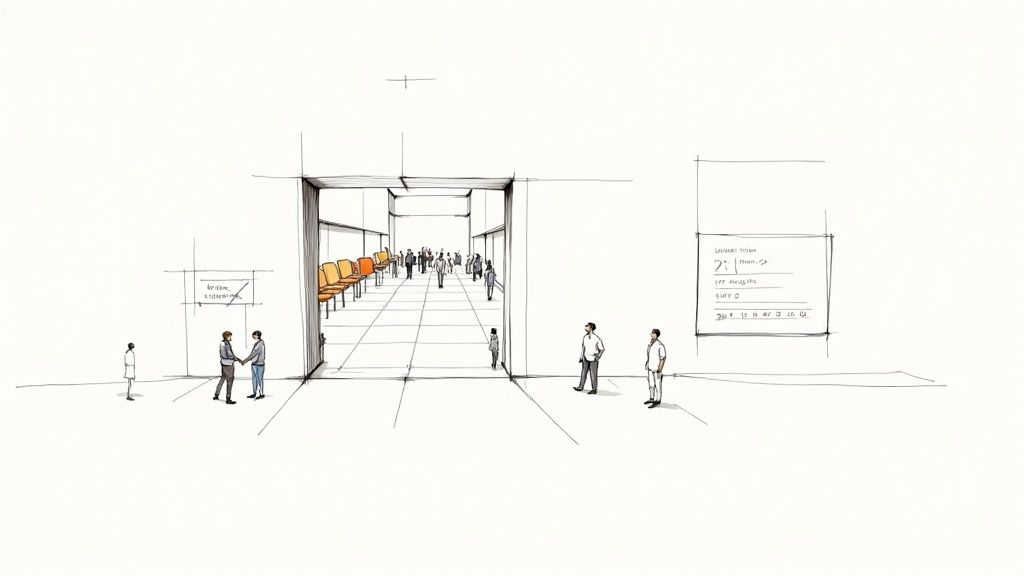
General admission means a ticket gives someone access to an event or to a specific venue area without assigning an exact seat. That’s the simple answer to what are general admission tickets, what a general admission ticket is, and what ga tickets are. Instead of promising a numbered spot, the organizer sells entry to an unreserved space and attendees choose where to stand or sit when they arrive. In practice, GA usually works on a first-come, first-served basis, so arrival time can affect how close someone gets to the stage or which row they sit in.
Here’s the easiest way to think about the difference:
- GA: entry to an open or unassigned area
- Reserved seating: a specific seat is tied to the ticket
- VIP or premium zones: access to a better area or extra perks, with or without a specific seat
That matters because GA can describe a few different setups. At a concert, it may mean a standing floor. At a workshop or comedy night, it may mean open seating. At an outdoor venue, it may mean lawn access or an unreserved section. For organizers, the appeal is simple: you manage capacity and access instead of building a seating chart. For attendees, the trade-off is more freedom and less certainty.
Why GA Is the Default for So Many Events
GA works because it matches how many live events operate. If your venue is built around flow rather than fixed seating, GA is often the cleanest model. For a broader planning lens, London Audio Visual Hire's guide is a useful reminder that ticketing format, crowd movement, and on-site logistics all affect each other.
It’s also common because venues can sell access at a single price point or use GA as a simpler alternative to reserved seating. For more background on how common ticket-market models work, you can review this market report.
- For Organizers: setup is faster because you’re selling access to a space, not managing seat assignments.
- For Attendees: the format feels more casual and flexible.
- For Pricing: one GA tier is easy to launch, while multiple GA zones can add premium options without a full seating map.
The trade-off is simple: GA gives people flexibility, but it asks you to communicate expectations clearly.
This is why we built our platform for real people pouring heart into their events. With flat-fee pricing and fast payouts, you can focus on the experience, not the software.
Exploring the Different Types of GA Tickets
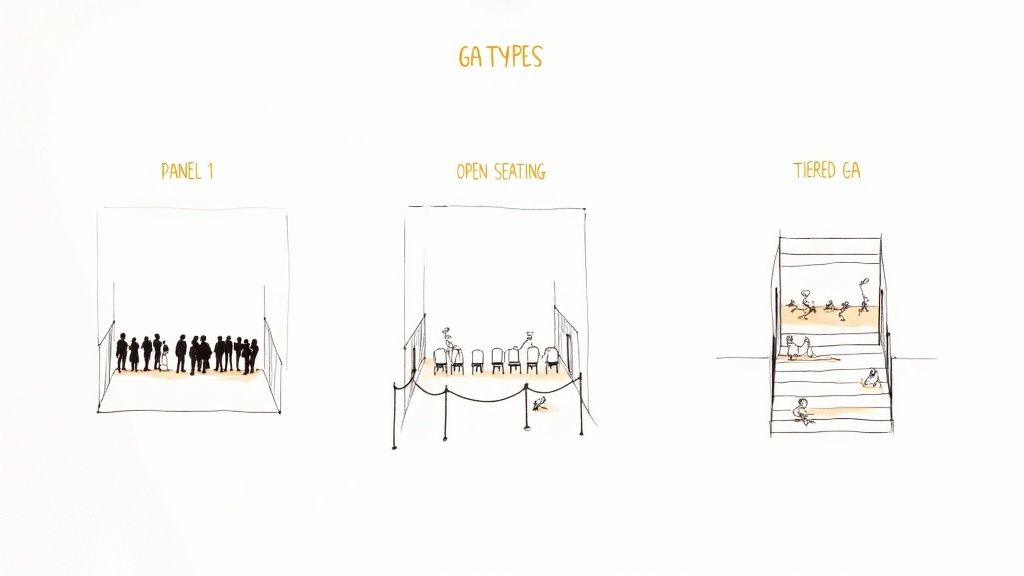
A “GA ticket” is shorthand for a ticket that grants entry to a non-assigned area. That area can look very different from one venue to the next, which is why people ask what are ga tickets and how does ga work. The ticket itself isn’t the whole story; the venue layout and ticket-page rules determine how the experience works.
Standing GA
This version is often pictured as a general admission floor or open standing area near a stage. The attendee gets access to the floor, but not a fixed place on it. Spots are chosen by arrival time and personal preference, so getting there early usually matters.
Organizers should say more than just “GA” on the ticket page. Spell out door time, whether there’s a separate line for early access or VIP, whether re-entry is allowed, and whether the floor is standing-room-only.
Open-Seating GA
This version still uses general admission, but the room has seats. Attendees can sit wherever there’s space instead of being assigned a row and seat number in advance. That makes it a strong fit for workshops, talks, screenings, poetry nights, and casual performances.
What the attendee gets is simple: entry plus the right to choose any open seat in the designated area. The ticket page should clearly say that seating is first-come-first-served and unreserved.
Section- or Zone-Based GA
Some events split general admission into separate areas rather than one big pool. A ticket might grant access to the main floor, a lawn, an upper platform, or another unreserved zone. This lets organizers create pricing differences and manage capacity without assigning exact seats.
For the attendee, the key question is not “What seat do I have?” but “Which area can I enter?” Spots within that area are still chosen on arrival, so early arrival may matter inside the zone.
GA is not always standing. A general admission ticket can mean standing room, open seating, lawn access, or admission to an unreserved section. For a deeper look at the bigger picture, see our guide on the various types of event ticketing.
Why General Admission Is Your Secret Weapon
If you’re a workshop host or pop-up chef, general admission can be a lifesaver. GA sidesteps the complexity of reserved seating when the venue and audience don’t need that level of structure.
It simplifies everything. You’re not selling a specific seat. You’re selling access to an experience.
Keep It Simple, Sell Tickets Faster
The biggest win with GA is speed. Without a seating chart, you can create a custom-branded event page and start selling tickets quickly.
Here’s what that looks like:
- Faster Setup: launch without mapping every seat.
- Easier Management: focus on total capacity.
- Less Attendee Confusion: guests buy a ticket and show up.
Build a Better Atmosphere
General admission can also create a more casual, communal atmosphere. When people aren't locked into spots, they're free to mingle and find friends. That’s a strong fit for networking events, food festivals, and social experiences.
By removing the formality of assigned seats, you give your event room to breathe.
This is why we built our platform for people pouring their hearts into events. With our flat-fee pricing, you don’t worry about hidden percentage cuts. You get fast, secure payouts straight to your account.
Handling the Downsides of General Admission
General admission is simple to sell, but the tradeoffs are real. The pressure point is usually what happens at the door and inside the room when lots of people are making the same first-come, first-served decisions at once.
The good news is that most GA problems are predictable. They usually fall into three buckets: queue management, fairness and accessibility, and attendee expectations.
Queue Management
The first rush sets the tone for the whole event. Your attendees should know exactly when doors open, where the line starts, what they need ready for entry, and whether arriving early affects where they’ll stand or sit.
Before the event, communicate the basics:
- Door time: when guests can enter
- Check-in method: QR code, printed ticket, or name lookup
- Bag policy: what’s allowed and what slows entry
- Re-entry: whether guests can leave and come back
- Access rules: whether the room is standing, open seating, or divided into zones
At the venue, use a real queue plan instead of hoping the crowd self-organizes. If your event has a GA floor, remember that legal capacity and comfort are not always the same thing.
Fairness and Accessibility
“First-come, first-served” sounds neutral, but it can create problems for guests who cannot stand for long periods, move quickly through a crowd, or queue early. Accessibility planning matters here, and it should be visible before people buy.
A practical baseline is to offer a way for attendees to request accommodations in advance and to explain what support is available on site. The ADA guidance from the U.S. Department of Justice is a good starting point for understanding the broader obligation to provide equal access.
For GA events, that often means accessible viewing or seating options, staff training, and a clear contact point on the ticket page. Fairness also includes how you handle early entry, separate access, or better GA zones. If some guests get those perks, say so clearly.
Attendee Expectations
A lot of GA complaints are really communication failures. People are usually fine with flexible seating or standing as long as they knew what they were buying.
Here’s what to spell out before event day:
- whether GA means standing room, open seating, or zone access
- whether seating is first-come-first-served
- whether key areas are likely to fill early
- whether re-entry is allowed
- what guests should bring or avoid
Guidance from the U.K. Health and Safety Executive on event crowd management is a useful reminder that crowd safety is about monitoring flow and density, not just hitting a final capacity number.
Finally, GA can attract scalpers. Taking a few minutes to learn how to prevent ticket scalping can protect your real fans.
How to Price and Sell GA Tickets
The whole process starts with one number you cannot ignore: your venue’s legal capacity. Never sell more tickets than your space can safely hold.
Figuring Out Your Ticket Price
Once you have your capacity, pricing is next. The goal is to cover your costs, make a profit, and find a price that feels fair to your audience.
From there, you can use simple strategies:
- Early-Bird Pricing: discount the first wave of buyers.
- Tiered Pricing: start lower and raise the price later.
- Check the Market: compare with similar events and broader trend reports like this ticket market overview.
Setting Up Your Ticket Page
Think of your ticket page as your digital storefront. It has to be simple and trustworthy.
Your ticket page should answer every question before it’s asked. What time do doors open? Is it standing room only? Over-communicate the details so attendees show up ready.
Clarity builds trust. For a deeper dive, check out our guide on how to sell tickets for any event.
When sales start rolling in, you shouldn't have to wait for your money. A great ticketing partner gives you fast, secure payouts straight to your bank account.
Your No-Fluff Checklist for a Smooth GA Event
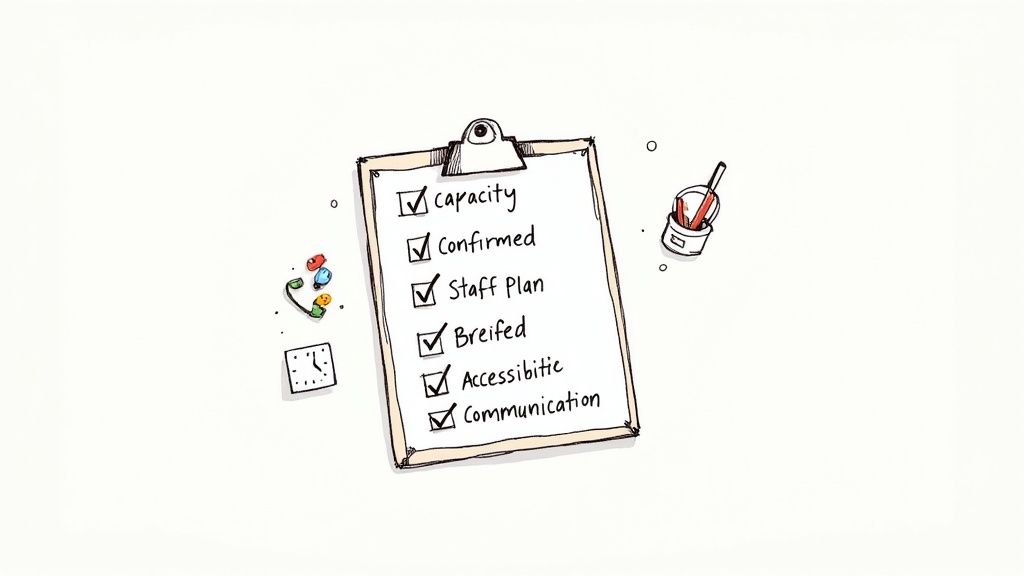
This is the cheat sheet to pull up before doors open.
The Hour-Before Sanity Check
- Confirm Your Legal Capacity: your ticket sales should never exceed this number.
- Walk Your Entry Plan: make sure the queue area is obvious and scanners are ready.
- Brief Your Team: everyone should know their role.
- Designate an Accessibility Point: have a clear plan for guests who need support.
- Send a "What to Expect" Message: remind people about door times and parking.
If you want to get a better handle on the logistics, understanding event production is a great next step.
Frequently Asked Questions
What do general admission tickets mean?
General admission tickets usually mean entry to an event or a specific venue area without an assigned seat number. The attendee gets access to the space covered by the ticket, then chooses where to stand or sit based on the venue layout and availability.
Is general admission the same as standing?
No. Standing room is one common form of GA, but it isn’t the only one. A GA ticket can also mean open seating, lawn access, or admission to an unreserved section where seats are available on a first-come, first-served basis.
How does general admission work at the door?
Most of the time, the ticket is scanned at entry and the attendee is admitted into the relevant GA area. After that, they choose their place within that space, subject to venue rules, zone limits, and any posted restrictions.
Are general admission tickets cheaper?
Often, yes, because the organizer is selling access to a shared area rather than a specific seat. But not always. Some events use multiple GA zones or premium GA access, so one GA ticket may be cheaper than reserved seating while another costs more.
Can you sit with friends in general admission?
Usually yes, if you arrive together or save space within the venue’s rules. It’s often easier to stay together in GA than in reserved seating, but it depends on whether the event is standing, open seating, or split into separate zones.
What should organizers always say on a GA ticket page?
At minimum: whether the event is standing or seated, whether seating is first-come-first-served, door time, bag rules, re-entry policy, and what area the ticket includes. If that information is missing, people will fill in the blanks themselves.