
What Is White-Label Event Ticketing Anyway?
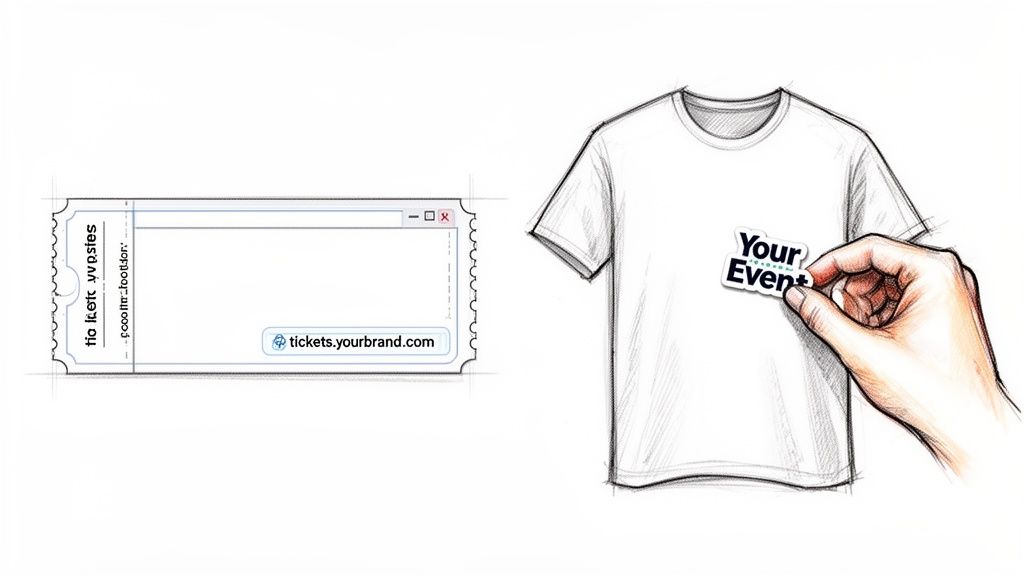
White-label event ticketing is like buying a quality, plain t-shirt and printing your own design on it. You get all the powerful features—selling tickets, processing payments, checking people in—but the entire experience looks and feels 100% yours.
This is about putting you, the creator, back in control of your brand and your money. It’s what makes your small event feel polished and trustworthy from the moment someone decides to buy a ticket. No more sending your audience to a weird, unfamiliar website.
It's your event, your brand, your page. Plain and simple.
Keeping Your Brand Front and Center
Think about the last time you bought a ticket. You probably landed on a big, generic platform with its own colors. It had ads for other events. The checkout felt completely disconnected from the event you were excited about. That disjointed feeling creates doubt.
White-label solutions fix this. They let you maintain a seamless brand experience from start to finish. This isn't just vanity; it's about building trust. When a pop-up chef’s ticket page has the same style as their Instagram, buyers don't hesitate. They know they're in the right place.
Your ticketing should be part of your event, not an ad for someone else's platform. The entire customer journey happens under your brand.
This approach is powerful for creators who live their personal brand. For workshop hosts and community organizers, your name is your reputation. A seamless checkout reinforces that professionalism. It makes a five-person yoga class feel as legitimate as a 5,000-person festival.
More Than Just a Pretty Page
Beyond looking good, a white-label platform brings serious practical wins. It's not just about appearances. It's about building a sustainable operation around your passion.
Here are the key advantages for small creators:
Complete Brand Control: Your logo, your colors, your voice. The whole experience feels like it's coming directly from you. This boosts buyer confidence and makes you look like a pro.
Direct Customer Relationships: You own the attendee data. Instead of a platform hoarding your customer list, you get the direct contact info you need to build a real community.
Fairer Pricing: Many white-label options use a simple flat fee per ticket. This helps you avoid nasty percentage-based fees that eat your earnings, especially as ticket prices go up. You can explore different types of ticketing models to see how they stack up.
Faster Payouts: You connect your own payment processor (like Stripe). The money from ticket sales often goes straight to your account. No more waiting weeks after your event to get paid.
White-label ticketing is built for people who are serious about their events but don't want to get lost in corporate branding. It gives you the powerful tools of a major platform without forcing you to sacrifice your identity.
How It Actually Works In Practice
Alright, let's pull back the curtain. How does this "white-label" thing actually work? You might be surprised. It’s incredibly straightforward, and you won’t write a single line of code. You can have a fully branded, professional ticketing page live and taking payments in minutes.
This isn’t just about making things look pretty. It's about building trust from the first click. When someone lands on a page with your logo, your colors, and your voice, they feel confident hitting 'buy'. From start to finish, the customer relationship stays with you, not some faceless ticketing company.
Three Ways To Get Your Tickets Set Up
You have a few ways to start selling. They’re all designed to meet you where you are. No need to build a whole website if you don't want to.
Here are the most common setups:
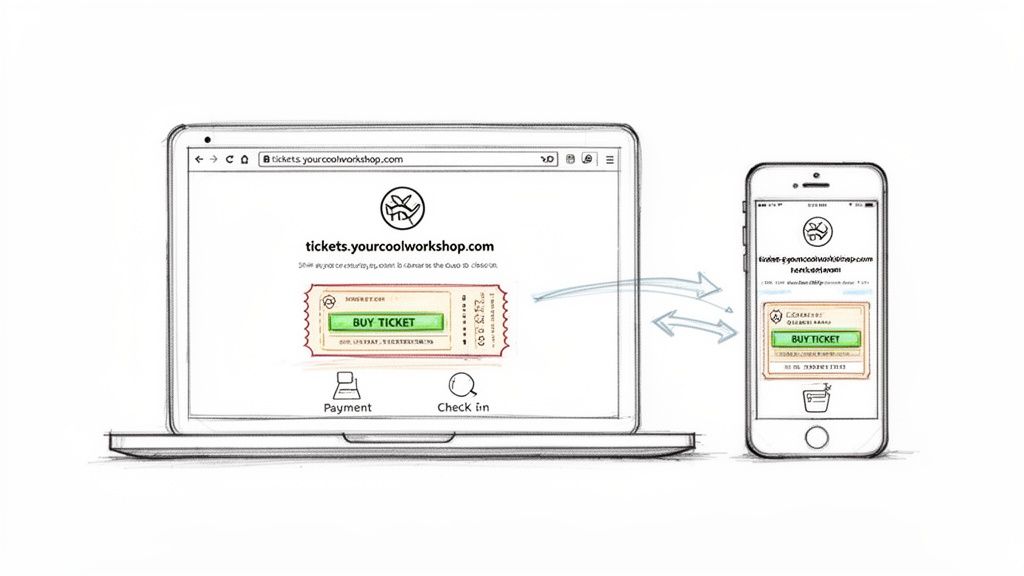
Embed a Widget: Already have a website for your pop-up dinner series or workshops? Perfect. Just drop a small snippet of code—a simple copy-and-paste—right onto your existing page. This creates a ticket widget so people can buy without ever leaving your site. It’s the quickest way to get going.
Create a Standalone Page: If you don't have a website, no sweat. You can build a simple sales page directly on the ticketing platform. Upload your logo, choose your brand colors, pop in your event details, and share the link.
Use a Custom Subdomain: For that extra professional polish, set up a custom subdomain like
tickets.yourcoolworkshop.com. This makes your ticketing feel completely seamless and integrated with your brand. That's a huge confidence booster for buyers.
Online ticketing is growing fast, and tools like these empower smaller organizers to keep their brand front and center. That's a massive advantage. We’re seeing venues run everything on their own custom domains, handling events for anywhere from five to 5,000 people.
The Attendee Experience
Now, let's look at it from your customer's view. The process is buttery smooth. They see your event on Instagram, click the link, and land on a page that looks exactly like yours. They choose their ticket, enter payment details, and get a confirmation email with your branding all over it.
The magic is they never feel passed off to another company. The trust you've built carries all the way through the transaction.
This seamless journey continues right up to the door. The confirmation email usually includes a digital ticket with a unique QR code, which makes check-in a breeze. If you're curious, you can learn how a QR code for tickets can seriously streamline your event entry.
When you're ready to go live, making it easy to buy is crucial. Think about how your audience will find you. A simple link in bio for tickets on your social profiles is a must.
Behind the scenes, the money flows directly and securely into your bank account. There are no sneaky percentage fees skimmed off the top. Just a predictable flat fee, so you know exactly what to expect. This direct payout system is a game-changer when you need cash for upfront costs like venue deposits.
Why Bother With White-Label Ticketing?
So, why should a pop-up chef or a workshop host care about this?
Because it attacks the three biggest headaches small creators face. It’s about taking back control from giant platforms that weren’t built for you.
You get total control over your brand. You own your customer data. And the pricing is almost always fairer. Let's break that down.
Your Brand Stays The Star
Think about it. You've poured your heart into creating a specific feel for your pop-up dinners or yoga retreats. Why let a generic, clunky ticketing platform hijack that experience right at the finish line?
With white-label ticketing, your brand stays front and center. Your logo, your colors, your voice—they’re all there, from the landing page to the "thank you" message. This isn't just about looking professional. It's about building trust. When a buyer stays on a page that feels like yours, they’re far more confident hitting "purchase".
Your ticketing page should be a natural extension of your event, not a confusing detour that advertises someone else's business.
A seamless experience is key. It’s one of the simplest ways you can increase website conversion rate without spending a dime on ads.
You Own Your Audience Relationships
This is the one most organizers don't think about until it’s too late. When you use a big marketplace like Eventbrite, you're building their customer list, not your own. They get your attendees' emails and use them to promote other events—sometimes even from your competitors. It's wild.
A white-label approach flips that script.
You get full ownership of your attendee list. Every person who buys a ticket is now part of your community. You can email them directly with updates, send a thank-you note, and invite them to your next thing. It’s how you build a real relationship instead of just making a one-off sale.
Standard Ticketing vs White Label Ticketing
To see the difference, it helps to put the two approaches side-by-side. For a small organizer, the contrast isn't just about features. It's about control, cost, and community.
| Feature | Standard Ticketing (e.g., Eventbrite) | White Label Ticketing |
|---|---|---|
| Branding | The platform's brand is everywhere. Your logo is tiny, if present. | Fully your brand. Your logo, your colors, your domain. |
| User Experience | Customers leave your site for a third-party checkout. | The entire checkout happens on your own website or page. |
| Data Ownership | The platform owns the customer data and can market to them. | You own 100% of your customer data. |
| Pricing Model | Usually a percentage of the ticket price + a fixed fee. | Often a small, flat fee per ticket or a monthly subscription. |
| Discoverability | Potential for discovery on their marketplace (competing with others). | You're responsible for your own marketing. |
| Customization | Very limited. You're stuck with their template. | Highly customizable to match your brand. |
Standard ticketing is renting an audience from a marketplace. White-label ticketing is about building and owning your own.
The Money Makes More Sense
Let's talk numbers, because this is where it gets interesting.
Most big ticketing platforms have confusing pricing. They charge a percentage of your ticket price, plus a flat fee, plus a payment processing fee. It adds up fast and eats your profits.
White-label platforms use a much simpler model: a small, flat fee per ticket. This means you keep way more of your money, especially as ticket prices go up.
Here’s a quick comparison. Imagine you sell 50 tickets to a workshop at $100 each.
Standard Percentage Model: A platform might take 3.5% + $1.59 per ticket. That’s $5.09 skimmed from every sale. You'd lose $254.50 just in platform fees.
Flat-Fee Model: A flat fee might be just $1.00 per ticket. You’d only pay $50.00 in platform fees.
That’s an extra $204.50 in your pocket from one event. For a pop-up chef running a monthly dinner, that difference can add up to thousands of dollars a year. That's money for ingredients, marketing, or your life.
The Few Features You Actually Need
Software feature lists can feel like reading a Cheesecake Factory menu. A million options, but most of them are just noise. Let's cut the clutter and focus on what matters for someone running workshops, pop-ups, or community gatherings.
This isn’t about finding the platform with the most bells and whistles. It’s about finding one with the right ones. The point is to spend less time clicking around in clunky software and more time making your event awesome.
Your Bare-Bones Feature Checklist
If a white-label platform can’t nail these five things, walk away. These aren’t nice-to-haves. They’re the foundation for any creator who values their time and brand.
Dead-Simple Setup: You should go from creating an account to a live event page in under ten minutes. No code, no chaos. If you have to read a user manual, they’ve failed you.
Real Brand Customization: We're talking more than just slapping your logo on a template. You need control over colors and fonts to create a page that looks like a natural part of your website.
Fast, Secure Payouts: Ticket money should go straight to your bank account through a trusted processor like Stripe. You should never have to wait until after the event to get paid. Cash flow is king.
A Clean Mobile Experience: A huge chunk of tickets are bought on phones, usually seconds after someone sees your Instagram post. The checkout must be lightning-fast and simple, with no frustrating pinching and zooming.
Simple Attendee Management: You need a painless way to see who’s coming, check people in (a QR code scanner is a lifesaver), and handle the occasional refund without wanting to throw your laptop.
The best platforms get out of your way. They give you simple, sturdy tools that let you focus on your event, not on fighting complicated software.
A simple setup means a pop-up market coordinator can launch branded pages for new events in minutes without begging a developer for help. A solid white-label solution gives you just what you need to run your operation without the headache. The team at Scrile.com has some great insights on how this empowers local creators.
What About the "Nice-to-Haves"?
Once you’ve got the essentials, a few other features can make your life easier. Think of these as bonus points. They aren't deal-breakers, but they show a platform really gets what creators need.
Basic Analytics: You don’t need a massive data dashboard. Just a clean view of ticket sales over time, where your buyers come from, and which tickets sell best. This stuff helps you make smarter moves for your next event.
Easy Website Integration: Embedding a checkout widget on your own website is a huge win. It keeps attendees on your turf for the entire purchase, making the whole thing feel professional.
Custom Form Fields: Sometimes "name and email" isn't enough. The option to add a question to your checkout—like asking about dietary restrictions for a pop-up dinner—is unbelievably useful.
Picking the right platform is about finding the right fit. Don't get distracted by a tool that brags about fifty features you’ll never touch. Focus on the core functions that save you time and help sell more tickets. If you're weighing your options, look at our guide on finding the best ticketing platform for events for a detailed breakdown.
Understanding The Real Costs With No Surprises
Let's talk money. Ticketing platform pricing can be intentionally confusing. It's loaded with hidden fees and weird percentages that make it almost impossible to know what you’ll take home. We’re going to cut through the noise so you never get stuck with a surprise bill.
The game is understanding the different ways platforms charge you. It’s not just the sticker price. It's how those fees scale as your event gets bigger.
Breaking Down The Common Pricing Models
Most pricing falls into one of three buckets. Knowing the difference is the first step to keeping more of your cash.
Percentage Fees: This is the model the big platforms love. They take a slice of every ticket, usually between 2.5% to 7.5%, plus a fixed fee. It feels small at first, but it punishes you for selling higher-priced tickets.
Per-Ticket Fees: This is as simple as it sounds: a flat fee for every ticket sold, no matter the price. Whether your ticket is $25 or $250, the fee stays the same—maybe $1 per ticket. This is transparent, predictable, and easy to budget for.
Monthly Subscriptions: With this model, you pay a flat monthly or annual fee for the platform's tools, letting you sell as many tickets as you want. This can be a fantastic deal for organizers who run many events.
The features you depend on—easy setup, branding, and fast payouts—should be included, not buried under complex pricing tiers.
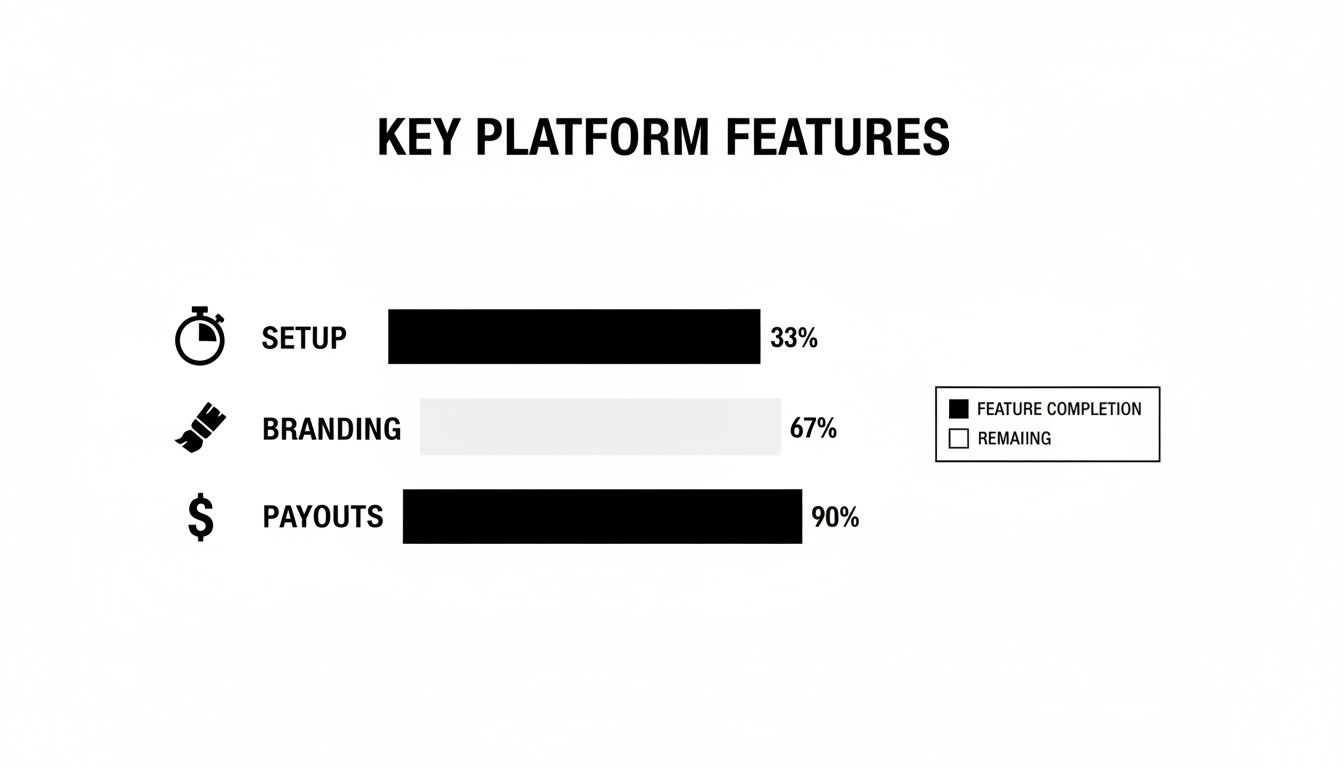
The core functions you rely on should just work, without you pulling out a calculator every time.
Let’s Run The Numbers: A Real-World Comparison
Theory is one thing. Seeing the actual dollars and cents is what matters. We’ll use a simple, realistic scenario to show how these pricing models stack up.
Imagine you're hosting a sold-out workshop: you've sold 50 tickets at $75 each, for a total of $3,750. Here’s how your take-home profit changes.
| Cost Breakdown For A Small Event |
| :--- | :--- | :--- | :--- |
| Pricing Model | Platform Fees | Payment Processing | Your Take-Home Profit |
| Percentage Fee (5% + $0.99/ticket) | $237.00 | ~$111.00 | $3,402.00 |
| Flat Per-Ticket Fee ($1.00/ticket) | $50.00 | ~$111.00 | $3,589.00 |
| Monthly Subscription ($99/month) | $99.00 | ~$111.00 | $3,540.00 |
Note: Payment processing fees (e.g., Stripe) are separate and typically around 2.9% + $0.30 per transaction.
Look at that difference. With the percentage-based platform, you're handing over an extra $187 that could have gone back into your business. That’s the cost of supplies, marketing for the next event, or a nice dinner to celebrate a job well done.
The big platforms count on you not doing the math. A small percentage fee seems harmless until it scales, quietly eating away at your money.
What About Free Community Events?
This is where things get interesting. Most percentage-based platforms won't charge for free tickets, which is nice. But a good flat-fee or subscription platform also lets you manage RSVPs for free events. You get a beautiful branded page and an organized attendee list at no cost. It’s the perfect way to make your free gathering feel professional.
A solid white-label ticketing system gives you control, whether your event is free or paid. For more ideas on managing your budget, our guide on free event planning software has some great tips.
Is This The Right Move For Your Event?
White-label event ticketing is a powerful tool, but it's not for everyone. This is a quick gut-check to help you figure out if it’s the right move for you, or if you'd be paying for features you don't need.
The answer comes down to what you value most. If you care about your brand, want a direct connection with your audience, and prefer simple costs, you're in the right place.
The Ideal User Is Probably You If...
This approach is tailor-made for independent creators pouring their hearts into what they do. If any of these sound familiar, you'll feel right at home with white-label event ticketing.
You're a great fit if you:
Host workshops or classes: Think yoga teachers or pottery instructors. You've built a loyal student base that trusts you, and your booking page should reflect that.
Run a supper club or pop-up: Your brand is everything. A seamless, branded ticket-buying experience makes your intimate dinner feel exclusive and professional.
Organize community events: Whether it's a local market or a neighborhood cleanup, a branded page makes your event look official and trustworthy.
Value your time and money: You're busy. You don't have time to wrestle with clunky software or confusing fees. You need something that works, gets you paid fast, and doesn't skim your profits.
The common thread here is ownership. White-label ticketing is for people building a brand and a community for the long haul, not just selling a one-off ticket.
Who Might Not Need This
On the flip side, this might be overkill for some situations. If you’re throwing a casual, one-time party for friends, a simple RSVP tool or a group chat is probably all you need.
It also might not be the best fit if you rely on the built-in audience of a massive platform. If a huge chunk of your sales comes from their marketplace—and you don't mind the fees—then sticking with that system might make sense. According to a Ticket Tailor survey, less than 2% of organizers said discovery sites were their most important marketing channel. If you're in that small group, don't fix what isn't broken.
The goal is to pick the right tool for the job. White-label event ticketing is perfect for creators who want to own their brand experience and customer relationships, from five attendees to 5,000. It gives you the control and professionalism you deserve.
Your Questions, Answered
Alright, let's get into the nitty-gritty. When creators explore white-label ticketing, a few key questions always come up. Here are the straight-up answers.
Do I Need to Know How to Code?
Nope. Not even a little. That’s the appeal of a great white-label platform. They're built for people who are masters of their craft—cooking, teaching, community building—not software developers.
You should be able to jump in, brand your page, set up your event, and connect your bank account in minutes. If you have to dig through help docs to get started, you're looking at the wrong tool. It should feel as intuitive as setting up a social media profile.
What Happens to My Customer Data?
This is a big one. It's where white-label ticketing really shines. When you use a true white-label solution, you own 100% of your customer data. The platform is just the engine; the relationship stays between you and your attendees.
This means you get the full list of names and emails. You can follow up with reminders, send a thank-you note, ask for feedback, or let them know about your next pop-up. No more feeding your contacts to a ticketing company that will just market other events to them. It's your community. You get to build it.
Can I Use This for Free Events?
Absolutely. It's a savvy move for managing them professionally. Most platforms that use a flat-fee model won’t charge a dime for free events. This gives you a polished, branded page to collect RSVPs and get a headcount, at no cost.
Using a professional system for a free open house makes it feel more organized. It signals you care about the details, which builds trust for your next paid event.
It’s a simple way to elevate the experience from the start.
How Fast Do I Get Paid?
This is a critical question for any creator. The answer can make or break your cash flow. Steer clear of any platform that holds your money until after the event. That’s an old-school model that forces you to shoulder all the risk.
A modern white-label provider should integrate directly with a payment processor like Stripe. When a ticket is sold, the money flows into your own Stripe account, usually within a day or two. This gives you instant access to your funds to cover upfront costs like venue deposits, ingredients, or marketing.
Ticketsmith was built for workshop hosts, pop-up chefs, and community organizers who pour everything into their events. Set it up in minutes, make it look like yours, and get your cash instantly. No code, no chaos, and no service fees eating your hard work. Ready for ticketing that finally works for you? Join the waitlist for Ticketsmith.