
An email distribution list is just a collection of email addresses from people who want to hear from you. It's your direct line to your biggest fans. It's how you sell tickets to a pop-up dinner, fill a workshop, or pack a fundraiser.
Without one, you're just yelling into the social media void.
Why Your List Is Your Most Valuable Asset
Think about your social media following. You're renting space on someone else's land. The platform makes the rules and can change the algorithm whenever it wants. One day your posts are flying high. The next, they're invisible. Sound familiar?
Your email list, on the other hand, is property you own. These are people who raised their hand and said, "Yes, I want to know what you’re up to." For anyone putting on events, this direct connection is gold. You're having a conversation with people who are already listening.
The Power of a Direct Line
This isn't just a feeling. The numbers tell the same story. Email blows other channels out of the water for selling tickets. A solid 4.24% of email traffic results in a purchase, while social media barely manages 0.59%.
For smaller creators, those focused lists pack the biggest punch. Lists with under 500 contacts often see click-to-open rates around 14.72%.
An email distribution list is the most reliable way to turn a one-time attendee into a loyal regular. It's how you stop chasing new customers and start building a community.
The best part? Building this direct line is easy. Tools like Ticketsmith let you create a ticketing page in minutes. It has custom branding so it looks like yours. The trick is letting people join your list right as they buy tickets.
If you want to go deeper on using guest data, this a comprehensive guide to database email marketing is a great place to start. Nurturing this relationship is how you sell out events for years to come.
How To Build Your List From Zero
Okay, you're sold. But your subscriber count is zero. Don't sweat it. Building an email list from scratch is easier than you think. It does not involve buying a shady list of names. Please, never do that.
The goal is to make it easy for people who already like your stuff to say, "Yes, keep me in the loop." You're not trying to convince strangers. You're inviting fans into a community.
Start Where Your People Are
The best place to find your first subscribers is where they already hang out with you. You don't need a complex marketing plan. You just need a clear invitation.
Here are a few simple ways to start:
- At Your Event: Put a clipboard with a signup sheet near the exit. Old school still works.
- On Your Socials: Add a signup link to your Instagram or Twitter bio. Mention it in your posts.
- Your Ticketing Page: This is the big one. When people are buying a ticket, their interest is at an all-time high. A simple "Join our mailing list" checkbox during checkout is a no-brainer.
Think of it as a journey: someone hears about your event, they attend, and then they become a loyal fan. Your email list is the bridge between attending and loyalty.
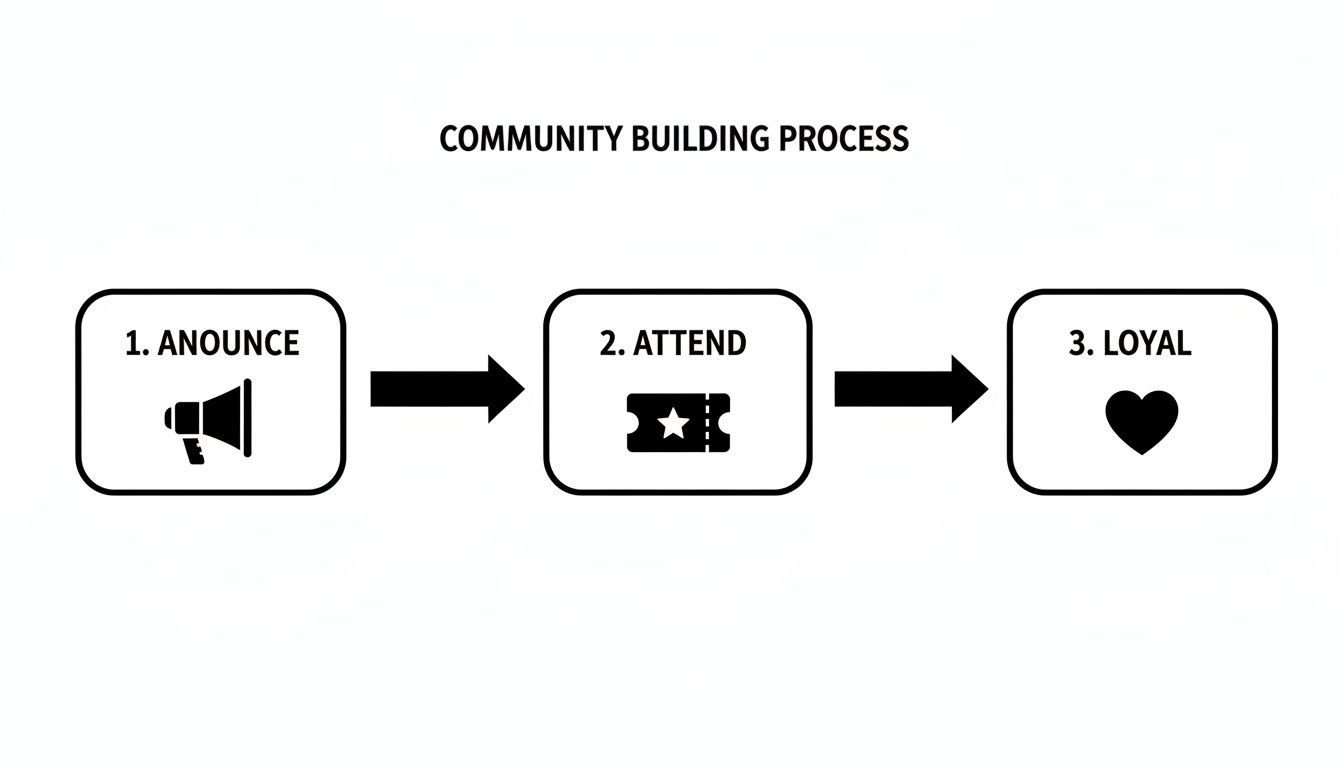
Each step is a chance to invite someone to join your list.
Use Your Next Event as a Magnet
You can build your list before tickets even go on sale. Just create a simple waitlist page for your next event. This captures the interest of your most eager fans.
With a platform like Ticketsmith, you can get a page like this up in minutes. You don't have to write any code. Announce the waitlist, and watch your first subscribers roll in. That waitlist is the beginning of your email distribution list.
The biggest mistake is waiting for the "perfect" time. The perfect time is now, with whatever audience you have. Even if it's just friends and family. They're your founding members.
For proven tactics, check out this excellent resource on how to build an email list that actually grows your business. The real secret is just combining a few simple methods and being consistent.
Simple List-Building Tactics That Work
Here's a quick look at a few easy methods, how much work they take, and what they're best for.
| Method | Effort Level | Best For |
|---|---|---|
| Ticketing Page Checkbox | Low | Any event using online ticket sales. The absolute must-have. |
| Social Media Bio Link | Low | Organizers with an active social media presence. |
| In-Person Signup Sheet | Low | Small, intimate events like workshops, classes, or pop-ups. |
| "Coming Soon" Waitlist | Medium | Building hype and gauging interest before a big event launch. |
| Website Pop-up Form | Medium | Events with a dedicated website that gets steady traffic. |
Don't overthink it. Pick one or two methods that fit what you're already doing and just start.
Making your online registration for events do double duty as a list-building tool is the most efficient way to grow. It automates the whole process. You can focus on creating an amazing experience, not manually adding names to a spreadsheet.
What to Actually Send to Your Subscribers
So, you have a list of subscribers. Now what? That blinking cursor on a blank page can feel intimidating. Don't sweat it. The game is about being helpful and human, not just another piece of inbox junk.
Your email distribution list is a direct line to people who want to hear from you. Respect that connection. You're building a relationship, not just blasting ads. Every email is a chance to make them feel like an insider.
It's a noisy world. A mind-boggling 376.4 billion emails are sent every single day, so yours needs to be worth opening. But people want good email. Roughly 93% of people check their inbox daily. You can find more of these email marketing statistics on Cognism.com.
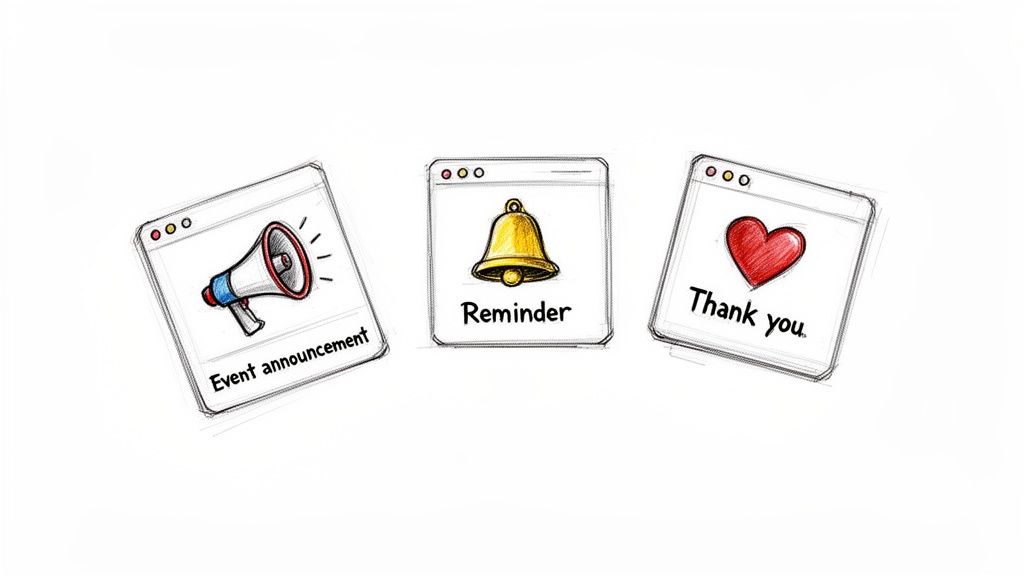
Here are the three essential emails every event organizer should have ready.
The Event Announcement Email
This is your big moment. The grand reveal. It’s when you finally tell everyone about that cool thing you’ve been working on. The goal is simple: build excitement and get people clicking to the ticket page.
- Subject Line: Keep it clear, but give it some pop. "It's Official: The Summer Cooking Class is Here!" works well.
- Body: Get straight to the good stuff. Announce the what, when, and where. Tell them why they can't miss it. A great photo helps.
- Call to Action: Make the next step obvious with a big, bold button. "Grab Your Ticket" or "See the Full Menu" is perfect.
For your most dedicated fans, sweeten the deal with an exclusive presale. Sending a presale link just to your email list is one of the best rewards you can offer. We have a whole guide that breaks down how presale tickets work.
The Friendly Reminder Email
People are busy. They forget things. A well-timed reminder isn't pushy; it's helpful. Send one a week before the event, and maybe a final nudge 24 hours before tickets close.
This email is about creating a little urgency (without being obnoxious). Frame it as a friendly heads-up.
Simple Reminder Template:
Subject: Heads up! Just 5 spots left for the workshop.
Hey [Name],
Just a quick note that our [Event Name] is almost full. If you were hoping to join us, now's the time!
Hope to see you there.
[Link to Ticket Page]
The Post-Event Thank You
Most people forget to send this email. It might be the most important one for building a community. It shows you care about the entire experience, not just making a sale.
Send this a day or two after your event. Keep it short, sweet, and sincere.
- Say thank you. Acknowledge their time and support.
- Share a highlight. Drop in a great photo from the night or a link to the playlist.
- Ask for feedback (optional). A one-question survey can give you valuable insights.
- Hint at what's next. A teaser like, "We're already dreaming up our next dinner..." keeps the excitement going.
Sending these three emails consistently will build trust and turn one-time attendees into true fans.
The Boring (But Critical) Stuff: Keeping Your List Clean and Legal
Let's talk about the part of email marketing that sounds incredibly boring but is critical. Keeping your list clean and compliant.
I know, those words make your eyes glaze over. But stick with me. It’s not as complicated as lawyers want you to think. The rulebook for email is just good manners. Get permission before you email someone. And give them an easy way out if they want to leave. That's it.
Consent Is Everything
You absolutely must have explicit permission to email someone. This isn't a "nice-to-have." It's the law in many places, thanks to rules like GDPR in Europe and the CAN-SPAM Act in the US.
What does that look like?
- No pre-checked boxes. The "join our mailing list" box should be unchecked by default. People have to actively click it.
- Never, ever buy a list. Seriously. This is the fastest way to get your emails flagged as spam and destroy your reputation.
- Be crystal clear. Tell people what they're signing up for. "Join our list for event announcements and early-bird discounts" works perfectly.
The golden rule is simple: only email people who are expecting to hear from you. It keeps you on the right side of the law and ensures your messages actually land in their inboxes.
The Art of the Unsubscribe
Making it hard for people to unsubscribe is a terrible look. It’s like locking the doors at a party when someone wants to go home. Let them go gracefully.
Every single email you send must have a clear, easy-to-find unsubscribe link. You'll usually find it in the footer. Seeing people unsubscribe isn’t a failure. It's a sign of a healthy list.
Why a Clean List Is a Better List
This brings us to "list hygiene," which is just a fancy term for cleaning house. Your goal isn't the biggest list. It's the most engaged one.
Every so often, remove subscribers who haven't opened your emails in a long time (say, six months). This is one of the best things you can do for your list's health.
It immediately improves your open rates. It signals to providers like Gmail that people want what you're sending. This means you’re far less likely to end up in the spam folder. More real fans see your announcements. You sell more tickets. Simple as that.
How to Segment Your List for More Ticket Sales
Sending the exact same email to everyone is like shouting into a crowded room. A few people might hear you, but most will just tune out the noise.
Segmentation is the opposite. It’s pulling a few people aside for a quiet, relevant conversation.
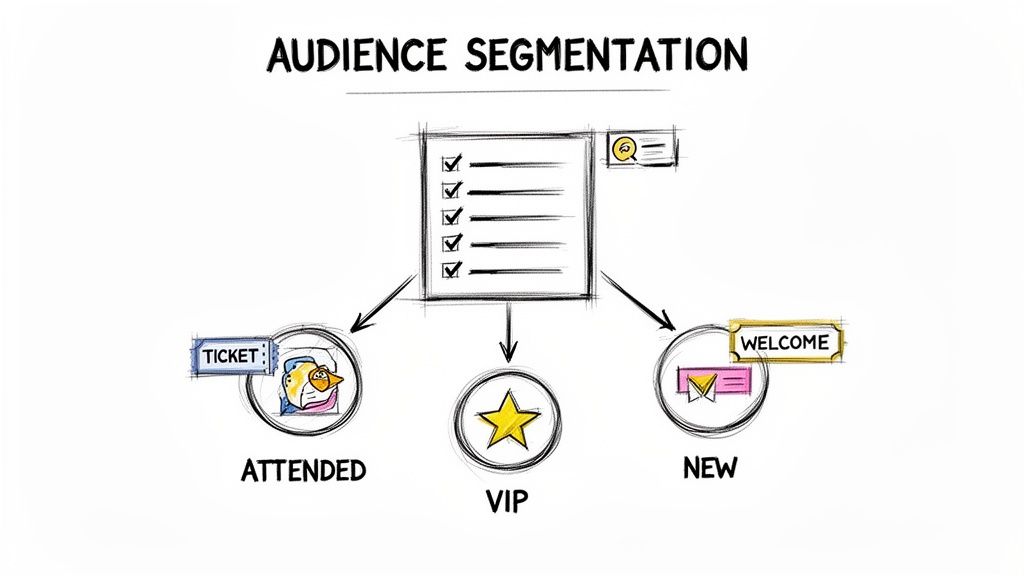
It just means dividing your main email distribution list into smaller groups based on what you know about them. The goal is to send the right message to the right people. When you nail this, your emails feel less like marketing and more like a helpful note.
And it works. Companies that use segmentation have seen their revenue jump by a staggering 760%. You don't need a huge team to do this. You can dig into more email marketing stats over at Cognism.com to see the full impact.
Easy Segments You Can Create Today
You don't need to slice your audience into a million tiny pieces. Starting with a few simple groups is more than enough.
Here are three practical segments you can set up right now:
- Past Attendees: Your proven fans. They’ve already bought a ticket and showed up. This group is gold.
- VIPs or Repeat Buyers: Your superfans. They come to multiple events or always buy the premium ticket. They deserve special treatment.
- New Subscribers: These folks are interested but haven't bought a ticket yet. They need a warm welcome.
Creating these groups doesn't require complex software. In a platform like Ticketsmith, your attendee data is already organized. You can build these segments in minutes, with no code.
Putting Your Segments to Work
Once you have your groups, you can send them targeted messages. You wouldn't talk to a first-time attendee the same way you'd talk to someone who’s been to five of your workshops.
Segmentation is about making your audience feel seen. It shows you’re paying attention. That's the fastest way to build loyalty.
Let’s make this concrete. Instead of sending one generic "tickets on sale now" email, try this:
- Email your VIPs first. Give them a 24-hour head start to buy tickets, maybe with a small discount. Title it "You get first dibs."
- Then, email your Past Attendees. Thank them for their past support and let them know tickets are available. Remind them how much fun they had.
- Finally, email your New Subscribers. Introduce the event. Explain the value. Include a great photo from a previous event to show them what they’re missing.
This approach drives sales and builds community. Your VIPs feel rewarded. Past attendees feel appreciated. New folks get a proper introduction. If you want to learn more about creating that initial burst of sales, check out our guide on how early-bird tickets can build momentum.
Connecting Your Email List With Your Ticketing
This is where it all clicks. Your ticketing platform and your email list shouldn’t be in separate silos. They need to work together to turn ticket buyers into a lasting community.
Think of it as a flywheel. You announce an event to your email list. Your fans buy tickets. And new people who buy tickets join your list. It’s a self-fueling cycle. The best time to ask someone to join your community is the moment they’re excited enough to buy a ticket.
Automating Your Growth
This process shouldn’t be another chore on your to-do list. You have an event to plan. The right tools make this connection automatic.
This is why we built Ticketsmith. It was built for real people pouring heart into their events. You can get an event page live in minutes—no code required. As attendees check out, they see a simple option to join your email list. It’s an effortless way to bring new buyers into your world.
The magic happens when your tools work for you in the background. Good technology should feel invisible. It lets you focus on creating an amazing experience, not fighting with software.
A System That Scales With You
This connection is powerful whether you're selling five seats for a pottery class or 5,000 tickets for a festival. It’s how you build a sustainable, independent business.
Here’s how the loop works:
- Announce: You email your existing list about a new event.
- Sell: Your fans buy tickets, and new attendees discover you.
- Grow: Those new buyers check a box to join your list during checkout.
- Repeat: Your list is now bigger for your next announcement.
By integrating these two systems, you’re not just selling tickets. You’re building an asset that grows over time. Making your online ticketing for events the engine of your list growth is the smartest way to scale.
Common Questions, Answered
Got a few questions? Perfect. We hear these all the time. Here are some direct, no-nonsense answers.
How often should I email my list?
There’s no magic number. A good rule of thumb is once or twice a month, ramping up to once a week as you get closer to a launch.
The real secret? Only email when you have something valuable to share. If you're just sending emails to check a box, people will tune out fast. Always choose quality over quantity.
What is the best tool to use?
The "best" tool for your email list is the one you'll actually use. Platforms like Mailchimp or ConvertKit are popular for a reason. Most offer free plans for smaller lists.
Don't get stuck in analysis paralysis. Just pick one that looks straightforward and jump in. You can always switch later.
The most important metric isn't your open rate. It's ticket sales. If you have a small, loyal list that shows up for every event, you're winning. Focus on your own results, not vague industry benchmarks.
What open and click rates should I expect?
It’s easy to get obsessed with averages, but try not to. For most independent creators, an open rate between 20-30% is solid. Click-through rates usually land in the 2-5% range.
But again, these are just ballpark figures. The list for a local pottery class will behave differently than one for a massive food festival. Focus on building real relationships, and the sales will follow.
Ready to connect your ticketing directly to your email list? With Ticketsmith, you can spin up a beautiful, branded event page in minutes. We handle the fast, secure payouts straight to your account with simple, flat-fee pricing. No hidden percentage skims.