Publicizing your event means getting the right people excited enough to show up. It's really just three phases: build your foundation, spread the word, and drive last-minute sales. The key is having a plan, so you're not just shouting into the void.
Your Simple Event Publicity Playbook
You’ve poured your heart into planning an amazing workshop, pop-up dinner, or local gathering. Now for the hard part: getting people in the door.
The good news? You don't need a huge budget or a marketing degree. You just need a simple plan. Forget the buzzwords and complicated spreadsheets. This is a real-world guide on how to publicize an event, built for creators who are short on time but big on passion.
We're going to break down exactly what to do and when. From your first announcement to the final push for tickets, we've got your back.
The Three Phases of Publicity
Think of your promotion in three stages. The Early Phase is for getting your ducks in a row. The Middle Phase is when you make some noise. And the Final Phase? That's all about creating urgency.
Each stage has a different job. Trying to do everything at once is a recipe for burnout. Focus your energy on the right tasks at the right time.
A classic mistake is waiting until the last minute to start promoting. By then, people’s calendars are full. Giving yourself at least four to six weeks is the sweet spot for most small events.
This timeline gives you a simple flow for your publicity efforts, moving from early planning to the final ticket push.
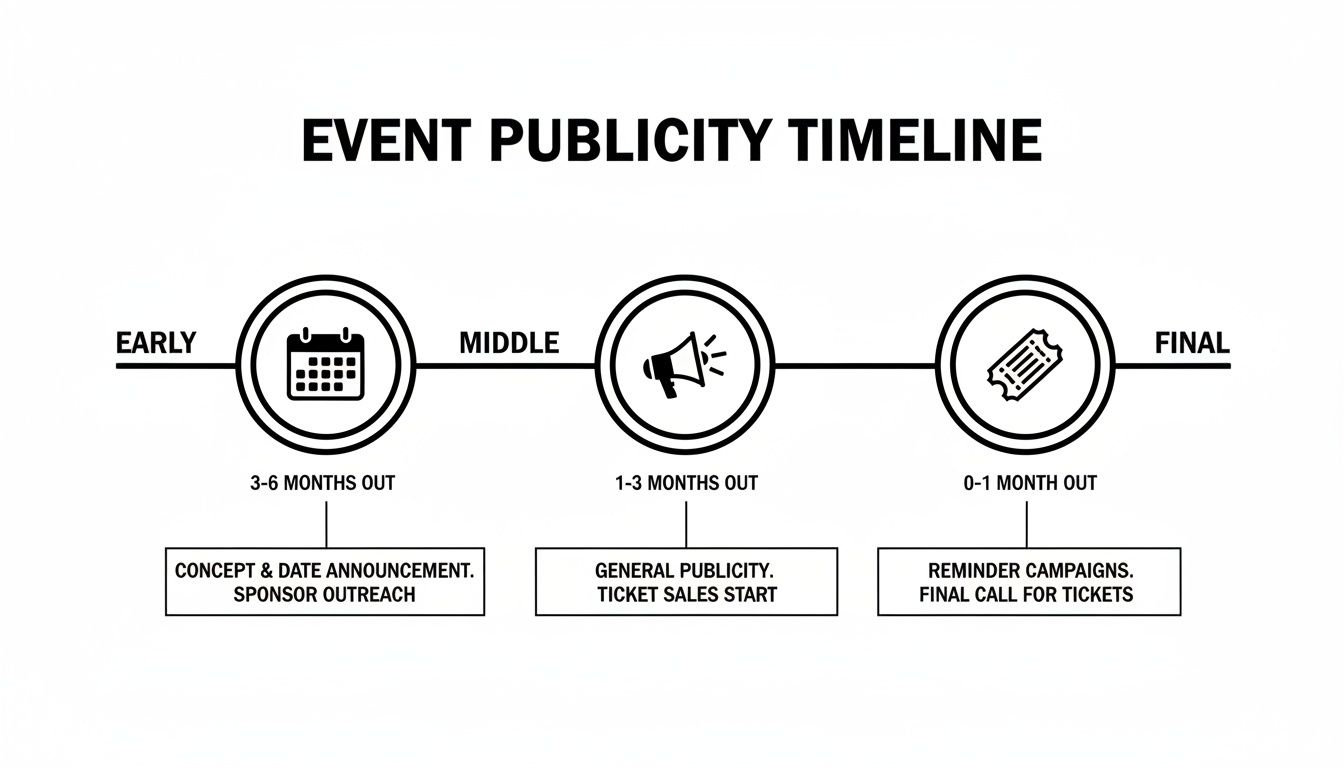
This visual breaks down the process. A consistent, phased effort is way more effective than one big promotional blast right before the event.
To make it even clearer, here's a quick breakdown of what to focus on.
The Three Phases of Event Publicity
| Phase | Timeline | Key Focus | Example Action |
|---|---|---|---|
| Early Bird | 4–6+ Weeks Out | Foundation & Awareness | Create your event page, set up ticketing, and announce "save the date." |
| Full Launch | 2–4 Weeks Out | Engagement & Sales | Launch ticket sales, share behind-the-scenes content, and pitch to local media. |
| Final Push | Last 1–2 Weeks | Urgency & Scarcity | Run "last chance" emails, highlight ticket scarcity, and post daily reminders. |
This structure isn't about being rigid. It's about being strategic so you're not scrambling at the last second.
Why a Timeline Matters
Without a timeline, you're guessing. You'll either annoy people by posting too much too soon, or miss your chance by starting too late. A simple schedule keeps you on track. It makes sure your message lands when it matters.
It also forces you to prepare. Knowing you need to launch tickets in two weeks gives you a deadline to get your event page ready. This is where a simple tool like Ticketsmith is a lifesaver. You can set up a custom-branded page in minutes, with no code. You’re ready to go the second your timeline says "launch."
The goal isn't to follow some stuffy plan. It's about giving yourself a structure. A structure that frees you up to focus on creating an incredible experience.
Build Your Foundation Before You Announce Anything
A great launch starts long before you post "Tickets on sale now!"
Rushing this part is like trying to build a house without looking at the plans. You'll spend all your time patching holes later. Let's get the foundation solid first. Then you can focus on selling tickets, not fixing mistakes.
Create Your Event's Home Base
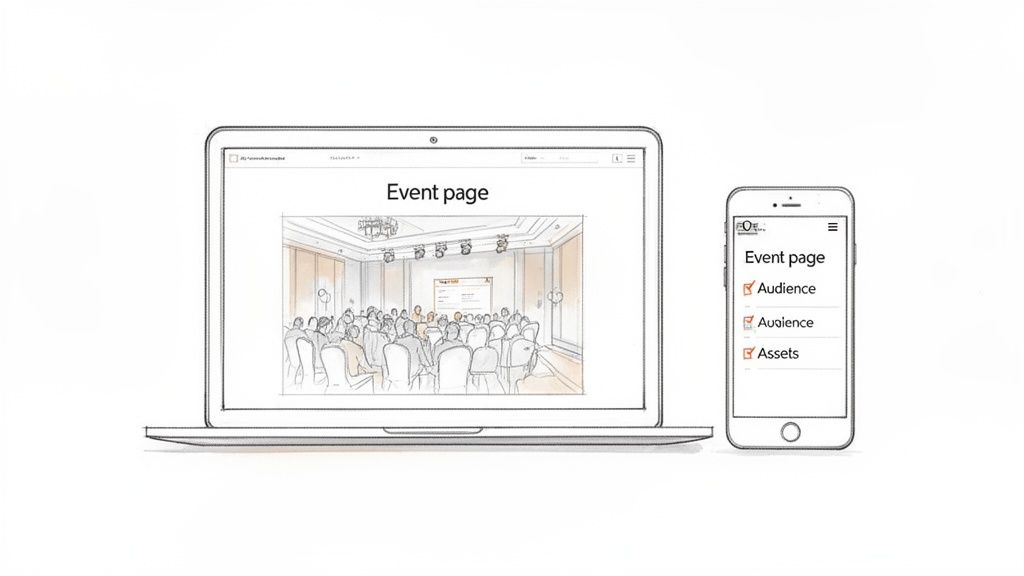
Before you tell anyone about your event, you need one central place for all the info. This is your event page. It's where people learn what you're doing, why it's cool, and most importantly, give you their money.
This doesn't need to be complicated. In fact, it shouldn't be. Using a simple platform lets you get a page up in minutes. It should have your branding so it looks like it came from you. The goal is clarity and speed.
Nail Down Who You’re Talking To
Okay, your page is ready. Now, who are you trying to attract?
Getting specific is a superpower. "Everyone" is not a target audience. It's a recipe for being ignored. "Aspiring bakers in Brooklyn who want to master sourdough"—that's a target audience.
Think about the one person you’re creating this for. Seriously, picture them.
What problem are you solving for them?
What will they learn, experience, or feel?
Why should they give you their Saturday and their cash?
Your answers are the building blocks for your messaging. Every email and social post should speak directly to that person.
Vague messaging gets vague results. If you try to appeal to everyone, you appeal to no one. Be brutally specific about who your event is for and why they can't miss it.
This clarity informs everything you do next. It dictates the photos you choose, the words you write, and the places you post.
Get Your Core Assets Ready
"Assets" is a stuffy word. It just means having a few things ready so you aren't scrambling. You don't need a professional photo shoot.
Here’s your checklist:
One Great Photo: A picture of you, your space, or a past event. Something that captures the feeling. Natural light and a smartphone are your friends.
A Clean Graphic: Use a free tool like Canva to create a simple graphic with the event title, date, and time. Keep it clean and readable.
A Short Description: A one-paragraph summary of your event. Pull this from your event page. This is your go-to text for social media and emails.
Having these three things in a folder makes promotion ten times faster. When a local blog asks for info, you just send the folder. Easy.
Start Building Your Email List Now
Even if you have zero subscribers, start an email list today. Seriously.
Your email list is your single most powerful tool. It’s a direct line to people who said, "I want to hear from you." Social media algorithms change. Email is forever.
As you build your foundation, it’s worth understanding the strategies for building a robust email list. The effort you put in now pays off later.
Even a small list of 25 engaged people is more valuable than two thousand passive followers. They're the people most likely to buy tickets first. For more, we have a guide on building your own email distribution list.
With your page built, your audience defined, and your assets ready, you have a launchpad. Now you’re ready to make some noise.
Spreading the Word with Channels That Actually Work
Your event page is live. Your message is sharp. Now it's time to tell people about it. Many organizers get overwhelmed here. They think they need to be everywhere at once.
Don't.
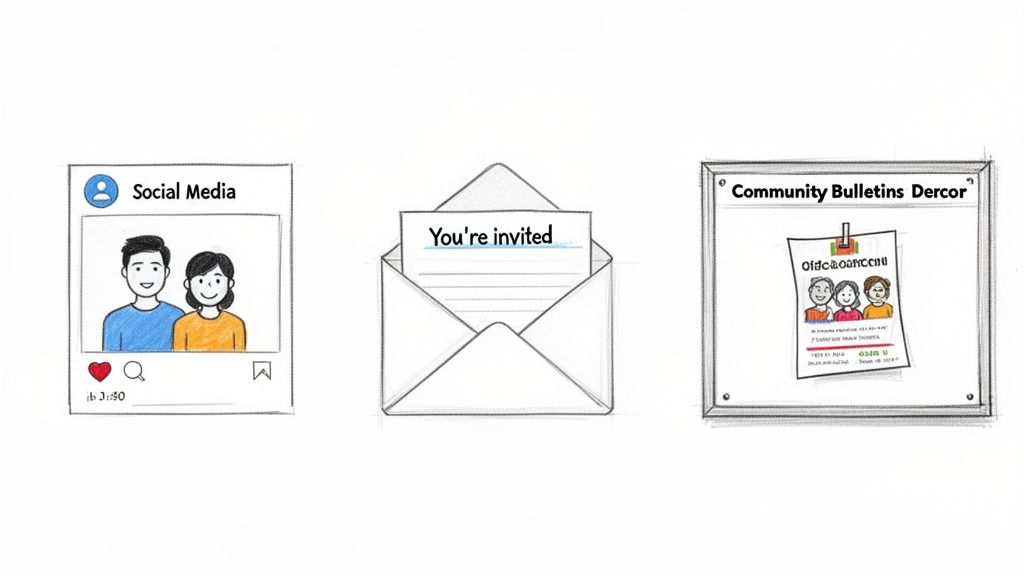
The goal isn't to shout from every rooftop. It's to whisper in the right ears. Focus on the few channels where your people spend their time. For most small events, this means a smart mix of social media, email, and community outreach.
Go Where Your Audience Lives
Social media is usually the first stop. A whopping 83% of marketers use it to find attendees. But that doesn't mean you need to master every platform. That’s a recipe for burnout.
If your audience lives on Instagram, focus there. If they're in a specific Facebook Group, become a valuable member before you drop a link.
Pick one or two channels and do them well.
Make Your Social Media More Human
Blasting "BUY TICKETS NOW!" over and over gets you muted. Your social media should feel less like an ad and more like a genuine invitation.
Here are a few ideas that work:
Share a behind-the-scenes look. Testing a recipe for your pop-up? Show the messy process. People love seeing the work that goes into an experience.
Introduce a speaker. Post a short Q&A. Ask them what they're excited about. This builds credibility and gives their followers a reason to check you out.
Ask a question. Hosting a pottery workshop? Ask your followers, "What's one thing you've always wanted to learn how to make?" This sparks engagement.
Create a short video. To grab attention, check out some viral video marketing strategies that hook people in the first three seconds.
The key is to tell the story behind the event. People connect with people, not faceless marketing. Show them the heart you're pouring into this.
Your Email List Is Your VIP Club
Remember that email list? Time to use it. Your subscribers are your warmest audience. They've already said they want to hear from you.
Don't send a generic blast. Write to them like a friend. Tell them you're hosting something special and wanted them to be the first to know.
Your email list is a direct line to your biggest fans. Treat them like gold. Give them first dibs on tickets, an exclusive discount, or a personal note.
This personal touch turns a subscriber into an attendee. For a deeper dive, check out our guide on powerful event promotion strategies.
Never Underestimate Local Outreach
In a world drowning in digital noise, a physical flyer feels fresh. If your event is for a local community, get out into that community.
Think about where your ideal attendees hang out:
Coffee shops
Community centers
Co-working spaces
Local bookstores
University bulletin boards
A clean flyer on a community board still works magic. It shows you're part of the local fabric. Also, submit your event to local online calendars run by city blogs or news outlets. Most have a free submission form.
By focusing your efforts, you can publicize your event without burning out. It's about depth, not width. A real connection on one platform is worth more than a thousand empty impressions across ten.
Driving Last-Minute Ticket Sales
The final week is where the magic happens. This is make-or-break time. All the procrastinators and fence-sitters are finally deciding to pull the trigger.
Your job isn't to be pushy. It's to create friendly urgency. This is the last call, and you want to make it compelling. Remind people that the amazing experience you've been talking about is almost here. Their chance to join is closing fast.
Create Genuine Urgency and Scarcity
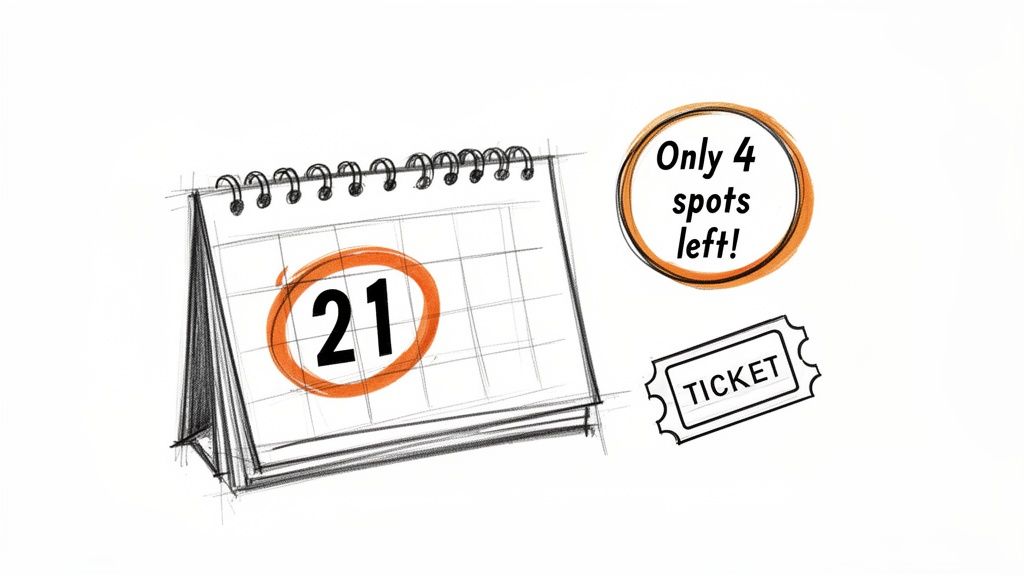
Nothing lights a fire under people like the fear of missing out (FOMO). But it has to be real. Faking scarcity feels cheap and will burn your credibility.
If you genuinely have limited spots, shout it from the rooftops. A post that says, "Only four spots left!" is a thousand times more powerful than "Tickets are selling fast!" One is a fact. The other is fluff.
Here's what works:
The Countdown: Post daily on social media counting down the days. "Three days until our sourdough workshop!" It’s simple, visual, and effective.
The "Last Chance" Email: Send one final, clear email to your list. Subject lines like "Last chance for tickets" or "Doors close tomorrow" get opened.
Share a Testimonial: Have a quote from a past event? Post it now. Let their authentic excitement do the selling.
Don't invent scarcity if you don't have it. Instead, focus on the value people will miss. Frame it as, "This is your last chance to learn this skill," or "The final opportunity this year to be part of this dinner."
This approach respects your audience while still giving them a nudge.
Re-Engage Your Warmest Leads
Think back to the beginning. Who showed early interest? The people who liked your first post or commented with a question are your hottest leads. They just need a final nudge.
Don't just post and hope they see it. Go back to those old posts and reply directly. A simple, personal message can make all the difference.
- Try something like: "Hey [Name]! Just a friendly heads-up that the workshop is this Saturday and there are just a couple of spots left. Hope to see you there!"
This personal touch cuts through the noise. It shows you're paying attention and value their interest. A small detail that sells tickets.
Nudge the Price Strategically
Sometimes, a small price adjustment gets people off the fence. This isn't about deep discounts that devalue your event. It's about a small, strategic incentive.
A flash sale is a classic. Offering 10% off for the next four hours can create a burst of sales. It's a clear, time-sensitive offer that forces a decision.
Another method is dynamic pricing. The price might adjust as the event gets closer. If you're curious, you can learn more about what is dynamic ticket pricing without confusing your customers. The key is transparency.
Whatever you do, make sure your ticketing tool lets you easily adjust prices. You want to create a coupon code in seconds, not fight with complicated software.
Finally, if you have partners or speakers, ask for one last push. Their endorsement in the final days is gold. Combine these efforts and you'll build the momentum to sell out.
Keeping the Momentum Going After the Event
Think your work is done when the last person leaves? Nope. The post-event phase is a golden opportunity. You can turn one successful gathering into a loyal community for the future.
This is where you lock in all that great energy. The goal is to make your attendees feel seen, appreciated, and excited for what’s next. Nail this, and you've already started publicizing your next event.
Say Thank You and Ask for Feedback
First, send a thank-you email within 24 hours. Keep it simple and heartfelt. A genuine "Thank you so much for coming" goes a long way.
This email is also the perfect moment to ask for their thoughts. People like being asked for their opinion. Their answers are gold for planning your next event. What did they love? What fell flat? A simple one-question survey gives you incredible insights.
Share the Best Moments on Social Media
While the vibes are fresh, get photos and highlight reels up on social media. Tag attendees who are open to it. You're creating a digital scrapbook of the experience.
This also serves another purpose: it shows everyone who didn't come what they missed. A little friendly FOMO is a powerful promotional tool. Seeing real people having a great time is more convincing than any ad.
Your past attendees are your best marketing team. When they share your photos or leave a positive comment, it's a powerful endorsement you can't buy.
Leaning into their excitement builds a real sense of community. It signals that your events are more than a ticket purchase. They're a shared experience.
Build Your VIP List for Next Time
Now for the pro move. Take everyone who attended and create an "insiders" segment in your email list. These people are your superfans. They showed up. They paid. They are your most valuable audience.
These folks should be the first to hear about your next workshop or pop-up. Nurturing this relationship turns one-time attendees into repeat customers.
Give them early access. Let them grab tickets for your next event before anyone else.
Offer them a small discount. A "thank you" discount for being a past attendee builds incredible loyalty.
Ask for their input. A quick poll like, "What topic should we cover next?" makes them feel part of the planning.
A great post-event experience can be a simple follow-up. For some low-cost ideas, check out our guide on how to create memorable event goodie bags.
By focusing on these steps, you're not just closing out one event. You're building the foundation for a sold-out next one.
Questions I Hear All the Time from Event Organizers
When you're deep in planning, a million questions pop up. I get it. Here are the most common ones I hear from creators making things happen.
"Seriously, How Far in Advance Should I Start Promoting My Event?"
There isn't one magic number, but here's a reliable rule of thumb. For a small to medium event—a workshop, pop-up dinner, or local meetup—give yourself four to six weeks. This gives you enough runway to build awareness without burning out your audience (or yourself).
For something bigger, like a local festival, you need more time. Stretch that to at least eight to twelve weeks.
The trick is to break promotion into phases.
The Early Buzz (6+ weeks out): Soft launch. Announce a save-the-date. Tease a few speakers. The goal is just to get on people's radar.
The Main Push (4 weeks out): Go-time. Tickets are on sale. Your email and social media efforts are in full swing.
The Final Call (The Last Week): Your messaging shifts to urgency. Countdowns, "only a few spots left," and "last chance to buy" reminders.
Thinking in phases makes it feel less like a mountain to climb.
You can't just drop a link four weeks out and expect a sell-out. The best publicity builds a story over time. It turns casual curiosity into real excitement.
A little planning here saves a lot of stress later.
"What Are the Best Free Ways to Publicize an Event on No Budget?"
You can 100% promote an event with a zero-dollar budget. It just takes more hustle. These scrappy methods often build a stronger connection with your audience than a paid ad ever could.
First, lean into your personal network. This is your superpower. Don't just blast a generic message. Send personal notes to friends and colleagues you think would be interested. A simple, "Hey, I'm putting on this thing I'm excited about, and it made me think of you," is incredibly powerful.
Next, pick one social media platform and own it. Don’t spread yourself thin. Find out where your ideal attendees hang out online—a niche Facebook Group, Instagram, or LinkedIn—and become a valuable member.
And don't forget the real world. Think local and analog.
Community Hubs: Local Facebook Groups, neighborhood forums like Nextdoor, or specific subreddits can be goldmines. Just read the rules before you post.
Old-School Flyers: It sounds crazy, but a well-designed flyer in the right local coffee shop or community center can be shockingly effective. It costs next to nothing to print a small batch.
You have more promotional power than you think, even with empty pockets.
"What Should I Actually Put on My Event Ticketing Page?"
Your event page has one job: convince someone to click "buy ticket." It needs to answer three questions instantly: What is this? Who is it for? And why should I go?
Start with a crystal-clear title. No jargon. "Sourdough Baking Workshop for Beginners" is better than "Artisanal Flour Alchemy."
Grab their attention with a great photo. Then, write a quick, punchy description that spells out the value. What will people learn or experience? Use bullet points so they can scan key takeaways in seconds.
Make sure all crucial details are impossible to miss: date, time, location, and price. Be upfront about the cost. Using a platform with flat-fee pricing is a game-changer. You can tell your customers exactly what they'll pay without a nasty "service fee" surprising them at checkout. Add a short bio about yourself to build trust, and make the buy button ridiculously easy to find.
I know, that’s a lot to take in. But publicizing your event doesn’t have to feel like a mess. With a simple plan and the right tools, you can get back to what you do best: creating an amazing experience.
At Ticketsmith, we built our platform for creators like you. People pouring heart into events. You can set up a beautiful, custom-branded page in minutes. We offer fast, secure payouts and simple flat-fee pricing that won’t skim your profits. Whether you’re hosting for five people or 5,000, we make selling tickets the easiest part of your job. Get started today at https://ticketsmith.co.