
Ever feel like you’re just guessing what to charge for your event? Dynamic ticket pricing is the answer. It’s a simple idea: letting your ticket prices change automatically based on what’s happening in real-time.
Think about how Uber fares surge in a downpour. Or how airline tickets get more expensive closer to the holidays. That’s all this is.
And it's not just for giant corporations anymore.
What Is Dynamic Ticket Pricing, Really?
Let’s cut the jargon. Dynamic pricing is a way to sell the right ticket to the right person at the right time, for the right price. Instead of setting one flat price and hoping for the best, your prices adjust up or down based on factors you control.
It’s a huge leap from the old methods. For a great breakdown of the old-school ways, you can check out these types of ticketing models. The big difference is that dynamic pricing adds a layer of real-time intelligence.
How It Works in Simple Terms
This isn't black magic run by data scientists in a hidden lab. It’s just about letting data do the heavy lifting for you. You set simple rules that trigger price changes automatically.
Here are a few common triggers people use:
- Time: Prices can climb as the event gets closer. This gives people a good reason to buy early.
- Demand: Once you sell a certain number of tickets, the price for the next batch can automatically go up.
- Scarcity: Those last ten spots for your sold-out pottery class? They’re worth more than the first ten. Price them that way.
The point is to fill every spot and earn what your event is truly worth. Without being chained to a spreadsheet 24/7. It's about working smarter, not harder.
The global market for this stuff was valued at $1.2 billion in 2024 and is on track to hit $7.9 billion by 2033. That growth is happening because the tech has finally gotten simple enough for anyone to use.
Let's compare the old way with the new way.
Dynamic Pricing vs. Fixed Pricing
| Feature | Fixed Pricing | Dynamic Pricing |
|---|---|---|
| Price Flexibility | Price is set once. It never changes. | Prices adjust based on your rules. |
| Revenue Potential | Capped. You might leave money on the table. | Maximized. You capture the true market value. |
| Audience Urgency | Low. No reason to buy early. | High. Encourages buying before prices rise. |
| Setup Effort | Simple. Set it and forget it. | Requires a few minutes to set up your rules. |
| Data Usage | Minimal. Based on your initial guess. | Data-driven. Relies on sales, time, and demand. |
A fixed-price model is straightforward, but it’s a blunt instrument. Dynamic pricing gives you the precision to adapt.
Why Should Small Creators Care?
A smart pricing strategy is crucial. You’d use an event planning checklist template to manage logistics, right? Think of dynamic pricing as the tool that manages your revenue.
For a pop-up chef, a workshop host, or a local musician, this means no more guessing games. A good platform handles the adjustments, whether you’re hosting five people or five thousand.
You can get it set up in minutes with no code. Brand it to match your style. And get fast, secure payouts without anyone taking a surprise cut. It’s technology finally built for real people pouring their hearts into creating amazing experiences.
How the Pricing Magic Really Happens
Dynamic pricing can feel like a black box, but it’s not some dark art. It’s just simple math powered by a bit of software. The system is like a tireless assistant that adjusts prices based on rules you create.
It all starts with data. A pricing algorithm looks at a few key inputs to decide the price at any given moment. This isn't scary corporate data mining. It’s just the basic facts about your event.
This simple process shows how demand data flows through an algorithm to determine the final ticket price.
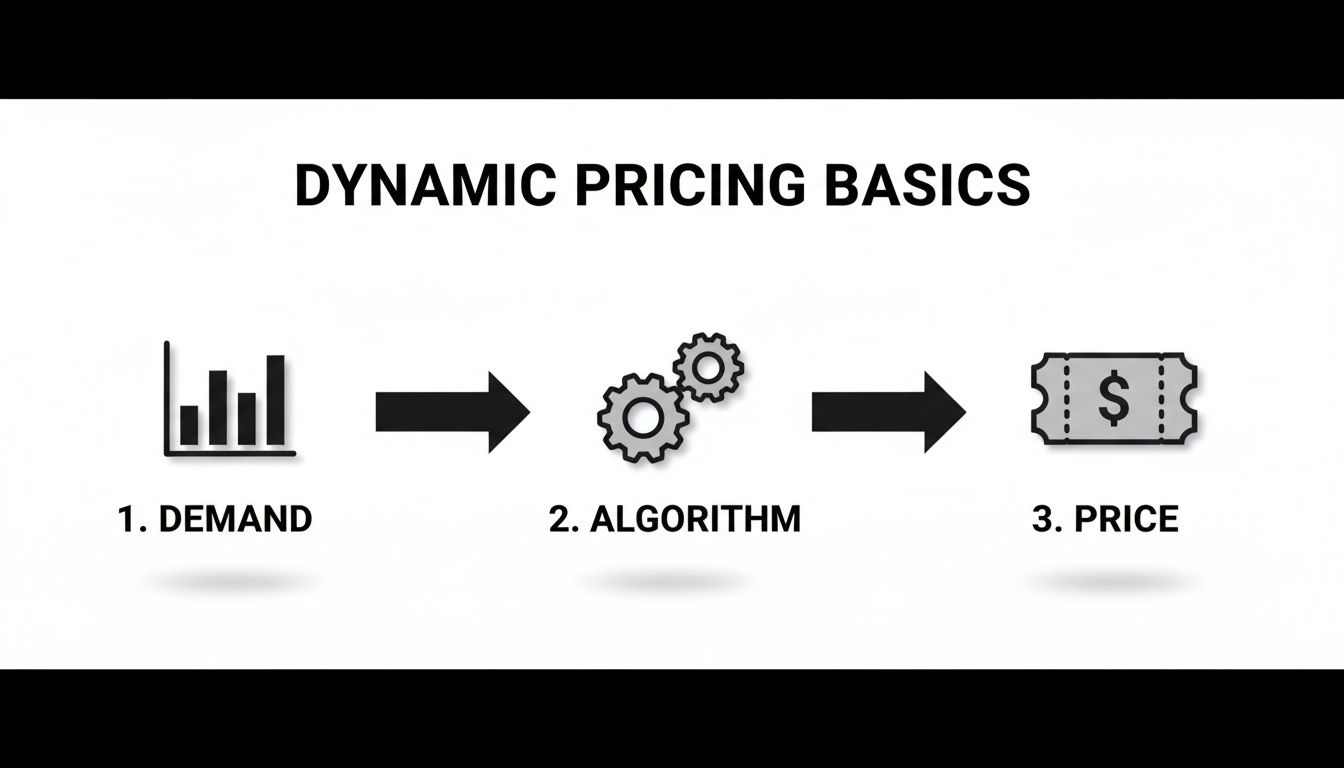
The goal is to match the price to real-time interest. That way, you don't undercharge when demand is high or leave seats empty when it's low.
The Triggers That Change Your Prices
The easiest way to think about these are as simple “if-then” statements. If a certain condition is met, then the price changes. You define the conditions, so you're always in control.
Here are the most common triggers for independent creators:
- Time Until Event: This is the classic. The price is $45 until two weeks before the event, then it bumps up to $55. This rewards the early birds and creates urgency. It pairs perfectly with other early-access methods, which you can read about in this guide on how presale tickets work.
- Ticket Availability (Scarcity): You can set a rule that once 80% of tickets are sold, the price for the remaining spots automatically increases by $10. This is perfect for that sold-out pottery class. Those last few seats are simply more valuable.
- Day of the Week: A Tuesday night workshop might struggle to fill up compared to a Saturday afternoon. You can set a lower base price for weekdays to encourage sign-ups and maximize attendance.
- Real-Time Demand: Some tools monitor how many people are looking at your event page right now. If there's a sudden spike in traffic, the system can nudge the price up slightly to match that interest.
The real power here is automation. You set these rules up once. It might only take a few minutes without touching a single line of code. From there, the system handles the adjustments so you can get back to creating an amazing experience.
For a pop-up chef, the system can automatically raise the price for the last five spots. For a workshop host, it can drop the price on a Wednesday morning class to get a few more people in the door. It’s your personal sales manager, working 24/7.
The Pros and Cons of Changing Prices
So, is dynamic ticket pricing always a good idea? Nope. Like any powerful tool, it’s got real benefits and potential downsides. You need an honest look at both sides.
On one hand, you can make more money. You can dodge that sinking feeling of selling out in five minutes, knowing you could have charged more. It also helps you fill seats that might have stayed empty.
But there’s a catch. And it’s a big one.
The Big Upside: More Revenue, Fewer Empty Seats
The most obvious win is maximizing your earnings. When demand is high, you capture the real value of your tickets instead of leaving cash on the table. The last few spots in your popular workshop are almost always worth more than the first ones sold.
Dynamic pricing is also your secret weapon against the dreaded empty-seat problem. For a midweek workshop, you can automatically drop the price to tempt people who are on the fence. It’s a smart way to boost attendance and cover your costs.
So, what’s the problem? People’s feelings.
The Downside: Risking Your Reputation
The single biggest risk is alienating your community. If your attendees feel like they're being squeezed for every last dollar, it can corrode the trust you’ve worked so hard to build. Nobody likes feeling like they got a bad deal.
This isn’t a theoretical worry. Big brands have faced major backlash. Just look at the concert industry. In just five years, average ticket prices for top tours jumped 41%, hitting $135.92. This led to artists ditching the model and governments getting involved. The U.S. Justice Department even sued Live Nation-Ticketmaster in 2024 over these practices. You can read more about how dynamic pricing is shaking up the music world.
The lesson for independent creators is simple: your reputation is everything. Upsetting your core audience for a few extra bucks is almost never worth it.
This is where a thoughtful, human approach comes in. You don’t have to choose between a fair profit and treating your people well.
- Set Clear Boundaries: Good ticketing platforms let you set price floors and ceilings. This means prices adjust within a range you’re comfortable with. No one feels gouged.
- Be Transparent: A little honesty goes a long way. A simple note like, "Prices may go up as the event gets closer, so book early for the best deal!" can turn potential frustration into a clear incentive.
- Focus on Value: The price is only an issue if the value isn't clear. If you’re delivering an incredible experience, people are much more likely to feel the price is fair.
Dynamic pricing is a strategy, not a magic wand. It’s a powerful way to earn what you deserve, but it has to be handled with care. The goal is to build a sustainable event your community loves, not to cash in and burn bridges.
Real-World Examples for Your Event
Alright, theory is great. But let's see how this actually works for the kind of event you run. Dynamic pricing isn't just for stadium tours anymore. It's a useful tool for anyone creating an experience.
Let's move from "what is dynamic ticket pricing?" to "what could this do for my event?"
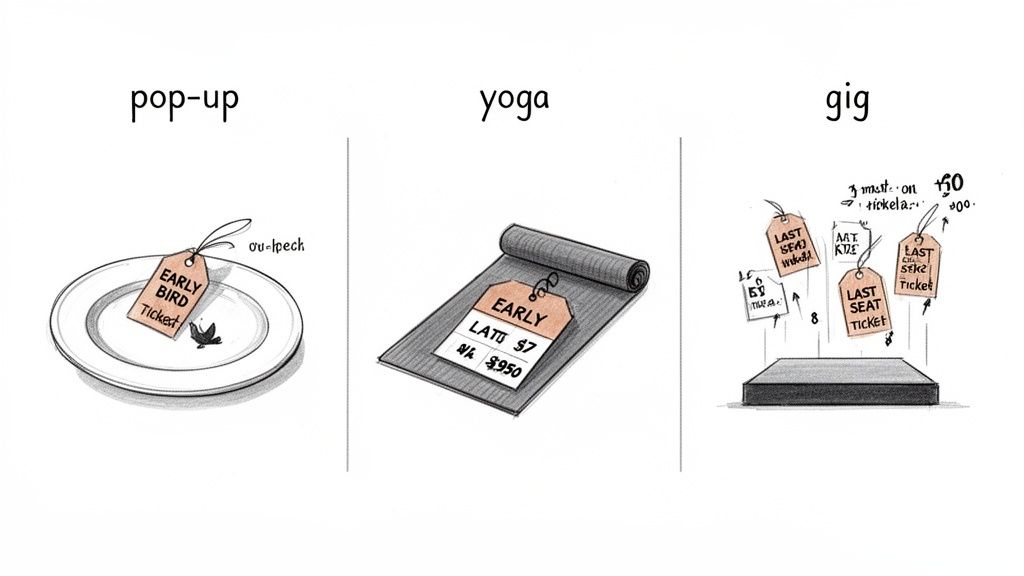
The Pop-Up Dinner
Imagine you’re a chef hosting a pop-up tasting menu for thirty people. Your priority is to build buzz and lock in early bookings to cover your costs.
This is a perfect spot for a simple demand-based trigger.
- Tickets 1–10: Price these at $75 to reward your most loyal fans and build momentum.
- Tickets 11–25: Once the first batch is gone, the price automatically bumps to your standard $90.
- The Final 5 Tickets: Scarcity kicks in. These last-minute spots jump to $110. They're now the most sought-after seats.
This strategy helps you build a solid financial base while maximizing what you earn from latecomers. Best of all, it happens automatically. You can focus on the menu.
The Weekend Yoga Workshop
You're a yoga instructor hosting a two-day workshop. Your biggest challenge is getting people to commit ahead of time. This is a classic use case for time-based pricing.
Your goal is to reward the planners and create a natural deadline for the procrastinators. This tactic can smooth out your cash flow and help you plan.
You can structure your pricing to create clear incentives. For a deeper look at this approach, check out this guide on the strategy behind early bird tickets.
Here’s a simple setup:
- Super Early Bird (First Two Weeks): Tickets are just $120.
- Early Bird (Up to One Month Before): The price rises to $150.
- Standard Price (Final Month): Tickets settle at the full price of $180.
This tiered approach gives everyone a fair shot at a good deal. It clearly communicates that waiting will cost more. It’s a gentle nudge to get people off the fence and onto the mat.
The Small Music Gig
Let's say you’re an indie musician who just booked a local venue with a capacity of 150. You want the show to feel full and energetic, but you also want to earn what you're worth.
Here, you can combine both demand and time triggers.
- Early Online Sales: For the first month, all online tickets are $15 to get the ball rolling.
- Week of Show: As the date gets closer, the online price increases to $20.
- Door Price: Any remaining tickets sold at the door are $25.
This setup rewards fans who buy in advance and captures extra revenue from the walk-up crowd. It's a simple strategy you can set up in minutes, with custom branding that looks like it came from your band. With flat-fee pricing, you know exactly what you’ll pocket on every ticket sold.
How to Use Dynamic Pricing Without Being a Jerk
So, you’re thinking about using dynamic pricing. This is the most important part of the conversation. Getting it wrong can torch the trust you’ve worked so hard to build.
Get it right, though, and you can earn more while making your attendees feel respected.
The golden rule is simple: be transparent. People don't mind a different price if they understand why. A surprise price hike at checkout feels like a slap in the face. A clear reason feels like a fair deal.
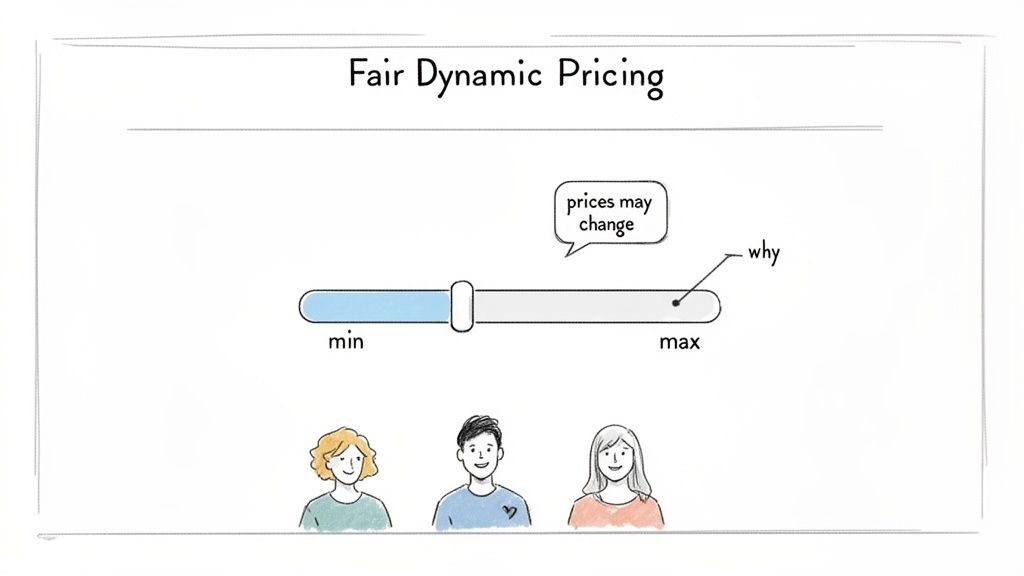
Set Smart Guardrails from the Start
Before you flip the switch, set clear boundaries. A good ticketing platform lets you do this in minutes, no code required. Think of it as putting bumpers in a bowling lane.
Your two most important settings are:
- Price Floor: The absolute lowest your ticket price will ever drop. It guarantees you cover your costs.
- Price Ceiling: The highest your ticket will ever go. It’s your promise that prices won't get predatory, no matter how wild the demand gets.
This approach also naturally discourages scalpers. By capturing more of the ticket's real value yourself, you leave less for resellers looking to flip them. We dive deeper into this in our guide on how to prevent ticket scalping.
Communicate Like a Human
Mystery is for novels, not your pricing strategy. Your attendees are smart, so treat them that way. A little straightforward communication works wonders.
Here are a few simple lines you can adapt:
- "Heads up! Prices will increase as we get closer to the event, so grab your tickets early for the best deal."
- "We have a limited number of early bird tickets at this price. Once they’re gone, they’re gone!"
- "To keep things fair, our ticket prices adjust based on demand. Book now to lock in your price."
This simple act of explaining the "why" makes all the difference. Public perception is a big deal. A 2023 Statista survey found that while most people in Indonesia found dynamic pricing fair, nearly 66% in Great Britain called it unfair. Being transparent is your best tool for staying on the right side of that divide.
Measure What Matters After the Event
So, how do you know if it worked? Once the dust settles, look at more than just the final revenue number.
Did you sell out? Great. But when did you sell out? If it was a month in advance, you probably left money on the table. If it was an hour before doors opened, your pricing was likely spot on.
Check these key numbers:
- Sales Velocity: How quickly did tickets sell at each price point?
- Attendee Feedback: Did anyone bring up the pricing in surveys or on social media?
- Final Revenue: How did it stack up against past events that used fixed pricing?
Integrating dynamic pricing into a bigger strategy, like when you're organizing a successful golf tournament, means thinking about the entire attendee journey. By being thoughtful and clear, you can turn dynamic pricing into a powerful tool that grows your event without ever feeling like a jerk.
Your Dynamic Pricing Questions Answered
Alright, let's get into the questions probably bouncing around in your head. No fluff. Just straight answers.
Is Dynamic Ticket Pricing Legal?
Yes, it’s completely legal. Airlines and hotels have been doing it for decades. The trouble only starts when pricing gets deceptive or discriminatory.
The key is to be upfront about it. Never hide fees or spring a surprise price change at checkout. As long as you're transparent that prices can change, you’re on solid ground. Honesty isn't just the best policy; it's the only one.
How Do I Start Using This for My Small Event?
You don’t need to be a data wizard. The best way in is with a platform built for creators, not Ticketmaster. Look for simple, no-code tools where you can set your pricing rules with a few clicks.
Seriously, it can be this easy:
- Set your base ticket price.
- Add a rule like: "Increase price by $10 when 80% of tickets are sold."
- Add another rule: "Increase price by $5 one week before the event."
That’s it. A good system handles the rest. These tools are built for real people, whether you're expecting five attendees or five thousand.
Won't My Attendees Get Angry If Prices Change?
They might—if you're sneaky about it. But if you’re open and honest, it’s a totally different story. People get frustrated by surprises, not by clear, fair rules.
A simple note on your event page is all it takes: "Heads up! Prices will go up as we get closer to the event, so book early to get the best deal." This turns a potential complaint into a smart incentive. It frames the higher price as a reward for planners, not a penalty for procrastinators.
It’s not about tricking people. It’s about communicating value. When you’re clear about how your pricing works, you build trust.
Can I Set Limits on How High or Low My Prices Go?
Absolutely. In fact, you should. This is the most important part of using dynamic pricing responsibly. You are always in the driver's seat.
Before you launch, set two critical numbers:
- A Price Floor: The absolute minimum your ticket will ever cost. This guarantees you always cover your expenses.
- A Price Ceiling: The absolute maximum. This is your promise to your community that you’ll never price-gouge.
Setting these guardrails gives you the best of both worlds. You get the flexibility to earn more when demand is high, but you also maintain control and keep things fair. It’s even better when you use a platform that offers simple, flat-fee pricing and direct payouts. You get the revenue you earned, plain and simple.