
Ever bought a ticket to a local gig or a food festival and noticed it didn't have a seat number? That’s general admission (GA).
It’s a first-come, first-served free-for-all. Attendees find their own spot, whether that means snagging a chair, claiming a patch of grass, or getting right up against the stage. Think of it like walking into your favorite coffee shop during the morning rush. You just grab whatever open table you can find.
So What Is General Admission Seating Anyway?
Let’s cut the event industry jargon. General admission is the most straightforward way to manage your crowd. You sell tickets that grant entry into a specific area. No wrestling with complicated seating charts full of rows and numbers.
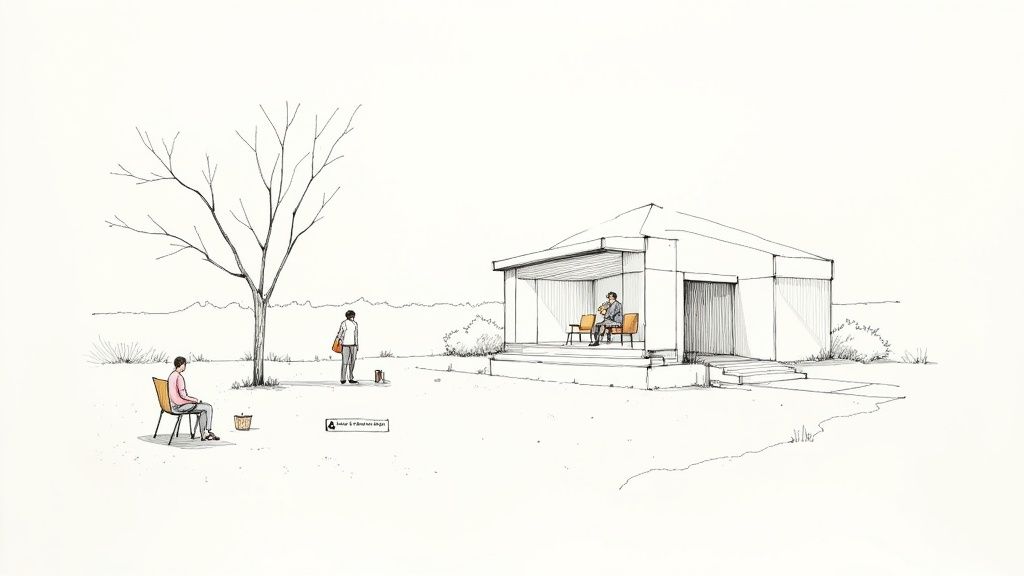
It's the perfect choice for any event where assigned seating feels too formal, stuffy, or just plain unnecessary. We see it work beautifully for:
A local band playing a set at a brewery.
A pop-up chef hosting an intimate, family-style dinner.
A weekend craft fair filling up a community hall.
An outdoor movie night in the park.
How General Admission and Reserved Seating Compare
To really get GA, it helps to see it next to its more structured cousin, reserved seating. Reserved seating is what you find at theaters or arenas, where your ticket guarantees you a specific spot. Think Row G, Seat 12.
Here’s a quick comparison.
General Admission vs Reserved Seating at a Glance
| Feature | General Admission | Reserved Seating |
|---|---|---|
| Simplicity | Easy to set up and manage. | Requires a detailed seating map. |
| Flexibility | Guests choose their own spot. | Guests are assigned a specific seat. |
| Ticket Sales | Simple ticketing process. | More complex, often tiered pricing. |
| Attendee Experience | Creates a casual, communal feel. | Offers a predictable, structured experience. |
| Best For | Festivals, concerts, fairs, workshops. | Theaters, galas, conferences, sports. |
The choice really depends on the kind of atmosphere you want to create for your guests.
Freedom is the Main Attraction
The core idea behind GA is freedom. You’re letting your attendees create their own experience. The super-fans will show up hours early to claim a spot right at the front. Others might prefer to hang back by the bar. This creates a more dynamic energy that assigned seats can't replicate.
For a small creator, this is a huge win. You don’t waste time building and managing a seating map. You can get back to what matters: creating an incredible event. With a simple ticketing tool, you can have your event page live and selling tickets in minutes. No code needed.
General admission shapes the entire event experience from the moment a ticket is purchased. It signals a more relaxed, spontaneous atmosphere where the focus is on the shared moment, not a specific seat number.
This model also gives you more wiggle room with your capacity. Many venues use GA to fit more people than fixed seating would allow, since fire codes often include standing room. Getting a handle on the different types of ticketing is the first step in picking the right path for your event.
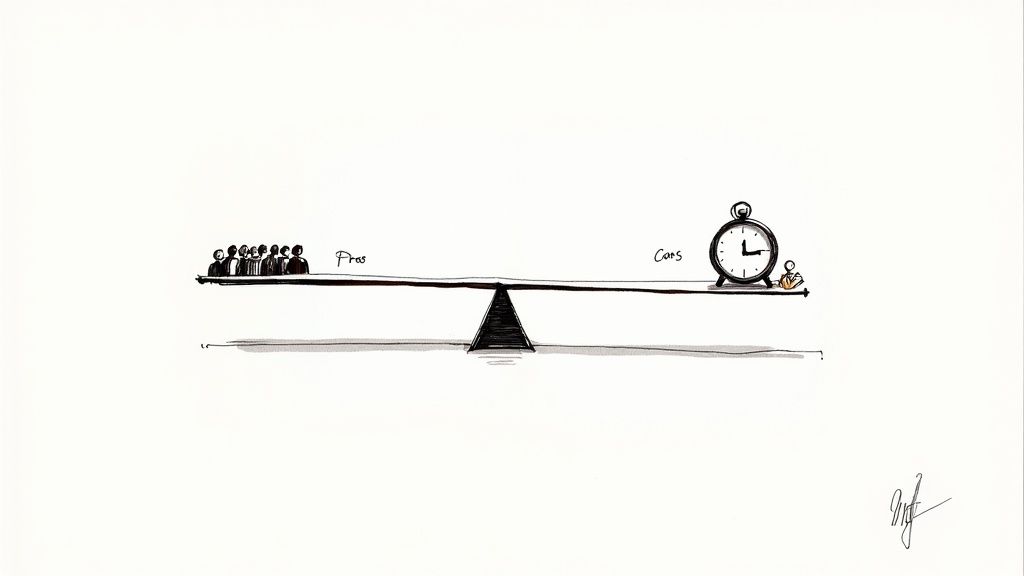
The Pros and Cons of Going General Admission
So, general admission sounds easy, right? It can be. But deciding if it's the right move means taking an honest look at both the good and the bad. Let’s get into it.
The Good Stuff: Why GA Shines
First up, the upside. For small creators, the simplicity of GA is a massive win. A pop-up chef hosting thirty people doesn’t need to sweat over a complex seating chart. The same goes for a workshop leader in a community hall.
The benefits here are pretty clear:
Less Setup Stress: Forget spending hours building seat maps. You sell tickets that grant entry, period. This is a lifesaver when you’re pouring your heart into the event and just need ticketing to work. You can get an event page live in minutes.
A More Social Atmosphere: GA naturally encourages mingling. People move around, chat with new folks, and create a real sense of community. It’s perfect for any event where you want a relaxed, social feel.
Maximizes Your Space: You can often fit more people into a venue with GA, especially with standing room. That flexibility helps you sell more tickets and avoid awkward empty seats.
For a lot of organizers, these perks make general admission the obvious choice. It’s built for real people who value connection over rigid formality.
The Not-So-Good Stuff: The GA Headaches
Okay, let's get real about the downsides. General admission isn't without its challenges. Being aware of them is half the battle.
The biggest issue? Long lines. Eager attendees often show up early to claim the "best" spots, which can lead to queues snaking around the block. And it's crucial to understand the significant impact of long lines on customer abandonment because it shows how vital crowd control is.
Here are a few other snags to watch out for:
Accessibility Hurdles: A first-come, first-served model can be a nightmare for guests with mobility issues. People who can't stand for long periods need a clear plan for support.
The "Seat Saver" Problem: We’ve all seen it. Friends saving whole rows of chairs can lead to frustration and awkward confrontations between guests.
A Disorganized Feel: Without structure, the entry process can feel chaotic if it’s not managed well. A mad dash for seats can undermine a well-planned event.
Deciding on general admission isn't just about selling tickets. It's a choice that shapes your attendees' entire experience, from the moment they arrive to how they remember your event afterward.
The key is to weigh these points honestly. GA offers incredible freedom, but that freedom requires thoughtful planning to ensure a smooth, enjoyable experience for everyone.
How to Run a Smooth General Admission Event
Alright, you've decided general admission is the move. Great choice. Now, let’s talk about how to make it run like a well-oiled machine instead of a Black Friday doorbuster.
A smooth GA event is all about managing expectations and the flow of people.
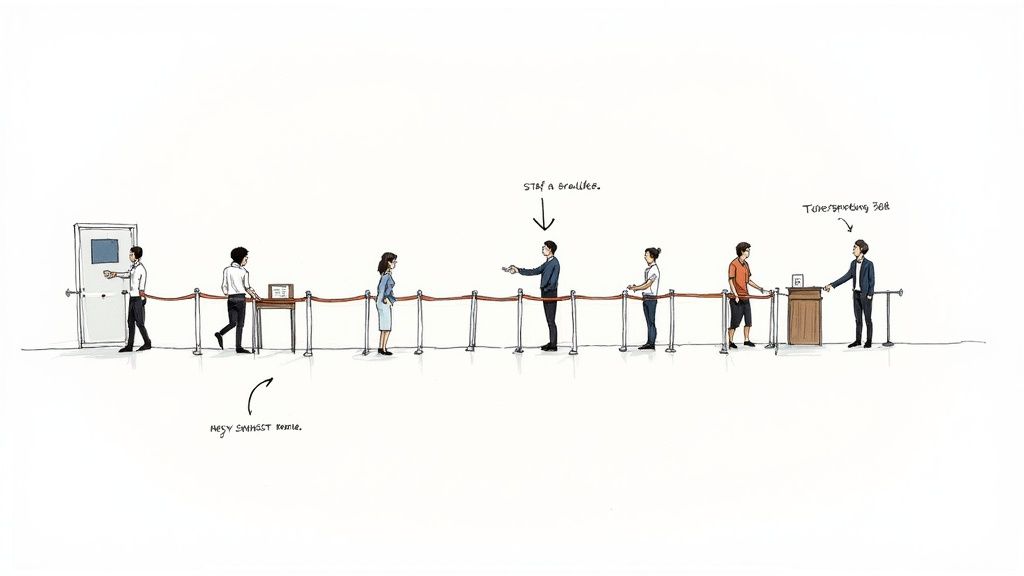
The image above nails the secret to a calm entrance: a clear, organized queue. Simple tools like stanchions (the fancy name for those posts with ropes) are your best friend. They prevent a shapeless mob from forming at your door.
Nail Down Your Real Capacity
First things first. Your venue’s official capacity isn't the number you should be selling tickets for. That number on the fire code sign is a starting point. You need to figure out your effective capacity.
Walk through your space. Are there columns? A sound booth? Merch tables taking up a corner? All that is dead space you need to subtract.
For a standing-room-only show, a good rule of thumb is about five to seven square feet per person. If you're using movable chairs, you have to account for aisles. Don’t just cram people in. Give them room to breathe.
Manage the Entry Flow
The first five minutes set the tone. If entry is a chaotic mess, it creates a frantic energy that’s hard to shake. Your goal is a check-in process that feels calm and collected.
Here are a few practical ways to do that:
Create one obvious entry point. Don't make people guess where to go. Use big, clear signs that a kindergartener could understand.
Use stanchions to form a line. An orderly queue is a happy queue. It eliminates pushing and makes the wait feel fair.
Have staff guide the first wave. When the doors open, have a friendly face directing the first group. A simple, "Hey folks, come on in! Feel free to grab a spot anywhere," works wonders.
Open the doors early. For anything bigger than a handful of people, opening doors 30 to 60 minutes before showtime lets guests trickle in.
This is where your ticketing software can be a massive help or a huge bottleneck. You just need a tool that lets people pull up tickets fast. Our guide on a simple online event registration process can save you a ton of headaches.
Don't Skimp on Signage
Once people are inside, they still need guidance. Simple, well-placed signs are your silent event staff. They can point people toward restrooms or the bar without you answering the same question a hundred times.
A well-run general admission event feels intentional, not accidental. It shows your attendees that you respect their time and are committed to giving them a great experience from the moment they arrive.
It's a proven model. The flexibility of GA is a huge reason why 75% of attendees prefer flexible seating arrangements, which contributes to higher occupancy rates. You can read more about how GA seating impacts event revenue to see the bigger picture.
You've poured your heart into creating a great workshop or pop-up. A little planning at the door ensures everyone gets to experience it just the way you intended.
Smart Ways to Price Your GA Tickets
Just because your seats are up for grabs doesn't mean your pricing strategy has to be simple. A single ticket price is clean, yes. But with a little savvy, you can build excitement and boost your revenue without the headache of a seating chart.
Let's dig into a few smart ways to price your GA event.
Tiered Pricing Builds Early Momentum
One of the easiest ways to add life to your GA pricing is with time-based tiers. This creates urgency and rewards your biggest fans for buying early.
Early-Bird Tickets: Offer a limited batch of tickets at a discount for the first week. This gets the ball rolling fast and shows your event is one to watch.
Advance Tickets: This is your standard price. It runs from the moment the early-bird special ends until the day of the event.
Door Tickets: It’s always a good idea to charge a little extra for tickets sold at the door. It nudges people to buy in advance, which helps you predict attendance.
It's a simple, effective way to get people off the fence. We've all been there. Seeing an "early-bird" deal is often the push we need to click "buy." Plus, understanding how presale ticket pricing works can give you a real edge.
Create Premium GA Tiers
Who says general admission has to mean everyone gets the same experience? You can easily create "premium" GA tiers that bundle in extra perks. This is a brilliant way to increase your revenue per ticket holder.
Think of it as GA+.
This strategy lets you sell a better experience without ever mapping individual seats. You get the financial upside of premium tickets with the operational simplicity of GA. It’s perfect for the pop-up chef or workshop host who wants to offer something special.
Creating a premium GA tier is the simplest way to add a VIP feel to your event. It lets you cater to guests willing to pay more for convenience and comfort, all without touching a seating chart.
For example, a $50 GA+ ticket might include:
Early Entry: For super-fans, this is the most valuable perk. Let them in 15 minutes early to claim the best spots.
A Drink Ticket: A simple add-on that makes guests feel taken care of the moment they walk in.
Access to a Special Area: Rope off a small section with a better view or just a bit more breathing room.
The best part? A good ticketing tool lets you set up these different ticket types in minutes. You can create custom branding for each tier so it looks like yours. You also get fast, secure payouts straight to your account, and you never worry about a platform skimming a percentage of your sales with flat fee pricing.
Making General Admission Accessible for Everyone
This is important. A pure first-come, first-served setup can be a real headache for guests with disabilities. If someone isn’t able to stand in line or needs a specific spot, a total free-for-all just won’t cut it.
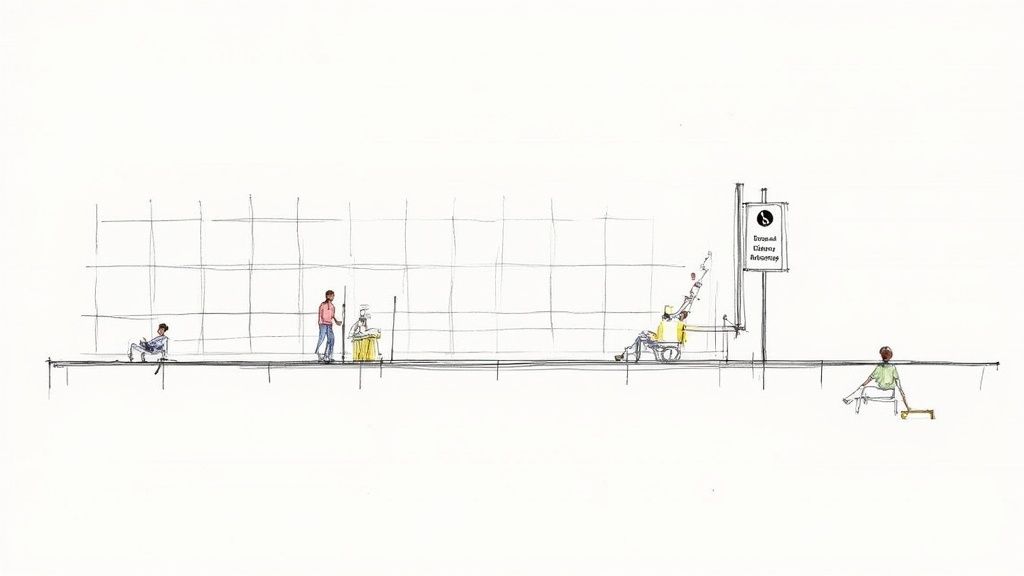
This isn't about getting tangled up in compliance rules. It’s about being a good host and making sure every person who bought a ticket feels welcome.
The good news? Making your GA event accessible is pretty straightforward.
A Simple Plan for Inclusivity
It all comes down to clear communication and a good plan. Being proactive is everything.
Start with your ticket page. It's the first place people go for information. Just add a simple, clear note inviting guests to get in touch if they have any needs.
You can use language like this:
"We want everyone to enjoy the event. If you need accessibility accommodations, please contact us at [your email address] so we can make arrangements for you."
That one sentence does two powerful things. First, it shows you care. Second, it gives attendees a direct line to get help without any fuss.
You could also add a simple question right in the checkout flow. A field that asks, "Do you require any accessibility accommodations?" lets people tell you what they need privately and efficiently.
Set Aside a Designated Area
The final piece is creating a dedicated accessible viewing area. You don’t need anything fancy.
Just rope off a small section with good sightlines that’s easy to get to. Mark it with clear signage so it’s easy to find.
This approach gives you the best of both worlds. You keep the casual, energetic feel of general admission while ensuring a comfortable experience for all your guests. For organizations that want to show their commitment, it's a great idea to publicly post an accessibility statement.
Got it. Choosing a seating style for your event brings up questions. Let's tackle the most common ones we hear from creators, with straight, no-fluff answers.
Does General Admission Mean Standing Only?
Not necessarily, but it can. "General admission" simply means spots aren't assigned. It's first-come, first-served.
Your pop-up dinner might have open seating at long tables. Your workshop could have chairs scattered around. Or, yes, your indie rock show could be entirely standing room.
The most important part? Be crystal clear on your event page. If you're hosting a four-hour concert with no chairs, your attendees need to know that before they click "buy."
How Do I Prevent a Mad Rush at the Doors?
A little planning goes a long way. You want a calm, orderly entry that sets a great tone for the event.
Create a clear line: Use ropes or signs to form an organized queue before the doors open.
Staff up for entry: Even if it's just you and a friend, have enough hands on deck to scan tickets efficiently.
Open doors early: Give people 30 to 60 minutes before showtime. This lets the crowd trickle in gradually.
Can I Switch from GA to Reserved Seating Later?
Technically, you can. But honestly, it's a massive headache. You'd have to contact every person who bought a ticket to assign them a new seat. That's a recipe for confusion and grumpy emails.
It's so much easier to decide on your seating style from the get-go and stick with it.
If you're on the fence, a hybrid model is your best friend. Offer a small, reserved VIP section alongside a larger general admission area. This gives you the simplicity of GA for most of your space, plus a premium option for guests who want to pay for a guaranteed spot.
This approach gives you flexibility without the operational chaos of a last-minute switch.