
You’re trying to do some good, not wrestle with a fifty-tab spreadsheet. We get it. Putting on a charity event feels overwhelming, especially when you’re a small team with a big heart. Juggling donations, volunteers, and marketing is a massive undertaking.
This isn’t another fluffy, corporate guide. It’s a straightforward charity event planning checklist for people in the trenches. Think of it as a roadmap for the pop-up chefs, workshop hosts, and neighborhood organizers who just want to make a difference without losing their minds.
We'll walk through the ten big steps. You'll learn how to set clear goals, find sponsors, and create an event that keeps supporters coming back.
The goal is simple: take the chaos out of planning so you can focus on your cause. No jargon. Just a step-by-step guide to help you pull off a successful event.
Let’s make this simple.
1. Define Event Goals and Fundraising Targets
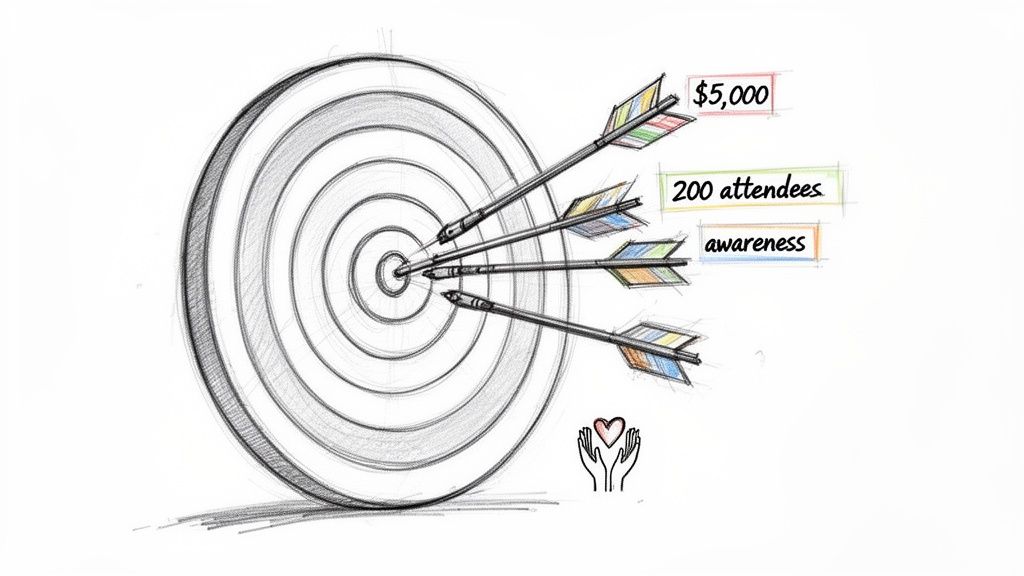
Before you book a single vendor, you need to know why you're hosting this event. What does success look like? Skipping this step is like starting a road trip without a destination. You'll spend a lot of time and money going nowhere.
Your goals are your compass. They dictate your budget, venue, marketing, and everything else. Without clear objectives, your team can't make smart decisions.
Why This Matters
This isn't about picking a random number. Are you trying to raise funds for a specific program? Boost community awareness? Recruit new volunteers? Each goal requires a different strategy. "Raise $10,000 to provide 200 winter coats for local kids" is far more powerful than just "raise money."
Actionable Tips for Setting Goals
- Be S.M.A.R.T.: Make your goals Specific, Measurable, Achievable, Relevant, and Time-bound. For instance, "Raise $15,000 by October 31st to fund our after-school arts program for one year." This is a goal you can actually work toward.
- Break It Down: A big goal like "$25,000" feels intimidating. Break it into smaller pieces: $15,000 from tickets, $7,000 from sponsors, and $3,000 from a raffle. It suddenly feels manageable.
- Research Past Events: Look at what similar nonprofits have accomplished. This helps set realistic benchmarks. For inspiration, check out these creative nonprofit fundraising event ideas.
- Share Your Goal Publicly: Put your fundraising target right on your ticketing page. It builds momentum and encourages people to participate when they see their contribution making a real difference.
2. Secure Venue and Confirm Capacity Requirements
Your venue is more than just four walls. It’s the backdrop for your entire event. The right space makes everything easier. The wrong one creates a cascade of problems you’ll be solving all night. This step is critical because it dictates so many other decisions.
Choosing a venue impacts your budget, capacity, and the overall feel of your fundraiser. It's the physical container for the experience you want to create.
Why This Matters
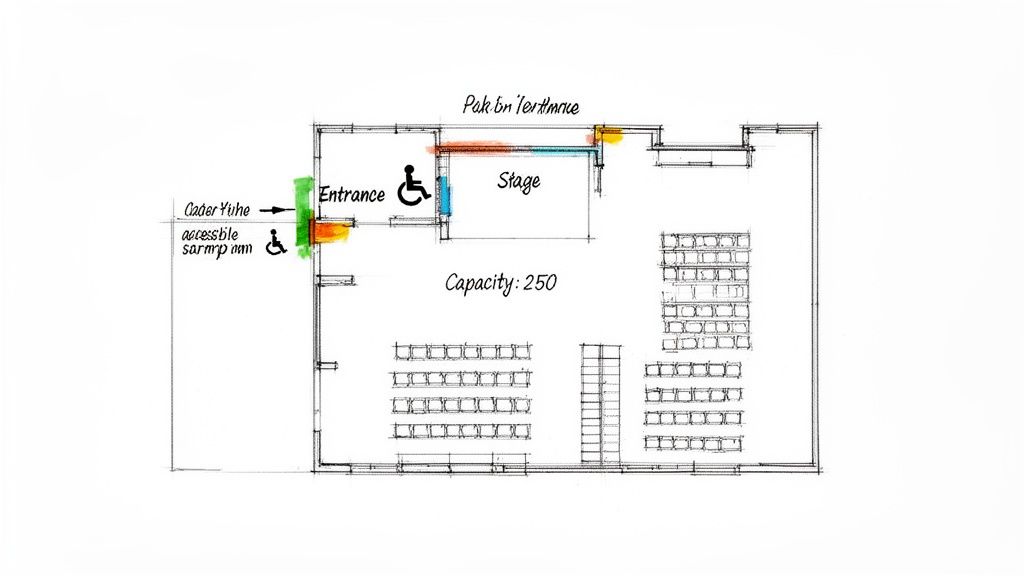
The venue decision is huge. A community center kitchen is perfect for a fundraising cooking class but wrong for a black-tie gala. Your venue choice needs to match your event format and financial reality. It also legally determines your maximum attendance, which directly impacts your fundraising potential.
Actionable Tips for Securing a Venue
- Book Early: Don't wait. Popular venues can book out six months to a year in advance. Start your search as soon as you have a rough date.
- Visit in Person: Photos can be deceiving. Walk through the space. Check the lighting, the acoustics, and the condition of the restrooms.
- Get Everything in Writing: Your contract should detail everything. This includes capacity limits, included amenities like tables and chairs, and cancellation policies. No handshake deals.
- Confirm Accessibility: Is the venue ADA compliant? Check for ramps, accessible restrooms, and convenient parking. Ensuring everyone can attend comfortably isn't a nice-to-have, it's essential.
- Set Your Ticketing Capacity: Once you have the venue's legal capacity, set your ticket sales limit. A good ticketing tool handles this automatically. This prevents overselling and ensures a safe event.
3. Build and Manage Ticketing Infrastructure
Your ticketing page is your digital front door. If it’s confusing or clunky, potential donors will leave. Setting up a solid ticketing system is a core part of your charity event planning checklist that directly impacts revenue and your own sanity.
A smooth ticketing experience tells attendees you’re organized and professional. A platform that sets up in minutes (with no code) and lets you add your own branding is a huge win. It should be effortless for them to buy a ticket and just as easy for you to track sales.
Why This Matters
This is where the money comes in. A poorly chosen platform can skim a significant percentage of your revenue in hidden fees. For a nonprofit selling two hundred gala tickets at $75 each, losing 3-5% is a huge, unnecessary loss. Look for simple, flat-fee pricing.
A good system also provides real-time data. Knowing how many tickets have sold helps you make informed decisions about catering and marketing. It works for five attendees or five thousand.
Actionable Tips for Ticketing
- Set Up Early: Get your ticketing page live at least four to six weeks before your event. This gives you time for promotion.
- Create Tiers and Urgency: Offer different ticket types. A pop-up chef might have a $40 general admission ticket and a $65 VIP ticket. Use early-bird pricing to encourage immediate sign-ups.
- Write a Compelling Description: Use clear, exciting language. Tell people exactly what their ticket includes and how their purchase supports your mission. Be specific about the impact.
- Test the Flow: Before you announce the event, buy a ticket yourself. Was it easy? Did the confirmation email look right? Fix any friction points before your real audience sees them.
- Be Clear About Policies: State your refund or cancellation policy directly on the event page. This transparency builds trust. For a deeper dive, explore the best way to sell tickets.
4. Develop Marketing and Promotion Strategy
You can plan the most incredible event, but if nobody knows about it, you’ll be fundraising in an empty room. A solid marketing plan is how you get the word out, build excitement, and sell tickets. Start your promotion six to eight weeks before the event to build steady momentum.
Your marketing plan is the engine that drives attendance. For a small nonprofit, a smart, targeted approach can make a limited budget feel massive.
Why This Matters
Effective promotion turns your event into a community movement. It’s your chance to tell your nonprofit’s story and connect with new supporters. A well-executed campaign doesn't just fill seats. It builds an engaged following that will support you long after the event is over.
Actionable Tips for Marketing Your Event
- Start with Your Inner Circle: Your email list and social media followers are your warmest leads. Announce the event to them first, maybe with an exclusive early-bird discount.
- Create Shareable Story Content: Don't just post a flyer. Share stories about the people your nonprofit helps. This emotional connection is your most powerful marketing tool.
- Partner Up: Team up with local businesses and community organizations. Ask them to share your event with their audiences. A simple cross-promotion can expose your cause to hundreds of new people for free.
- Use a Simple Promotional Sequence: Plan your emails and social posts. A classic sequence is: Announcement > Early-Bird Reminder > Story Behind the Event > Sneak Peek > Last Chance to Buy. For more ideas, check out these event promotion strategies.
- Create Scarcity: Use countdown posts and messaging like "Only 20 tickets left!" This fear of missing out (FOMO) is a key driver for last-minute sales.
5. Recruit and Organize Volunteers and Staff
Your event can't run itself. Volunteers are the heart and soul of most charity events. A well-organized team is the difference between a smooth fundraiser and a chaotic mess. You're not just filling slots; you're bringing people into your mission.
Start recruiting eight to ten weeks before the event. This gives you plenty of time for training and communication.
Why This Matters
A disorganized crew creates a terrible experience for everyone, especially your guests. When volunteers are unsure of their roles, it leads to long lines and confusion. Clearly defined roles and a simple communication plan ensure every part of your event runs smoothly. This lets you focus on engaging with donors instead of putting out fires.
Actionable Tips for Volunteer Management
- Create Clear Role Descriptions: Don't just ask for "help." Be specific. Create simple, one-page descriptions for roles like "Registration Table Crew" or "Guest Greeter." Outline the exact tasks.
- Hold a Pre-Event Training Session: Gather everyone a week or two before the event. Walk them through the timeline and their specific duties. This builds confidence.
- Plan for No-Shows: It happens. Always recruit about 20% more volunteers than you think you need. It’s better to have too many hands than not enough.
- Assign a Volunteer Coordinator: Designate one person as the go-to contact for all volunteers on event day. This person manages schedules and solves problems, freeing you up.
- Show Your Appreciation: Volunteers are giving you their time. Thank them publicly, on social media, and with a personal note afterward. A small gesture goes a long way.
6. Arrange Sponsorships and Partnerships
Ticket sales alone rarely cover the full cost of an ambitious event. Strategic sponsorships are the financial backbone that allows your fundraising to truly succeed. This is about finding businesses who believe in your mission and are willing to provide support in exchange for visibility.
Think of sponsors as your event co-pilots. They help cover costs like the venue or catering, which means more of every ticket sold goes directly to your cause.
Why This Matters
Sponsorships do more than inject cash into your budget. They validate your cause and expand your reach. When a respected local business puts its name on your event, you gain credibility. For example, a sponsor who underwrites all event costs lets you market with the message: "100% of your ticket purchase feeds local families."
Actionable Tips for Securing Sponsors
- Create Tiered Packages: Offer clear sponsorship packages (e.g., Gold: $2,500, Silver: $1,500, Bronze: $500) with specific benefits for each level, like logo placement or event tickets.
- Target Aligned Businesses: Research companies whose values align with your mission. A local pet store is a better fit for an animal shelter gala than a random tech company.
- Start Early: Begin your outreach three to four months before the event. Corporate budgets are often planned quarterly, so get on their radar early.
- Provide a Clear Proposal: Your sponsorship deck should include your mission, event details, and exactly what they get for their investment. Be professional and direct.
- Don't Forget In-Kind Donations: Not all support is financial. Ask a local printer to donate the programs or a bakery to provide dessert. These reduce your expenses significantly.
- Deliver on Your Promises: Once you secure a sponsor, treat them like gold. Feature their logo prominently and send them a post-event report showing the impact of their contribution.
7. Plan Event Day Logistics and Execution
The big day is almost here. Now it's time to map out every single minute. This is the stage in your charity event planning checklist where you become a director, choreographing the entire production. Without a solid operational plan, even the best ideas can descend into chaos.
This plan is your playbook. It tells everyone what to do, where to be, and when to be there. A detailed timeline and layout prevent confusion and empower your team to handle surprises.
Why This Matters
Thinking through logistics prevents day-of disasters. What happens if the speaker is late? Where do volunteers store their coats? A detailed plan answers these questions before they become problems. It ensures a seamless experience for your guests, which reinforces that your organization is a worthy cause to support.
Actionable Tips for Logistics Planning
- Create a Master Timeline: Build a detailed "run of show" document that outlines the entire day, from setup to breakdown. Include specific times for vendor arrivals, volunteer briefings, and program segments.
- Draw a Venue Map: Sketch out a floor plan. Clearly mark the locations for registration, coat check, food stations, and donation areas. Good signage is key. For outdoor events, quality Outdoor Event Signs can guide attendees effectively.
- Test All Your Tech: A day or two before the event, go to the venue and test everything. Check the microphones, projectors, and any payment kiosks you plan to use.
- Assemble an Emergency Kit: Pack a box with supplies you hope you won't need. Think first-aid supplies, extra extension cords, zip ties, duct tape, and a backup power bank for your phone.
- Hold a Pre-Event Huddle: Gather all staff and volunteers 30 minutes before doors open. Walk through the timeline, review key roles, and answer any last-minute questions.
8. Set Up Donation and Fundraising Mechanisms
Your event tickets cover the cost of entry. The real fundraising magic often happens during the event. Relying on ticket sales alone leaves a lot of money on the table. You need to give your guests easy and compelling ways to contribute more.
This is about creating multiple streams of revenue that all flow toward your fundraising goal. Think beyond the price of admission.
Why This Matters
A single fundraising method appeals to a single type of donor. By offering a mix of options like a silent auction, a direct appeal, or a raffle, you engage different people. Someone who can't afford a $1,000 auction item might happily buy five $20 raffle tickets. More options mean more opportunities to hit your target.
Actionable Tips for Setting Up Fundraising
- Diversify Your Asks: Don't just have one donation table. Incorporate a silent auction with items from local businesses, a live auction for high-ticket experiences, and a simple "fund-a-need" pledge drive.
- Make Giving Easy: Place QR codes on tables that link directly to a mobile-friendly donation page. Use clear signage with suggested donation amounts ($50 for art supplies) to show tangible impact.
- Prep Your Auction: Start soliciting auction items from local businesses at least two months out. Aim for a variety of items and price points. Display them with clear descriptions and starting bids.
- Tell a Compelling Story: Don't just ask for money. During the event, share a powerful, brief story about how the funds will be used. Connect every donation ask back to the mission.
9. Manage Attendee Experience and Engagement
Your event isn't just a transaction. It's an experience. The way attendees feel from the moment they buy a ticket is crucial. A great experience turns a one-time donor into a lifelong supporter. A bad one ensures they never come back.
A memorable experience directly impacts your fundraising success. People give more to causes they feel connected to, and they tell their friends about events they genuinely enjoyed.
Why This Matters
Guest experience is more than just good food. It's the entire journey. A clunky check-in or confusing signage can overshadow the most important cause. When you get it right, attendees feel appreciated. This deepens their commitment and makes them more likely to donate again.
Actionable Tips for a Great Attendee Experience
- Communicate Clearly and Early: Send a "know before you go" email about a week out. Include details on parking, the schedule, and what to wear. This reduces guest anxiety.
- Create a Flawless Welcome: Your check-in process should take less than two minutes per person. Have enough staff and clear signage. A warm, personal greeting at the door makes a huge difference.
- Incorporate Your Mission: Don't let the "why" get lost. Show a short, powerful video. Have a board member share stories. Weave moments that connect guests directly to the impact of their support.
- Prioritize the Details: People remember the small things. Ensure food and drinks are high quality. Post clear signs for restrooms and exits. Strategically seat people to encourage networking.
- Follow Up Thoughtfully: Send a thank-you email within 48 hours. Include photos from the event and an update on the funds raised. A simple post-event survey can also provide valuable feedback.
10. Track Financial Performance, Revenue Reconciliation, and Post-Event Follow-Up
The event isn't over when the last guest leaves. Some of the most critical work happens afterward. This is where you measure success, thank your supporters, and turn one-time attendees into long-term advocates.
Tracking your finances and communicating your impact closes the loop. It shows donors you're responsible and that their support made a tangible difference. This builds trust.
Why This Matters
This is about accountability and momentum. Accurately tracking revenue against expenses shows your board and supporters the event's true financial outcome. Fast, secure payouts straight to your account make this much simpler.
Prompt follow-up keeps the post-event energy high. A thank-you email sent within 24 hours reinforces the positive feeling attendees have. It makes them more likely to donate again, volunteer, or attend your next event.
Actionable Tips for Tracking and Follow-Up
- Reconcile Immediately: Within 48 hours, reconcile your accounts. A solid grasp of payment reconciliation is crucial. Match your ticket sales data with payment processor statements.
- Create a Final Report: Within one week, create a simple financial report. Tally all income and subtract all expenses to calculate your net revenue. This is the number that matters.
- Send a "Thank You" Email ASAP: Send a thank-you email to all attendees, volunteers, and sponsors within 24-48 hours. Keep it genuine and include a couple of great photos.
- Share Your Success: About a week later, send a recap email. Announce the final fundraising total and thank the community. People love to know they were part of a success story.
- Show, Don't Just Tell: Thirty days later, send an impact update. "Thanks to you, we delivered 200 winter coats to local kids last week. Here’s a photo." This makes the impact real. For more ideas, this guide on the post-event wrap-up has solid pointers.
10-Point Charity Event Planning Comparison
| Area / Task | Implementation Complexity | Resource Requirements | Expected Outcomes | Ideal Use Cases | Key Advantages |
|---|---|---|---|---|---|
| Define Event Goals and Fundraising Targets | Low–Medium — strategic alignment required | Staff time, stakeholder input, benchmark research | Clear fundraising/attendance targets and success metrics | Initial planning, board approval, budget setting | Focused planning, measurable goals, stronger sponsorship asks |
| Secure Venue and Confirm Capacity Requirements | Medium — site visits and contract negotiations | Venue budget, site visits, contracts, accessibility checks | Confirmed location, capacity, amenities, rental terms | In-person events needing specific space or accessibility | Better guest experience, clarified logistics, safety compliance |
| Build and Manage Ticketing Infrastructure | Medium — platform setup and testing | Ticketing platform, payment processing, staff training, branding | Automated sales, attendee data, capacity control | Paid events, tiered pricing, waitlists | Automation, real-time sales data, secure payments |
| Develop Marketing and Promotion Strategy | Medium–High — multi-channel coordination | Marketing time, creative assets, possible ad spend, partnerships | Increased awareness, ticket sales, engagement metrics | Events seeking new audiences or high turnout | Multi-channel reach, measurable optimization, low-cost tactics |
| Recruit and Organize Volunteers and Staff | Medium — recruitment and training logistics | Volunteer coordinator, training materials, scheduling tools | Reliable event staffing, distributed workload, community engagement | Budget-limited events or those needing many roles | Cost savings, community involvement, operational capacity |
| Arrange Sponsorships and Partnerships | Medium–High — outreach and negotiation | Sponsorship proposals, sales effort, relationship management | Financial or in-kind support, promotional amplification | Events needing budget relief or sponsor visibility | Reduces costs, increases reach, builds long-term relationships |
| Plan Event Day Logistics and Execution | High — detailed timelines and contingencies | Detailed plans, equipment, staff/volunteers, communication systems | Smooth operations, safety, on-schedule program delivery | Complex or multi-segment live events | Prevents chaos, manages risks, improves guest experience |
| Set Up Donation and Fundraising Mechanisms | Medium — procurement and payment setup | Auction items, mobile payment tools, donor materials, volunteers | Multiple revenue streams and increased total funds | Fundraising galas, auctions, donation-driven events | Increases revenue, reduces giving friction, leverages donors |
| Manage Attendee Experience and Engagement | Medium–High — many touchpoints to coordinate | Communications, signage, catering, interactive programming | Higher satisfaction, repeat attendance, advocacy | Events focused on retention, relationship-building | Boosts retention, creates shareable moments, strengthens mission link |
| Track Financial Performance, Reconciliation & Follow-Up | Medium–High — accounting and communications | Accounting tools, staff time, CRM/email systems, receipts | Accurate financial reports, donor stewardship, lessons learned | Events requiring transparency, board reporting, future planning | Financial transparency, informed decisions, improved donor relations |
It's a Wrap. Now, Make It Happen.
You made it. That’s a good sign. It means you’re serious about making your charity event a success. This whole article boils down to one idea: planning is just a series of small, manageable decisions. It’s not a mythical beast. It’s a checklist.
You can see how each phase builds on the last. You can't set a ticket price without a budget. You can't market an event without a venue. You can’t ask for sponsorships without clear goals. It all connects. This isn't a random list of tasks. It's a sequence.
The best organizers aren't geniuses. They're just good at breaking down a huge goal ("raise $20,000") into tiny steps ("call three caterers by Tuesday"). They focus on the next logical thing, not the mountain of things left to do.
The Real Takeaways
If you only remember three things, make them these:
Your 'Why' is Your Anchor. Your event’s purpose is your most powerful tool. It’s what you’ll use to inspire volunteers, secure sponsors, and convince attendees to buy a ticket. When things get complicated, returning to your mission simplifies every decision.
People are Your Multiplier. An event is nothing without its community. This includes attendees, volunteers, sponsors, and your team. Your job is to make it easy for them to participate. A well-managed volunteer team is worth more than a huge marketing budget.
Simplicity is Your Best Friend. Complexity is the enemy of execution. Don't get bogged down by tools that require a PhD to operate. Choose simple, effective solutions for your marketing, ticketing, and timeline. A straightforward charity event planning checklist like this one cuts through the noise.
Now, Get Started
Don't let this list just sit in a browser tab. Print it out. Turn it into a project board. Make it real. The gap between a great idea and a great event is execution.
Start with the first section: goals. Spend an hour on it. Make one phone call. Send one email. That’s it. Momentum is built from small, consistent actions. You have the framework. You have the steps. All that's left is to begin.
You’re not just planning a party. You’re building a moment for your community to rally around a cause that matters. That’s important work. Now go make it happen.
Tired of ticketing platforms that skim a percentage of your hard-won donations? Ticketsmith offers simple, flat-fee pricing so you keep more money for your cause. Get your event page live in minutes and give your supporters a clean, secure checkout experience.