
Planning a charity event can feel like you need a dozen spreadsheets and a small miracle. You’re pouring your heart into a cause, not trying to become a professional event planner overnight. The goal is to raise money, not get tangled in complex logistics.
Forget the endless guides full of vague advice. This list is for the doers. The pop-up chefs, the community organizers, and the nonprofit coordinators who just want to get a great event running.
We'll break down twelve real-world charity fundraising event ideas you can actually pull off. For each one, you’ll get a no-nonsense plan on budget, audience, and promotion. We'll also touch on how you can set up ticketing in minutes, make it look like your brand, and collect payments without sneaky percentage fees eating into your donations. For more quick-hitters, check out these 10 easy ideas for fundraising that actually work.
Think of this as your practical playbook. It’s full of actionable steps to help you choose an idea, run with it, and focus on what matters: supporting your cause.
1. Virtual Gala or Online Auction Event
This is a traditional fundraising gala, but without the high venue costs. A virtual gala brings the whole experience online, from speakers and entertainment to live and silent auctions. It reaches a global audience right in their living rooms. This is one of the most versatile charity fundraising event ideas because it scales beautifully, from an intimate Zoom for major donors to a broadcast for thousands.
Who It's For
This format is perfect for organizations with a dispersed supporter base or those looking to cut overhead. If your community is comfortable online, this is a powerful way to engage them.
Quick-Start Plan
- Platform Choice: Pick a reliable streaming platform (like Zoom or Vimeo) and an online auction tool. Test everything. Multiple times.
- Program Flow: Keep it tight. A 60 to 90-minute runtime is the sweet spot. It maintains high energy and engagement.
- Ticket Tiers: Use a simple ticketing tool to set up different access levels. You could offer a General Admission ticket and a VIP ticket that includes a delivered meal kit. The setup is fast and keeps your branding front and center.
- Engagement is Key: Hire a chat moderator. They can stoke conversation, run live polls, and give shout-outs to donors.
- Follow-Up: Send a post-event email. Include a link to the recording and a final thank-you message highlighting the funds raised.
Pro Tip: Build hype with an email countdown. A week before, share a sneak peek of an auction item. Three days out, introduce a speaker. The day of, send a direct link and a "see you tonight!" reminder. Our charity event planning checklist covers every detail, from pre-launch to post-event.
2. Pop-Up Dinner or Supper Club Fundraiser
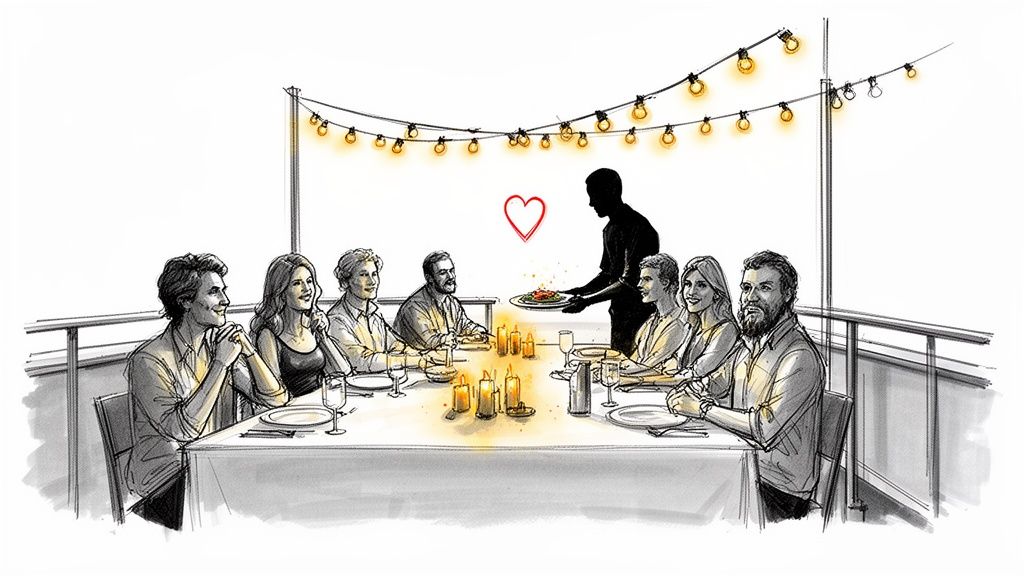
Imagine an exclusive dinner held somewhere unexpected. A private garden, a converted warehouse, or a scenic rooftop. Guests buy tickets to enjoy a unique meal crafted by a local chef, and the proceeds support your cause. This is one of the most engaging charity fundraising event ideas because it combines community, good food, and storytelling in an intimate setting.
Who It's For
This works for organizations that want a high-value, memorable experience for a smaller group. It’s especially good for food-related charities or any nonprofit with strong local community ties.
Quick-Start Plan
- Find a Chef Partner: Collaborate with a local chef willing to donate their time. Their name recognition can seriously boost your promotion.
- Secure a Unique Venue: Think beyond restaurants. A unique location is a major draw. Book it at least two to three months in advance.
- Sell Tiered Tickets: Use a simple ticketing page for different levels. Offer a single seat, a couples' ticket, or a VIP option. It's crucial to collect dietary restrictions during checkout.
- Create an Atmosphere: The theme should reflect your mission. Use decor, music, and a brief story from your organization to connect guests to the cause.
- Plan for Follow-Up: Send a thank-you email the next day. Include photos and a clear statement on how much was raised.
Pro Tip: Ask your chef partner to post about the event on their social media channels. Their endorsement is a powerful way to reach new potential donors. If you're new to the concept, our guide on how to start a supper club provides a great framework.
3. Fitness Class or Wellness Workshop Fundraiser
Tap into the wellness trend by hosting an event where registration fees support your cause. Think of a high-energy spin class, a calming yoga session, or a practical wellness workshop. You partner with a local studio, and participants get to feel good twice: by taking care of themselves and contributing to your mission.
Who It's For
This is a great fit for nonprofits with a health-focused mission or those looking to engage an active demographic. If you have local fitness studios willing to donate their time and space, this event is incredibly low-cost and high-impact.
Quick-Start Plan
- Find a Partner: Team up with a local yoga studio, CrossFit box, or certified instructor who believes in your cause. Many are happy to help for good exposure.
- Set the Price: Use a simple ticketing platform to manage registrations. You can set a fixed price or offer a "pay what you can" option. Capping class size is easy if space is limited.
- Schedule Smart: Host the class on a weekend morning or a weeknight evening.
- Tell Your Story: Before the cool-down, have someone share a powerful five-minute story about your organization’s impact. This connects the activity to the purpose.
- Small Touches Matter: Provide water and some healthy post-workout snacks. It’s a simple gesture that goes a long way.
Pro Tip: Create a branded "I Sweated for a Cause" sign for post-class photos. It encourages social media sharing and spreads the word about your nonprofit. Ask the instructor to tag your organization in their posts, too.
4. Workshop or Masterclass Series
Turn knowledge into donations. A workshop or masterclass offers real value to your supporters by teaching them something new. Think grant-writing, sourdough baking, or pottery. People learn a skill, and you fund your mission. This is one of the best charity fundraising event ideas because it builds a community around shared interests.
Who It's For
This is perfect for organizations with access to experts. If your supporters are eager to learn, this format provides tangible value beyond just a donation. It’s also great for building your organization's authority.
Quick-Start Plan
- Find Your Expert & Topic: Partner with a skilled professional who believes in your cause. Choose a topic that aligns with your mission and what your community wants to learn.
- Set Up Ticketing: An event page that handles registrations is key. You can set up tiered pricing, create group discounts, or add a "donation" ticket. This takes minutes and works for five to 5,000 attendees, all with your branding front and center.
- Outline the Content: Work with your instructor to create a clear, engaging curriculum. A 90-minute to two-hour session is a great starting point.
- Promote the Value: Market the workshop by focusing on what attendees will learn. Highlight the expert's credentials and the impact their ticket will have.
- Gather Feedback: Send a follow-up survey. Ask what attendees enjoyed and what topics they’d like to see next. This helps you plan future events.
Pro Tip: Before you book an instructor, create a waitlist page to gauge interest. Ask people to sign up for updates. If you get a strong response, you have a winning idea. It’s a no-risk way to validate your concept.
5. Community Market or Festival with Vendor Booths
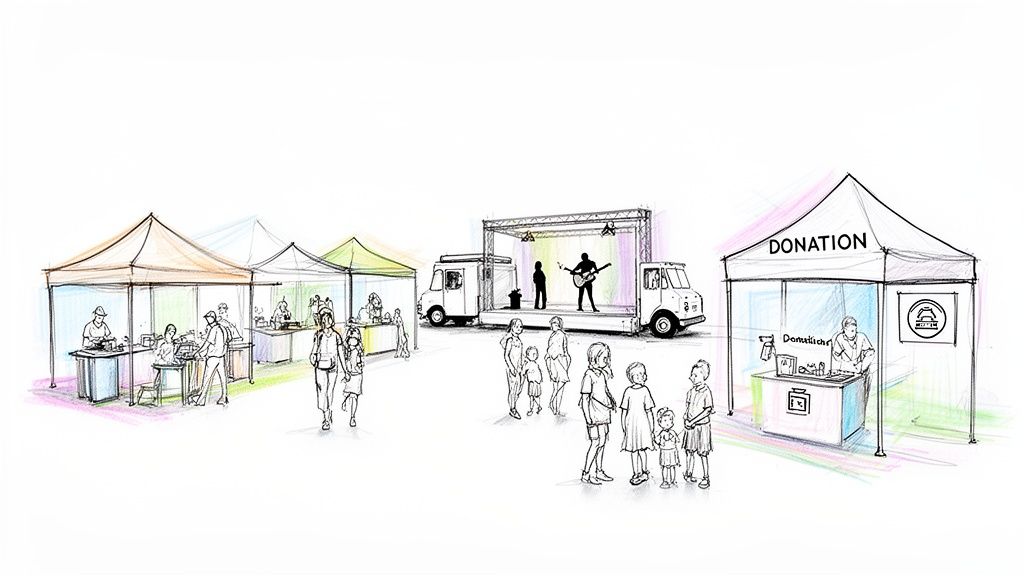
Turn your cause into a community hub by hosting a market. This event brings together local vendors, artisans, food trucks, and performers. Your nonprofit earns money by selling booth space, taking a small percentage of sales, or charging a modest entry fee. It’s a lively gathering that supports your mission and local small businesses.
Who It's For
This idea is perfect for organizations with strong local ties. If you want to engage families, foodies, and shoppers all at once, a community market is one of the most effective charity fundraising event ideas. It’s highly visible and builds immense goodwill.
Quick-Start Plan
- Vendor Recruitment: Start recruiting vendors three to four months in advance. Reach out to local artisans and food trucks to ensure a diverse lineup.
- Venue and Logistics: Secure a venue with good foot traffic. Public parks or community center lots work well. Always have a backup indoor plan for bad weather.
- Ticket & Booth Sales: Use a ticketing tool that lets you pre-sell vendor booths and admission tickets online. This gives you a clear headcount and upfront revenue. You can set it up in minutes with no code needed.
- Layout and Flow: Design a market layout that encourages exploration. Allocate premium booth locations to sponsors.
- Entertainment: Book local musicians or performers to create a festive atmosphere. This keeps people browsing longer.
Pro Tip: Use your ticketing platform to manage all vendor communications. Send reminders and share setup details in one place. You can also offer early-bird pricing for vendors to encourage quick sign-ups. For a full breakdown, see our guide on how to organize a community event.
6. Charity Sports Tournament or Competition
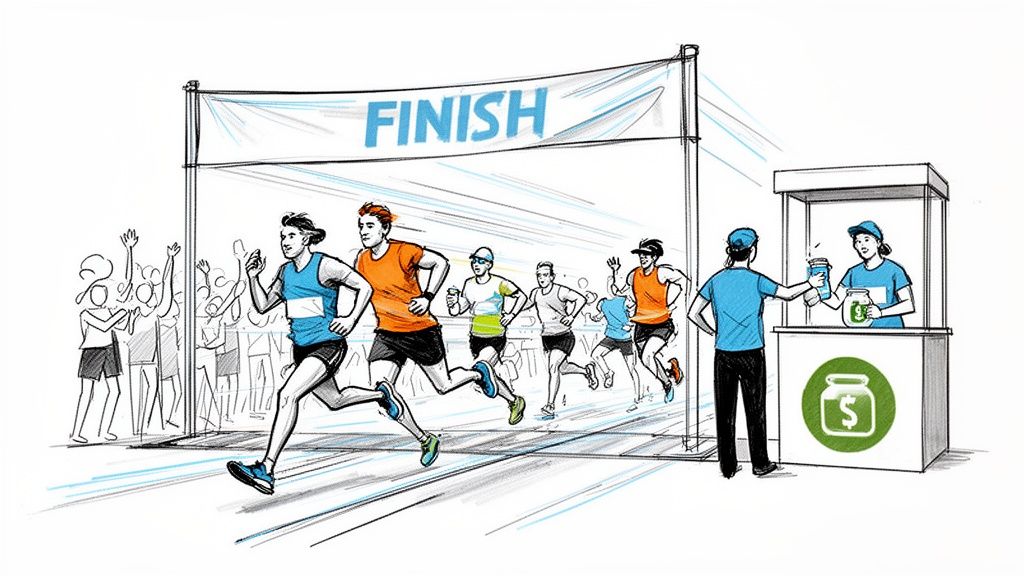
Tap into your community's competitive spirit by hosting a sports event where entry fees support your cause. Think a 5K run, a friendly golf outing, or a local pickleball bracket. Participants can sign up individually or form teams, turning a day of fun into a powerful fundraiser.
Who It's For
This is a great option for organizations with an active supporter base. It works well for causes related to health, youth development, or community-building. It gets people moving and interacting in a positive way.
Quick-Start Plan
- Pick Your Sport: Choose an activity with broad appeal. A 5K is a classic. But don't overlook trendy options like cornhole or pickleball.
- Secure a Venue & Date: Book a park, golf course, or community center well in advance. Make sure you have any necessary permits.
- Set Up Registration: Use a simple ticketing tool to handle sign-ups. You can easily create different pricing tiers for early birds or corporate sponsors, all under your own branding.
- Find Sponsors: Local businesses are often eager to sponsor holes at a golf tournament or get their logo on t-shirts. This helps cover upfront costs.
- Plan the Day: Recruit volunteers to manage check-in, direct participants, and hand out water. A visible leaderboard keeps the energy high.
Pro Tip: For a deeper dive into organizing a larger sports event, guides that detail precisely how to run a golf tournament offer a great framework. The logistics apply to almost any competition.
7. Networking Event or Happy Hour Fundraiser
Mix business with a good cause. A networking happy hour brings professionals together. Ticket sales, drink specials, and sponsorships all drive revenue in a relaxed social setting. This is one of the easiest charity fundraising event ideas to pull off with a big impact.
Who It's For
This event is a natural fit for organizations with ties to a professional community. It’s also perfect for nonprofits looking to engage a new generation of donors who value making connections.
Quick-Start Plan
- Find the Right Partner: Team up with a popular local bar or restaurant. Many will offer their space for free on a weeknight in exchange for bringing in a crowd.
- Set Your Price: Use a simple ticketing tool to create a few tiers. An early-bird price rewards prompt sign-ups. A general admission ticket can cover entry and one drink.
- Schedule Smart: Host the event on a Tuesday, Wednesday, or Thursday from 5:00 PM to 7:00 PM. This is prime time for after-work networking.
- Share the Mission: Keep the formal program brief. A compelling five-minute "mission moment" is all you need to connect attendees to the cause.
- Smooth Check-in: Have a quick, scannable check-in process. People should be mingling, not waiting in line.
Pro Tip: Promote the event on professional networks like LinkedIn two to three weeks in advance. Create a branded event page that makes buying a ticket take less than a minute. This reduces friction and boosts early sales.
8. Auction Event (In-Person or Hybrid)
The thrill of the bid makes an auction a classic fundraiser. It can be a fast-paced live auction or a silent auction where guests browse and bid. The goal is to create friendly competition to drive up donations. A hybrid model brings the action to online bidders, expanding your reach beyond the room.
Who It's For
This works great for established nonprofits with a strong network for sourcing items. It's also perfect for anchoring a larger gala with a high-energy fundraising component.
Quick-Start Plan
- Source Great Items: Begin sourcing 20 to 30 quality auction items four to six weeks out. Think unique experiences and exclusive packages.
- Choose Your Format: Decide between a live, silent, or hybrid auction. For hybrid or silent, pick a mobile bidding platform to manage bids.
- Sell Tickets: Use a simple ticketing tool to sell event access. Create tiered tickets, like a "VIP Bidder" package with a drink ticket. This keeps your branding clean and avoids surprise percentage fees cutting into your donation total.
- Create a Catalog: Send a digital auction catalog to all ticket holders one week before the event to get them excited.
- Run the Bidding: Hire a professional auctioneer or recruit a charismatic volunteer to keep the energy high. For silent auctions, use leaderboards to stoke competition.
Pro Tip: Make bidding a team sport. Announce a "table challenge." The table with the highest collective bid total wins a round of drinks. It turns individual bids into a collaborative game.
9. Virtual or In-Person Film Screening with Q&A
Combine storytelling with direct impact. A film screening fundraiser shows a documentary relevant to your cause. Follow it with a Q&A with filmmakers or experts. It's an immersive way to educate and inspire, turning viewers into supporters. This is one of the most compelling charity fundraising event ideas for connecting people to your work.
Who It's For
This event is ideal for organizations with a strong narrative. Environmental groups, human rights advocates, or health-focused nonprofits are a good fit. It also works for community centers wanting to spark meaningful conversation.
Quick-Start Plan
- Secure Film Rights: This is step one. Contact the distributor to secure screening rights four to eight weeks out. Confirm if you have rights for both in-person and virtual showings.
- Line Up Your Panel: Invite compelling speakers for the post-film Q&A. This could be the director, an expert, or someone from your team.
- Set Up Ticketing: A simple ticketing page is essential. Create different price points for single viewers or virtual-only access. This makes it easy for supporters to participate.
- Plan the Tech: For a hybrid event, ensure you have quality cameras and microphones for the Q&A. Test your streaming platform thoroughly.
- Engage and Follow Up: Keep the Q&A to a tight 15-20 minutes. Collect emails during registration and send a follow-up with a link to donate.
Pro Tip: Build an experience around the film. Send a pre-event email with discussion questions. For a virtual event, you could partner with a local restaurant for a themed "dinner-and-a-movie" meal kit. If you're looking for the best way to sell tickets with tiered pricing, a good platform will handle it all for you.
10. Creative Competition or Talent Show Fundraiser
Tap into your community's hidden talents. This event turns local artists, musicians, and comics into your fundraising champions. Participants pay an entry fee to compete, and the audience buys tickets to watch and vote. It’s a dynamic format that works for a Battle of the Bands or a poetry slam.
Who It's For
This is a great fit for organizations with strong community ties and a flair for entertainment. It's especially effective for arts, culture, and youth-focused nonprofits.
Quick-Start Plan
- Recruit Talent: Start promoting participant sign-ups at least six weeks out. Create separate entry forms for different categories.
- Secure a Venue: Find a space with a stage and good sound. Local theaters, community centers, or even a bar can work well.
- Set Up Ticketing: Use a ticketing tool to sell both participant entry fees and audience tickets. This keeps all your revenue in one place and makes check-in seamless, with fast payouts straight to your account.
- Plan the Show: Line up a charismatic host, a few judges, and plan the running order. Keep the pace brisk.
- Engage the Audience: Use a text-to-vote service or a simple QR code system to let the audience pick the winner. It's an easy way to boost engagement.
Pro Tip: Create short "meet the contestant" video clips for social media in the weeks before the event. Tagging participants encourages them to share with their own networks, expanding your reach.
11. Online Course or Digital Product Launch
Turn your organization's expertise into a lasting revenue stream. Instead of a one-time event, you create and sell a digital product like an online course or e-book. All proceeds support your mission. It’s a powerful model that shifts fundraising from a single moment to a continuous source of income. This is one of the most sustainable charity fundraising event ideas out there.
Who It's For
This is perfect for nonprofits that are experts in a specific field. A career charity offering a resume course. A mental health organization selling a meditation series. An environmental group creating an e-book on sustainable living. If you have knowledge people will pay for, this model works.
Quick-Start Plan
- Validate Your Idea: Before building anything, survey your audience. Find out what they want to learn and what they’d pay for. A little research prevents a lot of wasted effort.
- Choose a Platform: Pick a simple platform like Teachable or Gumroad to host and sell your product. The goal is to get it online without technical headaches.
- Create Your Product: Plan a three to six-month production timeline. Start small with a concise e-book or a focused mini-course. You can always expand it later.
- Set Up Pre-Sales: Use a simple event page to launch pre-sales with early-bird pricing. This builds buzz and generates revenue before launch day. Plus, the setup is quick and uses your own branding.
- Launch and Promote: Use your email list for a launch sequence. Create a compelling preview or sample chapter to show people what they're getting.
Pro Tip: Offer tiered pricing. A basic tier could be the course itself. A premium tier could add bonus worksheets or access to a private community. A VIP tier could include a one-on-one coaching session.
12. Peer-to-Peer Fundraising Challenge or Pledge Event
This approach turns your supporters into active fundraisers. They create personal fundraising pages and ask their networks to sponsor them in a challenge. Think a walk-a-thon, a fitness goal, or a gaming marathon. It multiplies your reach by tapping into the social circles of your most dedicated followers.
Who It's For
This is a great option for organizations with an engaged, grassroots community. It thrives on personal stories and social connections. If your cause inspires passion, a peer-to-peer event can harness that energy. It works especially well for health, fitness, or youth-focused charities.
Quick-Start Plan
- Define the Challenge: Pick a clear, achievable challenge with a set timeline. A "30-Day Step Challenge" or a "24-Hour Read-A-Thon." Keep the rules simple.
- Choose Your Tech: Select a peer-to-peer fundraising platform (like Donorbox) that integrates with your website. This is where participants build their pages.
- Set Up Registration: Use a simple ticketing tool to manage participant sign-ups. You can offer a single registration fee or create tiers tied to fundraising commitments. This keeps the sign-up process clean and branded.
- Create a Toolkit: Arm your fundraisers for success. Provide them with email templates, social media graphics, and talking points about your mission. Make it easy for them to share.
- Maintain Momentum: Send weekly emails with leaderboard updates. Share top fundraiser stories on social media. Offer encouragement to keep energy high.
Pro Tip: Host a short, energetic virtual kick-off event. It gets everyone excited, answers questions, and builds a sense of team spirit before the fundraising officially begins.
12 Charity Fundraising Ideas Comparison
| Event | Implementation complexity | Resource requirements | Expected outcomes | Ideal use cases | Key advantages |
|---|---|---|---|---|---|
| Virtual Gala or Online Auction Event | Moderate–High (live streaming, platform integration) | Moderate (streaming/AV, auction software, hosts) | Moderate revenue; broad geographic reach; reusable content | Organizations wanting wide reach without venue costs | Wide reach; lower venue overhead; content repurposing |
| Pop-Up Dinner or Supper Club Fundraiser | Moderate (venue, catering, permits) | High (chef, catering, unique venue, permits) | High per-ticket revenue; intimate donor cultivation | Culinary-focused causes; donor stewardship events | Premium pricing; strong relationship-building; social media appeal |
| Fitness Class or Wellness Workshop Fundraiser | Low–Moderate (instructor, space, liability) | Low–Moderate (instructor, venue, insurance) | Steady recurring income; engages health-conscious donors | Health/wellness nonprofits; community engagement | Low overhead; repeatable; aligns with wellbeing values |
| Workshop or Masterclass Series | Moderate (expert sourcing, curriculum, delivery) | Moderate (instructors, materials, platform) | Higher ticket prices; builds authority; predictable series income | Professional development and education-focused audiences | Justifies premium pricing; scalable virtually; reputation building |
| Community Market or Festival with Vendor Booths | High (logistics, permits, vendor coordination) | High (venue, staffing, signage, permits) | High revenue potential; strong community visibility | Large-scale community fundraising and vendor partnerships | Multiple income streams; vendor-driven promotion; scalable |
| Charity Sports Tournament or Competition | Moderate (scheduling, volunteer coordination) | Moderate (venue/course, insurance, equipment, prizes) | Good revenue and sponsorship potential; annual tradition | Competitive communities; corporate team events | Attracts sponsors; repeatable; engages active participants |
| Networking Event or Happy Hour Fundraiser | Low (venue partnership, promotion) | Low–Moderate (bar/venue, light catering) | Moderate revenue; relationship and donor cultivation | Professional, alumni, and business networks | Low setup; easily repeatable; relationship focused |
| Auction Event (In-Person or Hybrid) | High (item procurement, auction logistics, hybrid tech) | High (quality donations, platform, auctioneer, venue) | High revenue if compelling items secured | Organizations with access to high-value donors/items | Significant revenue potential; public donor recognition |
| Virtual or In-Person Film Screening with Q&A | Moderate (film rights, speaker coordination, AV) | Moderate (licensing fees, AV, speaker/staff) | Strong storytelling impact; moderate revenue and PR | Awareness campaigns and mission storytelling | Deep engagement; appeals to film audiences; virtual reach |
| Creative Competition or Talent Show Fundraiser | Moderate (talent recruitment, production, voting) | Moderate (stage, sound, judges, promotion) | Entertainment-driven ticket sales; participant promotion | Arts communities, youth engagement, cultural events | High entertainment value; participant networks boost reach |
| Online Course or Digital Product Launch | High upfront (content production, platform setup) | Moderate upfront, low ongoing (platform, production) | Scalable, passive recurring revenue; long-term brand building | Education nonprofits; global audiences needing evergreen content | Scalable; low marginal cost; ongoing revenue stream |
| Peer-to-Peer Fundraising Challenge or Pledge Event | Moderate (platform integration, campaign management) | Moderate ( fundraising platform, communications, toolkit) | High potential via networks; revenue variable by participation | Organizations with large supporter bases and communities | Leverages social networks; scalable; low organizational overhead |
Your Next Event Starts Here
That was a lot. We’ve covered everything from online auctions to community festivals. If you’re feeling a little overwhelmed, that’s normal. The number of potential charity fundraising event ideas can feel paralyzing.
But you don't need the perfect idea. You just need a good idea that you can actually execute.
The Myth of the "Perfect" Fundraiser
There's no single "best" fundraising event. The pop-up dinner that sells out for one nonprofit might be a total flop for another. Success isn't about picking the most complex idea. It's about finding the right fit for three things:
- Your Mission: Does the event reflect what your organization is all about?
- Your Audience: Who are you trying to reach? What do they actually enjoy?
- Your Resources: What can you realistically pull off? Be honest about your team’s time and budget.
It’s far better to run a small, simple event flawlessly than to attempt a massive one that falls apart. The most successful fundraisers often start small, test an idea, and build momentum. Don’t dismiss the small starts.
From Idea to Action: Your Next Steps
Reading a list of charity fundraising event ideas is the easy part. The real work starts now.
First, pick one idea. Just one. Not three. Choose the event from this list that genuinely excites you and feels achievable.
Second, define your "Minimum Viable Event." What's the absolute simplest version of this event you could launch? Forget the bells and whistles for now. Get a win on the board.
Third, set a date. Put it on the calendar. A deadline turns a vague idea into a real project.
Remember why you’re doing this. You are rallying a community around a cause that matters. You’re turning passion into tangible support. Every ticket sold and every shared social media post contributes to something bigger.
You have the ideas. You have the passion. Now, go make it happen.
Ready to sell tickets for your next event without the hassle? Ticketsmith lets you create a beautiful, branded event page in minutes. We offer simple, flat-fee pricing, so you keep more of the money you raise for your cause. Give your fundraiser the simple, powerful tool it deserves.