
"Event planning" is a polite way of saying you're juggling a dozen things at once. One minute you're hunting for a venue, the next you're drowning in a spreadsheet trying to figure out who actually paid.
Free event planner software is your way out of that chaos, without the scary price tag.
What Is Free Event Planner Software Anyway?
Think of it less like a massive corporate system and more like a smart assistant that handles the boring stuff. It’s a tool built to manage your guest list, ticketing, and payments. You know, so you can get back to creating something amazing.
Instead of a messy spreadsheet, you get an organized list that updates itself. Instead of sending awkward payment reminders, you get a clean checkout page. It automates the tedious tasks that get in the way.
This isn't about bloated platforms with a million features you'll never use. It's about getting the essentials right.
Who Is This Really For?
This kind of software is a lifeline for small-scale creators. People pouring their passion into events without a huge team or budget. I’m talking about people like:
Workshop hosts who just need a simple way to sell five or ten spots.
Pop-up chefs creating a one-of-a-kind dining experience for a single night.
Local organizers bringing the community together for a market or festival.
Fitness instructors managing sign-ups for their next yoga retreat.
These tools were built for you. The goal is to get you set up and selling in minutes. No coding skills needed.
The whole point is to remove the technical headaches so you can get back to what you love. It’s about making your event look professional and run smoothly, even if it’s just you behind the scenes.
For these organizers, free software isn't just a convenience. It's what makes their event possible. The global market for these tools is exploding and expected to hit $107.28 billion by the 2030s. Small businesses fuel that growth, making up 64.24% of the market. They just need simple, effective solutions.
Getting your reservations right is absolutely critical. That's why we broke down how modern reservation software for events can simplify the entire process. It all comes down to finding a tool that just works.
What You Actually Get with Free Software
Let’s be honest. The word “free” usually makes you squint and look for the catch. When it comes to free event planner software, it’s less a catch and more a series of intentional trade-offs. You get real, useful tools, but with clear boundaries.
Most free plans give you the essentials to get an event off the ground. You can create a basic event page, manage RSVPs or sell tickets, and send confirmation emails. It’s enough to look professional and finally ditch that chaotic spreadsheet.
This core functionality is why free software is booming. Especially for independent creators who need efficiency without the overhead.
The infographic below shows just how much small businesses are driving this trend. They're adapting to hybrid events and fueling the market’s growth.
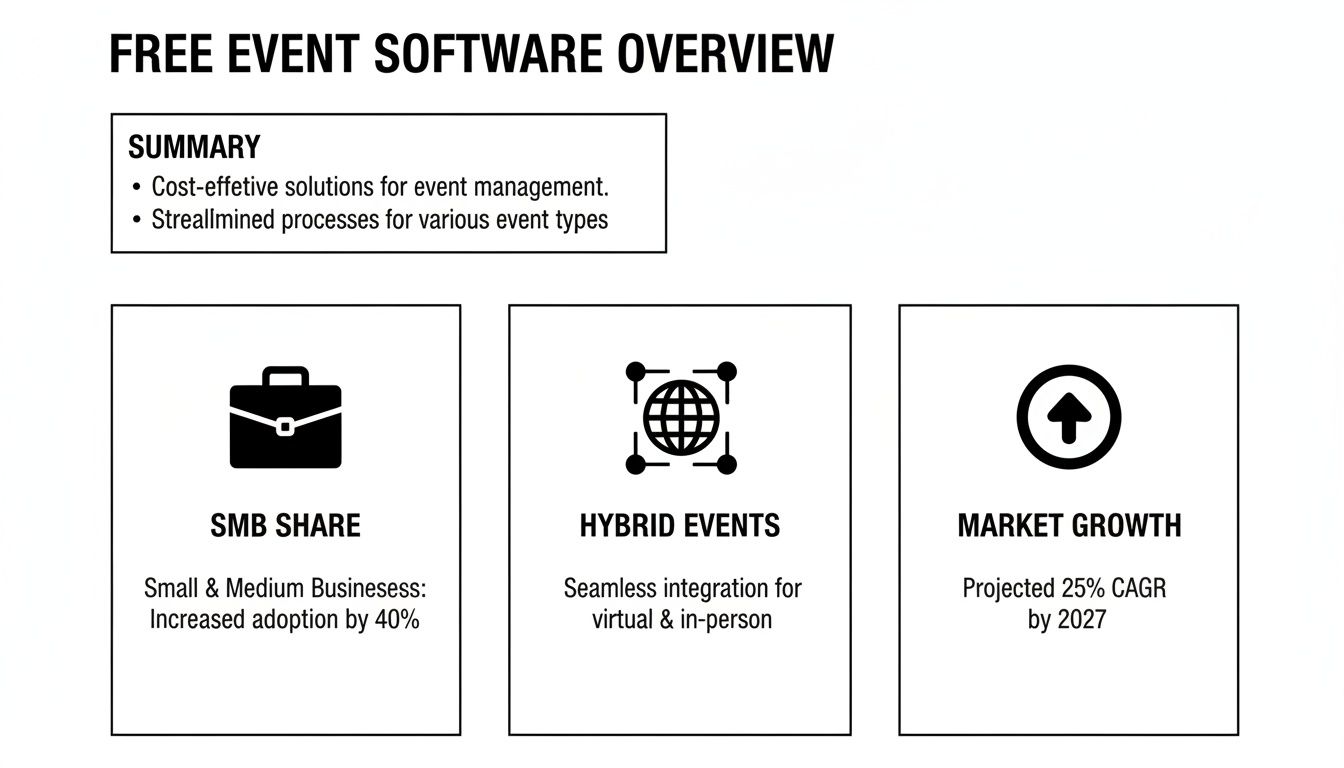
This just shows you’re not alone. Countless creators are using these exact kinds of tools to make their events happen. You don’t need a huge budget to get started.
The Common Trade-Offs
So, where are the limitations? They usually show up in a few key areas. Think of it as the difference between a sharp kitchen knife and a full chef's set. That single knife is great for most jobs. But you’ll eventually notice what’s missing.
Here’s a look at the typical give-and-take:
Attendee Limits: Many free plans cap your event size. It might be perfect for your 25-person pottery workshop but won’t work for a 300-person community fair.
Provider Branding: Your event page will likely have the software provider’s logo on it. You can’t fully customize it to look 100% yours.
Basic Analytics: You'll see how many tickets you sold. You probably won't get deep insights into traffic sources or attendee demographics.
Limited Customer Support: Need help at 10 p.m. the night before your event? You’ll likely be sent to a help doc, not a live person.
These aren’t necessarily deal-breakers. They’re just the reality of a free tool.
The goal is to find a free plan that’s genuinely useful on its own. It should solve your immediate problems without creating new ones. Not just a frustrating teaser designed to force an upgrade.
To see these differences at a glance, here’s a quick breakdown of what you typically get for free versus what’s reserved for paid plans.
Free vs. Paid Event Software Features
| Feature | Typically Free | Typically Paid |
|---|---|---|
| Event Page | Basic, template-based page with provider branding | Fully customizable branding, custom domains, advanced design options |
| Ticketing | Standard tickets, sometimes with a per-ticket fee | Multiple ticket types (VIP, Early Bird), seating charts, discount codes |
| Attendee Capacity | Capped at a specific number (e.g., 25, 50, or 100) | Higher or unlimited attendees |
| Marketing Tools | Basic social sharing links | Integrated email marketing, affiliate tracking, promotional tools |
| Analytics & Reports | Simple sales and attendance numbers | Detailed sales reports, attendee demographics, traffic source analysis |
| Customer Support | Access to help articles, forums, or email support | Priority support, dedicated account manager, live chat, or phone support |
| Integrations | Limited or no integrations with other software | Robust integrations with CRMs, marketing automation, and other business tools |
| Payouts | Standard payout schedule (e.g., after the event) | Instant or faster payouts, more payment gateway options |
A good free tool offers real value where it counts. For instance, some platforms might limit features but still give you fast, secure payouts directly to your account. Others might have branding but let you get set up in minutes. A simple, flat-fee pricing model for paid tickets, like we have at Ticketsmith, is another sign of a fair platform. It avoids taking a surprise percentage of your hard-earned revenue.
Your Checklist for Choosing the Right Tool
Alright, let's cut through the noise. Picking a free event planner software is simpler than you'd think once you know what to look for.
Forget the endless feature lists. Let's focus on a few practical questions that actually matter. This isn't about finding the perfect tool. It's about finding the right tool for your workshop or pop-up.
The No-Nonsense Evaluation Criteria
Think of this as your personal sanity check. If a tool doesn't tick these boxes, it’s probably not worth your time.
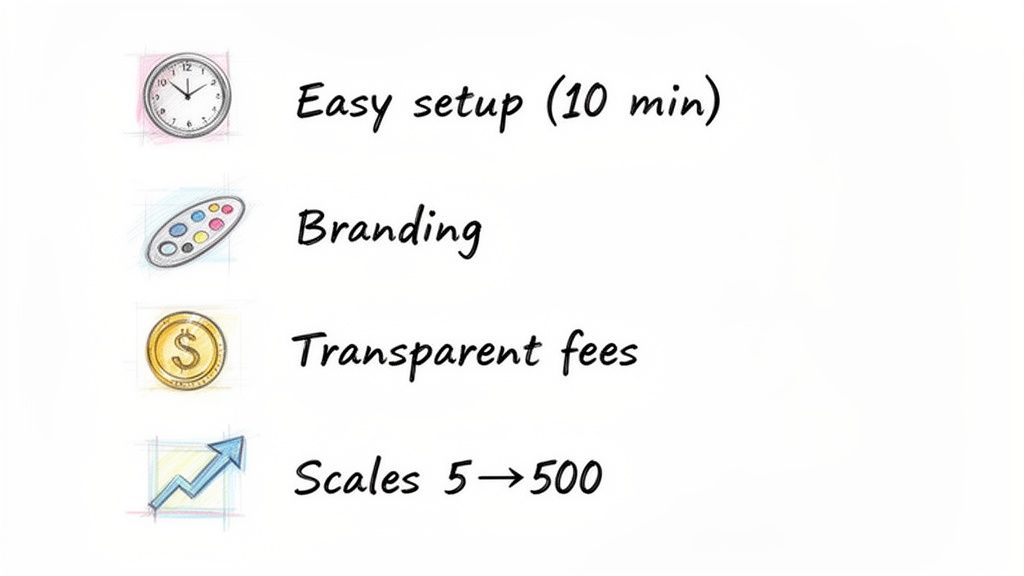
Speed to Launch: Can you go from sign-up to a live event page in ten minutes? Seriously. You shouldn't need a three-hour tutorial to sell a ticket. If the setup feels like a puzzle, walk away.
Branding Control: Does the page look like your event? You absolutely need to add your own logo and pick your brand colors. Your attendees are connecting with you, not some software company.
Transparent Fees: This one is huge. How does the company make money? Look for a simple, flat fee per ticket. Avoid platforms that skim a percentage of your revenue. Those sneaky costs add up fast and feel dishonest.
These three points separate the helpful tools from the marketing traps. They tell you if a company respects your time, brand, and bottom line.
Payments and Scalability
Once the basics are covered, think about money and growth. These two areas are where a free tool will either support you or hold you back.
First, payouts. How quickly does your money land in your bank account? Don't settle for platforms that hold your funds hostage until after the event. A good tool gives you fast, secure payouts so you can manage your cash flow.
Next, scalability. Will this tool work for your first five-person workshop and your future five-hundred-person festival? You want a platform that grows with you, not one you’ll have to ditch after your first taste of success. This is where exploring options for the best ticketing platform for events becomes so important for your long-term plans.
To keep everything straight, a good free event planning checklist template can be a lifesaver. The demand for this kind of software has exploded. With 63% of organizers investing more in event tech, picking a tool that handles these core needs well is more critical than ever.
Common Traps to Avoid with Free Tools
We all love free. But sometimes "free" comes with strings attached. Some platforms are designed to create more headaches than they solve. Let's walk through the common traps so you can spot them a mile away.
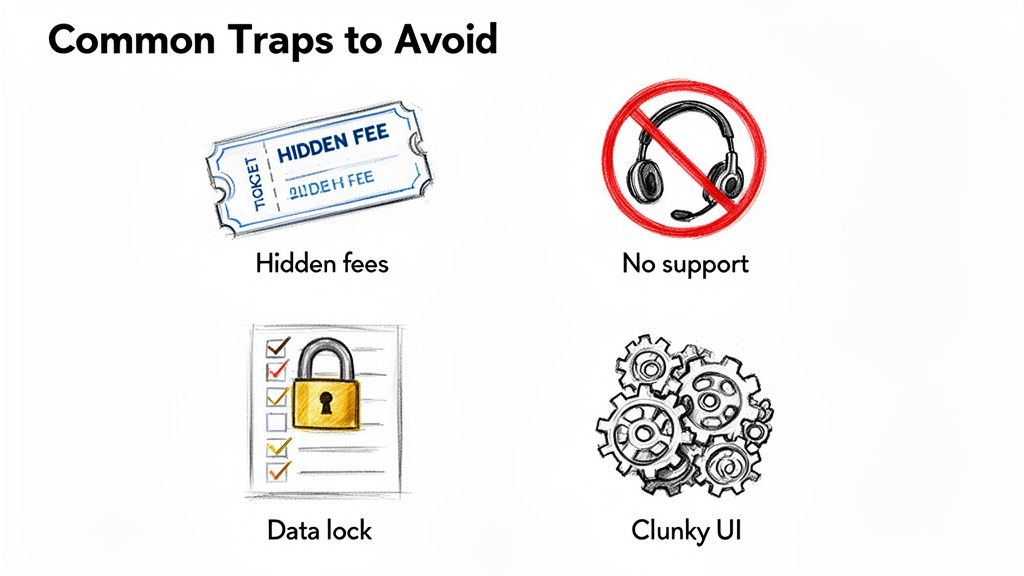
The biggest red flag? Sneaky fees. A platform might shout that it’s free, only to slap a huge “service fee” on every ticket at checkout. That fee goes straight to their pocket. Worse, it makes you look bad because your attendees feel like they're being nickel-and-dimed.
A genuinely fair tool is transparent about costs. They might charge a simple, flat fee per paid ticket. Not some confusing percentage.
The Support Ghost and the Data Hostage
Another classic problem is the support black hole. Everything works fine until it doesn't. What happens when your ticket page glitches an hour before your workshop starts? With many free tools, you’re on your own, digging through stale help articles.
A reliable platform, even a free one, should offer responsive support. They should understand your event is a big deal.
Then there’s the issue of who owns your data. After your event, you’ll want that attendee list to send thank-you notes or announce your next pop-up.
Some platforms make it surprisingly difficult to export your own data. They hold your attendee list hostage to lock you into their platform. You should always be able to download a clean CSV of your guests. No questions asked.
Finally, some free tools are just plain clunky. They're so poorly designed you waste more time fighting the software than you would have with a spreadsheet. The whole point is to save you time. If a tool feels like a chore, it's not the right one.
Avoiding these traps is key. We've put together a more detailed look at the landscape of free event planning software to help you sidestep these common issues. Your time is valuable. The right tool respects that.
Why Simple Ticketing Beats Bloated Software
Let's be honest. Most "all-in-one" event platforms are stuffed with features you'll never touch. Do you really need advanced seating chart logistics for your ten-person pottery workshop? Probably not.
Sometimes, all you need is a dead-simple way to sell tickets and get paid.
For workshop hosts and pop-up chefs, a focused ticketing tool almost always wins. It’s about stripping away the noise. You need to get an event page live in minutes, not hours.
It should look like your brand. And you need fast, secure payouts that go straight to your bank. No one should be skimming a percentage off the top.
Get Your Time Back
This isn't just about convenience. It's about reclaiming your time. Traditional event planning can eat up 70% more time on manual coordination. Think endless email chains and messy spreadsheets. In contrast, modern digital platforms automate registration and cut administrative errors in half.
This is especially true for European SMBs, where 77% cite high-speed digital tools as a primary productivity booster. They help them launch events in minutes instead of weeks. You can explore more data on how event tech is changing the game on Future Market Insights.
A simple ticketing solution does one job and does it exceptionally well. It handles the entire process, from creating a beautiful event page to securely processing payments. This focused approach is a core principle behind effective online ticketing for events, ensuring the tech serves you, not the other way around.
The best tool is the one you don't have to think about. It should feel invisible, letting you focus on creating a memorable experience for your attendees.
Choosing simplicity isn't a compromise. It’s a strategic choice to avoid complexity that doesn’t add value. A dedicated ticketing tool is powerful because it’s not trying to be everything to everyone.
It’s built for real people pouring their hearts into their work, whether they’re selling five tickets or five thousand. It’s about making the entire process fair, fast, and completely painless.
Answering Your Burning Questions
I get it. Picking a new tool, even a free one, feels like a commitment. You’re pouring your heart into this event. The last thing you need is a tech-induced migraine.
So, let's get straight to it. Here are the honest answers to the questions we hear most often.
Can I Really Run a Whole Event with Free Software?
For the software side, absolutely. Most free event planner software gives you the core tools to get off the ground. Things like an event page and a way to track who's coming.
The only cost you'll bump into are standard payment processing fees. That's just part of doing business online. The trick is to find a platform that's transparent about its pricing for paid tickets. Look for one that charges a simple, flat fee per ticket. That way, you won’t get blindsided by weird percentage cuts.
How Do I Actually Get Paid from My Ticket Sales?
This is a big one. The best platforms don't play games with your money. They connect directly to a secure processor like Stripe and send funds straight to your bank account. Usually just a few days after each sale.
Be very skeptical of any service that holds your money until after the event is over. You need that cash flow before the big day for supplies or the venue. For a small organizer, fast and secure payouts are a must-have.
What Happens if My Event Gets Bigger Than the Free Plan?
First off, that's an amazing problem to have. It means you're doing something right. A good tool should be ready to grow right alongside you. Before you commit, take a peek at their upgrade path. Is it simple? Is it affordable? Does it make sense for your needs?
You want a tool that feels just as right for your first workshop of 50 people as it does for your future festival with 500 attendees. The last thing you want is to be forced into some massive, expensive plan loaded with features you'll never use. True scalability is about having options, not getting cornered.