Putting on a live music event feels… big. Complicated. Like you need a road crew and a massive budget just to get started. That’s mostly nonsense.
Small creators run incredible, profitable shows all the time. Workshop hosts, pop-up chefs, and local organizers connect their communities with amazing artists. They just don't use the bloated, confusing tools big promoters do.
This isn't a theoretical guide. It's a practical list of live music event ideas you can pull off this month. We’ll cover ten concepts, from acoustic pop-ups to wellness classes with a live soundtrack. You’ll get tips on how to actually do it.
And you won't need a line of code. You can set up an event page in minutes, use your own branding, and get fast payouts with flat-fee pricing. No one's skimming a percentage off your hard work. Let's find an idea for you.
1. Intimate Acoustic Pop-Up Concerts
Stripped-down, personal, and unforgettable. Intimate acoustic pop-ups are one of the best ways to create a real connection between an artist and an audience.
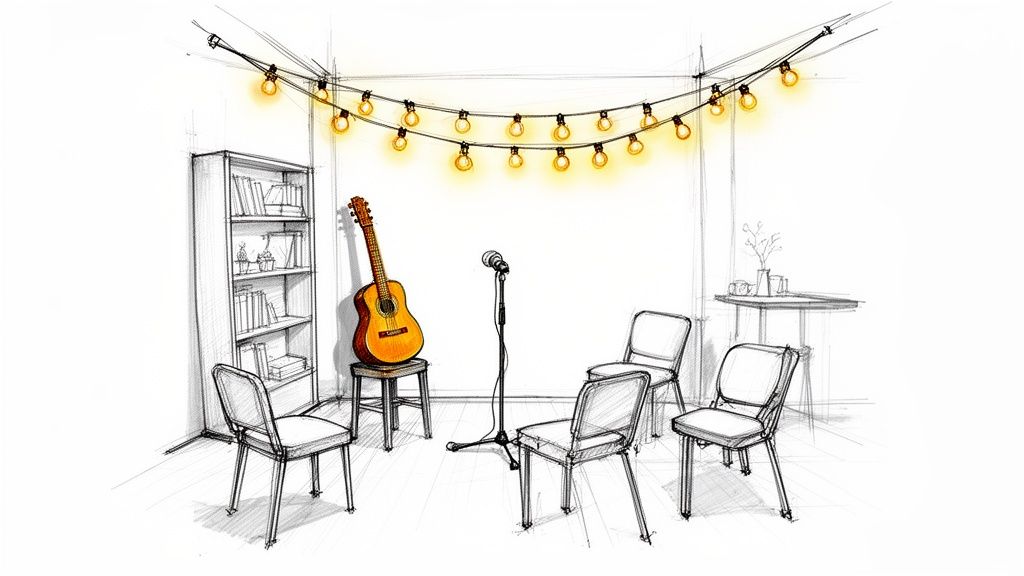
Forget massive stages. Think of a singer-songwriter with a guitar in a cozy bookstore, a coffee shop after hours, or your backyard. These events thrive on simplicity and a "we're all in this together" feeling.
The concept is simple: small scale, big impact. Aim for an audience of 20 to 100 people in a non-traditional space. The music is the absolute center of attention.
How to Make It Work
This works great for emerging artists and organizers building a community without a huge budget. The focus is on the experience, not expensive production.
- Create Scarcity: Limit tickets to 30-50 people. This makes the event feel exclusive and ensures everyone gets a great view.
- Partner Up: Team up with a local coffee shop, restaurant, or boutique. They provide the space and a built-in audience. You bring the entertainment. You can often bundle a ticket with a drink or small plate.
- Ticketing Done Right: Set up your page two to three weeks early to build buzz. A platform with a flat fee means more money goes to the artist. They’ll appreciate that. For a no-fuss guide, check out the basics of ticketing a concert.
- Build Your List: This is your secret weapon. At the event, use a QR code to collect email addresses. Now you have a direct line to your biggest fans for the next show.
2. Supper Club Live Music Events
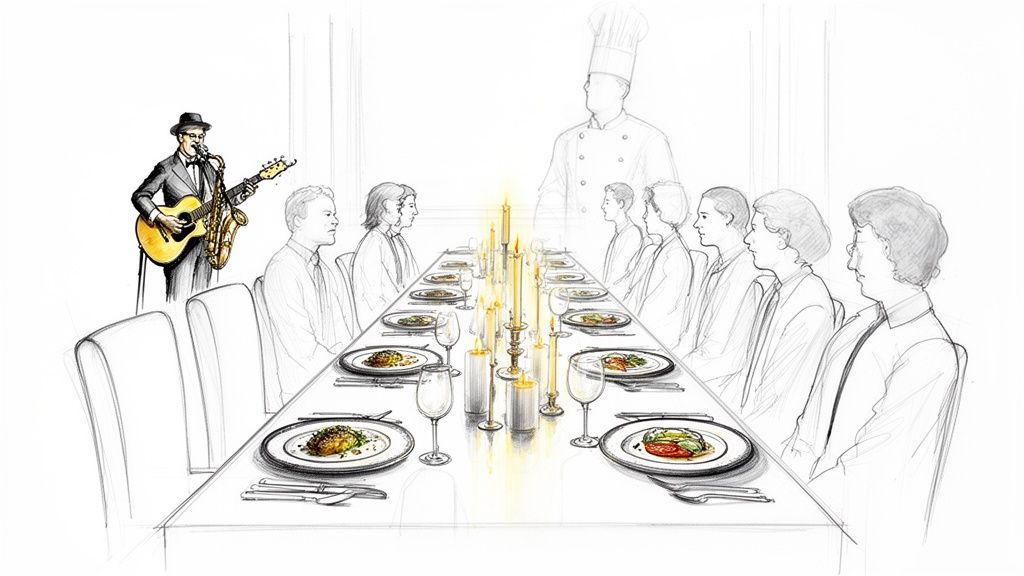
Combine a brilliant meal with a live musical performance for an immersive experience. Supper club events create an evening where food and sound complement each other. Imagine a soulful jazz trio playing between a chef's courses. It’s an integrated culinary and musical journey.
The idea is to elevate dinner from a meal to a curated event. This format is perfect for pop-up chefs who want to add entertainment value and command a premium price. You’re not just selling food. You’re selling a memorable night out.
How to Make It Work
This approach transforms a pop-up dinner into a must-attend cultural event. Success hinges on a thoughtful pairing of the menu, the musician, and the atmosphere.
- Price It Right: Cover quality ingredients, the venue, and artist fees. Aim for an $85 to $150 minimum per person. This ensures you can pay everyone fairly and still turn a profit.
- Coordinate the Flow: Work with the chef and musician to plan the evening’s timing. The music should enhance dinner, not interrupt it. Schedule short sets between courses to allow for conversation.
- Manage Your Inventory: Food costs are your biggest variable. Require attendees to register at least 72 hours in advance. This lets you buy exactly what you need. An online ticketing page that closes automatically is perfect for this.
- Offer Tiered Options: Create different experiences. A ticketing platform that handles tiers makes this simple. You can offer VIP tables near the performers or include a complimentary bottle of wine.
3. Workshop + Live Music Hybrid Events
Combine education and entertainment by pairing a hands-on workshop with a live music performance. This hybrid offers two experiences in one ticket. Think of a songwriting class that ends with an open mic, or a yoga session with a live cellist. It delivers more value than its parts.
The concept elevates a standard class into a memorable event. You're not just teaching a skill; you're creating an atmosphere. This model appeals to people looking for unique, immersive activities.
How to Make It Work
This is perfect for instructors who want to boost ticket value and attract a new audience. The key is to ensure the workshop and music feel integrated, not just tacked on.
- Price for Value: Your ticket includes a class and a concert. Price it accordingly. A range of $45-$65 per person feels fair for the dual offering.
- Set a Clear Schedule: Be explicit about the timeline. A simple schedule on the ticketing page prevents confusion.
- Manage Capacity: Keep the event personal. Limit tickets to a number that works for both formats, usually under 100. This is easy to set up on your event page, which can be built in minutes and cap sales automatically.
- Coordinate with Artists: Make sure the musicians understand their role. If they're providing ambient sound, their performance is different from a headlining set. Have them arrive at least 30 minutes early.
4. Charity Fundraiser Live Music Galas
Combine great music with a great cause. A charity gala is a powerful way to bring people together, provide entertainment, and raise funds for a nonprofit. This isn't just a concert. It's a structured event built around giving, where music elevates the experience.
The concept is a formal or semi-formal gathering where music is the main draw, but fundraising is the goal. Think of a local hospital foundation hosting a benefit concert with a silent auction. These events create an emotional connection, making attendees more likely to donate.
How to Make It Work
This works for nonprofits and community organizers creating a high-impact fundraising event. The key is to blend entertainment seamlessly with fundraising appeals.
- Tiered & Sponsor Ticketing: Don't just sell one ticket. Create multiple pricing levels ($100, $150, $250) with different perks. Also, create "sponsor" packages for local businesses that include brand recognition and a block of tickets.
- Plan Way Ahead: Lock in your venue and artists at least two to three months in advance. Start selling tickets six to eight weeks before the event.
- Leverage Your Supporters: Announce ticket sales to your existing email list first. Offer them an early-bird discount. A simple group discount for tables of five or more can also boost initial sales.
- Make Giving Easy: Your ticketing setup should do more than just sell tickets. Add a simple donation option at checkout. Let people add an extra $25, $50, or $100 with a single click.
5. Festival and Multi-Stage Community Music Events
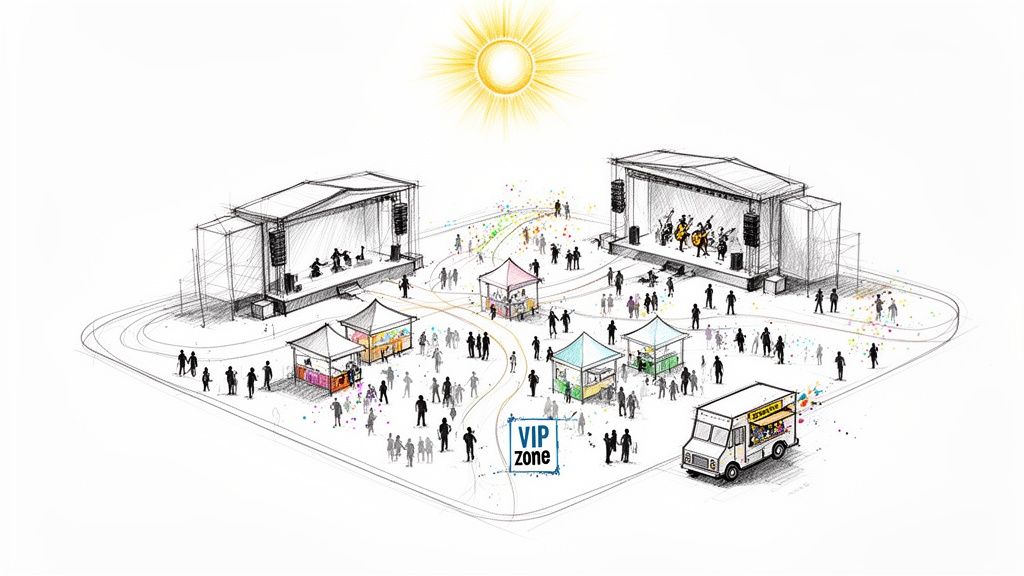
Ready to think bigger? A multi-stage festival is the ultimate way to create a landmark event. This is a full-day or multi-day experience with multiple artists, food trucks, and local vendors. You’re building a temporary city centered around music.
This model is a massive undertaking but offers a massive reward. It transforms a local park into a cultural hub. It's one of the live music event ideas that truly brings a whole community together.
How to Make It Work
This approach is for ambitious organizers who want to make a big local impact. Success hinges on long-term planning, as you're managing multiple artists, vendors, and thousands of attendees. It works for 500 or 5,000 people.
- Plan Your Timeline: Start planning at least six to nine months out. You need this lead time for booking acts, securing permits, and building a solid promotional runway.
- Tier Your Tickets: Create urgency and reward early fans with early-bird pricing. Offer tiered day passes (Friday, Saturday, Sunday) and weekend bundles to maximize revenue.
- Create VIP Packages: A VIP experience is an easy upsell. For $75 to $150, offer perks like dedicated viewing areas, private bathrooms, or exclusive merch. It's a great way to boost your bottom line.
- Streamline Your Entry: For a large event, smooth entry is crucial. Use a ticketing system with QR code scanning to keep lines moving. A platform with a flat fee ensures you keep more of every ticket sold.
6. Fitness and Wellness + Live Music Classes
Elevate a workout from routine to a full sensory experience. This idea blends the energy of a fitness class with the soul of a live performance. Imagine a yoga flow guided by a live cellist or cardio powered by live drummers. It’s about creating a perfect sync between movement and music.
This concept turns a standard class into a premium event. Participants will happily pay more for a unique, immersive experience. The artist isn't just background noise; they are an active part of the class.
How to Make It Work
This is a fantastic way for fitness instructors and studio owners to differentiate their offerings. It’s less about a concert and more about an integrated wellness event.
- Price for Value: Your class is now a premium offering. Price tickets in the $35-$50 range to reflect the added value of a live performer.
- Build a Habit: Schedule the class for the same day and time each week. Consistency helps people build it into their routine. Offering a "five-class pack" can lock in commitment.
- Easy Ticketing for Recurring Events: A platform that lets you set up recurring events in just a few minutes saves a ton of administrative work. Flat-fee pricing means you keep more revenue from each ticket.
- Promote Smart: Start with your existing clients. Create short, energetic video clips for Instagram Reels to attract new people. A 50% discount on the first class is a great way to get newcomers in the door.
7. Corporate Networking Events with Live Music
Elevate the standard business mixer from stuffy to sophisticated. These events swap awkward silences and canned playlists for a vibrant atmosphere. Imagine a Chamber of Commerce mixer with a smooth jazz trio. The music is a social lubricant, making it easier for people to connect.
The music is a backdrop, not the main event. Its purpose is to create a refined environment that encourages conversation. It makes a professional gathering feel less like an obligation and more like a memorable experience.
How to Make It Work
This idea is perfect for professional associations and corporate planners. The focus is on creating a premium experience that justifies a higher price and attracts sponsors.
- Music as Atmosphere: Choose artists who understand their role is to enhance, not dominate. A jazz trio or classical guitarist are excellent choices. Keep performances to 45-minute sets with breaks.
- Target Corporate Sponsors: The primary revenue stream here isn't individual tickets; it's corporate sponsorship. Offer packages from $1,000 to $5,000 that include blocks of tickets and logo placement.
- Smart Ticketing Tiers: Price individual tickets between $45 and $65. Create separate tiers for members and non-members, offering a discount to your core audience.
- Plan Your Timeline: Launch ticket sales four to six weeks before the event. For a complete guide, see these marketing strategies for events. To ensure your event resonates, explore these Top 5 corporate event entertainment ideas for fresh inspiration.
8. Open Mic Night and Talent Showcase Events
An open mic night is the ultimate community-builder. It’s a raw, unpredictable, and often brilliant showcase of local talent. You provide the stage, and the community provides the show. It turns any space into a vibrant hub of creativity.
The concept is beautifully straightforward: offer short, five-to-ten-minute performance slots to anyone brave enough to sign up. This format thrives on its low-stakes, high-variety appeal.
How to Make It Work
This approach is perfect for venues wanting to fill a weeknight or organizers looking to build a recurring event with minimal artist booking costs. The focus is on participation.
- Recruit a Great Host: Your host is crucial. They keep the energy up, manage the sign-up list, and make performers feel welcome. A good host turns a chaotic series of acts into a cohesive show.
- Simple Ticketing: Charge a small door fee, like $5 or $8, for audience members but let performers in for free. This respects their contribution. Use a simple ticketing platform to track your door sales.
- Offer a Featured Slot: To draw a bigger crowd, designate one slot per night as a paid "featured artist" spot. Offering a small stipend ($50 to $100) for a 20-minute set attracts more established local talent.
- Streamline Sign-Ups: Ditch the paper list. Create a simple online pre-registration form. This lets you schedule the night in advance and builds an email list of performers.
9. Virtual and Hybrid Live Music Events
Why limit your audience to one room? Virtual and hybrid events expand your reach far beyond the physical capacity of a venue. This model blends an in-person concert with a high-quality livestream. You serve ticketed attendees on-site and pay-per-view fans watching from home.
The idea gained traction during the pandemic, but it’s here to stay. It offers a powerful way for artists to connect with a global fanbase. You’re essentially running two shows at once: one for the room and one for the camera.
How to Make It Work
This is perfect for artists with a scattered following or venues looking to maximize revenue. Success depends on giving both audiences a stellar experience.
- Create Tiered Ticketing: Price in-person and online tickets separately. You might charge $15 for a "livestream pass" and $40 for a general admission ticket.
- Invest in Production: Your online audience won't stick around for choppy video or muffled sound. Invest in good audio and multi-camera setups to make the stream feel professional.
- Engage the Virtual Crowd: Don't forget your online viewers. Assign someone to manage a live chat or host a brief virtual-only Q&A with the artist after the main set.
- Test Everything: Do a full technical run-through at least 48 hours before the event. Test your cameras, audio, streaming platform, and internet connection.
10. Genre-Specific Music Series and Themed Concert Nights
Consistency is magnetic. A recurring series built around a specific genre is a powerful way to build a loyal, repeat audience. Instead of a one-off show, you’re creating a reliable cultural event people look forward to. Think 'Jazz Tuesdays' or an '80s Rock Covers Night'.
The concept is to create a habit. You’re not just selling a ticket to a single show. You’re selling an experience people can make part of their routine. This turns attendees from casual listeners into dedicated fans of your brand.
How to Make It Work
This approach is perfect for venues and organizers who want to establish a strong community and generate predictable revenue. The key is consistency in theme and scheduling.
- Schedule for Habit-Forming: Pick a consistent day and time, like the first Friday of every month. This makes it easy for people to remember and plan around.
- Brand Your Series: Give your series a distinct identity. Create a simple logo and consistent messaging. This makes it instantly recognizable.
- Offer Season Passes: Encourage commitment by bundling tickets. A "season pass" for three or four shows at a 20% discount locks in your audience and provides upfront cash flow.
- Book Reliably: Plan your artist lineup six to eight weeks in advance. This gives you plenty of time to promote each show and drive early ticket sales.
10-Point Comparison of Live Music Event Ideas
| Event Type | Implementation complexity | Resource requirements | Expected outcomes | Ideal use cases | Key advantages |
|---|---|---|---|---|---|
| Intimate Acoustic Pop-Up Concerts | Low — minimal setup, quick launch | Small crew, basic mic/amp, flexible venue partnerships | Strong engagement, modest revenue, local audience growth | Emerging artists, local fan-building, casual performances | Low cost, high intimacy, fast to organize |
| Supper Club Live Music Events | High — complex timing and service coordination | Chef/kitchen, dining venue, service staff, production | High per-ticket revenue, memorable experiential value | Pop-up chefs, culinary entrepreneurs, premium diners | Premium pricing, food+music synergy, strong word-of-mouth |
| Workshop + Live Music Hybrid Events | Moderate — content integration and scheduling | Instructor, musician, AV, workshop materials | Higher perceived value, cross-audience attendance, social content | Educational hosts, wellness providers, creative workshops | Appeals to multiple audiences, justifies higher pricing |
| Charity Fundraiser Live Music Galas | High — fundraising, sponsorship, formal programming | Venue, production team, sponsors, auction systems, volunteers | Significant fundraising, media exposure, donor engagement | Nonprofits, foundations, benefit events | Mission-driven premium tickets, sponsorship & PR potential |
| Festival and Multi-Stage Community Music Events | Very high — multi-venue logistics, permits | Large staff/volunteers, multiple stages, vendors, security, insurance | Large attendance, multiple revenue streams, regional impact | City festivals, community anchors, tourism events | Scale revenue potential, broad reach, vendor/sponsor income |
| Fitness and Wellness + Live Music Classes | Moderate — sync music with class flow | Instructor, musician experienced in fitness, studio space, AV | Recurring revenue, higher retention, premium pricing | Boutique studios, wellness brands, regular class series | Differentiation, recurring customers, strong social content |
| Corporate Networking Events with Live Music | Moderate — balance music and conversation | Venue, background musicians, catering, AV, sponsor relations | Improved attendee experience, sponsorship opportunities | Professional mixers, conferences, corporate receptions | Memorable atmosphere, sponsor-friendly, higher attendance |
| Open Mic Night and Talent Showcase Events | Low — regular schedule, simple production | Host/MC, basic sound setup, performer roster, venue support | Community building, low per-event revenue, talent discovery | Grassroots scenes, bars, coffee shops, artist development | Very low cost, easy to run, nurtures local talent |
| Virtual and Hybrid Live Music Events | High — technical complexity for dual audiences | Professional AV/streaming crew, cameras, platform, redundancy | Expanded reach, multiple revenue streams, recorded assets | Artists seeking wider audiences, hybrid concert models | Scalable audience, replay/resale value, geographic reach |
| Genre-Specific Music Series and Themed Concert Nights | Moderate — recurring booking and brand upkeep | Curator/booker, consistent venue, marketing, artist lineup | Predictable recurring revenue, loyal subscribers | Niche audiences, venues building regular programming | Subscriber loyalty, lower marketing cost, clear brand identity |
Stop Planning, Start Doing
You just scrolled through a ton of live music event ideas. Maybe you’re buzzing about a secret acoustic show. Or perhaps a high-energy fitness class is calling your name.
That's the fun part. It's also the dangerous part.
The real trap isn’t a lack of ideas. It’s analysis paralysis. It’s waiting for the "perfect" concept or the "perfect" moment. That moment never comes. The only perfect moment is when you decide to actually do the thing.
From Idea to Opening Night
The difference between a cool concept and a sold-out show isn't a grand strategy. It’s a series of small, manageable steps. You don't need a massive budget or a team of twenty. You just need to commit.
Remember the core takeaways:
- Start with the experience. What feeling do you want to create? Intimate and cozy? Or electric and communal? The feeling dictates the logistics.
- Collaboration is your superpower. Partner with a pop-up chef, a yoga instructor, or a local brewery. Combining forces doubles your reach and halves your workload.
- Nail the essentials, forget the fluff. Your audience needs a clear event description, a simple way to buy a ticket, and the right address. Everything else is a bonus.
The most successful organizers aren't the ones with the wildest ideas. They’re the ones who pick one good idea and see it through. They choose a date, book an artist, and put tickets on sale. That’s it. That’s the whole game.
Your First Step is the Smallest One
Feeling overwhelmed? Good. It means you care. Now, channel that energy into one tiny action.
Not "plan the entire event." Not "secure all sponsors."
Just this: Pick one of the live music event ideas from this list that excites you and feels achievable in the next ninety days.
Is it the supper club with the jazz trio? The charity open mic night? The workshop with the acoustic set? Write it down. That’s your target. Your next step isn’t to build a stage; it’s to send one email to a potential collaborator.
The goal isn't a flawless production on your first try. It’s to get the reps in. To learn what works for your community. To prove you can turn a simple idea into a room full of people sharing an experience. You’ve got this.
Ready to turn your idea into reality? Ticketsmith makes it dead simple to create a beautiful, custom-branded event page and start selling tickets in minutes. We handle secure payments with a simple flat fee, so you can focus on creating an unforgettable show, not wrestling with code.