
Figuring out ticketing for your concert can feel like a massive headache. But it doesn't have to be. This is your practical guide to getting from 'cool idea' to 'sold out.'
Why Your Concert Ticketing Actually Matters
So you're putting on a show. Cool.
Whether it's a chill acoustic set for thirty people or a local band showcase for three hundred, the way you handle tickets says a lot. It’s the very first interaction anyone has with your event.
A clunky, confusing process loses people before they even pull out their credit card. A smooth experience builds trust. It shows you’ve got your act together. This isn't just about taking money. It’s about starting the relationship right.
It's All About the Experience Now
People are absolutely starving for live events again. The global live concert market is expected to rocket to $25.74 billion next year. People want real-life experiences.
This isn't just for giant stadium tours. It applies to your event, too. People want to get out and connect. You can dig into more stats about this trend in this market report.
This cultural shift is fantastic news for independent creators. There’s a real demand for the unique events you’re pouring your heart into.
Your goal isn't just to sell a ticket. It's to sell an experience. That experience starts the moment someone lands on your event page.
What to Expect From This Guide
We built this guide for the people in the trenches making things happen. The local promoters. The workshop hosts. The pop-up chefs. We'll walk through everything you need to know, without the corporate speak.
Here’s a quick peek at what we'll cover:
Getting Your Event Set Up: How to get your page live in minutes with your own branding. It will actually look like your event. No coding needed, promise.
Pricing Your Tickets: Smart ways to price tickets without pulling a number out of thin air. We’ll talk early birds, general admission, and VIP options.
Promotion and Sales: Clever, low-cost ways to spread the word and drive sales, even if you don't have a massive ad budget.
Fees and Getting Paid: Why flat-fee pricing is a game-changer and how to get your money quickly and securely, right into your account.
Picking the right tools is half the battle. If you’re still weighing options, our guide on the best ticketing platforms for events is a great place to start.
Alright, let's get into it.
Setting Up Your Event Page and Nailing the Price
First things first. Your concert needs an online home. This isn't just a sales page. It's the digital front door to your event.
You don't need to be a developer. A good setup takes just a few minutes, not weeks, and requires zero code. The most important part is making the page look like yours. Custom branding is huge. It shows you’re a professional and makes your event stand out from a generic template.
Getting the Price Right
Once the page is ready, you hit the big question: what should you charge? Guessing is a terrible strategy. A smart price comes from a little bit of homework.
Start by adding up your costs. The venue, sound equipment, staff, security, everything. Then, peek at what similar local events are charging. You're not trying to copy them. You're just getting a feel for the market. This gives you a baseline.
Don't undervalue your work. People are willing to pay for a great experience. Your ticket price should reflect the value you’re providing.
This simple infographic breaks down the core focus areas for your ticketing strategy.
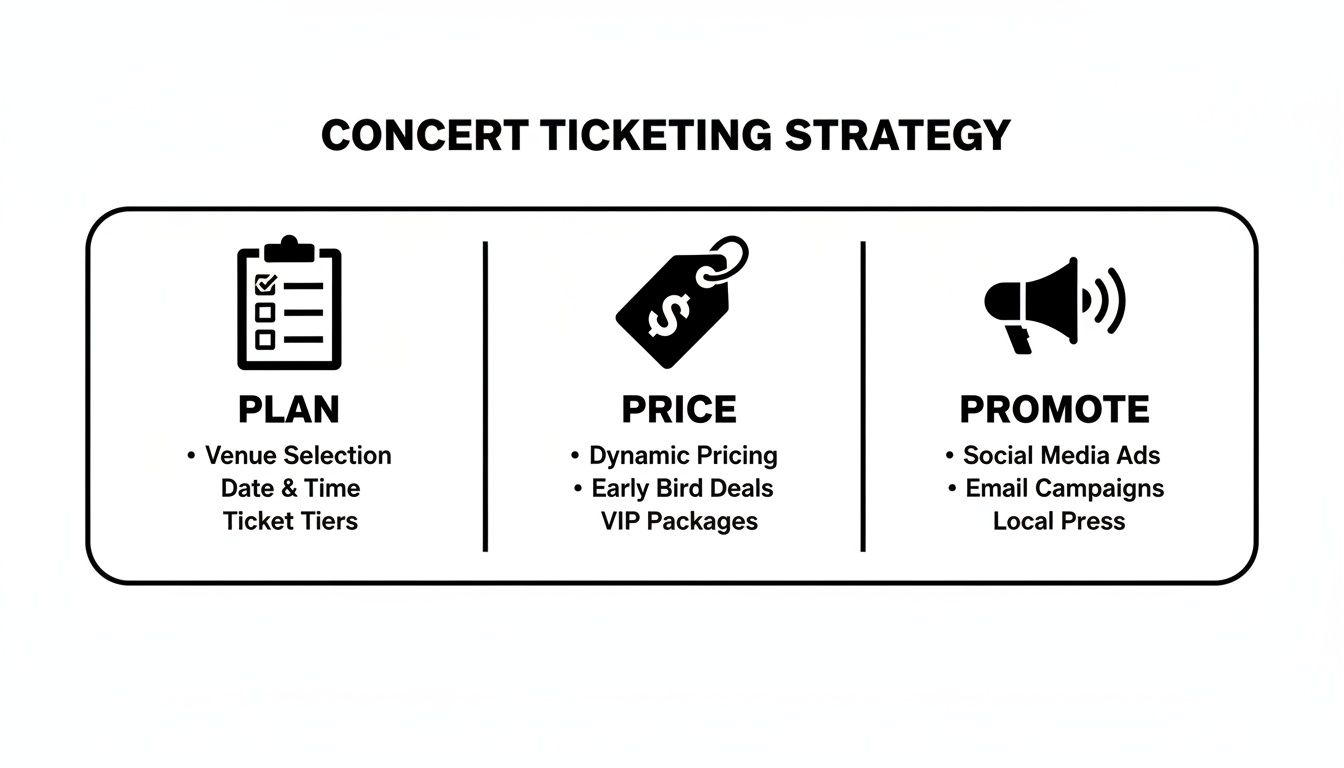
It comes down to three things: planning, pricing, and promotion. Nailing the price makes the other two work.
Using Tiers to Boost Sales
Offering a few ticket options, or tiers, is a fantastic way to create urgency. It also caters to different types of attendees. It sounds complex, but it's really not.
For most independent concerts, a simple pricing model is all you need. Here are a few straightforward strategies I've seen work time and again.
Simple Ticket Pricing Models for Your Concert
A comparison of three easy-to-implement ticket pricing strategies for small to medium events.
| Strategy | Best For | Example |
|---|---|---|
| Flat Rate | Small, intimate shows or events with a single, clear offering. | All tickets are $25. Simple, no-fuss, and easy for attendees to understand. |
| Tiered (Early/Standard) | Building early buzz and rewarding eager fans. Creates a sense of urgency. | $20 Early Bird (first 50 tickets), then $30 General Admission afterward. |
| Tiered (GA/VIP) | Events where you can offer a tangible upgrade, maximizing revenue per ticket. | $40 General Admission, $75 VIP (includes priority entry and a free drink). |
The goal here is to give people choices without overwhelming them. A tiered structure is a proven way to get early sales rolling and increase your average ticket value.
For instance, Pollstar data shows major artists can command average ticket prices like $271.49. This proves people will pay for perceived value. While your local show is a different beast, the principle holds. A small 30% price lift on some tickets—say, from $65 to $85 for a premium option—can add significant revenue without changing your capacity.
Creating early bird offers is a form of presale. It’s a powerful tool for generating buzz. If you want to dive deeper, we break down how presale tickets work in another guide. Ultimately, you want clear pricing that feels fair, never tricky.
The Online Checkout Experience (Don't Screw This Up)
Okay, your event page is live. Your ticket prices are set. Now for the make-or-break part: actually selling the tickets.
Your checkout process should be so fast that people barely have time to second-guess their purchase. A clunky, confusing checkout is an absolute sales killer. Most people are buying from their phones. Your page needs to be clean, simple, and work flawlessly on a small screen. It's a small detail that makes a huge difference.
Keep It Clean and Honest
The checkout page should feel like a natural extension of your event. Not some generic, third-party form. With the right tools, you can brand it with your colors and logo in minutes. This little touch reassures buyers they’re in the right place.
You also absolutely have to accept all major payment methods. Don't make someone dig for a specific credit card because your system is limited. The moment the purchase goes through, an instant email confirmation with their ticket is non-negotiable. It’s the digital handshake that says, “Yep, you’re all set. See you at the show!”
The biggest sin in online ticketing? Hidden fees. Nothing kills trust faster than a $25 ticket mysteriously ballooning to $34.50 at the final step. Just be upfront about the total cost.
This is where a flat-fee pricing model is a game-changer, especially for independent promoters. You know exactly what it costs. Your fans aren't ambushed by nasty surprises. That transparency builds loyalty.
Get Your Money, Fast
Honestly, Cash flow is everything when you're running events. You have deposits to make, vendors to pay, and marketing to fund. The last thing you need is your ticket revenue held hostage for weeks.
When choosing a platform, look for one that offers fast, secure payouts directly to your bank account. Getting your funds quickly means you can run your event without the stress of fronting every single cost yourself. It's what allows you to scale from a tiny show for five people to a bigger one for 5,000.
People are comfortable paying for events well in advance. Just look at the big players. Live Nation reported a gross transaction value of $9 billion in one quarter. A staggering $5.1 billion was deferred revenue from tickets sold for future concerts. You can read their quarterly results. This shows fans are willing to buy online, and early. You can tap into that same confidence by giving them a trustworthy way to pay.
Promoting Your Concert Without Breaking the Bank
Alright, you've built the page and set the prices. Nice one. Now for the part that keeps most of us up at night: getting people to actually buy tickets.
The good news? You don’t need a giant marketing budget to fill a room. You just need a smart, focused plan. It’s about creating real connections, not just running expensive ads.
Start With What You Already Have
Your best first customers are people who already know and like what you do. Seriously. Don't overthink this. Just start with your existing crew.
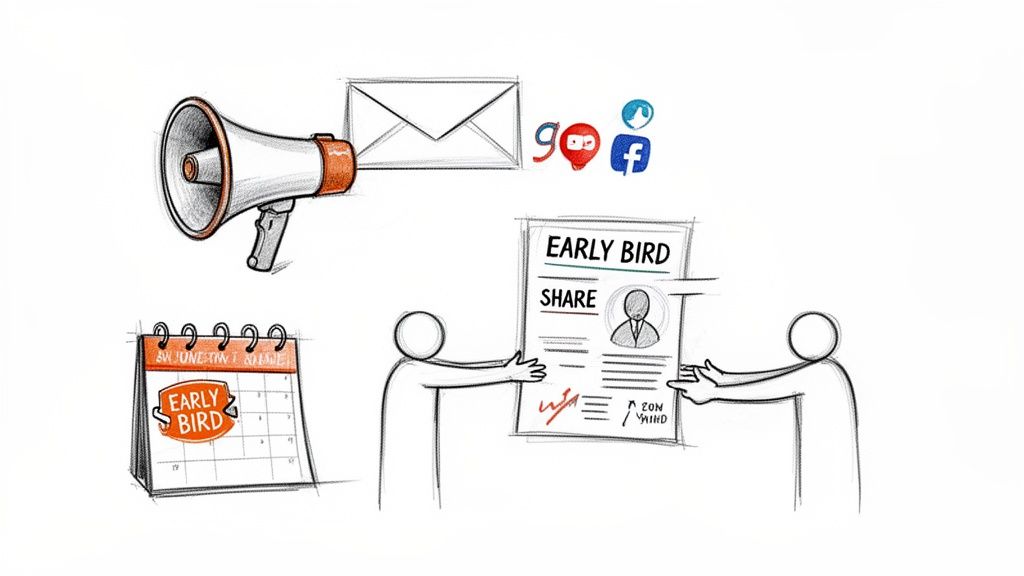
Your email list is pure gold. A simple, personal email announcing the show to past attendees is often your most effective first move. It doesn't need fancy design. Just be human.
Next, hit your social media channels. Post great photos from past shows. Share a behind-the-scenes video. Make it ridiculously easy for your followers to find and share the event link. The goal is to get your core fans so excited that they become your street team.
Create a Little FOMO
Urgency is your best friend in ticket sales. The single best way to create it is with an early bird discount.
Offering a limited number of tickets at a lower price does two crucial things:
It gives your most loyal fans a reward for buying tickets early.
It creates powerful social proof. When people see that tickets are already selling, they’re far more likely to buy. Nobody wants to miss out.
A simple "First 50 tickets are only $20!" message can generate more initial buzz than a week of generic "buy now" posts. It gives people a clear, compelling reason to act immediately.
That initial burst of sales gives you momentum. And, just as important, it gives you cash flow to cover upfront costs.
A Simple Promotional Checklist
It's easy to get overwhelmed. Here's a quick checklist to keep you on track. It covers the essentials for getting the word out without spending a ton.
Write a killer description: Your event page copy should be simple, exciting, and answer the basic questions. Who, what, when, where, and why should they care? Get to the point.
Post in local groups: Find relevant Facebook groups where your potential audience hangs out. Share your event, but don't just spam the link. Engage with the community first.
Send a reminder email: A week before the show, send a quick "last chance" reminder to your list. It's an easy way to catch procrastinators.
Collaborate with performers: This is a big one. Make sure artists are promoting the show to their own audiences. Give them a unique tracking link so they can see the sales they're driving.
For a deeper dive, our guide on event promotion strategies has a bunch more ideas you can steal. And to reach the right audience, it’s worth learning about the top music promotion strategies that are working right now. Promotion is an ongoing effort, not a one-time blast.
Managing the Door and Wrapping Up Your Event
The big day is finally here. After all the planning and promotion, you don't want a chaotic mess at the entrance. A smooth check-in process isn't just about efficiency. It makes you look professional and sets a great tone for the show.
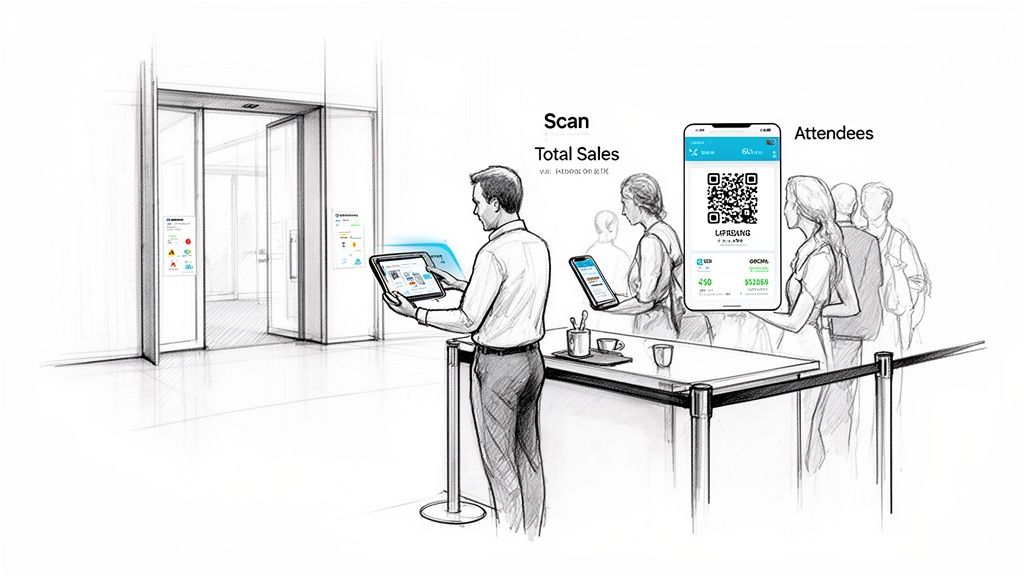
You don’t need a team of ten or expensive hardware. Even if it's just you and a friend managing the door, a simple mobile app for scanning tickets is all it takes. Forget printed lists. A quick scan of a QR code on a fan's phone is fast, secure, and keeps the line moving. It shows you have things under control.
Making Entry Effortless
The beauty of digital ticketing is its simplicity. Each ticket has a unique code. This pretty much eliminates the risk of someone sneaking in with a duplicate. The app instantly validates the ticket and checks the person in. Done.
This process is also a lifesaver for tracking real-time attendance. From your phone, you can see exactly how many people have arrived. If you want to get into the weeds, our guide on using a barcode for tickets breaks down the tech in plain English.
Beyond just scanning, managing the door is also about safety. A clear plan for entry and exit is non-negotiable. Brushing up on the important duties of a concert security guard can give you a solid framework for keeping things orderly, even if you’re only hiring one or two people.
After the Last Encore
Once the final song has been played, your job isn't quite done. It's time to reconcile sales and see how you did. This used to mean wrestling with messy spreadsheets. Not anymore.
A good ticketing system gives you a clean, simple dashboard with all your sales data. You should be able to instantly see:
Total Revenue: The final sales figure after any refunds.
Tickets Sold by Type: How many Early Bird, GA, or VIP tickets you moved.
Check-In Data: The final count of who actually showed up versus who was a no-show.
This post-event analysis is where you find the gold for your next show. Did early bird tickets sell out in an hour? Maybe offer more next time. Was VIP a huge hit? Think about what other perks you could add.
This data is your roadmap. It helps you turn guesswork into smart decisions for future events. Plus, with fast and direct payouts, you get your money without having to chase it. The entire process, from the first sale to the final reconciliation, becomes simple and transparent.
Common Questions About Ticketing Concerts
Alright, we've walked through the whole process. But once you're in the thick of it, a few questions always pop up. Here are the most common ones we hear, with straight-up answers.
How Far in Advance Should I Start Selling Tickets for My Concert?
There's no single magic number. A solid rule of thumb is four to six weeks out for smaller, local shows. This gives you a decent runway to build buzz without the marketing getting stale.
If you're planning a larger festival or have a well-known headliner, push that timeline out. Think two or three months in advance.
The point is to give your promotion time to gain traction. An early start lets you roll out an "Early Bird" special to create urgency and get that first wave of cash flow. Big national tours have trained audiences to buy tickets months ahead. You can tap into that same mindset, even on a local scale.
Just one critical piece of advice. Make sure every single detail—venue, date, lineup—is 100% locked in before you sell a single ticket. Nothing tanks your credibility faster than changing key details after you’ve already taken people’s money.
What Is the Best Way to Handle Different Ticket Types?
Keep it simple, but make it count. The biggest mistake is creating a dozen confusing ticket tiers that paralyze buyers with too many choices. For most independent concerts, two or three clear options are all you need.
General Admission: Your bread and butter. This is the standard ticket for entry. It should be priced to cover your baseline costs and turn a profit.
Early Bird: This is just a discounted GA ticket. It's designed to reward fans who commit early. The key here is to limit the quantity to create real scarcity.
VIP or Premium: If you add a VIP tier, the perks need to be tangible and worth the extra money. Think priority seating, a free drink, or a small piece of merch. Don't just slap a "VIP" label on it and hope for the best.
A good ticketing platform makes managing these a breeze. You should be able to set inventory caps for each type, track their sales separately, and turn them on or off when you need to. It should be a setup you can manage in minutes.
What Happens if I Have to Cancel My Event?
Cancellations are the worst part of this business. But how you handle them is critical for your reputation.
The second you know the show isn't happening, your first move has to be clear communication with every ticket holder. Email them. Post it across all your social media. Don't leave anyone in the dark.
As for the money, your refund process will hinge on your ticketing platform. This is a huge reason to choose your tools carefully. Look for a platform that makes issuing refunds dead simple—ideally, something you can do from your dashboard with a few clicks.
Having a simple, upfront refund policy on your event page from day one is non-negotiable. It protects you and sets clear expectations for your attendees, making a bad situation a little less painful for everyone.
Platforms that use a flat-fee pricing structure often make this process much cleaner. You aren’t left trying to claw back complicated percentage-based service fees. You just refund what the customer paid, and it’s done. It keeps the whole thing transparent and honest, which is exactly what you need when things go south.